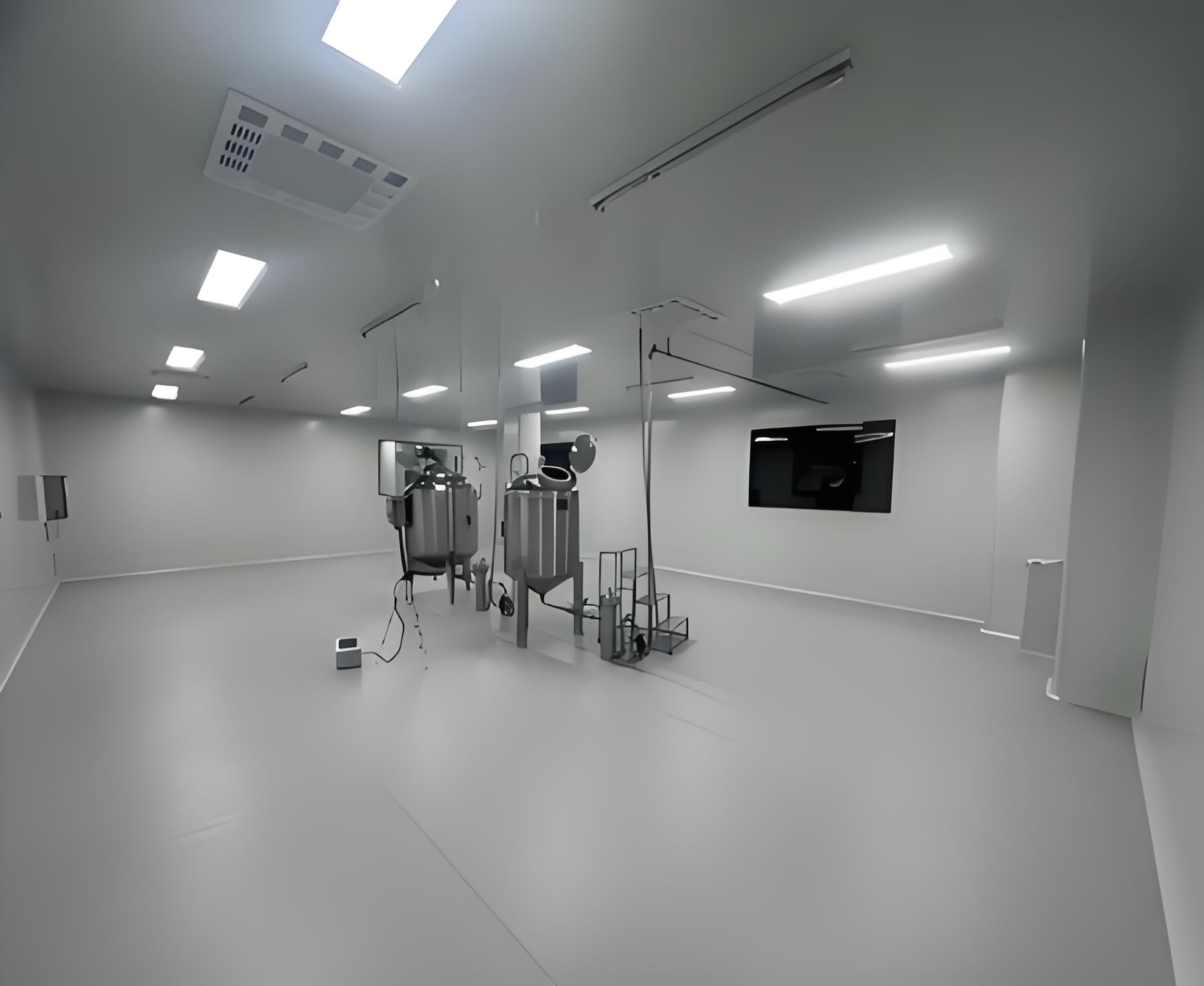
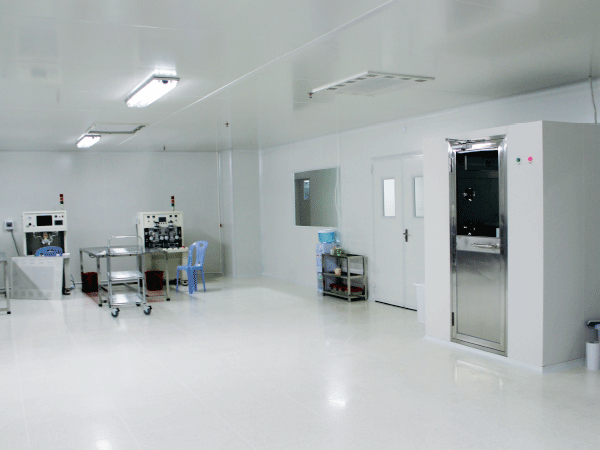
In the food industry, contamination by airborne microbes, dust, or foreign particles leads to product recalls, shelf-life reduction, and brand damage. A well-executed food purification project creates a controlled environment where air quality, surface hygiene, and personnel flow are systematically managed. Such projects involve the design and construction of cleanrooms that meet ISO 14644 classifications (Class 5 to Class 8, equivalent to Fed Std 209E Class 100 to Class 100,000), along with validated cleaning protocols and environmental monitoring. This article examines the technical components, regulatory drivers, and step-by-step implementation of a food purification project, from initial risk assessment to performance qualification. As a specialist in cleanroom engineering, TAI JIE ER has delivered over 200 food purification project installations for dairy, meat, ready-to-eat meals, and beverage facilities worldwide.
Before engineering a food purification project, one must identify the primary contaminants in a typical food plant:
Airborne microorganisms: Molds (Aspergillus, Penicillium), bacteria (Listeria, Salmonella), and yeasts. They originate from raw materials, personnel, and HVAC systems. A single gram of dust can carry 10⁶–10⁸ CFU.
Particulate matter: Flour dust, spice particles, metal fragments from equipment wear, or fibers from clothing.
Cross-contamination: Transfer of allergens (e.g., peanut dust into gluten-free lines) or pathogens between production zones via air currents or shared tools.
Condensation and moisture: Poorly controlled humidity leads to mold growth on walls and ceilings.
A professional food purification project addresses each vector through physical barriers, air pressure cascades, filtration, and strict hygiene protocols.
Every food purification project is based on a set of measurable engineering parameters. These are derived from product risk category (low, medium, high) and regulatory standards such as Codex Alimentarius, FDA 21 CFR Part 110, or EU 852/2004.
Food cleanrooms typically range from ISO Class 6 to Class 8 (Class 1,000 to Class 100,000). The required class dictates air change rates and filter efficiency:
ISO Class 8 (100,000): Minimum 15–20 air changes per hour (ACH). Used for ambient filling of non-sensitive products (canned vegetables, dry mixes). Particle limit: 3,520,000 particles ≥0.5 µm/m³.
ISO Class 7 (10,000): 30–60 ACH. For areas where exposed product is handled but not ultra-sensitive (cheese cutting, cooked meat slicing). Particle limit: 352,000 particles ≥0.5 µm/m³.
ISO Class 6 (1,000): 100–150 ACH. For high-risk zones such as aseptic filling of dairy or beverage products. Particle limit: 35,200 particles ≥0.5 µm/m³.
ISO Class 5 (100): 240–360 ACH (unidirectional flow). Required for sterile filling of UHT milk, infant formula, or ready-to-eat meals with extended shelf life.
In any food purification project, the chosen classification must be documented in a User Requirement Specification (URS) before design begins.
To achieve the above classes, a cascade of filters is installed:
Pre-filters (G4 to F7): Capture coarse dust (≥10 µm) and extend HEPA life. Located in air handling units (AHUs).
HEPA filters (H13 or H14): Efficiency 99.95% to 99.995% at 0.3 µm. Required for ISO Class 5 to Class 7. Each HEPA filter is tested with a DOP or PAO aerosol challenge during commissioning.
ULPA filters (U15–U17): 99.9995% efficiency at 0.12 µm. Rarely used in food except for aseptic filling machines.
The food purification project must also include filter housing with gel seal or knife-edge seal to prevent bypass leakage. TAI JIE ER specifies Camfil or AAF filter systems with validated sealing.
To prevent cross-contamination, clean zones must be at higher pressure than adjacent dirty zones. Typical pressure cascades:
High-risk (aseptic) zone: +25 Pa relative to corridor.
Low-risk (packaging) zone: +15 Pa relative to ambient.
Raw material reception: Negative pressure (-5 to -10 Pa) to contain dust and odors.
Pressure is monitored by digital manometers with alarms. Any food purification project includes a pressure differential diagram showing airflow direction through doors and transfer hatches.
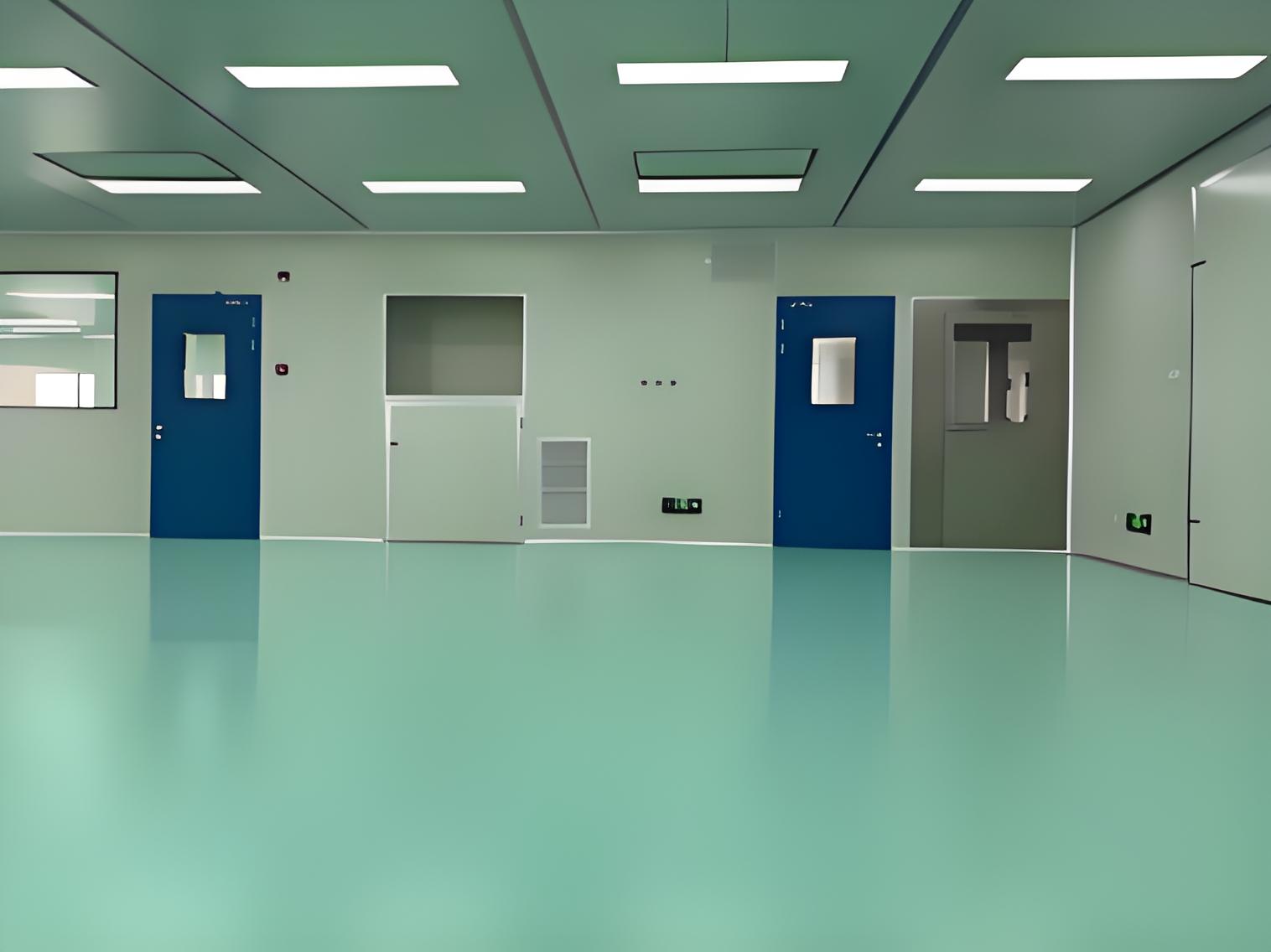
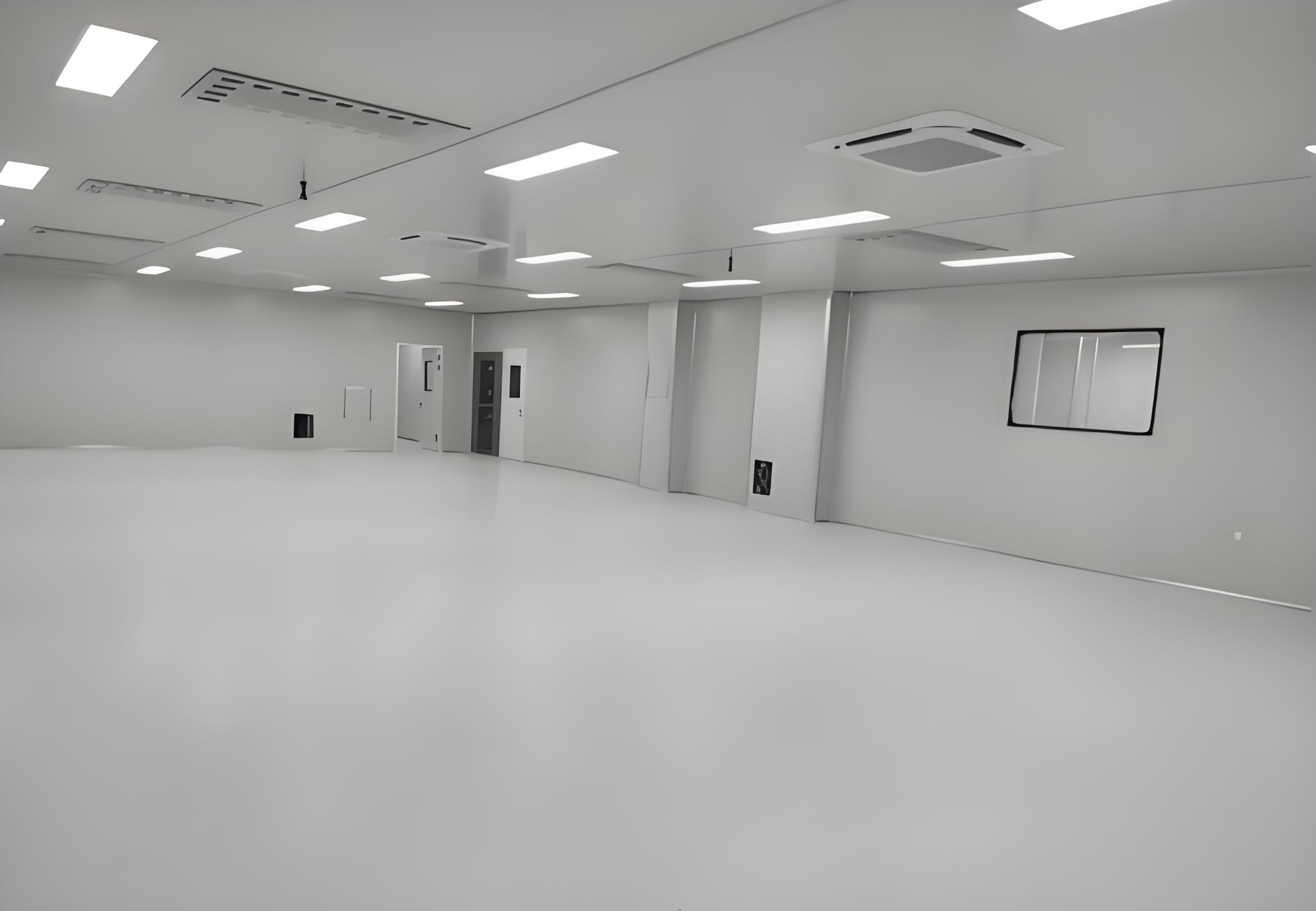
The physical construction of a food cleanroom requires non-porous, corrosion-resistant, and easy-to-clean surfaces. Common specifications:
Walls: Sandwich panels with 50mm or 75mm thick polyurethane foam core, coated with white prepainted steel (0.5–0.6 mm). All joints are sealed with food-grade silicone (no crevices).
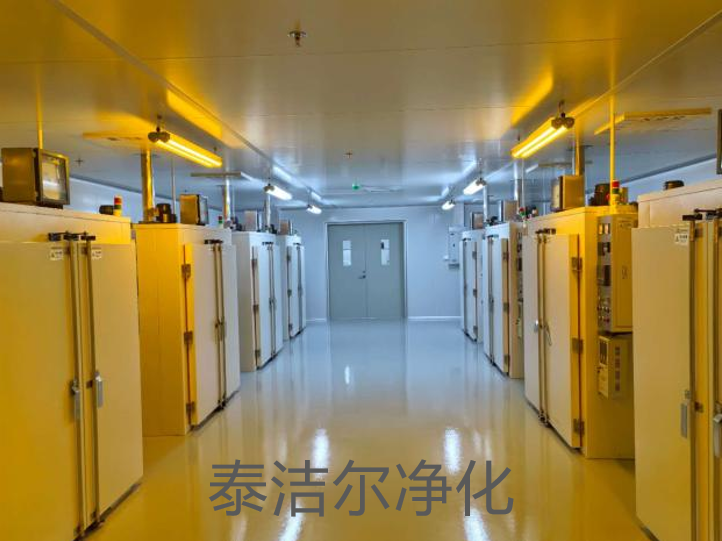
Ceiling: Same panel construction, with integrated HEPA filter housings and LED lighting (≥500 lux, sealed and flush).
Flooring: Epoxy resin or polyurethane screed (self-leveling, 3–5 mm thick), with coving at wall junctions to avoid right angles. Antistatic option for explosive dust environments.
Doors: Stainless steel sliding or swing doors with pneumatic closers and interlock systems (prevents opening of two doors simultaneously).
For a food purification project handling wet processes (meat, fish), wall and floor materials must withstand daily high-pressure washing with 60°C water and chlorine-based detergents. Stainless steel 304 or 316 cladding is preferred for the lower 2m of walls.
The heating, ventilation, and air conditioning (HVAC) system is the heart of any food purification project. It maintains temperature (typically 18–22°C for meat/dairy, 12–16°C for chocolate handling) and relative humidity (40–60% to prevent condensation and microbial growth). Key components:
Air Handling Unit (AHU): Equipped with cooling coil, heating coil (electric or hot water), humidifier (steam or adiabatic), and fans (belt-driven or EC plug fans). The AHU casing must be double-skinned with 50mm insulation to prevent sweating.
Ductwork: Galvanized steel (≤200°C) with internal coating or stainless steel for wash-down zones. All ducts are sealed to class A (SMACNA). Terminal HEPA boxes are installed at the point of entry into the cleanroom.
Air return: Low-level returns (near floor) for high-risk areas to remove heavy particles; high-level returns for general zones.
Differential pressure sensors: Placed across each filter stage and between rooms. Alerts if filter loading exceeds 200 Pa.
In a recent food purification project for a dairy plant, TAI JIE ER installed an AHU with a run-around coil heat recovery system, reducing HVAC energy consumption by 32% while maintaining ISO Class 7 conditions.
Even the best-engineered cleanroom fails if people and materials bypass purification protocols. Therefore, a food purification project must incorporate:
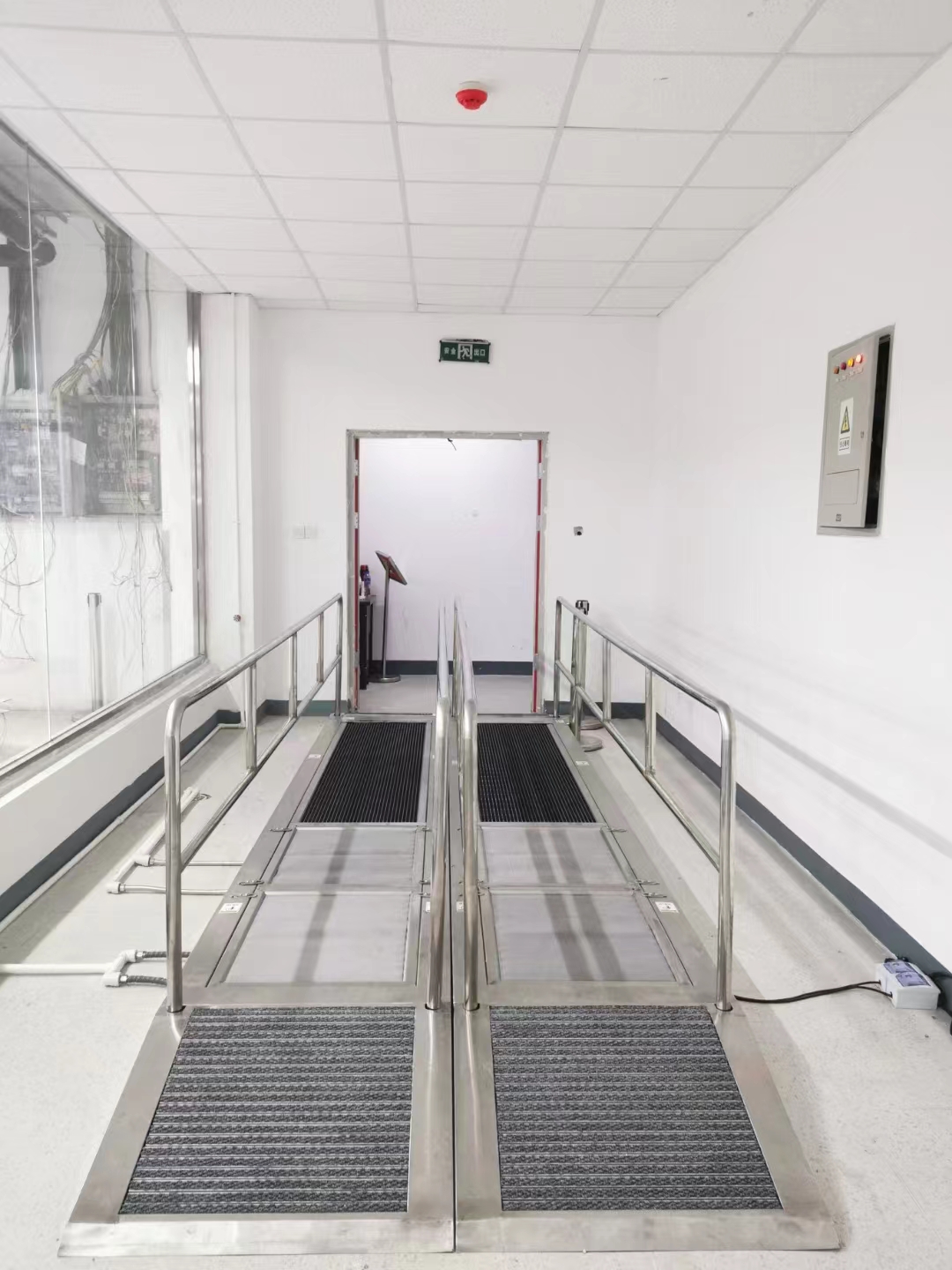
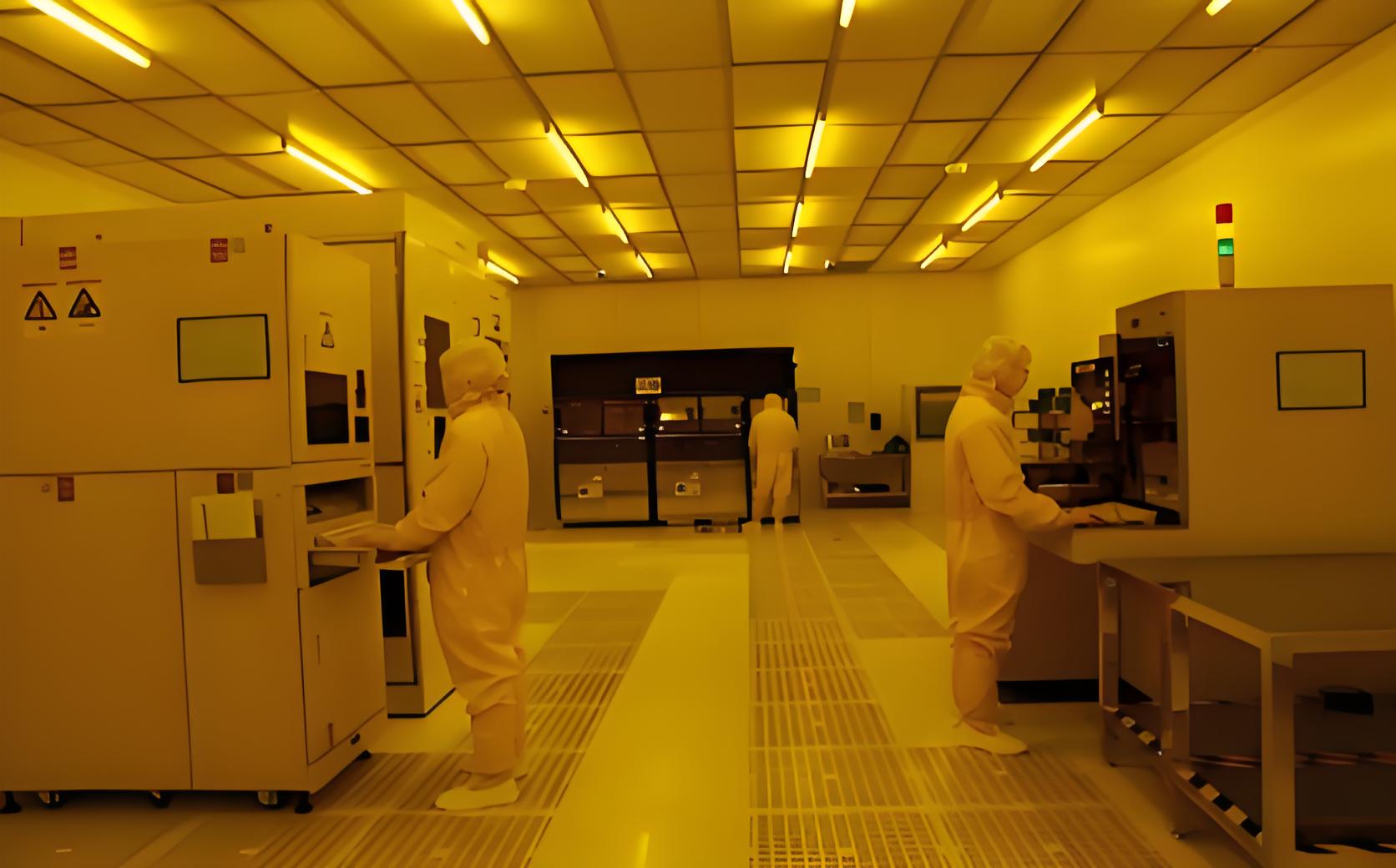
Personnel airlocks: Two-door interlocked rooms with air shower (high-velocity jets to remove surface dust). Changing areas with separate lockers for street clothes and cleanroom garments (coveralls, hairnets, gloves, boots).
Material transfer hatches: Pass-through chambers with UV-C lights or chemical sanitizing spray. For raw ingredients, a hatch with a built-in air curtain prevents contamination.
Handwashing stations: Sensor-operated taps, liquid soap, alcohol sanitizer, and air dryers (or single-use towels). All fixtures are stainless steel, no sharp edges.
Cleanroom garments: Non-shedding, antistatic polyester. Laundered in validated facility with weekly microbial testing.
A thorough food purification project includes a gowning procedure poster and regular training audits. Non-compliance is a major source of contamination.
After construction, the food purification project must undergo a four-phase validation process:
Installation Qualification (IQ): Verify that all components (AHU, filters, doors, sensors) are installed per drawings and specifications.
Operational Qualification (OQ): Test air change rates, pressure differentials, temperature uniformity, and filter integrity (scanning of HEPA filters with photometer).
Performance Qualification (PQ): Conduct non-viable particle counts (using handheld particle counter) and viable air sampling (using an impaction sampler or settle plates) over 3–5 days of simulated production.
Ongoing monitoring: Install continuous particle monitors (0.5 µm and 5.0 µm channels) at critical locations; sample surface swabs weekly for ATP bioluminescence and microbial culture.
Documentation from each phase is compiled in a validation report. TAI JIE ER provides a complete validation package for every food purification project, ready for regulatory inspection (FDA, BRC, IFS).
Even with careful design, some issues arise during operation. Field experience from TAI JIE ER identifies these frequent problems:
High particle count after filter change: Caused by improper installation of HEPA filters (damaged gaskets or torn media). Solution: Re-test filter integrity with PAO aerosol; train technicians on handling.
Mold on cleanroom walls: Usually due to condensation from cold spots or poor drainage. Solution: Increase surface temperature by improving insulation; install dehumidification with dew point control.
Pressure differential reversal when doors open: Insufficient air volume in the airlock. Solution: Increase supply air to the higher-pressure room or install a dynamic pressure reset in the BMS.
High energy bills: Running 100% fresh air when recirculation is allowed. Solution: Adjust fresh air damper to minimum required (10–20%) while maintaining CO₂ levels below 800 ppm.
Q1: What is the typical duration of a food purification project from
design to handover?
A1: For a 500 m² ISO Class 7 cleanroom, the
timeline is: design & engineering (4–6 weeks), construction &
installation (8–12 weeks), and validation (2–3 weeks). Total 14–21 weeks. A
smaller modular food purification project (50 m²) can be
completed in 6–8 weeks. TAI JIE ER offers
accelerated schedules for urgent projects.
Q2: How much does a food purification project cost per square
meter?
A2: Costs vary by classification and finish: ISO Class 8:
$800–$1,200/m²; ISO Class 7: $1,200–$2,000/m²; ISO Class 6: $2,000–$3,500/m².
These include walls, ceiling, flooring, HVAC, HEPA filters, and basic controls.
Excluded: building structure, water systems, and specialized equipment. A
detailed food purification project quote from TAI JIE
ER breaks down all components.
Q3: Can an existing food factory be retrofitted with a purification
project without stopping production?
A3: Yes, through phased
construction. For example, build a new cleanroom in an unused area, then
relocate operations over a weekend. Alternatively, partition the existing space
and work in sections while maintaining negative pressure in the construction
zone. However, full retrofit of a food purification project usually requires 2–3 weeks of downtime for final tie-in and validation.
TAI JIE ER provides a detailed disruption plan.
Q4: What are the regulatory standards that a food purification
project must meet?
A4: The main references are: ISO 14644 (cleanroom
classification), GMP for Food (Codex Alimentarius, FDA 21 CFR Part 117), and
specific standards for dairy (PAS 220), meat (USDA guidelines), and allergen
control (BRC Global Standard). A food purification project must
also comply with local building codes and fire safety (NFPA 101). TAI
JIE ER ensures all certifications are included.
Q5: How often should HEPA filters be replaced in a food purification
project?
A5: Typically every 2–3 years for continuous operation
(8,000–12,000 hours). However, replacement is driven by pressure drop: when the
filter reaches 200–250 Pa above initial resistance, change it. Annual integrity
testing (PAO scan) may reveal localized leaks requiring earlier replacement.
TAI JIE ER offers a filter monitoring service as part of our
maintenance contracts.
Q6: What is the difference between a food purification project and a
standard HVAC upgrade?
A6: A standard HVAC upgrade focuses on
thermal comfort and basic filtration (MERV 8–13). A food purification
project includes validated HEPA/ULPA filtration, room pressurization
cascade, microbial sampling, and strict construction materials (smooth,
non-porous). It also requires documentation of air change rates and a
contamination control strategy – aspects missing from conventional HVAC.
Investing in a dedicated food purification project is essential
for high-risk products.
Designing and executing a food purification project requires expertise in cleanroom engineering, regulatory compliance, and process integration. TAI JIE ER provides turnkey solutions: from risk assessment and URS writing to construction, validation, and staff training. Our portfolio includes projects for multinational dairy brands, ready-meal manufacturers, and infant formula producers, all meeting ISO Class 5 to Class 8 standards.
Send your inquiry today – include product type (e.g., fresh meat, UHT milk, frozen meals), required cleanroom area (m²), target ISO class, and any existing layout constraints. We will respond within 48 hours with a preliminary concept drawing, budget estimate, and a checklist of regulatory requirements for your region. For urgent projects, we can arrange a virtual site survey and a fixed-price proposal within one week.
Request a consultation for your food purification project from TAI JIE ER – references and case studies available upon request.