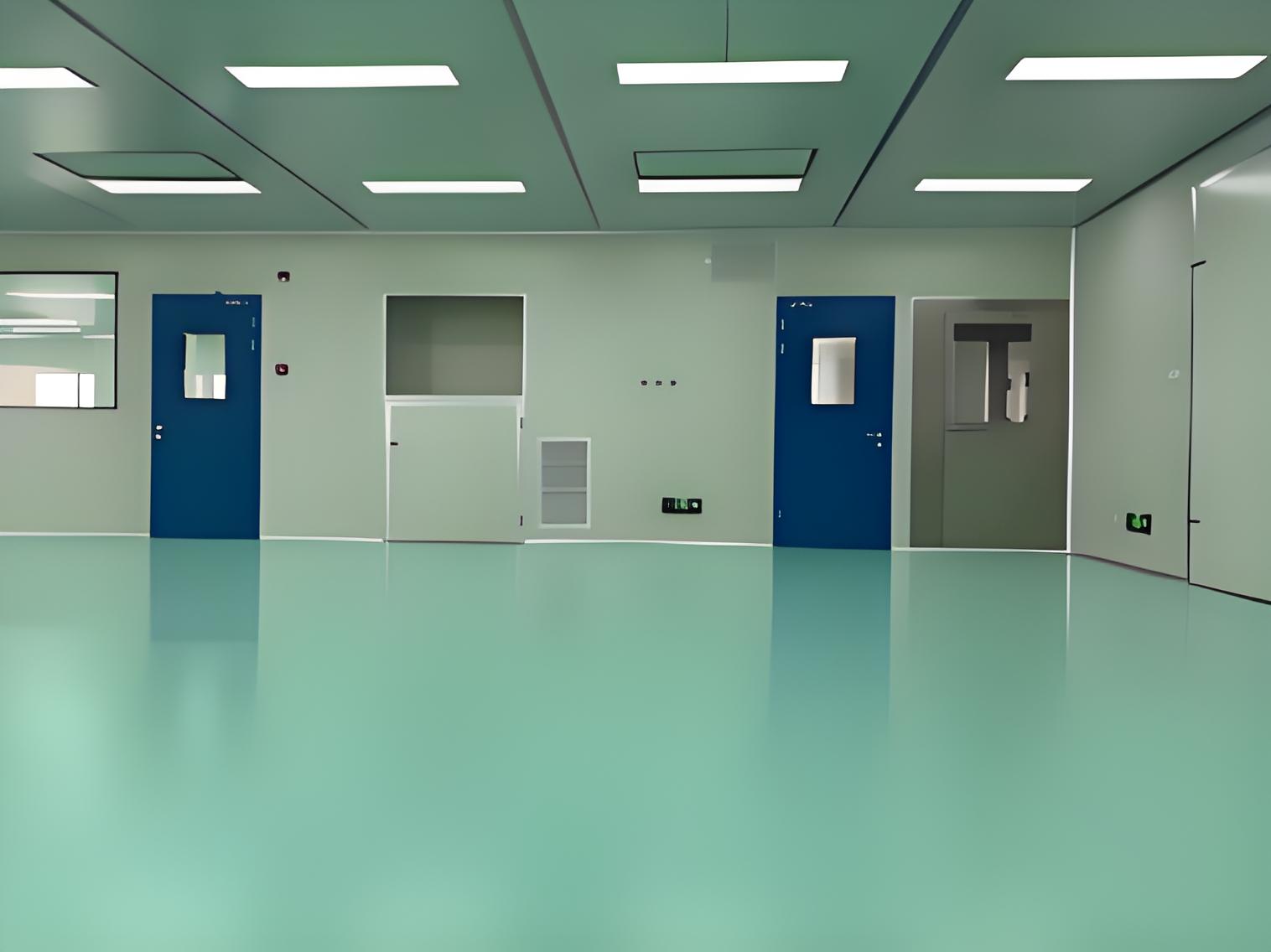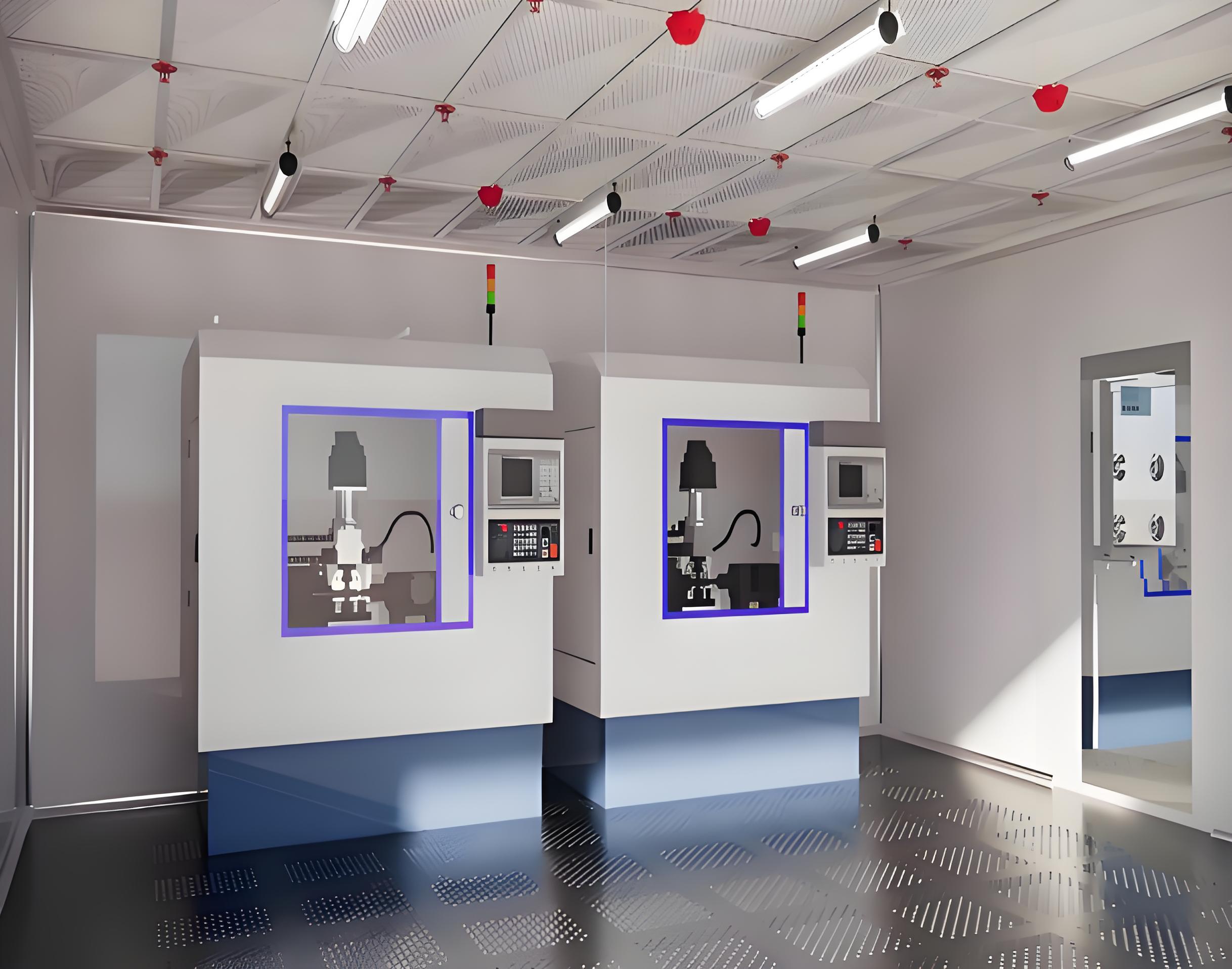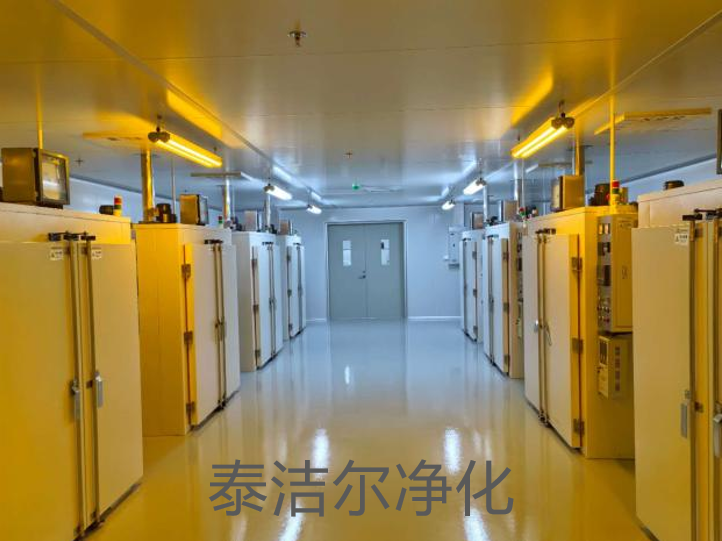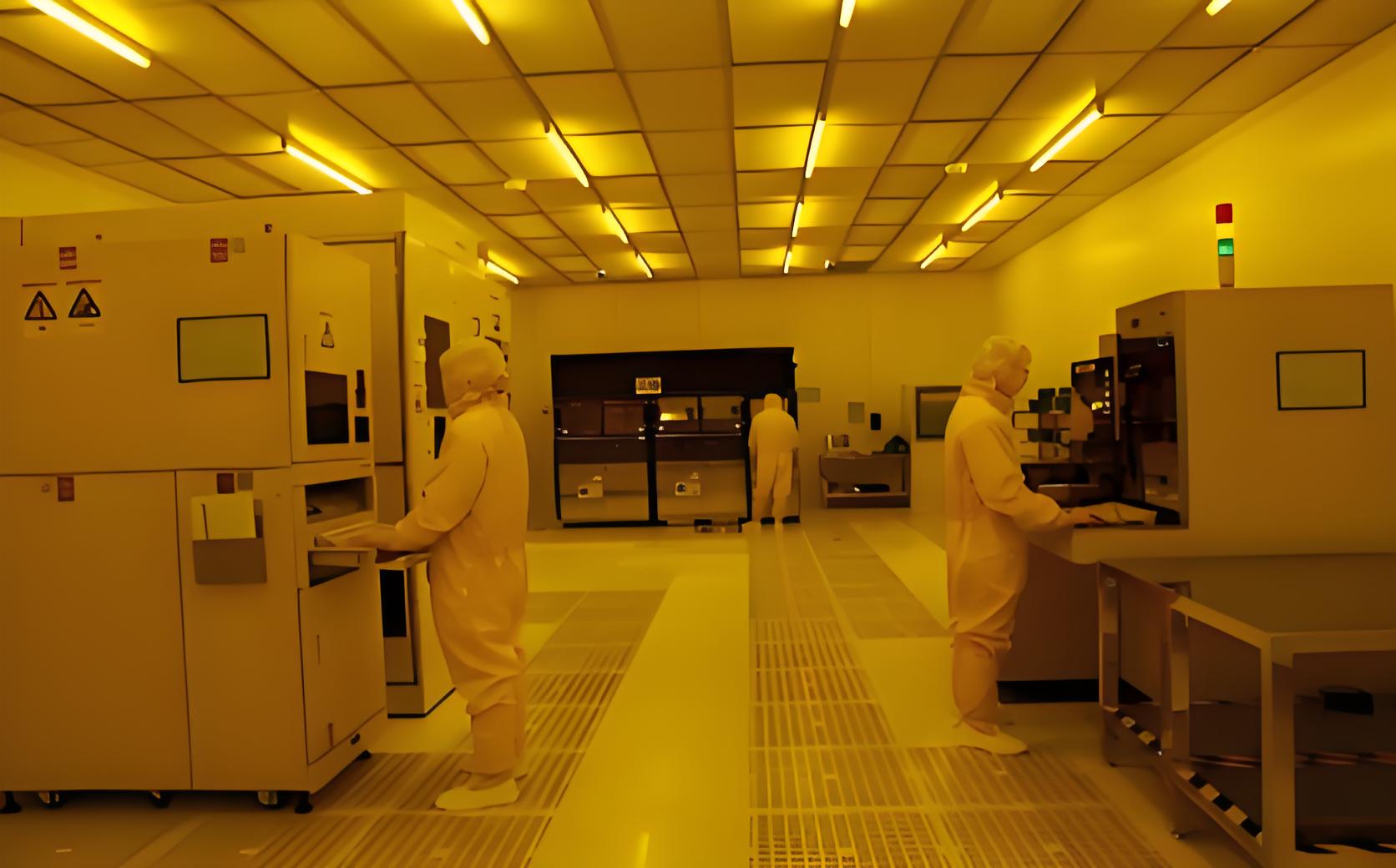
In pharmaceutical manufacturing, biomedical research, and clinical laboratories, the design of Biological purification engineering systems directly determines product sterility, worker safety, and regulatory compliance. Unlike electronic cleanrooms that focus on inert particles, biological environments must control viable microorganisms (bacteria, fungi, spores) and often require containment of hazardous pathogens (BSL-3, BSL-4). This article provides a component-level analysis of Biological purification engineering, covering biosafety level (BSL) classification, HVAC pressure cascades, HEPA/ULPA terminal filtration, vaporized hydrogen peroxide (VHP) decontamination, and GMP facility validation. Drawing on data from TAI JIE ER's 18 years of cleanroom construction, we will examine how to specify purification levels for sterile injectable lines (Grade A), cell therapy labs (ISO 5), and high-containment animal facilities (ABSL-3). We will also address common pain points: cross-contamination through airlocks, filter breakthrough, and revalidation after facility modifications.
The goal of biological purification engineering is not only to control airborne particles but also to eliminate or contain viable organisms. Key differences:
Viable particle monitoring: Active air samplers (impaction or impingement) and settle plates are used to measure colony-forming units (CFU) per cubic meter or per plate. Limits per GMP: Grade A (sterile filling) <1 CFU/m³; Grade B <10 CFU/m³; Grade C <100 CFU/m³; Grade D <200 CFU/m³.
Containment for hazardous agents: BSL-3 and BSL-4 labs require directional airflow (negative pressure), HEPA filtration on exhaust, and sealed penetrations to prevent pathogen release.
Surface decontamination: Materials must withstand frequent wiping with disinfectants (quats, bleach, alcohol) and periodic fumigation (VHP or formaldehyde).
Personnel safety: Air showers, chemical showers, and class III biological safety cabinets (BSCs) are integrated.
A professional Biological purification engineering provider like TAI JIE ER uses CFD to model airflow around biosafety cabinets, ensures proper pressure cascades, and validates decontamination cycles. Field data show that poorly designed biological cleanrooms have 10–100x higher environmental monitoring excursions compared to properly engineered facilities.
When designing or auditing a biological facility, these nine parameters define the biological purification engineering scope.
Biosafety level (BSL): BSL-1 (low risk, no containment), BSL-2 (moderate, e.g., influenza), BSL-3 (airborne pathogens, e.g., TB), BSL-4 (dangerous/exotic, e.g., Ebola). Each level has specific engineering controls: BSL-2 requires autoclave and sink; BSL-3 requires HEPA exhaust, double-door autoclave, and inward airflow; BSL-4 requires positive-pressure suits and chemical showers.
Air change rate (ACR) per hour: BSL-2: 6–12 ACH; BSL-3: 10–15 ACH; BSL-4: 16–25 ACH. Higher ACR dilutes airborne microbes but increases energy.
Pressure differential and cascade: For containment, adjacent areas maintain -5 to -15 Pa relative to corridors. For sterile manufacturing, positive pressure (5–15 Pa) prevents ingress of contaminants. Pressure alarms must be calibrated ±1 Pa.
HEPA/ULPA filter placement: For exhaust (containment), HEPA filters are placed near the source or in the air handling unit. For supply (sterile areas), terminal HEPA in ceiling diffusers. Efficiency H14 (99.995% at MPPS) is standard; ULPA U15 for aseptic filling.
Biosecurity interlocking: Airlocks with interlocking doors prevent simultaneous opening. For BSL-3, airlocks are ventilated at higher pressure or lower pressure (depending on direction).
Decontamination system: VHP generators for room bio-decontamination (cycle time 4–8 hours). Pass-through autoclaves for waste and materials.
Material and surface finish: Epoxy or polyurethane coatings on walls and ceilings; seamless flooring (PVC or polyurethane); coved corners (radius > 50 mm) to allow cleaning.
Environmental monitoring: Real-time particle counters (0.5 µm and 5.0 µm) plus viable sampling (impactors, gelatin filters). Temperature 20–24°C, RH 45–60%.
Validation documentation: IQ/OQ/PQ for HVAC, filter integrity testing (scanning or photometer), pressure decay tests, and VHP efficacy (biological indicators – Geobacillus stearothermophilus spores).
TAI JIE ER provides a turnkey biological purification engineering service that includes risk assessment (HACCP for contamination), design, construction, and certification per WHO TRS 961 and ISO 14644.
The HVAC system is the most critical component of biological purification engineering. It must maintain directional airflow, proper filtration, and stable conditions.
BSL-2: Negative pressure relative to corridors. Typically -10 Pa. Exhaust air passes through a HEPA filter before discharge.
BSL-3: Stricter cascade: laboratory negative to anteroom (-15 Pa), anteroom negative to corridor (-5 Pa). All exhaust HEPA-filtered, often with a second HEPA or bag-in/bag-out housing.
BSL-4: Positive-pressure suits supplied with breathing air; laboratory negative to surrounding areas (-20 Pa or more). Exhaust filtered through double HEPA in series.
Differential pressure sensors with alarms are placed at each door. TAI JIE ER uses redundant sensors and manual gauges for verification.
For aseptic processing (Grade A), unidirectional airflow (0.36–0.54 m/s) is required over critical zones. Smoke studies (using water fog or theatrical smoke) are performed to prove laminarity and absence of turbulence. Non-unidirectional areas (Grade C, D) must show no dead zones. TAI JIE ER's engineers perform smoke studies as part of OQ.
In case of exhaust fan failure, the supply fan must interlock to shut down, preventing pressurization that could push contaminants out. Emergency backup fans and power supplies (UPS) are mandatory for BSL-3 and above.
Biological purification engineering must include both routine disinfection and terminal sterilization.
Preferred method for room bio-decontamination because it leaves no toxic residue (breaks down to water and oxygen).
Typical cycle: dehumidification (<30% RH), conditioning (injection of H₂O₂ vapor at 300–500 ppm), exposure (2–6 hours depending on log reduction required), aeration (catalytic breakdown to <1 ppm).
Biological indicators (BIs) – Geobacillus stearothermophilus spores (10⁶) – are placed at hard-to-reach locations. Successful cycle requires all BIs killed.
Pass-through autoclaves (double-door) are installed in BSL-3/4 labs to sterilize waste and materials. They must be interlocked to prevent both doors opening simultaneously. Cycle parameters: 121°C, 15 psi, 20–45 minutes depending on load.
For chlorine dioxide or ozone, specific material compatibility is required. Formaldehyde is less common due to carcinogenicity. TAI JIE ER recommends VHP for most pharmaceutical and lab applications.
Even well-designed biological cleanrooms face recurring issues. Common problems and remedies in biological purification engineering:
Mold growth in HVAC drip pans: Condensate water in cooling coils supports fungal growth. Solution – install UV-C lights in air handling units, slope drip pans to drain, and use biocidal pan tablets. TAI JIE ER also offers stainless steel pans with hydrophilic coating.
HEPA filter breakthrough due to high humidity: Filters loaded with moisture lose efficiency and become breeding grounds. Remedy – ensure pre-cooling and reheat maintain RH below 60% at the filter face. Install moisture sensors.
Incomplete VHP penetration: Geometric shadows or porous materials (paper, cardboard) absorb VHP, preventing spore kill. Solution – use polished stainless steel surfaces, minimize porous items, and conduct airflow mapping to ensure vapor reaches all corners. TAI JIE ER's VHP cycle includes computational fluid dynamics for vapor distribution.
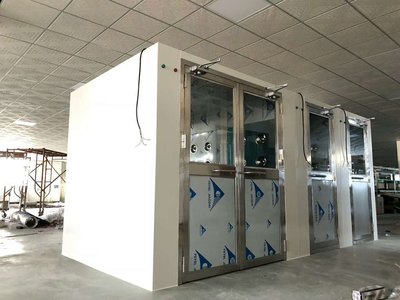
Cross-contamination through airlocks: Personnel walking through airlocks can carry contaminants on shoes and gowns. Solution – install sticky mats or automatic shoe cleaners, and implement a strict gowning procedure. For high-risk areas, use air showers with HEPA-filtered jets (25 m/s).
According to TAI JIE ER's field service records, addressing these four issues reduces environmental monitoring excursions by 60–80% in biopharma facilities.
For pharmaceutical and medical device manufacturing, biological purification engineering must comply with:
EU GMP Annex 1 (2022 revision) – sterile medicinal products.
FDA 21 CFR Part 211 (current Good Manufacturing Practice).
WHO Technical Report Series No. 961.
ISO 14644-1 and -2 (cleanroom classification and monitoring).
ISO 14698 (biocontamination control).
Validation includes:
DQ (Design Qualification): Verify that the design meets user requirements and regulatory standards.
IQ (Installation Qualification): Check filter model numbers, ductwork sealing, pressure gauge calibration.
OQ (Operational Qualification): Test ACH, pressure differentials, HEPA integrity (leak test), temperature/humidity mapping, smoke studies.
PQ (Performance Qualification): Run three consecutive days of environmental monitoring (particles, viable) under simulated operations.
TAI JIE ER provides full validation documentation and support during regulatory inspections. Their biological purification engineering team includes GMP compliance experts.
Biological cleanrooms consume high energy due to large air change rates and HEPA resistance. Strategies to reduce operating cost without compromising safety:
Demand-controlled ventilation: Use CO₂ sensors or particle counters to modulate air changes when the lab is unoccupied (e.g., nighttime setback to 6 ACH instead of 12 ACH). Ensure containment is maintained.
Energy recovery wheels (enthalpy wheels): Transfer heat and moisture between exhaust and supply air – recovers 60–75% of energy. For BSL labs, use purge sections to prevent cross-contamination.
EC fan filter units (FFUs): Electronically commutated motors reduce fan energy by 40% compared to AC motors.
Low-pressure-drop HEPA filters: Pleat depth and spacing optimized to reduce resistance from 250 Pa to 150 Pa at rated flow.
TAI JIE ER's designs typically achieve 25–35% energy savings over conventional biological cleanrooms.
Q1: What is the difference between a biological safety cabinet (BSC)
and a cleanroom?
A1: A BSC is an enclosed,
ventilated workspace for handling infectious agents; it provides personnel,
product, and environmental protection. A cleanroom is a room designed to control
airborne particles and microbes. BSCs are placed inside cleanrooms for added
protection. In biological purification engineering, both are
integrated: the cleanroom provides background air quality, and the BSC provides
primary containment.
Q2: How often should HEPA filters in a biological cleanroom be
tested?
A2: For sterile manufacturing (Grade A/B),
HEPA integrity testing (scanning or photometer) is performed every 6 months. For
BSL-3 labs, annually. For BSL-2, every 12–24 months. TAI JIE ER recommends
in-situ leak testing using PAO (polyalphaolefin) aerosol.
Q3: Can a single HVAC system serve both a BSL-3 lab and an adjacent
sterile suite?
A3: No, because BSL-3 requires
negative pressure (containment) while sterile suites require positive pressure
(protection). Using separate air handling units (AHUs) is mandatory. TAI JIE ER
designs dedicated AHUs for each pressure zone.
Q4: What biological indicators (BIs) are used for VHP room
decontamination?
A4: The standard BI is Geobacillus
stearothermophilus spores (ATCC 12980) on stainless steel discs or paper strips,
with a population of 10⁶ CFU. After VHP exposure, the BI is incubated at 55–60°C
for 7 days. No growth indicates a 6-log reduction.
Q5: What is the maximum allowable particle count for a Grade A (ISO
5) biological cleanroom in operation?
A5: Per EU
GMP Annex 1 (2022), Grade A in operation: ≥0.5 µm particles – 3,520 per m³ (100
per ft³); ≥5.0 µm particles – 20 per m³ (0.6 per ft³). Viable monitoring: <1
CFU per m³. These limits are stricter than ISO 14644-1.
Q6: How do I validate that a biological cleanroom remains sterile
after a power outage?
A6: After power restoration,
perform a full environmental monitoring (particles and viable) and a surface
sampling (contact plates) in critical areas. If results exceed alert levels,
requalify with a VHP decontamination cycle. TAI JIE ER recommends UPS for
exhaust fans and control systems to maintain negative pressure during
outages.
Designing and constructing a biological cleanroom or containment laboratory requires deep knowledge of microbiology, HVAC engineering, and regulatory codes. Generic contractors often overlook critical details such as pressure cascade stability, filter bypass leakage, or VHP material compatibility. Biological purification engineering from an experienced provider like TAI JIE ER ensures your facility meets BSL/GMP standards, protects operators, and passes regulatory inspections.
TAI JIE ER offers:
Free initial consultation and biosafety risk assessment.
Custom design with CFD airflow modeling, pressure cascade calculation, and VHP cycle simulation.
Turnkey construction, validation (IQ/OQ/PQ), and operator training.
Annual recertification and 24/7 remote monitoring of pressure, temperature, and humidity.
Request a no-obligation feasibility study – provide your biological agent class, required cleanroom grade, floor area, and local regulatory standards. Our engineering team will respond within 2 business days with a preliminary design and budget range. Click here to contact TAI JIE ER’s biological purification specialists or call(+86)135-3066-2883+86/ 0755-86531686 for immediate assistance. We also offer design-build financing and maintenance contracts.