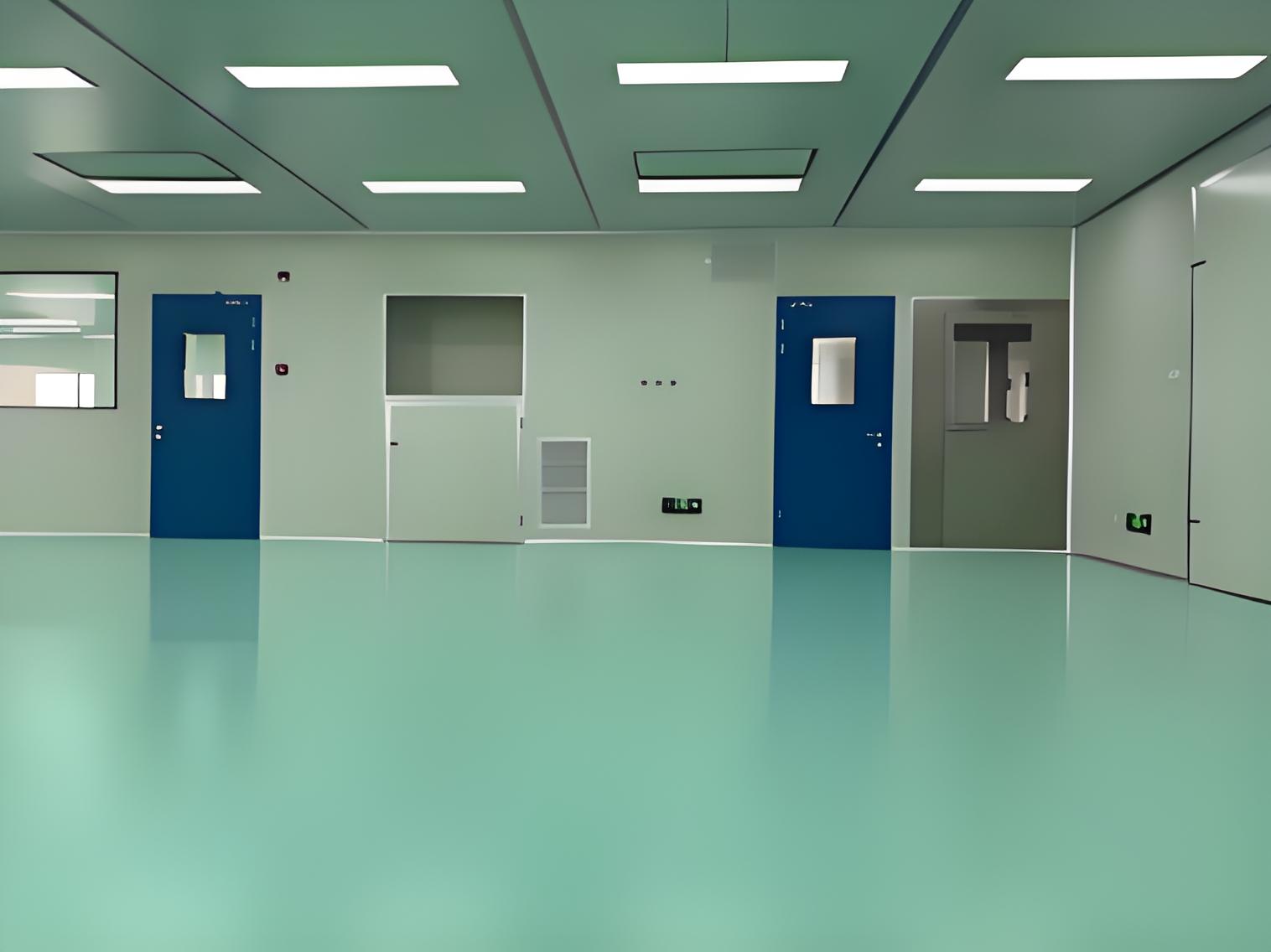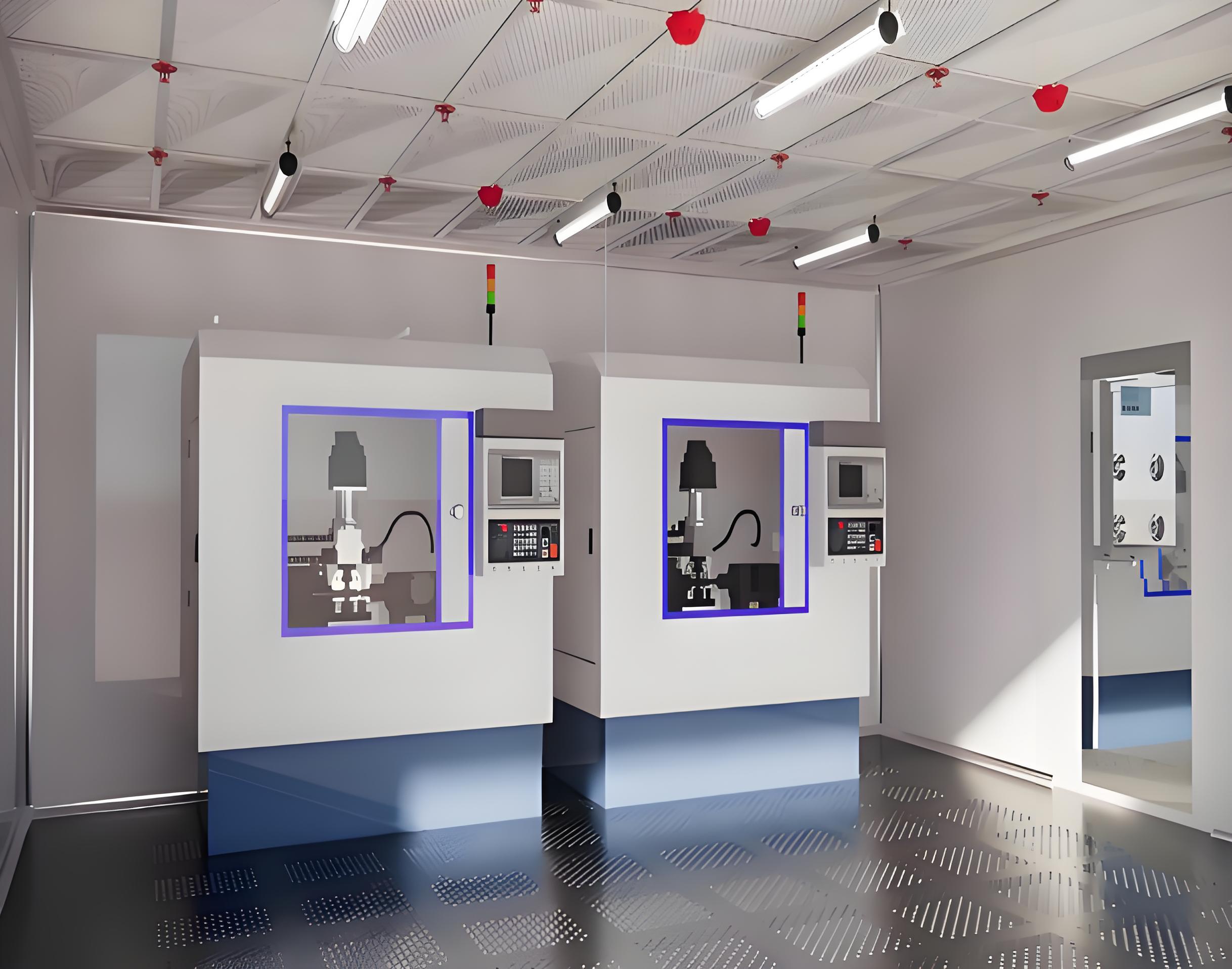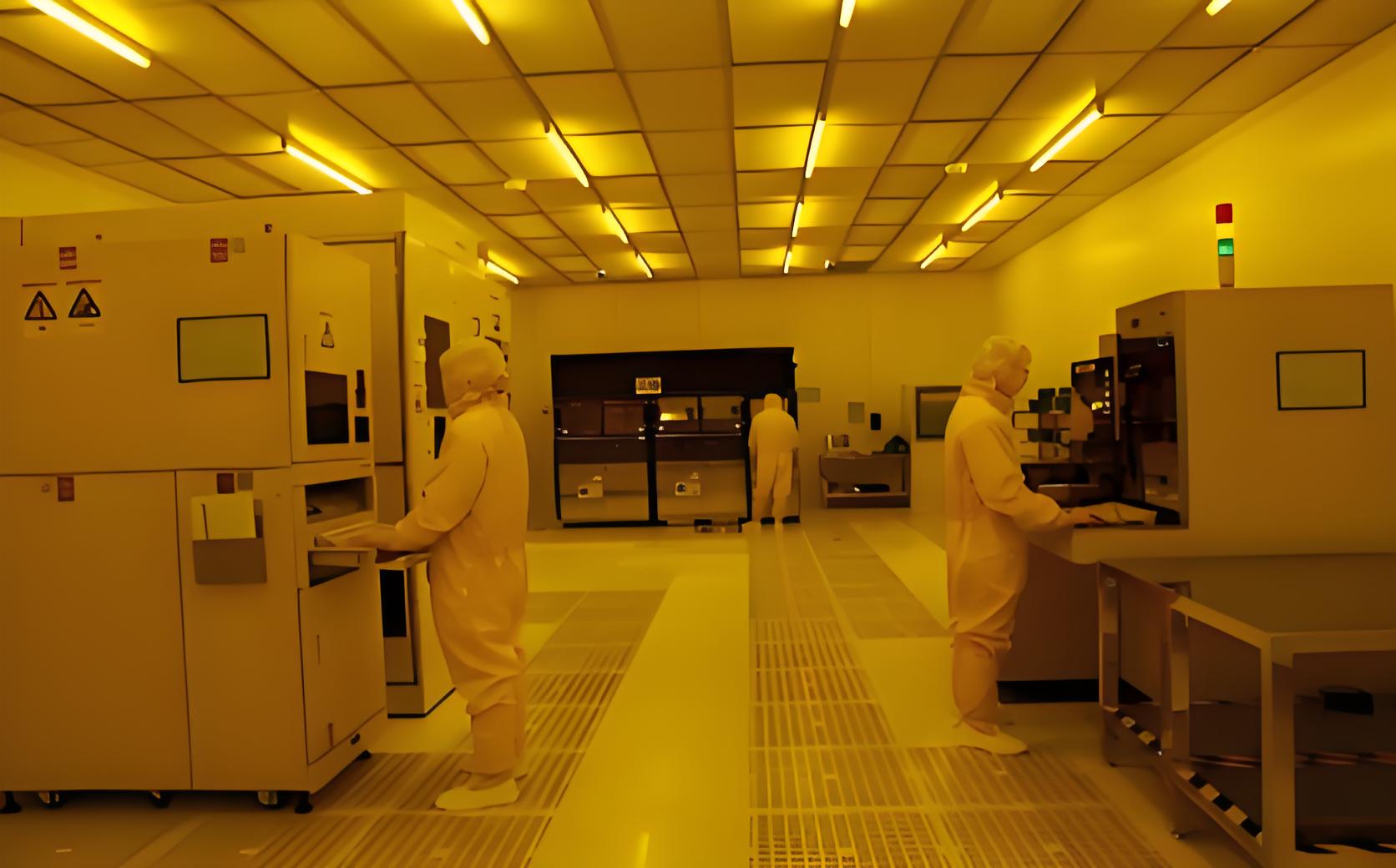
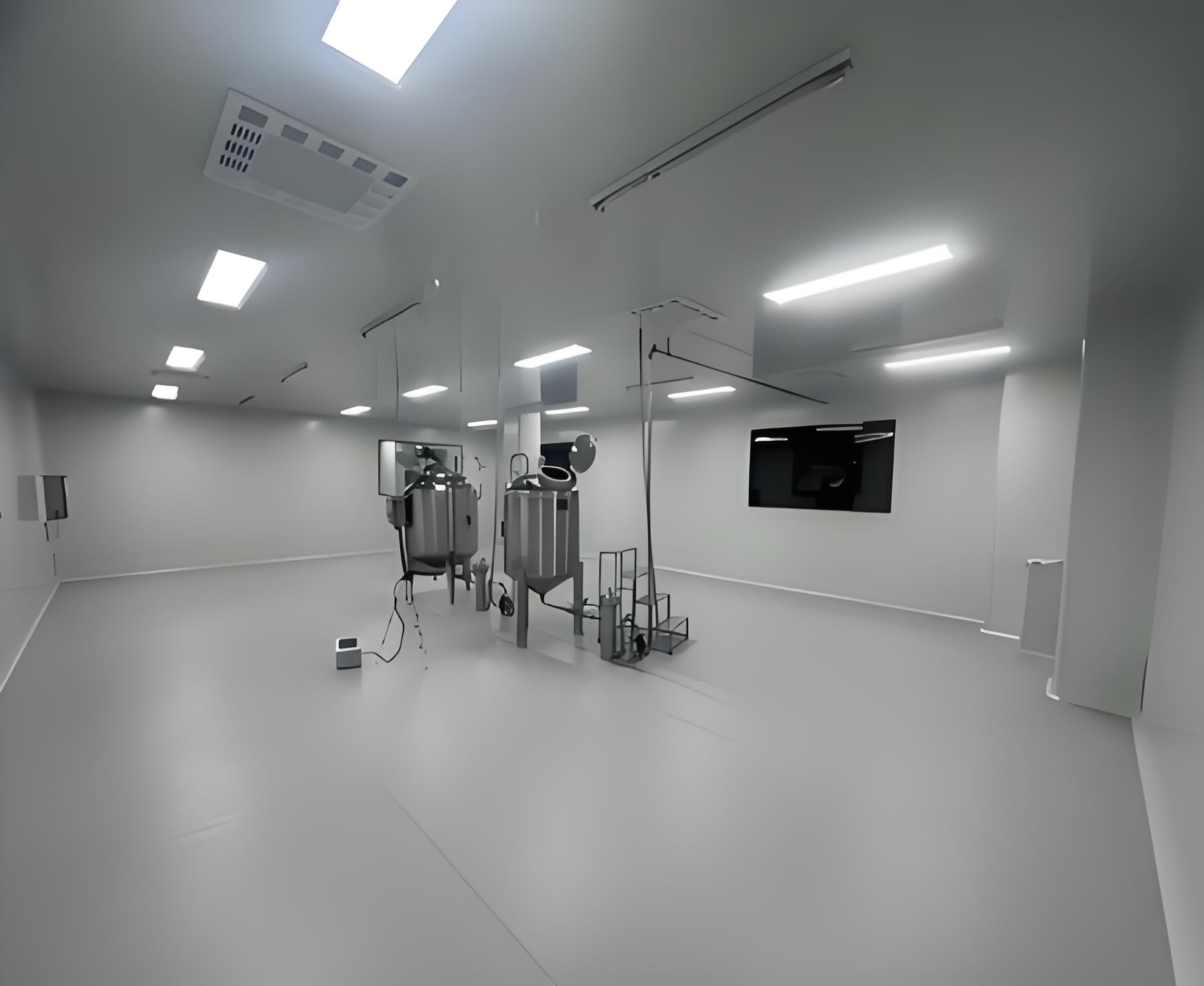
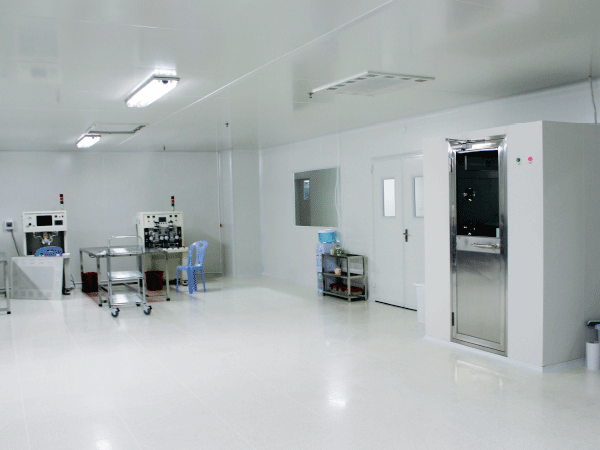
In semiconductor fabs, flat-panel display plants, and precision electronics assembly, the performance of electronic purification engineering directly determines defect density and product reliability. Contamination from airborne particles, molecular condensables, static charge, and micro-vibration can destroy sub-micron circuit features or cause intermittent failures. This article provides a component-level analysis of electronic purification engineering systems, covering cleanroom classification (ISO 14644-1), HEPA/ULPA filter selection, unidirectional vs. turbulent airflow, temperature/humidity uniformity, and material outgassing control. Drawing on data from TAI JIE ER's 18 years of cleanroom construction, we will examine how to specify purification levels for front-end wafer fabs (ISO 3–4), back-end assembly (ISO 5–6), and test areas (ISO 7–8). We will also address common pain points: particle re-entrainment, chemical filter breakthrough, and vibration-induced overlay errors.
The goal of electronic purification engineering is to maintain the cleanroom environment within specified limits for particles, airborne molecular contamination (AMC), temperature, humidity, and pressure. Failure to do so causes:
Yield loss from particle defects: A 0.1 µm particle on a 7 nm gate oxide can cause a short circuit. For a 300 mm wafer, just 1 particle/cm² reduces yield by ~5%.
Corrosion and electrical leakage from AMC: Acidic gases (SO₂, NOx) and bases (NH₃) corrode aluminum bond pads and change dielectric properties.
Overlay registration errors from thermal drift: ±0.5°C temperature variation in a lithography area causes 2–3 nm overlay shift.
Electrostatic discharge (ESD) damage: Low humidity (< 30% RH) increases tribocharging, destroying sensitive MOS gates.
A professional electronic purification engineering provider like TAI JIE ER uses computational fluid dynamics (CFD) to model airflow, specifies filter coverage, and integrates real-time particle monitoring (FIMS/CPM). Field data show that well-engineered cleanrooms achieve ISO 4 or better with 99.9995% filter efficiency at MPPS, while poorly designed systems have local hot spots exceeding class limits.
When designing or auditing a facility, these seven parameters define the electronic purification engineering scope.
ISO cleanliness class (per ISO 14644-1): For 0.1 µm particles: ISO 3 allows 1,000 particles/m³; ISO 4 allows 10,000; ISO 5 allows 100,000. Front-end lithography and etch require ISO 3–4; back-end assembly ISO 5–6; final test ISO 7–8.
Air change rate (ACR) or airflow velocity: Unidirectional (laminar) flow requires 0.3–0.5 m/s at the working plane; non-unidirectional requires 20–60 ACR per hour. Higher ACR improves self-cleaning but increases energy cost.
HEPA/ULPA filter grade: HEPA H14 (99.995% at MPPS) for ISO 5–6; ULPA U15 (99.9995%) for ISO 3–4. Filter media (glass fiber or PTFE) and seal type (gel or knife-edge) affect leak tightness.
AMC control (per SEMI F21): For acid, base, and condensable (MA, MB, MC) – target levels for 300 mm fabs: acids < 0.1 ppb, bases < 0.2 ppb, condensables < 1 ppb. Chemical filters (activated carbon, ion exchange, permanganate) are required.
Temperature and humidity: Lithography areas: 22°C ±0.1°C, RH 45% ±1%. Other areas: ±1°C, ±5% RH. Low RH (< 30%) increases ESD risk; high RH (> 60%) promotes corrosion and particle adhesion.
Pressure differential: Positive pressure (5–15 Pa relative to adjacent areas) prevents infiltration. For hazardous materials (e.g., HF etch), negative pressure with scrubbing is used.
Micro-vibration control (VC criteria): Lithography and metrology tools require VC-D (3 µm/s) or VC-E (1.5 µm/s) vibration levels. Slab isolation, air springs, or active cancellation systems.
TAI JIE ER provides a turnkey engineering service that includes site survey, CFD modeling, filter selection, and validation testing (particle count, airflow visualization, and vibration measurement).
One of the key decisions in electronic purification engineering is airflow pattern selection.
Principle: HEPA/ULPA filters cover the entire ceiling; air flows vertically downward at 0.3–0.5 m/s through a perforated raised floor.
Best for: ISO 3–5 areas (lithography, etch, deposition) where particle generation must be swept away immediately.
Advantages: Lowest particle concentration, predictable particle paths, easy to balance.
Disadvantages: High cost (filter coverage 80–100% of ceiling), high energy (fan power 2–3 kW per 100 m²).
Principle: HEPA filters in ceiling diffusers; air returns through low-wall returns. Mixing dilutes particles.
Best for: ISO 6–8 areas (back-end assembly, test, packaging, warehouse).
Advantages: Lower initial cost (filter coverage 15–25% of ceiling), 30–50% less energy than laminar.
Disadvantages: Higher particle concentration, recirculation zones may trap contaminants.
Modern electronic purification engineering often uses a hybrid design: mini-environments (ISO 3) inside a ballroom (ISO 6–7). This reduces energy cost while protecting critical tools. TAI JIE ER's cleanroom solutions include modular fan filter units (FFU) with EC motors, allowing individual zone control.
Particle filters (HEPA/ULPA) do not remove gases. For advanced nodes (< 28 nm), AMC is a major yield limiter. Electronic purification engineering must include chemical filtration:
Acid gases (HF, HCl, H₂SO₄, SO₂): Removed by activated carbon impregnated with alkaline (KOH, NaOH) or chemisorption media (Purafil).
Base gases (NH₃, amines): Removed by acid-impregnated carbon (phosphoric acid) or ion exchange resins.
Condensables (siloxanes, phthalates, DOP): Removed by high-retention activated carbon or hydrophobic zeolites.
Volatile organic compounds (VOCs): Removed by activated carbon or photocatalytic oxidation (UV+TiO₂).
Chemical filters are placed in the make-up air handling units (MAU) and recirculating air systems. Replacement frequency depends on inlet concentration – typical 12–24 months. Real-time monitors (ion mobility spectrometry, GC-MS) detect breakthrough. TAI JIE ER offers AMC audit and filter media selection based on local ambient air quality.
For lithography tools (steppers, scanners), temperature stability ±0.1°C and RH ±1% are mandatory. This requires:
Chilled water system with < 0.05°C control precision.
Reheat coils to avoid overcooling.
Low-face-velocity cooling coils to prevent moisture carryover.
Dry steam or ultrasonic humidifiers (no particulates).
VC criteria (velocity in µm/s) for different tools:
VC-A (50 µm/s): Manual assembly, microscopes.
VC-B (25 µm/s): Wafer steppers (older i-line).
VC-C (12.5 µm/s): 300 mm scanners, electron microscopes.
VC-D (6 µm/s): 193 nm immersion scanners, EUV tools.
VC-E (3 µm/s): Metrology (CD-SEM, AFM).
Solutions include:
Structural slab thickening (250–500 mm concrete) with isolation joints.
Air spring isolators under tool feet (natural frequency 2–3 Hz).
Active vibration cancellation (piezoelectric or voice coil) for extreme requirements.
TAI JIE ER's electronic purification engineering team coordinates with structural engineers to ensure floor vibration meets tool specifications – often overlooked by general contractors.
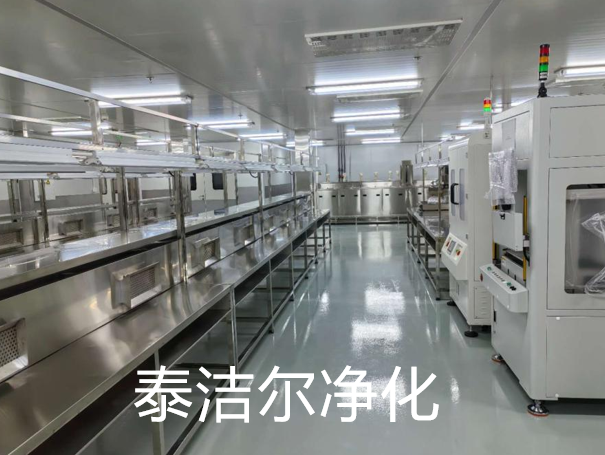
Even well-designed cleanrooms experience issues. Common problems and remedies in electronic purification engineering:
Particle spikes during operator entry: Caused by turbulent wake from opening doors. Solution – install air showers (high-velocity nozzles) or sliding cleanroom doors with controlled opening speed. Also increase air change rate near entry points.
Filter bypass leakage: Gaps between HEPA filter and ceiling grid allow unfiltered air. Remedy – use gel-seal or knife-edge frames with leak testing per IEST-RP-CC034. TAI JIE ER performs in-situ leak tests (scanning with photometer) for each filter.
High humidity in summer due to inadequate latent cooling: If make-up air unit lacks sufficient cooling coils, RH can exceed 60%. Solution – install a dedicated dehumidifier (desiccant wheel) or increase chilled water flow. TAI JIE ER includes psychrometric analysis in their design.
Static discharge from moving carts or operators: Flooring material (conductive vinyl, copper mesh) must have resistance 10⁵–10⁹ Ω. Grounding straps for personnel and conductive casters for carts are mandatory. Monitor with continuous static sensors.
According to TAI JIE ER's field service records, addressing these four issues reduces contamination-related defects by 40–60% in assembly areas.
Cleanrooms consume 10–20 times more energy than commercial buildings. Key strategies to reduce operating cost:
FFU speed control: Use EC (electronically commutated) fans with pressure sensors to adjust speed based on filter loading – saves 30–40% fan energy.
Chilled water reset: Raise chilled water setpoint from 7°C to 10°C when outdoor humidity is low – saves chiller energy.
Exhaust air heat recovery: Use run-around coils or heat pipes to pre-cool fresh air with exhaust air.
LED lighting with occupancy sensors: Reduces cooling load.
A well-optimized electronic purification engineering project can achieve 25–35% lower energy cost than a conventional design. TAI JIE ER provides energy modeling as part of their design package.
For semiconductor and electronics manufacturing, electronic purification engineering must comply with:
ISO 14644-1 (cleanroom classification)
ISO 14644-2 (monitoring and testing)
IEST-RP-CC001 (HEPA/ULPA filters)
SEMI F21 (AMC classification)
SEMI S2 (environmental, health, and safety)
Local building codes and fire safety (NFPA 318 for cleanrooms)
TAI JIE ER provides full validation documentation: DQ, IQ, OQ, PQ protocols, plus annual re-certification services. Their electronic purification engineering team includes certified contamination control professionals (CCCP).
Q1: What is the difference between ISO 5 and Class 100
cleanrooms?
A1: Historically, US Fed Std 209E used
"Class 100" meaning ≤100 particles per cubic foot of size ≥0.5 µm. ISO 14644-1
uses metric: ISO 5 allows 3,520 particles/m³ (0.5 µm) which equals 99
particles/ft³ – essentially the same. However, ISO 5 also specifies limits for
0.1, 0.2, 0.3 µm, while Class 100 only specified 0.5 µm. Always refer to ISO
14644 for modern electronic purification engineering.
Q2: How often should HEPA filters be replaced in an electronics
cleanroom?
A2: HEPA filters typically last 5–10
years if protected by pre-filters (MERV 8 or 13). Replace when pressure drop
doubles the initial value or when in-situ leak test shows >0.01% penetration.
TAI JIE ER recommends annual scanning for critical areas.
Q3: Can I achieve ISO 3 without using unidirectional
airflow?
A3: No. ISO 3 requires extremely low
particle concentrations (1,000 particles/m³ at 0.1 µm). Only laminar flow can
sweep particles away quickly enough. Turbulent flow cannot achieve ISO 4 or
better in occupied spaces.
Q4: What is the typical cost range for electronic purification
engineering per square meter?
A4: Costs vary widely
by class: ISO 8: $500–800/m²; ISO 7: $800–1,200/m²; ISO 6: $1,200–2,000/m²; ISO
5: $2,500–4,000/m²; ISO 4: $5,000–8,000/m². These include construction, HVAC,
filters, lighting, and certification but exclude process tools. TAI JIE ER
provides fixed-price quotes after site visit.
Q5: How do I measure airborne molecular contamination (AMC) in my
cleanroom?
A5: Use passive samplers (diffusion
tubes) for long-term average, or real-time monitors (ion mobility spectrometer
for NH₃, gas chromatograph for VOCs). For acids, use impingers with ion
chromatography. TAI JIE ER offers rental AMC monitoring kits and analysis
services.
Q6: What is the recommended relative humidity for ESD-sensitive
assembly?
A6: For ESD control, 40–60% RH is ideal.
Below 30% RH, static charge increases dramatically. Above 70% RH, corrosion risk
rises. For most electronics assembly, set RH at 45–55%. Use conductive flooring
and grounding in addition to humidity control.
Designing and constructing a cleanroom for electronics manufacturing requires expertise in multiple disciplines: HVAC, filter technology, particle physics, AMC chemistry, and vibration analysis. Generic contractors often underestimate the sensitivity of modern processes. Electronic purification engineering from an experienced provider like TAI JIE ER ensures your facility meets ISO standards, minimizes energy use, and supports high yield.
TAI JIE ER offers:
Free initial consultation and existing cleanroom audit.
Custom design with CFD simulation and cost estimate.
Turnkey construction, validation, and training.
24/7 remote monitoring and annual recertification contracts.
Request a no-obligation feasibility study – provide your process requirements (cleanliness class, tool list, floor area, and location). Our engineers will respond within 2 business days with a preliminary design and budget range. Click here to contact TAI JIE ER’s cleanroom specialists or call(+86)135-3066-2883+86/ 0755-86531686 for immediate assistance. We also offer design-build financing options for qualified clients.