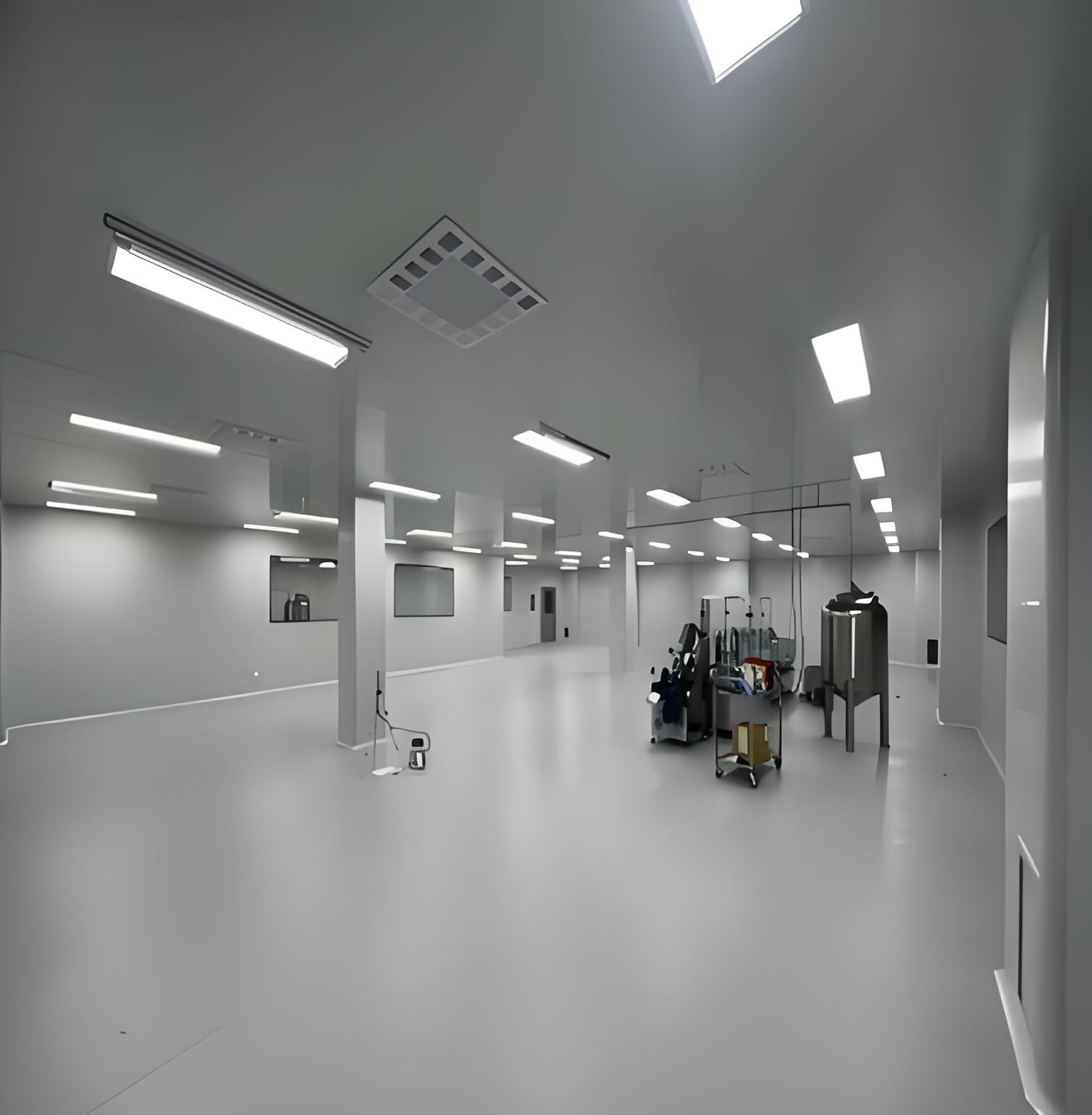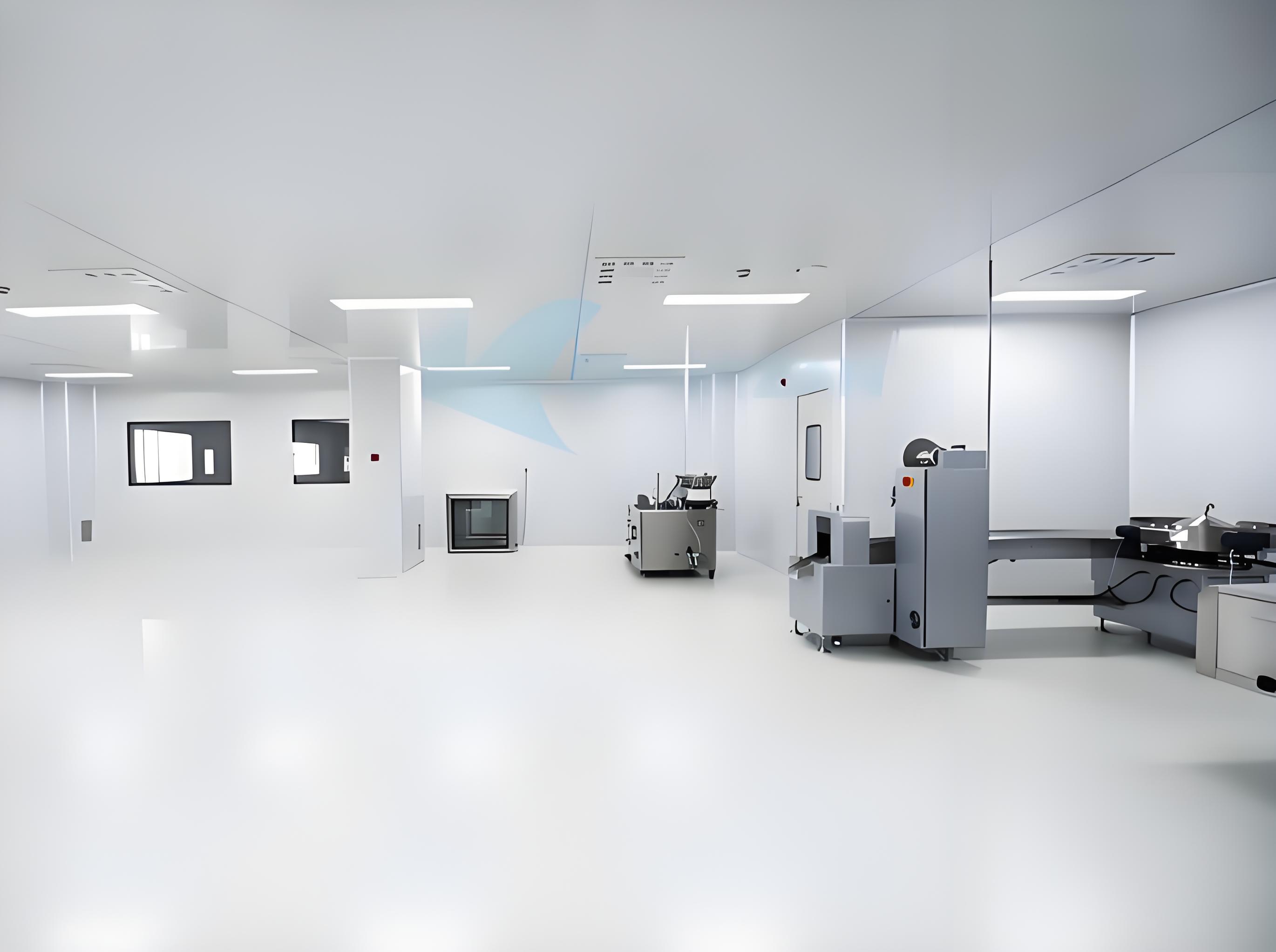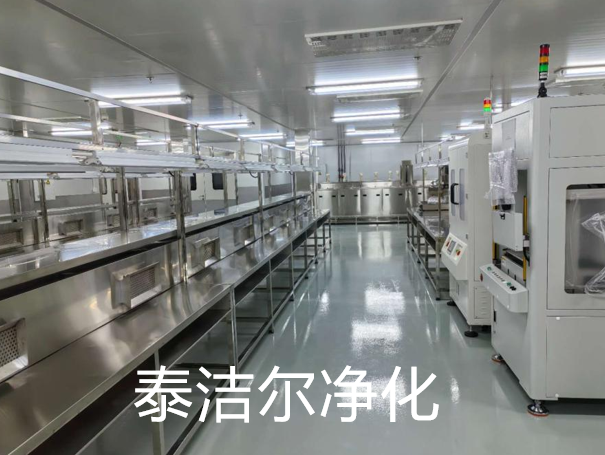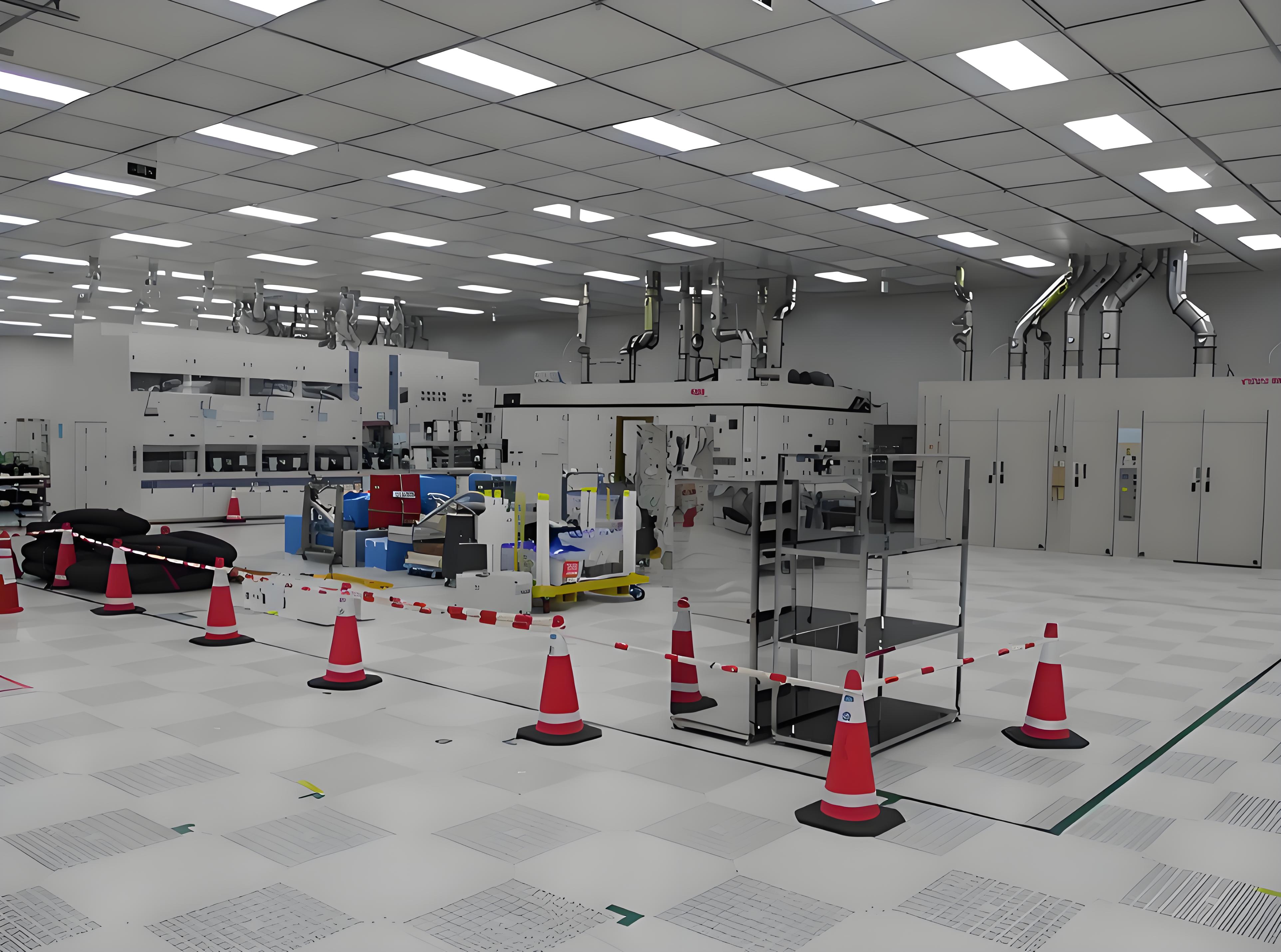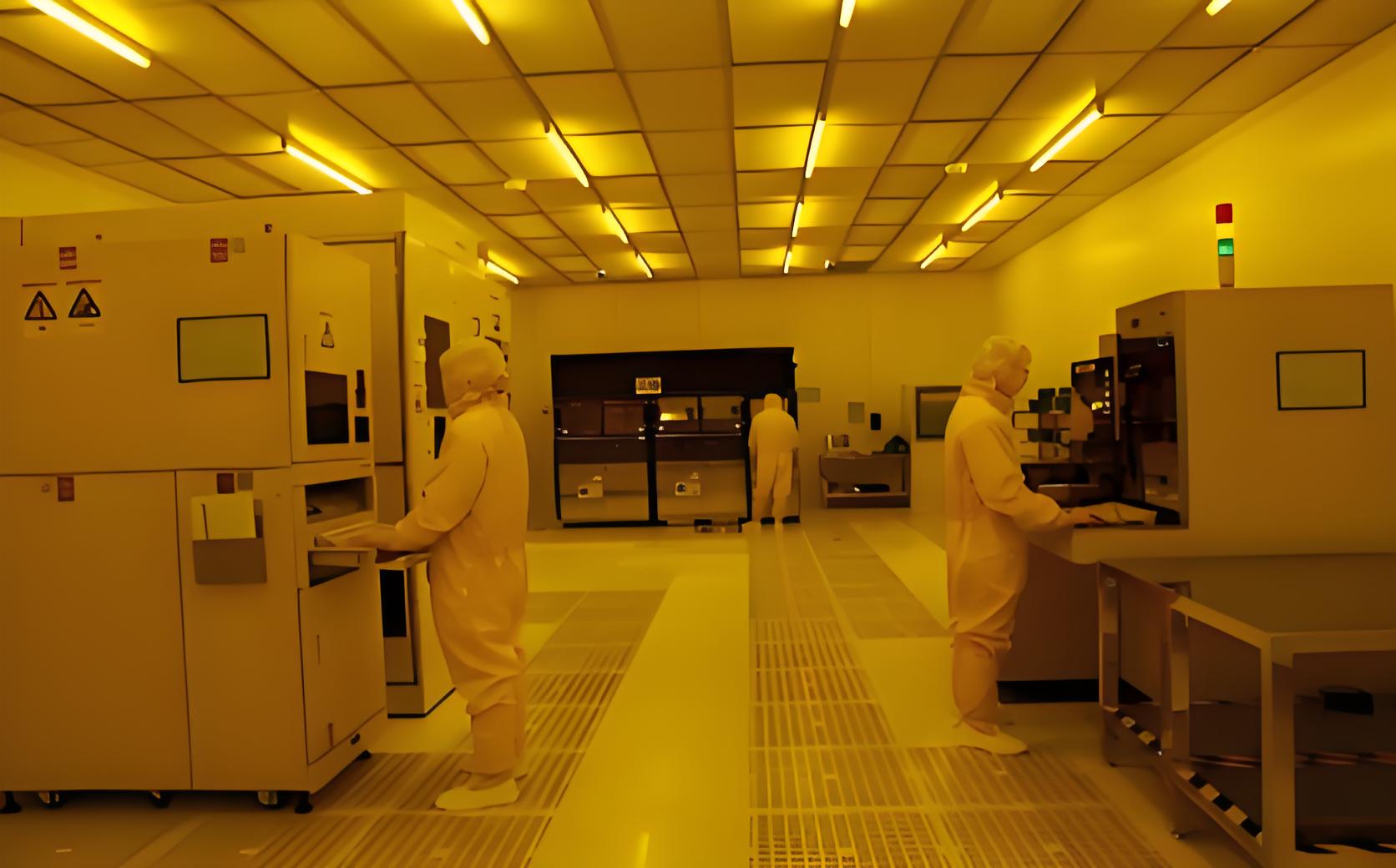
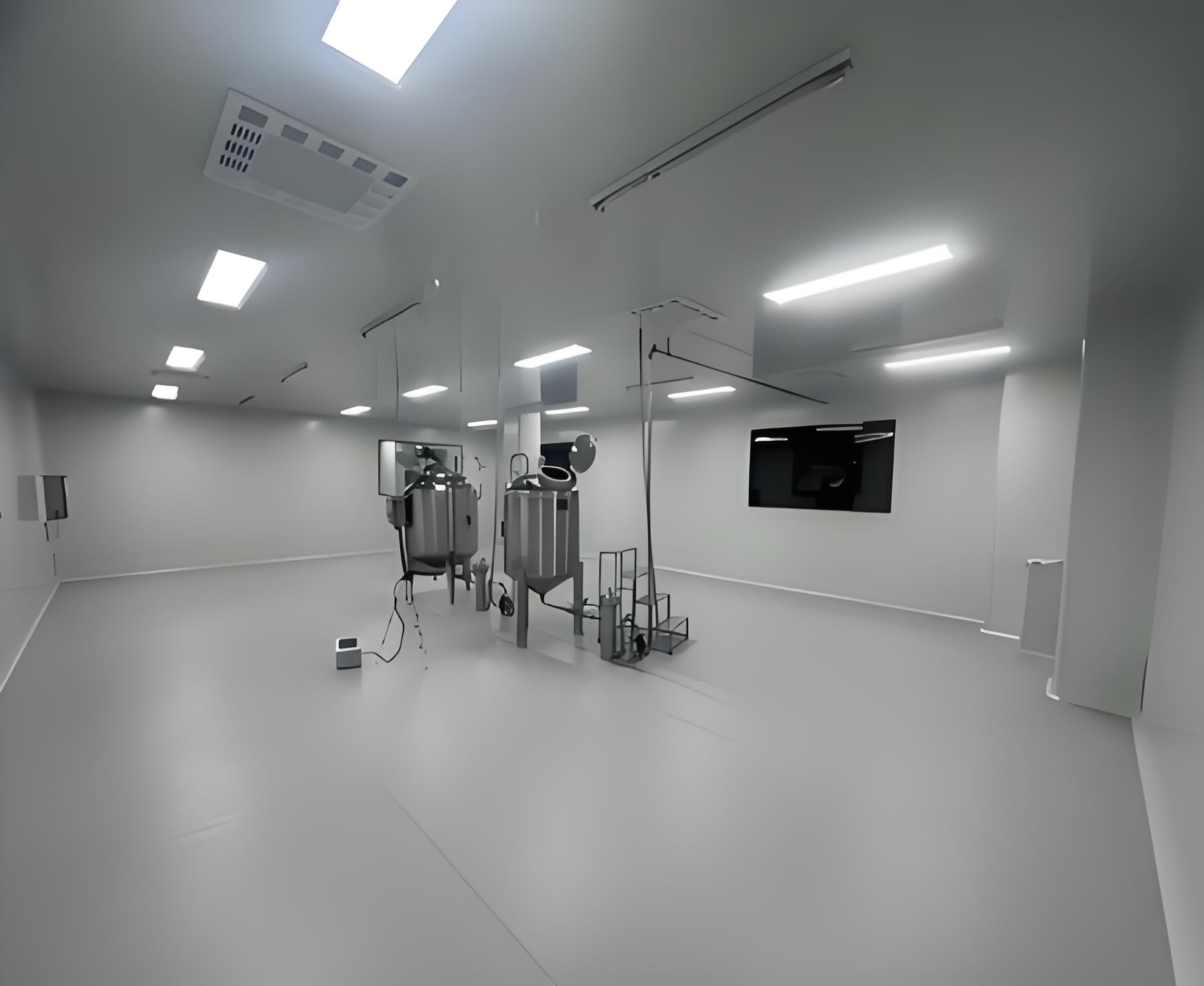
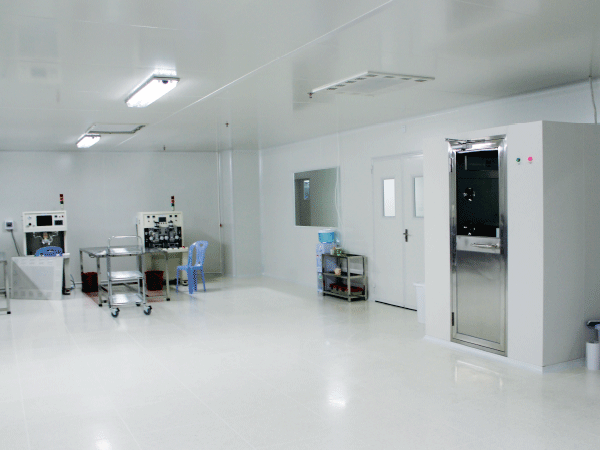
In semiconductor fabrication, pharmaceutical filling, or precision optics assembly, airborne particles remain the primary enemy of yield. A properly specified Dust-free workshop is not merely a clean room—it is a systematic integration of HVAC, material science, human behavior protocols, and real-time monitoring. This article delivers actionable engineering insights for facility managers, quality directors, and process engineers aiming to achieve ISO 14644-1 compliance while controlling operational costs. Drawing from decades of field data, we examine contamination sources, filtration physics, and retrofit strategies, with references to solutions provided by TAI JIE ER, a specialist in turnkey clean environment projects.
A Dust-free workshop is classified by maximum allowable airborne particle concentration per cubic meter. According to ISO 14644-1, Class 5 permits ≤3,520 particles (≥0.5 µm) per m³, while Class 7 allows ≤352,000 particles. However, real-world manufacturing defects often correlate with particles as small as 0.1 µm—especially in EUV lithography or Li-ion battery electrode coating. Therefore, specifying a dust-free workshop requires analyzing process-critical defect sizes, air change rates (20–600 ACH), and airflow uniformity. Contamination sources include personnel (up to 80% of particles), machinery friction, outgassing from sealants, and even the water used in wet benches. Without systematic control, sub-micron particles cause pinholes in thin films, bearing failures in MEMS devices, and false readings in medical sensors.
ISO Classes 1–5 : Unidirectional flow, ULPA filters (≥99.9995% efficiency at 0.12 µm), full coverage ceiling grids.
ISO Classes 6–8 : Non-unidirectional flow, HEPA filters (≥99.97% at 0.3 µm), lower air change rates.
Critical ancillary parameters : Temperature (22±1°C), relative humidity (40–55%), positive pressure (10–15 Pa relative to adjacent zones).
Building a robust Dust-free workshop rests on four interdependent subsystems. Each must be validated during commissioning and periodically requalified. Below are the core engineering components, along with cleanroom equipment and materials commonly used to achieve stable performance.
HEPA/ULPA fan-filter units (FFUs) provide primary contamination control. For ISO Class 5 or stricter, ULPA filters with MPPS efficiency ≥99.9995% are mandatory. Airflow uniformity (measured by velocity profile within ±20% of mean) prevents stagnant zones where particles settle. Computational fluid dynamics (CFD) modeling optimizes FFU layout, return air plenums, and low-wall returns. For ISO Class 6–8, ducted HEPA systems with terminal diffusers suffice, but leak testing per IEST-RP-CC034.2 must be performed annually.
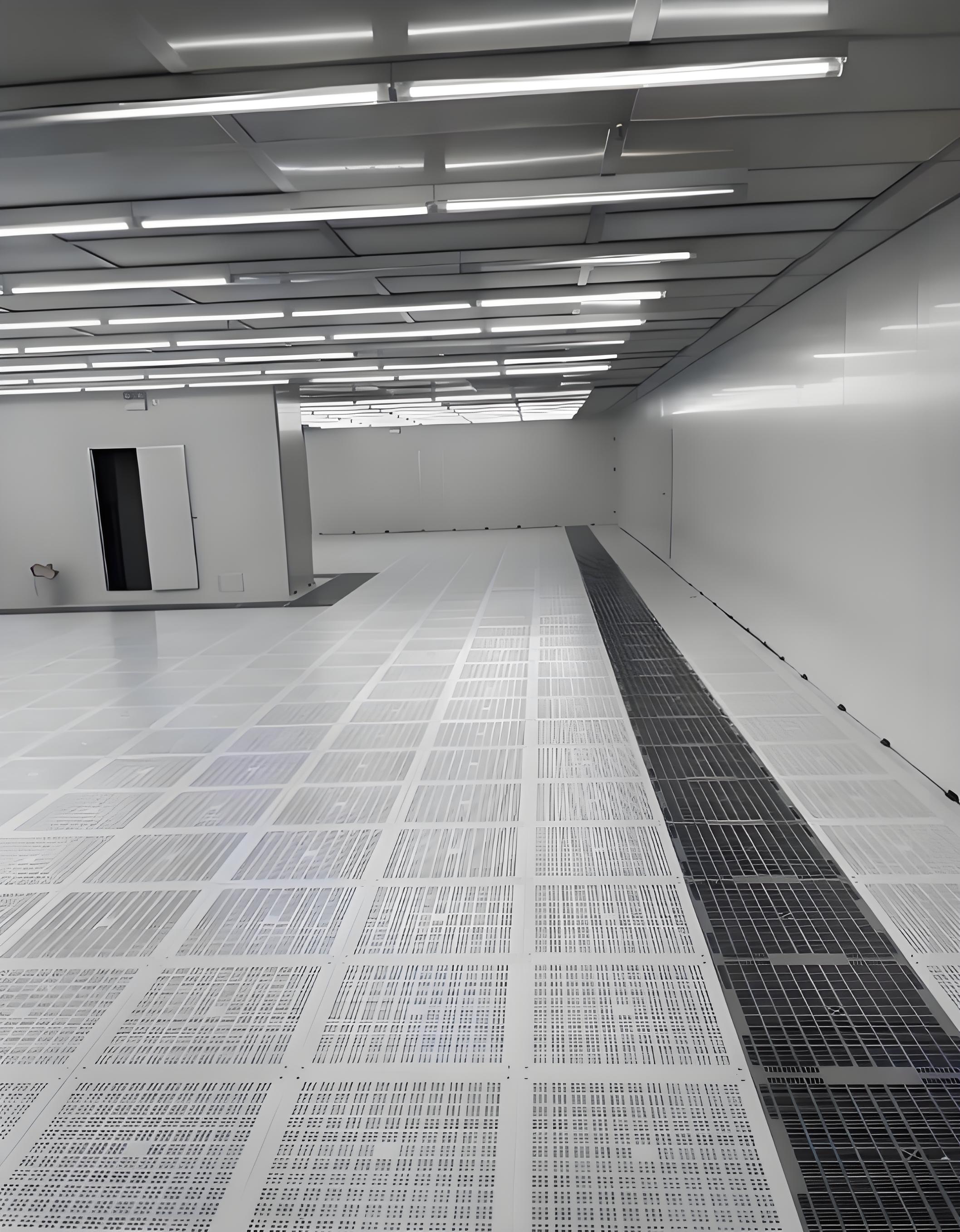
All interior surfaces—walls, ceilings, floors, workbenches—must be non-shedding, chemically resistant, and easy to decontaminate. Epoxy self-leveling floors or seamless vinyl sheets eliminate joints where particles accumulate. For static-sensitive environments (e.g., semiconductor assembly), conductive epoxy (surface resistivity 10⁵–10⁹ Ω/sq) combined with grounded ESD mats is required. Avoid wood, uncoated metals, or porous materials. Cleanroom-grade pass-through chambers and modular wall panels further reduce cross-contamination during material transfer.
Maintaining positive pressure relative to adjacent uncontrolled zones (≥10 Pa) prevents ingress of unfiltered air. A well-designed dust-free workshop uses a pressure cascade: gowning area (lower pressure) → equipment preparation zone (medium) → core process zone (highest). Airlocks with interlocked doors and timed purge cycles minimize pressure fluctuations. Differential pressure transmitters with alarm thresholds (e.g., <5 Pa or >20 Pa) alert operators to door left open or filter loading.
Real-time particle counters (laser or condensation nucleus counters) placed at critical process locations provide continuous data. For ISO Class 5, sampling frequency every 5–10 minutes; for Class 7, hourly. Additionally, viable air samplers (for pharmaceutical applications) capture bacteria and fungi. A building management system (BMS) logs temperature, humidity, differential pressure, and particle counts, triggering alarms when exceeding action limits. Trending data identifies gradual filter degradation or recurring operator errors.
The technical requirements of a dust-free workshop vary drastically across industries. Below are three high-stakes sectors where contamination control directly impacts profitability and regulatory compliance.
Semiconductors (300mm wafer fab) : Requires ISO Class 3–4 (≤1,000 particles ≥0.1 µm/m³). Sub-10nm nodes demand airborne molecular contamination (AMC) control for organics, acids, and bases. Chemical filters and stainless-steel ductwork are mandatory.
Pharmaceutical & Biotech (sterile filling) : Grade A (ISO Class 5) under unidirectional flow for filling zones, Grade B background (ISO Class 7). Viable particle limits (CFU/m³) enforced by GMP Annex 1. Frequent disinfectant rotation (sporicidal agents) and glove fingertip sampling required.
Lithium-ion battery electrode production : Metallic particle contamination (Cu, Zn, Fe) causes internal short circuits. ISO Class 6 or better with periodic metal particle monitoring via SEM-EDX. Humidity control (<1% dew point for dry rooms) is often integrated with the dust-free workshop envelope.
Each industry also demands specific qualification protocols. For instance, semiconductor fabs perform particle deposition rates on witness wafers, while pharmaceutical cleanrooms require smoke studies to demonstrate unidirectional airflow visualization every two years.
Even the most advanced Dust-free workshop can be compromised by improper gowning or behavior. Studies show a single person walking briskly can generate up to 10 million particles (≥0.3 µm) per minute. Therefore, strict protocols and cleanroom consumables (coveralls, gloves, wipers) are essential. Key control measures include:
Gowning sequences : Bouffant cap → face mask → hood → frock or coverall → boots → gloves. Double-gloving with frequent changes.
Behavioral rules : No rapid movements, no paper/cardboard inside, no cosmetics or lotions, limited speaking.
Training & certification : Annual practical exams (garment particle shedding test, touch plate sampling).
Automation substitution : Use closed automated material handling systems (AMHS) or robotic arms for high-risk transfer points.
Personnel monitoring systems (PMS) with handheld particle counters at exit gowning areas provide objective data on garment integrity. Regular cleanroom wiper testing (IEST-RP-CC004.3) ensures that wiping materials themselves do not become contamination sources.
Converting a conventional warehouse or laboratory into a certified dust-free workshop presents unique challenges: limited ceiling height, existing HVAC constraints, and production downtime. TAI JIE ER specializes in such retrofits, using modular cleanroom panels (40mm or 50mm thick, with anti-static PVC or powder-coated steel surfaces) that assemble quickly over existing floors. Below are proven retrofit steps:
Contamination baseline audit : 72-hour particle mapping to identify hot spots (leaky ducts, dusty overhead beams).
Structural modifications : Seal concrete cracks, apply epoxy coating, install raised floor for return air plenum if needed.
Dedicated AHU with HEPA/ULPA filter banks : Add fan-filter units above the clean zone; isolate from existing HVAC.
Pass-throughs and airlocks : Install at material entry/exit points, with interlock logic.
Validation per ISO 14644-2:2015 : Perform particle count tests (at rest and operational), filter leak scans, and airflow velocity tests.
Retrofit projects often achieve ISO Class 6 or Class 7 at 30–50% lower capital cost compared to new builds. Energy efficiency can be improved via variable frequency drives (VFDs) on FFUs and demand-controlled air changes based on real-time particle counts.
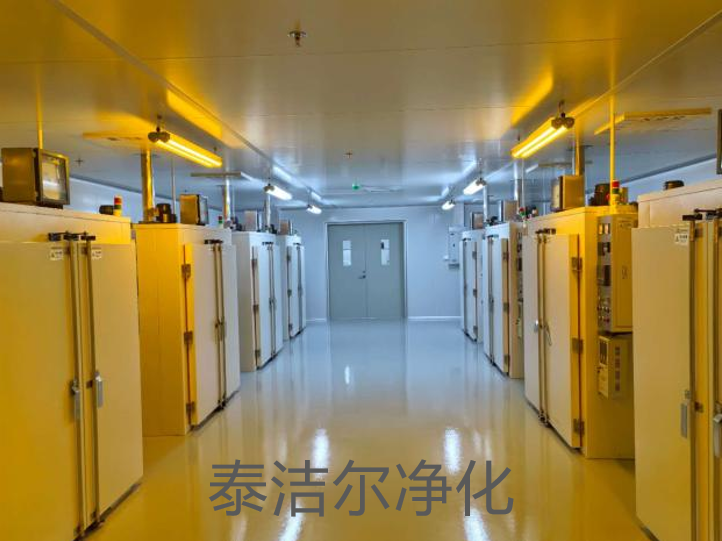
A dust-free workshop degrades over time due to filter loading, seal breaches, or process changes. A risk-based maintenance plan includes:
Daily checks : Differential pressure readings (door status, filter ΔP), temperature/humidity, and visual inspection of gowning discipline.
Monthly audits : Surface particle count (using swab sampling and particle counter), HEPA filter scan for leaks (if accessible).
Quarterly/Annual : Full ISO 14644-1 certification—particle counts for each classified zone, air change rate measurement, and recovery test (time to return to class after controlled contamination).
Filter replacement triggers : When ΔP rises 1.5× initial resistance or annual time limit (for ULPA, usually 3–5 years depending on environment).
All maintenance activities must follow cleanroom protocol : use HEPA-vacuumed tools, cleanroom-rated ladders, and post-maintenance particle testing. Cleanroom-grade validation equipment such as portable particle counters and photometers are mandatory for in-house teams.
Q1: What is the typical cost range for constructing an ISO Class 6
dust-free workshop?
A1: Costs vary by region, ceiling height, and
HVAC complexity. For a 100 m² modular ISO Class 6 facility (with airlocks, FFUs,
epoxy flooring, basic monitoring), capital expense ranges from $1,500 to $3,200
per m² in 2025. Retrofits tend to be 30–40% lower. Operational costs
(electricity for FFUs, filter replacements, cleaning) add $200–$500 per m²
annually. For accurate budgeting, TAI JIE ER provides customized
proposals based on local utility rates and process loads.
Q2: How often should HEPA filters be tested in a dust-free
workshop?
A2: According to ISO 14644-2:2015, HEPA/ULPA filter
integrity tests (scanning with a photometer) must be performed at maximum
interval of 24 months for ISO Class 5 or cleaner, and 36 months for Class 6–8.
However, if particle monitoring shows increasing baseline counts or if
construction work occurs nearby, immediate retesting is recommended. Portable photometers and thermal probes simplify in-house leak detection.
Q3: Can a dust-free workshop be used for both dry assembly and wet
chemical processes?
A3: Yes, but with strict zoning. Wet benches
(e.g., solvent cleaning, acid etching) must be located in dedicated zones with
independent exhaust, secondary containment, and corrosion-resistant ducting.
These zones typically have lower pressure relative to the dry assembly area to
prevent chemical vapor migration. Use separate air handling
units for wet and dry sections, and install gas-phase chemical filters
for AMC control. ISO Class 5 dry assembly combined with Class 7 wet processing
is common in semiconductor backend fabs.
Q4: What are the most common causes of dust-free workshop
certification failure?
A4: Based on audit data, top failures
include: (1) Leaking filter seals or damaged gaskets (found in >40% of
first-time certifications). (2) Inadequate air change rates due to undersized
FFUs or clogged pre-filters. (3) Personnel movement during “at rest” test
protocol violation. (4) Failure to maintain pressure cascade (doors left open or
damaged door seals). Pre-certification mock tests using a handheld particle
counter can identify these issues early.
Q5: How to reduce energy consumption of a dust-free workshop without
compromising cleanliness?
A5: Implement a demand-controlled
cleanroom system: adjust FFU speed or air changes based on real-time particle
counts (using BMS integration). During unmanned shifts (nights/weekends), reduce
ACH by 20–30% if process equipment is idle. Also upgrade to EC
(electronically commutated) FFUs which consume 40% less power than AC
motors. Use LED lighting with occupancy sensors and recover
heat from exhaust air for pre-heating make-up air. Some TAI JIE
ER projects have achieved 35% energy reduction through these
measures while maintaining ISO Class 6 compliance.
Designing or retrofitting a Dust-free workshop requires balancing initial investment against long-term operational reliability and regulatory risk. Start with a contamination risk assessment (FMEA method) to define critical particle sizes and acceptable defect rates. Then engage an engineering partner with proven cleanroom integration experience—from filter selection to validation protocols. Comprehensive documentation (user requirement specification, design qualification, installation qualification, operational qualification) ensures traceability and smooth regulatory inspections.
For project-specific guidance, including detailed CAD layouts, energy modeling, and turnkey construction, contact the engineering team at TAI JIE ER. Their portfolio includes over 150 dust-free workshops across semiconductor, battery, and pharmaceutical sectors, with guaranteed ISO class performance and post-commissioning support.
Ready to optimize your contamination control strategy? Request a free technical consultation and budget estimate for your dust-free workshop project.
Send an inquiry to TAI JIE ER – include your required ISO class, floor plan (if available), and process details to receive a customized engineering proposal within 3 business days.