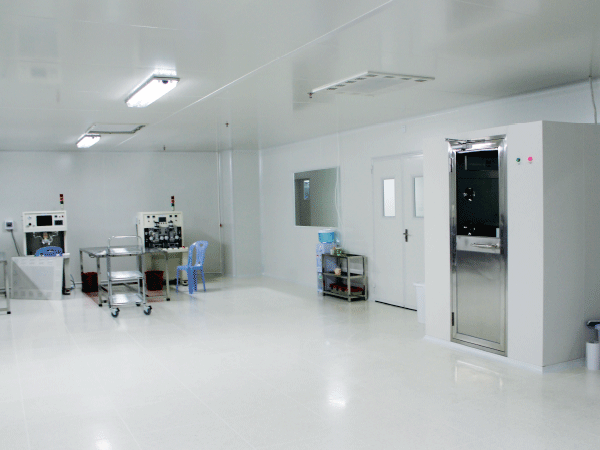

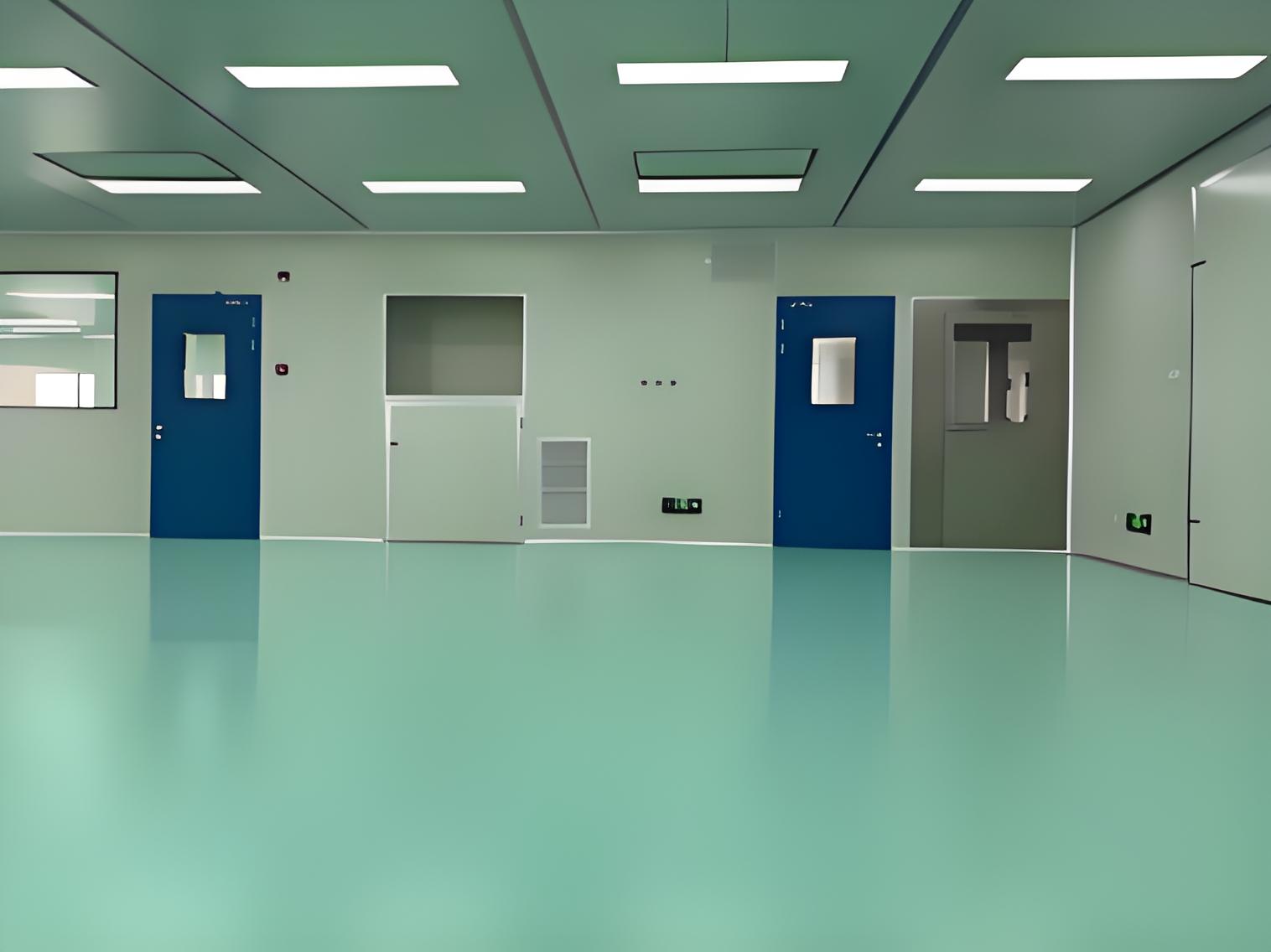
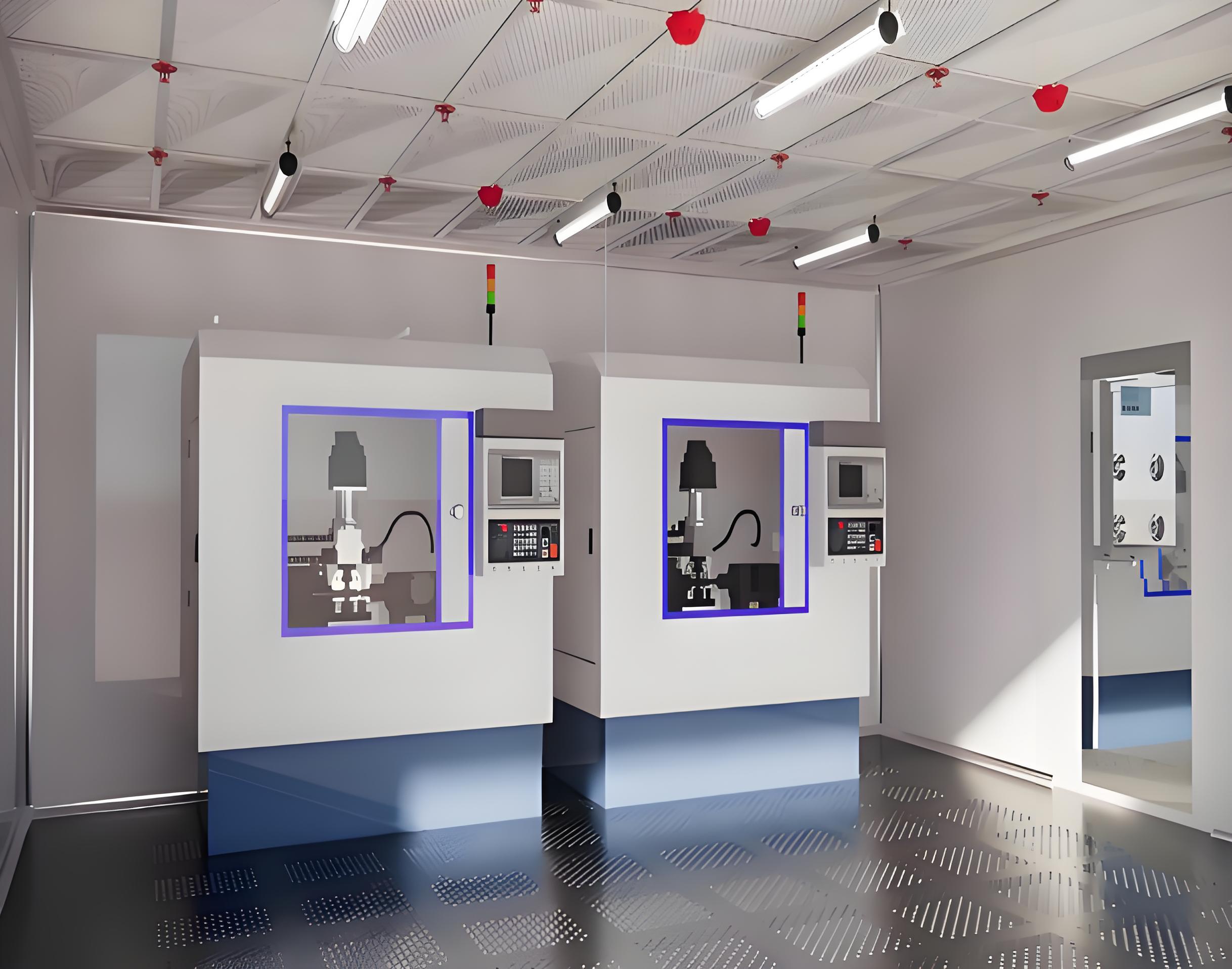
When industry outsiders hear the term cleanroom decoration, they often think of aesthetics or color schemes. For facility managers and contamination control engineers, however, this term refers to the critical "fit-out" phase of construction. It is the creation of the sealed envelope that separates a controlled environment from the chaos of the outside world.
The structural finish of a cleanroom is the primary barrier against particulate intrusion and microbial growth. If the walls, floors, or ceilings fail, the most expensive HVAC system in the world cannot save the facility from non-compliance.
At TAI JIE ER, we approach this process as a precision engineering challenge rather than a simple construction task. The goal is to build a shell that is airtight, chemically resistant, and capable of withstanding rigorous cleaning protocols for decades. This article analyzes the materials, costs, and installation techniques required for a successful build.
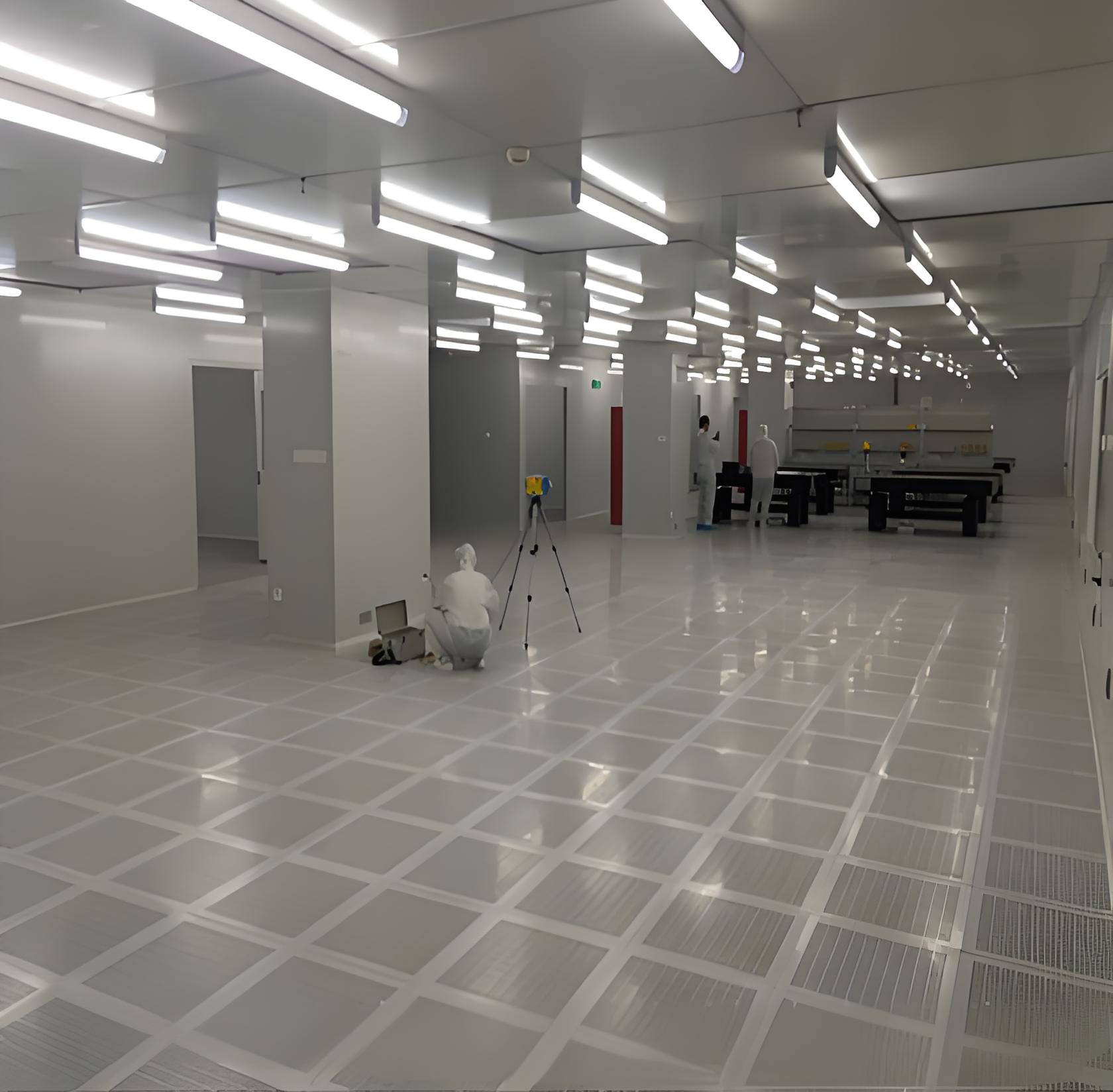
The fundamental purpose of cleanroom decoration is to eliminate variables. In a standard office building, a crack in the drywall is a cosmetic nuisance. In an ISO 5 cleanroom, that same crack is a reservoir for bacteria or a leak path that disrupts differential pressure.
Regulatory standards such as ISO 14644, GMP (Good Manufacturing Practice), and FDA guidelines dictate specific performance criteria. Surfaces must be smooth, impervious, and free of ledges or crevices where dust could settle.
This requirement drives every design choice. Traditional construction materials like wood or standard gypsum board are strictly prohibited because they shed particles. Instead, the industry relies on specialized modular systems that interlock to form a monolithic surface.
Selecting the right materials is the most significant decision in the project planning phase. The choice depends heavily on the specific application—pharmaceuticals differ vastly from electronics manufacturing.
The industry standard for walls involves modular sandwich panels. These panels consist of two metal skins bonded to a core material.
Panel Skins:
Powder-Coated Steel: The most common choice. It is durable, resistant to scratches, and handles standard cleaning agents well.Stainless Steel (304/316): Required for areas with high moisture or exposure to corrosive chemicals (like washrooms or VHP sterilization chambers). It is significantly more expensive but offers superior longevity.HPL (High-Pressure Laminate): Often used in electronics manufacturing because it is non-conductive and resists scratches, though it is harder to repair than steel.
Core Materials:
Rockwool: The standard for fire safety. It is non-combustible and provides sound insulation.Aluminum Honeycomb: Lightweight and extremely strong. It is preferred for ceiling panels that need to span long distances without sagging.Magnesium Oxide (MGO): Offers high fire resistance and rigidity but is heavier to install.
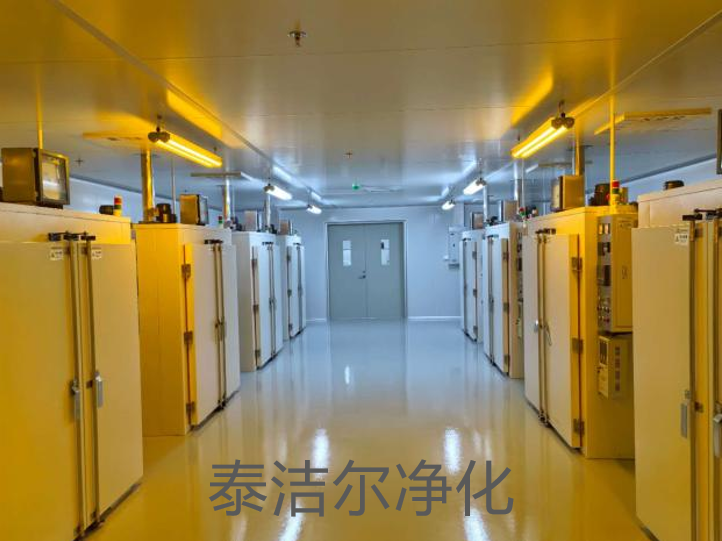
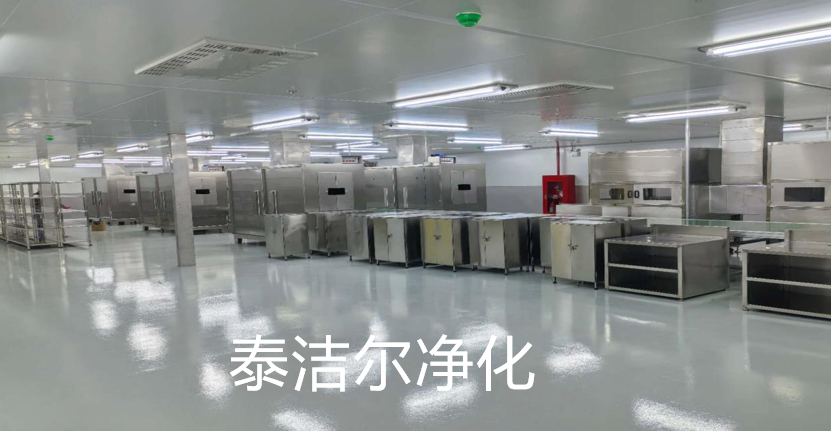
The floor receives the most physical stress. In cleanroom decoration, the floor must support equipment loads while remaining seamless.
Epoxy Self-Leveling: A liquid resin poured over concrete. It cures to form a hard, glass-like surface. It is excellent for heavy rolling loads (like forklifts or tanks) but can crack if the sub-floor shifts.PVC (Vinyl) Sheet: Preferred for pharmaceutical labs. It is softer underfoot, chemically resistant, and cracks less easily. The sheets are heat-welded together to eliminate seams.Raised Access Floors: Essential for semiconductor fabs. perforated tiles allow laminar airflow to pass through the floor into a sub-fab plenum, managing the massive volume of air required for ISO 3 or ISO 4 environments.
The ceiling must support lighting, fire sprinklers, and Fan Filter Units (FFUs).
Walkable Ceilings: These heavy-duty panel systems allow maintenance personnel to walk above the cleanroom to service lights and filters. This is a critical design feature because it allows maintenance to occur without entering the clean space, preserving the room’s certification status.Grid Systems: Lighter and cheaper, often used in lower-classification rooms (ISO 7/8). They use a T-bar grid similar to an office but with gasketed tiles that are clipped down to prevent movement.
A design is only as effective as its installation. The "decoration" phase is where the airtight envelope is actually achieved.
In a GMP facility, you cannot have window sills or door frames that protrude. Dust will accumulate on any horizontal ledge.
We utilize flush-mount windows where the glass pane aligns perfectly with the wall panel. Similarly, door frames are integrated into the panel system. This flush design ensures that when a cleaning crew wipes the wall, the motion is continuous and unobstructed.
Sharp 90-degree corners are impossible to clean thoroughly. To solve this, cleanroom decoration utilizes coving—curved aluminum or PVC profiles installed at wall-to-floor, wall-to-ceiling, and wall-to-wall intersections.
This creates a smooth radius (typically 50mm) that prevents particle accumulation. The installation of this coving requires precision; if there are gaps behind the cove, it becomes a hidden pocket for mold growth.
Once the panels are erected, every joint is sealed. We use cleanroom-specific neutral-cure silicone. This sealant must be fungicidal (mold-resistant) and low-outgassing.
For high-containment labs (BSL-3 or BSL-4), the sealing process is even more rigorous. The room must pass a pressure decay test, where it is pressurized, and the rate of air leakage is measured. If the decoration work is poor, the room will fail this test, delaying the entire project.
Budgeting for these projects is complex because "per square meter" prices vary wildly based on classification and material grade.
Unlike standard construction, where materials might be cheap, cleanroom materials are engineered products. However, labor often represents 35% to 45% of the total cleanroom decoration cost. This is because the installers must be certified technicians, not general laborers. They must understand how to handle sensitive materials without scratching them and how to apply sealants to a pharmaceutical standard.
ISO 8 (Class 100,000): Uses standard finishes, fewer filters, and basic epoxy. Lower cost.ISO 5 (Class 100): Requires 100% ceiling coverage with filters, raised floors, and conductive wall panels. The cost can be 3 to 4 times higher than an ISO 8 room.
If the facility is on the 10th floor of a building with small elevators, moving 3-meter-long wall panels becomes a logistical nightmare that drives up costs. TAI JIE ER always conducts a site survey to plan the logistics route before quoting a price.
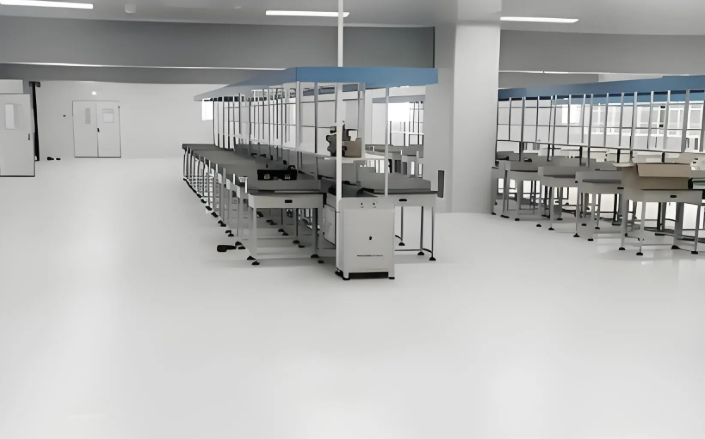
While the materials look similar, the engineering priorities differ based on the industry.
The focus here is biological control. The cleanroom decoration must resist harsh chemical cleaning agents like Vaporized Hydrogen Peroxide (VHP), phenolic disinfectants, and isopropyl alcohol.
Surfaces must be non-porous to prevent microbial ingress. Stainless steel is used heavily in wash-down areas. Radius coving is mandatory.
The focus is particulate control and Electrostatic Discharge (ESD). A stray static spark can destroy a microchip.
Flooring must be static-dissipative (ESD grade). Wall panels are often coated with antistatic paint or made from aluminum. Outgassing is a major concern; the sealants and materials used must not release volatile organic compounds (VOCs) that could coat the sensitive optics of lithography machines.
Projects often fail or face delays due to overlooked details in the finishing phase.
Applying epoxy over a damp or uneven concrete slab is a recipe for disaster. Moisture rising from the ground will cause the epoxy to bubble and delaminate. We always perform moisture testing on the concrete before beginning the flooring installation.
The walls act as the return air path. If the cleanroom decoration design does not account for the size and placement of return air risers (ducts built into the walls), the room will suffer from "dead zones" where air does not circulate, leading to particle buildup.
Facilities take damage. A cart will eventually hit a wall. If the wall system is not modular, replacing a damaged section might require shutting down the entire cleanroom for days. Modular panel systems allow for the replacement of a single panel with minimal disruption.
The difference between a compliant facility and a problematic one often comes down to the experience of the installation team.
TAI JIE ER offers a vertically integrated approach. We do not just supply the panels; we understand the engineering behind them. Our teams are trained in GMP protocols and understand the nuances of airflow and pressure hierarchies.
We provide comprehensive documentation packages. When your facility undergoes Installation Qualification (IQ) and Operational Qualification (OQ), you will need certificates for fire rating, steel grade, and paint thickness. We organize these from day one, ensuring your validation process is smooth.
Furthermore, we focus on the intersection of trades. The cleanroom decoration team must coordinate with the HVAC team, the electrical team, and the piping team. We act as the glue that holds these disciplines together, ensuring that a pipe penetration through a wall is sealed correctly and does not compromise the room's integrity.
The interior finish of a controlled environment is not merely a cosmetic choice; it is a functional component of the contamination control strategy. High-quality cleanroom decoration ensures that the facility remains airtight, cleanable, and compliant with international standards.
By selecting the right materials—whether rockwool panels for fire safety or conductive vinyl for static control—and partnering with experienced installers like TAI JIE ER, you invest in the long-term operational success of your production line. Do not compromise on the shell of your facility; it is the foundation upon which your product quality rests.
Q1: What is the main difference between cleanroom wall panels and standard drywall?
A1: Cleanroom panels are modular, pre-finished composite systems (usually steel-faced) that are non-shedding, impact-resistant, and chemically resistant. Standard drywall sheds particles, absorbs moisture, and requires painting, which can peel or chip, making it unsuitable for classified environments (ISO 7 and above).
Q2: How do you handle electrical outlets in cleanroom decoration?
A2: Electrical sockets and switches are "flush-mounted." We cut precise openings in the wall panels during fabrication or installation and seal the back boxes. The faceplates are designed to sit flat against the panel surface to minimize dust ledges, and the conduit runs inside the wall panel core to keep the room surface clean.
Q3: Can TAI JIE ER install cleanroom decoration in an existing warehouse?
A3: Yes, this is a "box-in-box" approach. We build a self-supporting structure inside the existing warehouse. However, we must first assess the existing floor quality and ceiling height to ensure there is enough space for the cleanroom plenum and ductwork.
Q4: How often does the decoration material need to be replaced?
A4: A well-maintained modular wall system can last 15 to 20 years. Flooring typically wears out faster, usually within 7 to 10 years depending on traffic. Heavy chemicals may cause surface discoloration over time, but if the structural integrity remains, replacement isn't always necessary.
Q5: Why is the price of cleanroom decoration higher than standard office fit-outs?
A5: The cost reflects the specialized materials (antibacterial coatings, high-density cores), the tight manufacturing tolerances required for airtight seals, and the skilled labor needed for installation. Additionally, the project includes extensive validation documentation and testing that standard construction does not require.