
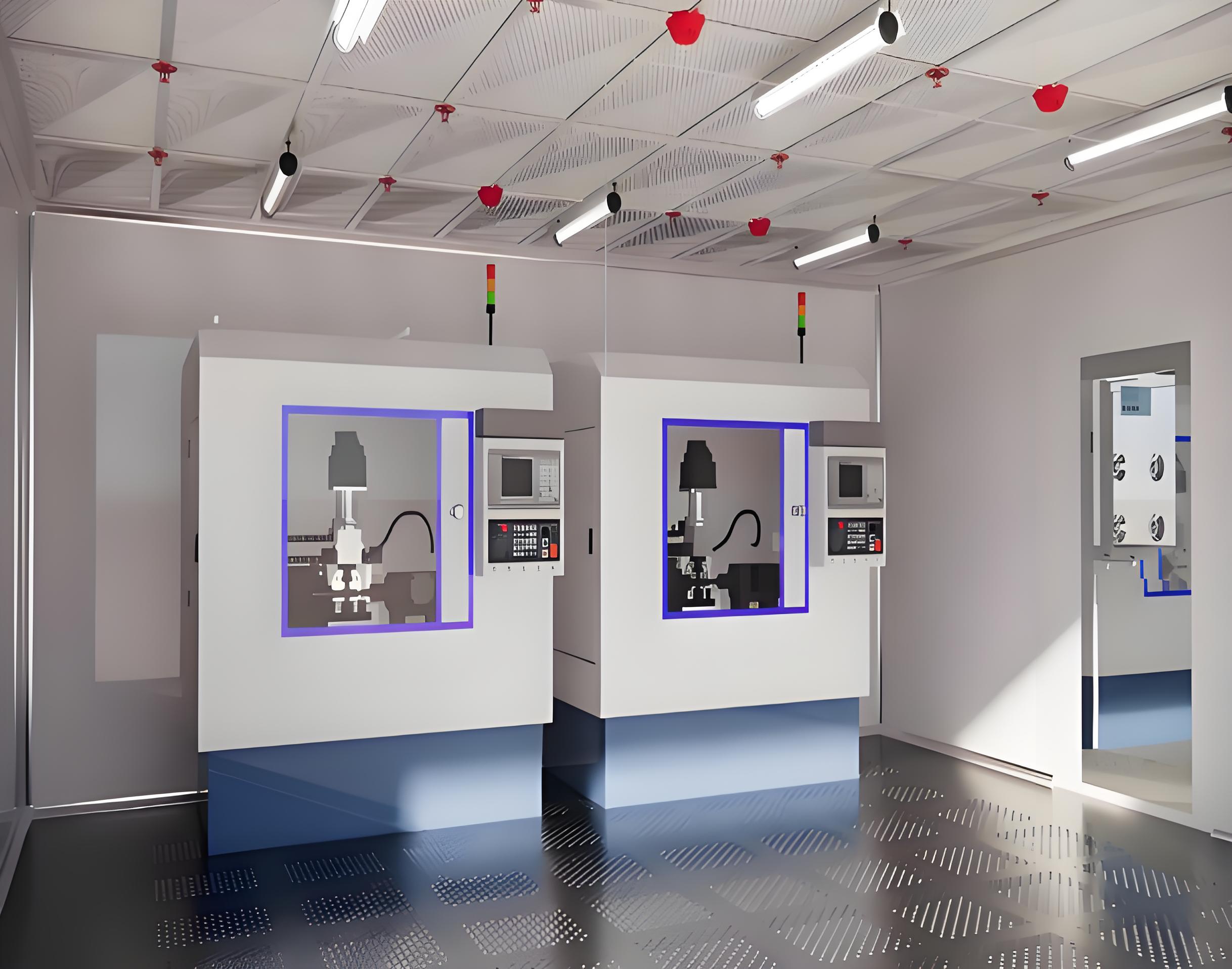
In healthcare facilities, pharmaceutical manufacturing, and semiconductor cleanrooms, the HVAC system is not merely a thermal comfort provider—it is the primary barrier against airborne contaminants. A central air conditioning system purification project transforms standard air handling into a precisely controlled environment where particulate counts, microbial loads, and pressure relationships are maintained within strict regulatory limits. Unlike conventional HVAC installations, purification-focused systems integrate multi-stage filtration, airflow management, and real-time monitoring to meet standards ranging from ISO 14644-1 for cleanrooms to ASHRAE 170 for hospital spaces. This article dissects the engineering principles, component specifications, and validation protocols that define successful purification projects, drawing on implementation data from TAI JIE ER installations across operating theaters, isolation wards, and GMP manufacturing suites.
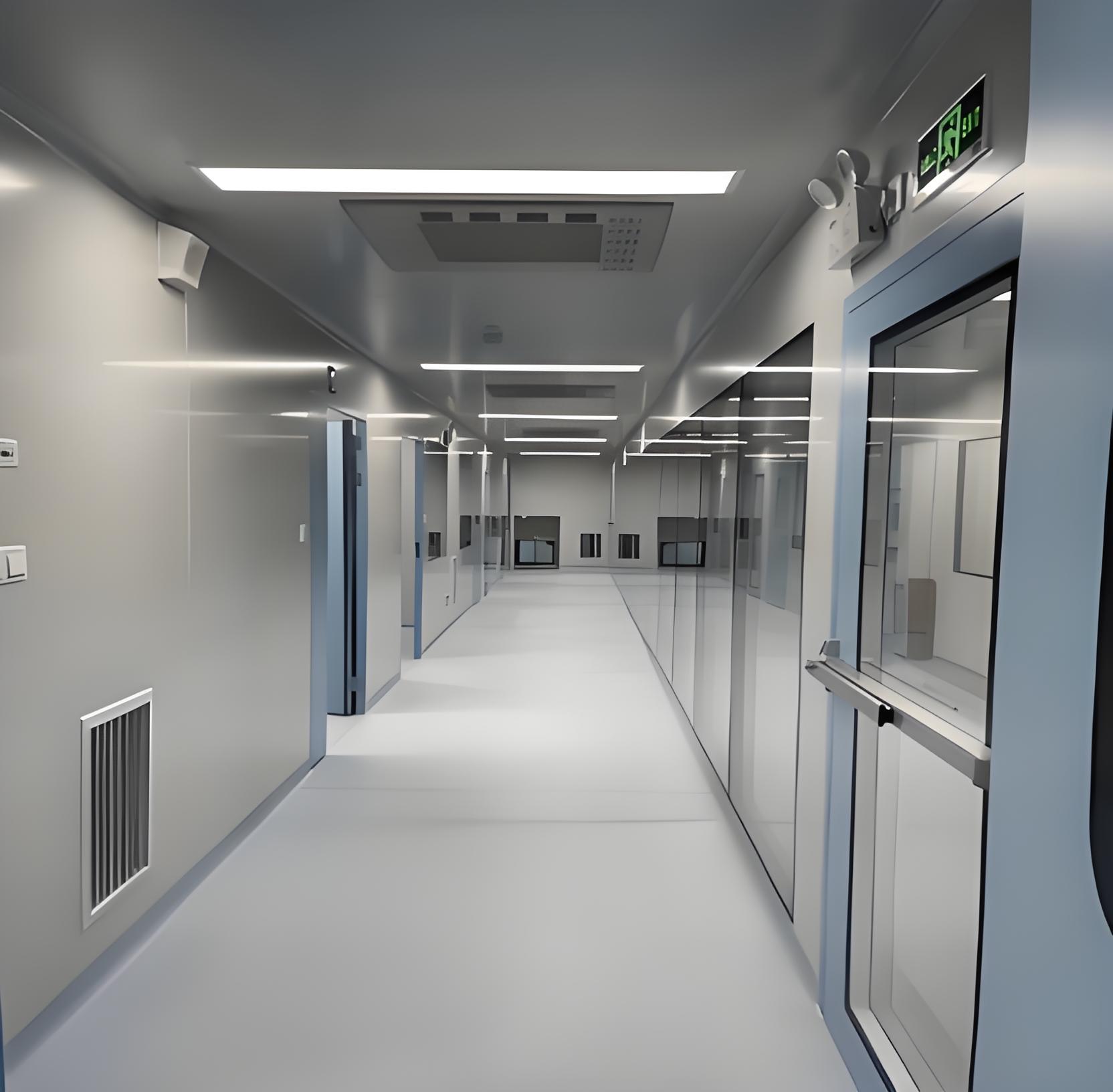
A purification-focused central air conditioning system differs fundamentally from conventional designs in its approach to contaminant control. Standard systems prioritize temperature and humidity regulation; purification systems add layers of filtration, pressure management, and air change discipline.
Effective purification requires a cascaded filtration strategy. Typical configurations include:
Pre-filters (MERV 8–10): Capture larger particles (>10 µm) to protect downstream components. Located at air handling unit (AHU) inlets.
Intermediate filters (MERV 13–15): Remove 85–95% of particles 1–3 µm. Often positioned after the cooling coil to prevent microbial growth on moist surfaces.
HEPA/ULPA terminal filters: HEPA (99.97% at 0.3 µm) for ISO Class 7 and above; ULPA (99.9995% at 0.12 µm) for ISO Class 5 critical zones. Installed at supply diffusers or in fan filter units (FFUs).
In a central air conditioning system purification project, filter selection is driven by the required cleanliness class and the nature of airborne hazards—whether viable organisms, chemical vapors, or inorganic particulates.
Containment and segregation are achieved through intentional pressure relationships between zones. Purification projects enforce cascading pressure gradients that direct airflow from cleanest to less clean areas.
Typical pressure hierarchies for medical and pharmaceutical applications:
Protective environments (immunocompromised patients): Positive pressure (+10 to +15 Pa) relative to adjacent corridors to prevent ingress of external contaminants.
Airborne infection isolation rooms (AIIR): Negative pressure (-10 to -15 Pa) with exhaust passing through HEPA filters before discharge.
Clean manufacturing suites: Progressive positive pressure from ISO Class 8 to ISO Class 5 zones, typically +5 Pa per adjacent class increment.
Pressure monitoring is continuous, with alarms triggering if thresholds deviate by ±2 Pa. In TAI JIE ER-engineered systems, pressure-independent control valves (PICVs) and variable frequency drives (VFDs) on exhaust fans maintain stability even during filter loading or door operations.
Air change rates (ACH) directly correlate with particle removal efficiency.
Purification projects specify ACH based on occupancy and cleanliness
requirements: Operating rooms: 20–25 ACH (minimum 4 ACH outdoor air). ISO Class 8 cleanrooms: 20–40 ACH. ISO Class 7 cleanrooms: 40–60 ACH. ISO Class 5 zones: 240–600 ACH (unidirectional flow). Air distribution utilizes laminar flow diffusers for critical zones and
low-velocity displacement diffusers for general areas. Computational fluid
dynamics (CFD) modeling is often employed to validate airflow patterns and
eliminate dead zones where contaminants could accumulate. Cooling coils and drain pans are notorious sites for biofilm formation, which
can become persistent sources of microbial contamination. Purification projects
address this through design and active mitigation. Standards such as ASHRAE 62.1 and FGI guidelines require: Coils arranged for full drainability (sloped to drain points). Double-sloped drain pans with no standing water capacity. Access panels for inspection and cleaning without major disassembly. Copper fins with hydrophilic coatings to reduce moisture
retention. UV-C lamps (254 nm wavelength) installed downstream of cooling coils provide
continuous surface and air disinfection. Key engineering parameters: Irradiance: 150–300 µW/cm² at coil surface. Dwell time: Minimum 0.2 seconds for airborne microorganisms. Lamp monitoring: Photocells to detect output degradation; alarms for lamp
failure. Studies from ASHRAE RP-1734 show that properly designed UVGI systems reduce
coil surface microbial counts by 99% and downstream airborne bacteria by
30–50%. Relative humidity (RH) outside the 40–60% range promotes either microbial
growth (RH >60%) or electrostatic discharge and particle suspension (RH
<40%). Purification projects incorporate precise humidity control
through: Chilled water or direct expansion coils for dehumidification, with reheat
coils to prevent overcooling. Steam injection humidifiers (clean steam) to avoid aerosolized minerals or
biocides. Dedicated outdoor air systems (DOAS) that precondition ventilation air
separately from recirculated air. Humidity sensors with ±2% RH accuracy are placed in return air streams and
critical zones, feeding back to the building management system (BMS) for PID
loop control. Regulatory bodies require documented evidence that the purification system
consistently performs as intended. Validation follows a structured protocol: Verifies correct installation against specifications. Documentation
includes: Filter certifications (HEPA/ULPA scan testing per IEST-RP-CC034). Pressure differential maps across all zones. Airflow balancing reports showing supply/exhaust volumes at each
diffuser. Utility connections (chilled water, steam, electrical). Demonstrates system operation within defined parameters under simulated
conditions. Tests include: Air change rate verification (using flow hoods or tracer gas decay). Temperature and humidity uniformity mapping (72-hour continuous
logging). HEPA filter integrity (DOP/PAO aerosol challenge). Room pressurization tests (door opening and closing simulations). Confirms sustained performance during actual occupancy or production. PQ
includes: Non-viable particle monitoring (continuous or sequential sampling). Viable air and surface sampling (settle plates, active air samplers). Validation of alarm and interlock functions. Post-validation, ongoing monitoring is conducted at frequencies defined by
risk assessment—typically quarterly for critical zones and semi-annually for
support areas. Purification systems are inherently energy-intensive, with filtration and
high air change rates accounting for 50–70% of total HVAC energy consumption.
Modern central air
conditioning system purification project designs incorporate
sustainability measures without compromising performance: Demand-controlled ventilation (DCV): CO₂ sensors modulate
outdoor air intake based on occupancy, reducing conditioning loads by 15–25%
during low-occupancy periods. Energy recovery wheels: Transfer sensible and latent heat
between exhaust and supply air streams, recovering 60–80% of energy that would
otherwise be wasted. VFD-driven fans: Adjust airflow based on real-time pressure
and filter loading, reducing fan energy by 30–50% compared to constant-volume
systems. High-efficiency motors (IE4/IE5): Reduce electrical
consumption by 5–10% compared to standard motors. Lifecycle cost analysis (LCCA) should evaluate the trade-off between initial
investment in efficiency measures and long-term operating expenses. For
facilities operating 24/7, efficiency upgrades often achieve payback within 3–5
years. Healthcare purification projects must comply with ASHRAE 170, FGI Guidelines,
and local health codes. Specific requirements include: Separate AHUs for critical zones to prevent cross-contamination. Redundant fans and filtration for Class B and C operating rooms. HEPA filtration on both supply and exhaust for airborne infection isolation
rooms (AIIRs). Alarm systems for pressure failures visible at room entrances. GMP-compliant facilities require validated systems with strict documentation.
Design features include: Clean-in-place (CIP) accessible AHUs with stainless steel drain pans. Bag-in/bag-out filter housings for safe HEPA replacement without facility
contamination. Temperature and humidity maintained within narrow bands (e.g., 20±2°C, 50±5%
RH). Continuous particle monitoring with data logging for batch
release. These environments demand ultra-low particulate levels and strict control of
airborne molecular contamination (AMC). Specifications include: ULPA filtration at supply (99.9995% at 0.12 µm). Chemical filters for acid, base, and volatile organic compound (VOC)
removal. Strict humidity control (45±2% RH) to prevent electrostatic discharge. Minimal air turbulence to avoid disturbing process tools. A1: A standard system focuses on thermal comfort with basic
filtration (typically MERV 8–11). A central air conditioning system
purification project integrates multi-stage filtration (HEPA/ULPA),
precise pressure cascades, higher air change rates, microbial control (UVGI,
hygienic coil design), and continuous monitoring to meet specific cleanliness
standards (ISO 14644, ASHRAE 170, or GMP). Purification systems are validated
and subject to ongoing performance verification, whereas standard systems are
not. A2: Air change rates are determined by the required
cleanliness classification, occupancy, and room function. For ISO Class 8
cleanrooms, 20–40 ACH is typical; for ISO Class 7, 40–60 ACH; for operating
rooms, ASHRAE 170 mandates 20–25 ACH with 4 ACH outdoor air. A risk assessment
should be conducted, considering potential contaminant sources and the
sensitivity of the activity. Computational fluid dynamics (CFD) modeling can
refine the ACH target for spaces with complex geometries or high heat loads. A3: Essential documents include: Validation Master Plan
(VMP); User Requirement Specification (URS); Functional Design Specification
(FDS); IQ/OQ/PQ protocols with acceptance criteria; HEPA filter certification
reports; pressure differential and airflow visualization (smoke study) reports;
environmental monitoring trend data (particles, viable counts); and ongoing
maintenance logs. For GMP applications, these documents must be maintained for
the life of the facility and be available for regulatory inspection. A4: For chemical and gaseous contaminants (formaldehyde,
VOCs, acid gases), purification projects incorporate activated carbon filters or
chemisorption media. These are typically installed after pre-filters and before
cooling coils, or in dedicated air handling units for spaces with high chemical
loads (e.g., pathology labs, pharmaceutical compounding). Media selection is
based on the specific contaminants identified through a building air quality
assessment. Regular media replacement is required, with monitoring using gas
detection sensors to confirm ongoing performance. A5: Timelines vary by scale and complexity. A typical
schedule: conceptual design and URS development (2–4 months); detailed
engineering and permitting (3–6 months); equipment procurement and construction
(4–8 months); installation and commissioning (2–4 months); validation and
documentation (2–4 months). Total duration ranges from 13 to 26 months for new
construction. Retrofit projects typically require 8–14 months, with phased
implementation to maintain existing operations. TAI JIE ER employs modular approaches and off-site prefabrication to compress timelines and
minimize disruption. Executing a successful central air
conditioning system purification project requires integration of
mechanical engineering, regulatory knowledge, and contamination control
expertise. From filter stage design to validation documentation, each element
must be precisely aligned with the specific airborne cleanliness requirements of
the facility. TAI JIE ER brings extensive
experience in delivering purification systems that meet rigorous standards for
healthcare, pharmaceutical, and high-technology manufacturing
environments—ensuring that the air within critical spaces consistently meets
performance specifications.3. Microbial Control: Coil Design, Drainage, and UVGI Integration
3.1 Hygienic Coil and Drain Design
3.2 Ultraviolet Germicidal Irradiation (UVGI)
4. Humidity Control: The Overlooked Purification Variable
5. System Validation: IQ, OQ, PQ, and Ongoing Monitoring
5.1 Installation Qualification (IQ)
5.2 Operational Qualification (OQ)
5.3 Performance Qualification (PQ)
6. Energy Efficiency in Purification Systems
7. Application-Specific Engineering Considerations
7.1 Healthcare Facilities (Operating Rooms, ICUs, Isolation Wards)
7.2 Pharmaceutical and Biotech Manufacturing
7.3 Semiconductor and Electronics Manufacturing
Frequently Asked Questions (FAQ)
Q1: What is the difference between a standard central air conditioning
system and a purification project?
Q2: How do I determine the required air change rate for my purification
project?
Q3: What validation documents are required for a central air conditioning
system purification project?
Q4: How do purification systems handle chemical and gaseous contaminants,
not just particles?
Q5: What is the typical timeline for completing a central air conditioning
system purification project?