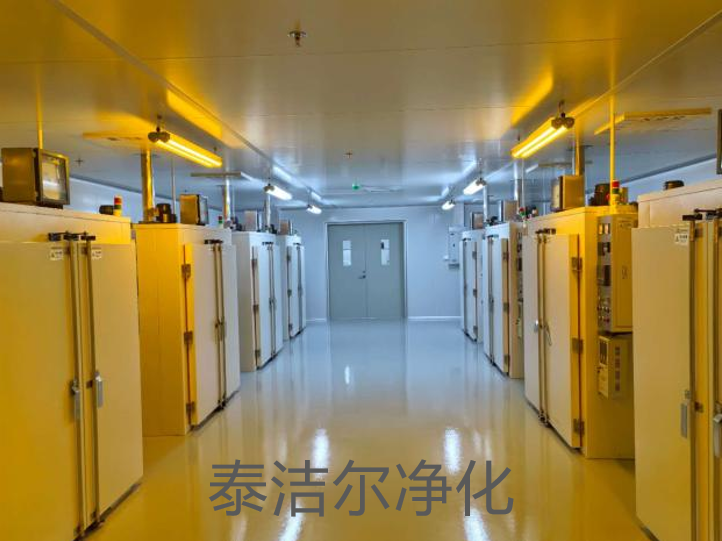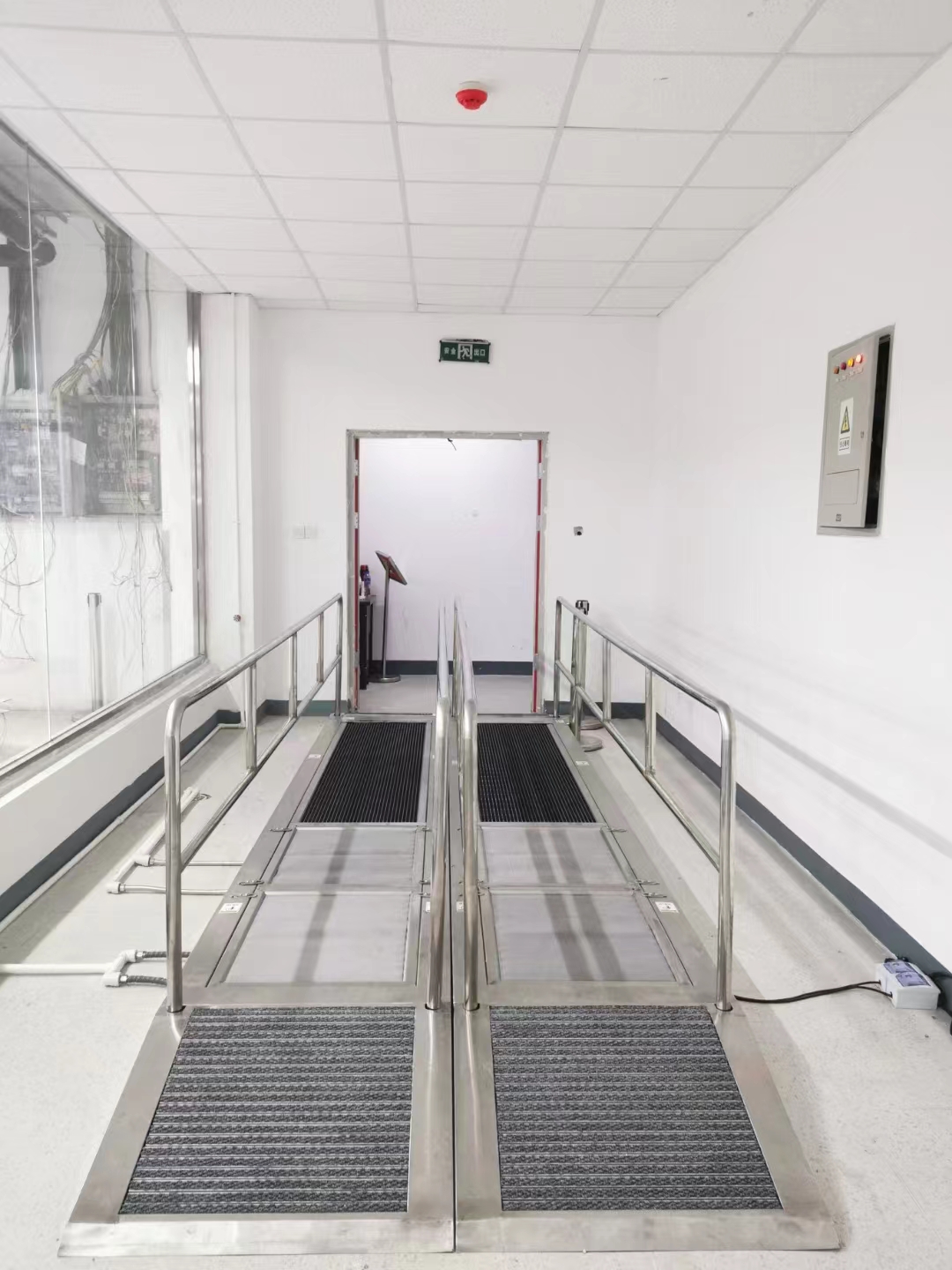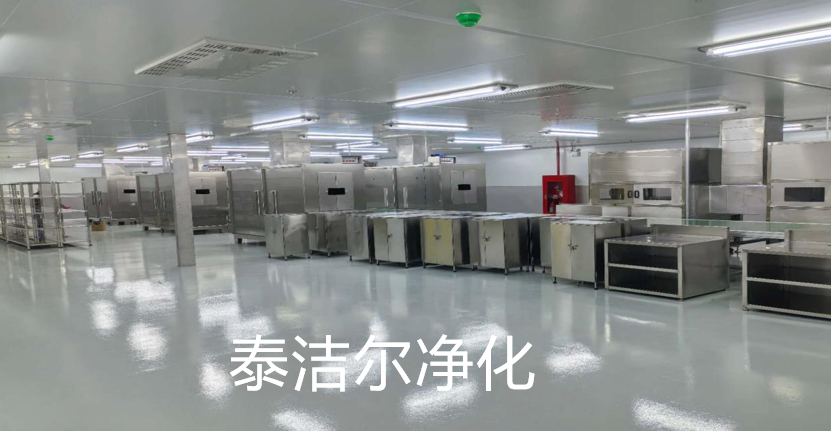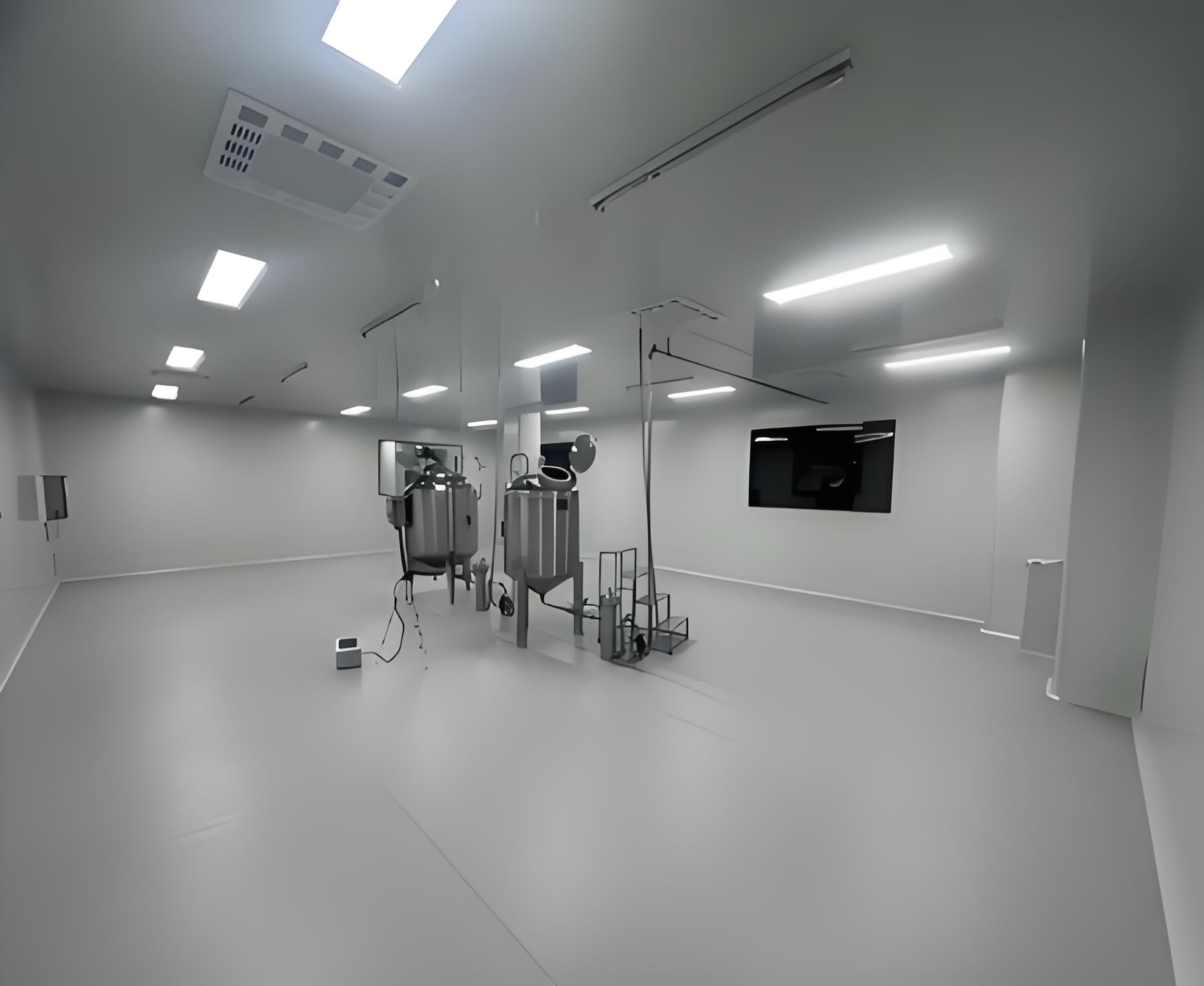
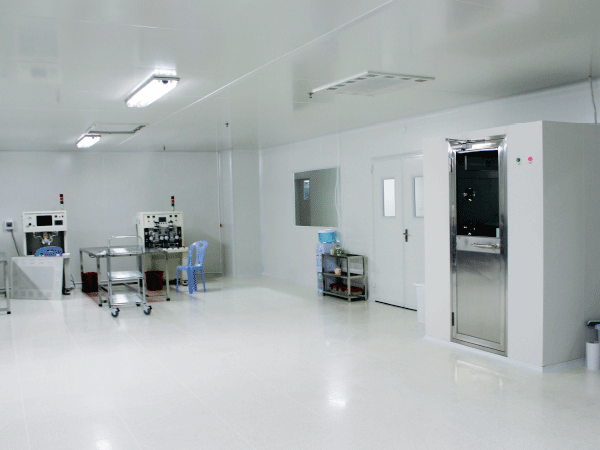

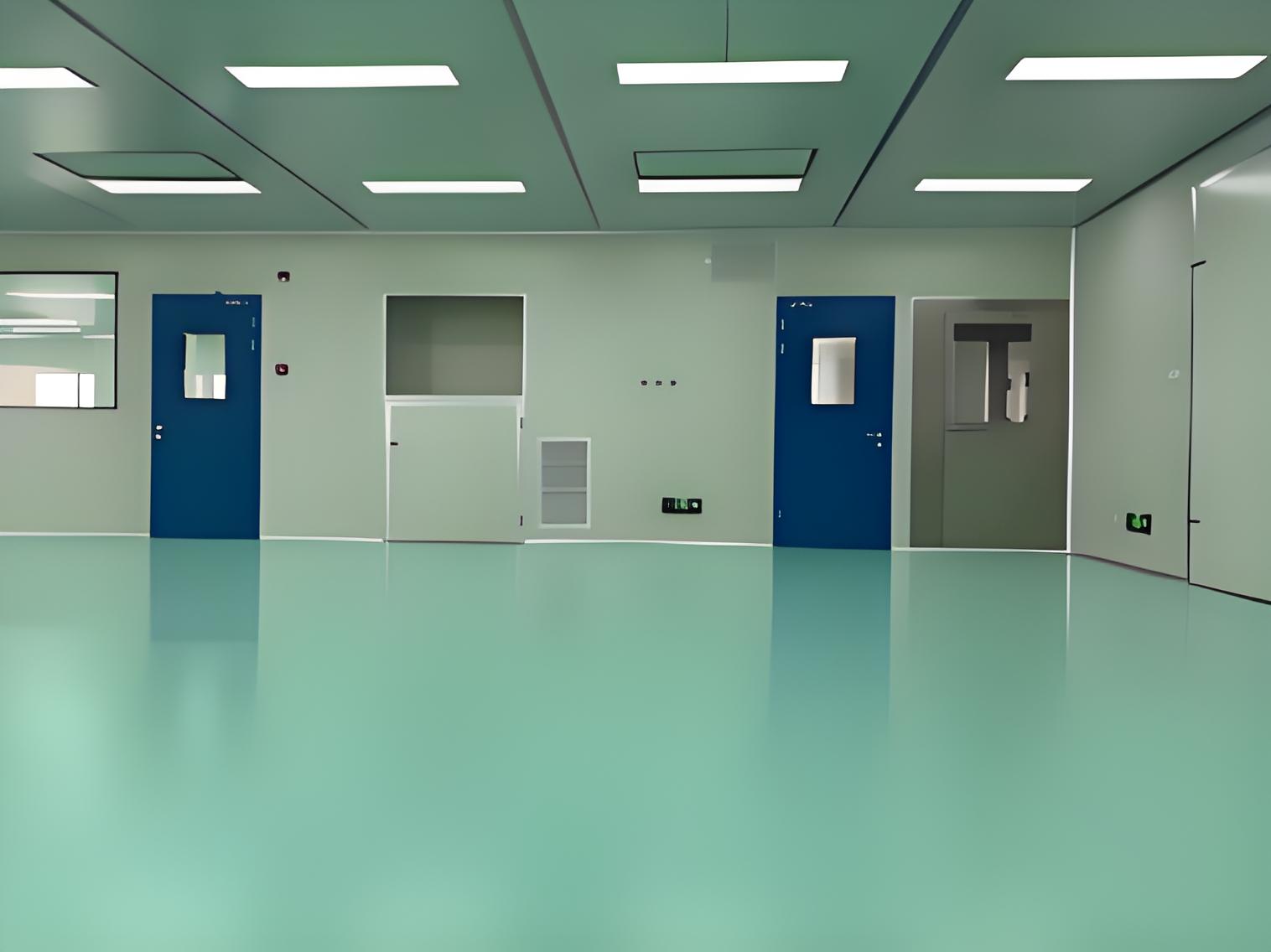
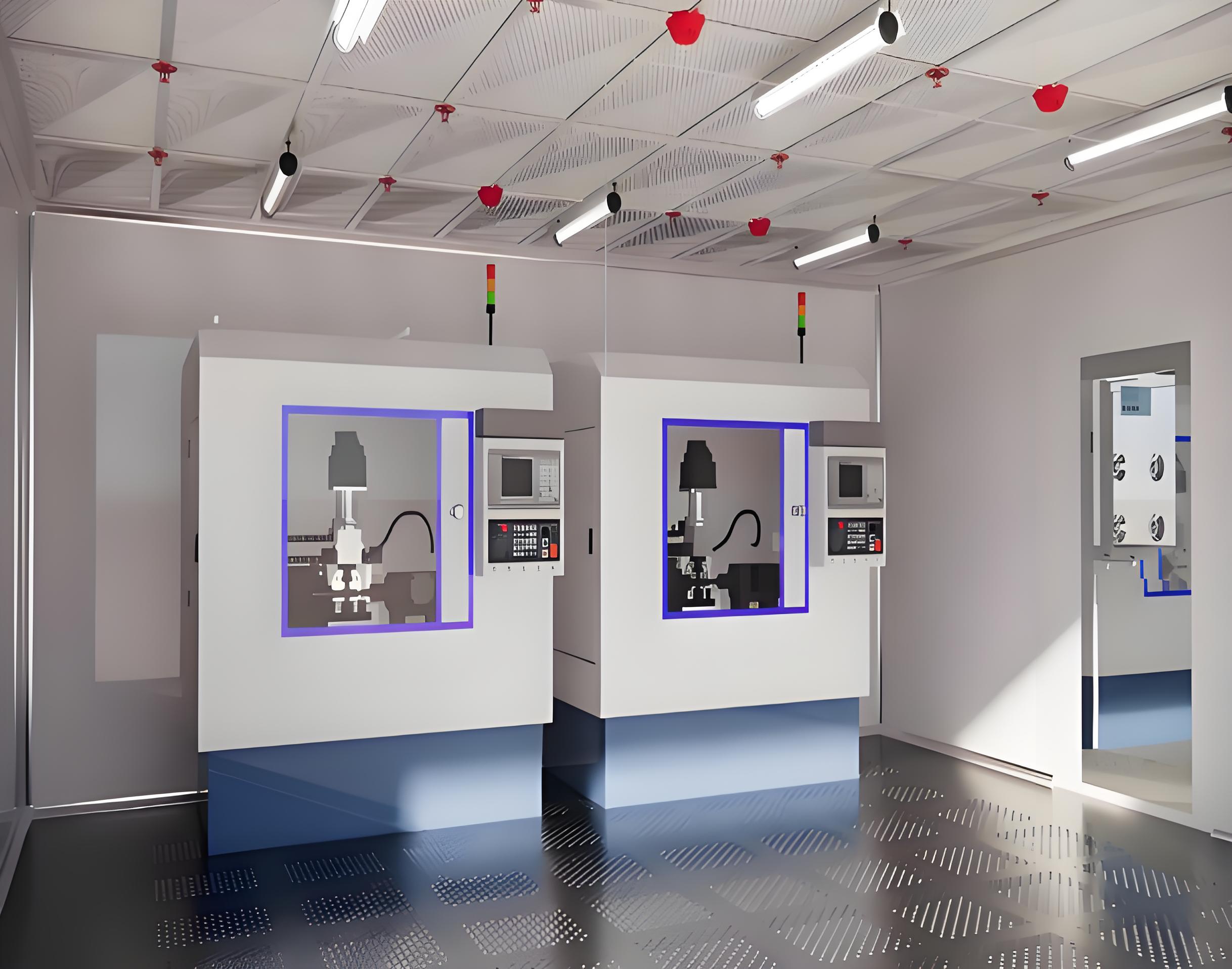
In controlled environments, the difference between sustained compliance and recurring contamination often hides behind wall joints, floor coves, and ceiling penetrations. Cleanroom decoration is not about aesthetics — it is a functional discipline that dictates how surfaces resist microbial adhesion, release particles, withstand aggressive sporicides, and support unidirectional airflow. A poorly finished cleanroom forces operators into excessive cleaning cycles, generates false environmental alarms, and risks product recalls. This guide provides 10 technical principles for designing and executing interior finishes that meet ISO 14644, GMP, and FDA expectations.
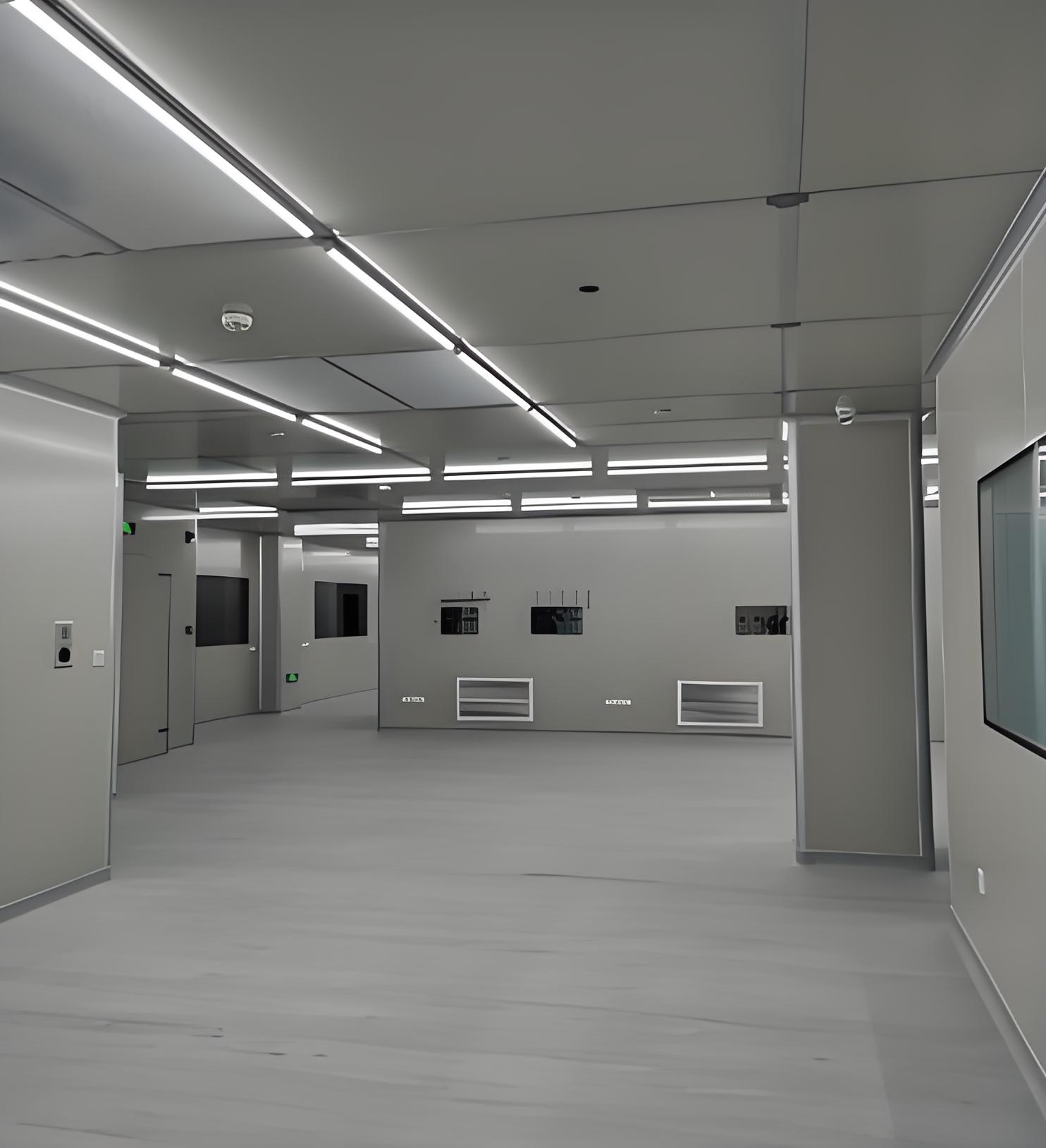
Any cleanroom decoration project must address four performance vectors: particle non-shedding, chemical resistance, cleanability, and durability under routine disinfection. Generic construction materials fail rapidly. For an ISO 7 or ISO 8 room, the finish system must achieve:
Surface roughness Ra ≤ 0.8 µm (for Grade A/B zones, Ra ≤ 0.4 µm).
Resistance to 3-5% hydrogen peroxide, peracetic acid, and quaternary ammonium compounds without discoloration or delamination.
Zero open crevices or unsealed edges that harbor microbial biofilms.
When these objectives are met, cleaning validation becomes predictable and routine monitoring data stays within action limits.
The most common source of non-viable particles in older cleanrooms is painted drywall with hairline cracks. Modern cleanroom decoration eliminates porous substrates. Recommended wall solutions:
Polyurethane or epoxy sandwich panels – mineral wool or honeycomb core, PVC/PP/PVDF facing. Joints are cam-locked, then sealed with cleanroom-grade silicone or welded with thermal fusion for absolute seal.
Fiberglass reinforced plastic (FRP) panels – lightweight, impact-resistant, compatible with VHP. Edges must be factory-finished, not field-cut without capping.
Stainless steel sheeting (304/316L) – required for Grade A zones and wash-down areas. Full-penetration welds ground smooth; no exposed screws.
A persistent defect: field-cut panel edges left unsealed absorb moisture and grow mold. The correction is to specify prefabricated corner profiles and edge trims from the same manufacturer.
Floors face mechanical abrasion from carts, chemical spills, and constant cleaning. Linear sheet flooring or seamless poured systems outperform tiles (tile joints fail). Preferred options:
Seamless epoxy or polyurethane cement (PUR) – self-leveling, cove base integrated to wall, electrostatic dissipative (ESD) variants available for electronics assembly.
Welded vinyl sheet – homogeneous vinyl with heat-welded seams, chemically tested against IPA 70% and diluted bleach. Requires coved upstands.
Terrazzo with conductive aggregates – for heavy-duty pharmaceutical facilities, but installation requires skilled craftsmen.
The cove base (radius 25–50 mm) eliminates right-angle dirt traps. Any transition between flooring types (e.g., cleanroom to gowning area) must be a flush, sealed metal strip.
Suspended ceilings in cleanrooms often hold HEPA modules, light fixtures, sprinklers, and monitoring sensors. Each penetration is a potential bypass leakage path. In high-grade cleanroom decoration, ceiling systems must incorporate:
Gel-sealed or gasketed T-grid systems – standard T-grid leaks up to 0.5% of airflow; gel seals reduce leakage to <0.05%.
Flush-mounted, recessed fixtures with overlapping flanges and silicone gaskets.
Access panels with cam-lock doors and pressure-tested seals – not standard drop-in tiles.
Case data: A biologics facility reduced non-viable particle counts in Grade B by 42% after replacing ceiling gaskets and sealing all lighting housing gaps.
Microscopic assessments show that 60% of surface bioburden resides within 2 cm of joints and corners. Proper cleanroom decoration eliminates these niches:
Internal corners – factory-formed radius (≥25 mm) rather than field-applied putty. Prefabricated cove corners for wall-wall and wall-floor.
Door frames – flush-mounted, stainless steel with continuous seal gaskets. No exposed hinges – use concealed pivot hinges.
Pass-through boxes – seamless interior transitions, silicone-free gaskets.
During construction, a 100% inspection using borescopes or UV light (fluorescent tracer applied to joints) verifies seal integrity.
Manufacturers sometimes specify “epoxy paint” without defining test standards. In real operation, daily wiping with 0.5% sodium hypochlorite or accelerated hydrogen peroxide quickly degrades low-grade coatings. A robust cleanroom decoration requires documented resistance to the specific disinfectant cocktail. Testing per ASTM D1308 or ISO 2812-1 should show no softening, blistering, or color transfer after 100 wipe cycles. Common field failures:
Delamination around door handles after six months → use stainless steel cladding at contact zones.
Yellowing of polyurethane under UV light → specify UV-stable aliphatic PU for rooms with windows.
TAI JIE ER pre-qualifies all finish materials in its in-house chemical lab, providing clients with compatibility tables before installation.
Traditional on-site drywall, taping, and painting introduces moisture and debris, extending schedules and risking contamination entrapment. Engineered modular cleanroom decoration uses factory-finished panels that interlock with integrated seals. Advantages:
Surface finishes (PVDF, antimicrobial polyester, or stainless steel) applied in controlled ISO 8 environment.
Pre-cut openings for doors, pass-throughs, and sensors with sealed edges.
Reduced on-site labor and elimination of curing time for paints or epoxies.
For contract manufacturers requiring rapid reconfiguration, modular systems allow panels to be relocated and resealed without demolition debris. A notable project by TAI JIE ER converted a warehouse into ISO 7 print-and-pack room with demountable wall system in 22 days.
While pharmaceutical cleanrooms prioritize bioburden, electronics and battery assembly lines require ESD-safe cleanroom decoration. Surface resistivity must stay between 10⁶ and 10⁹ ohms. Solutions:
Conductive epoxy flooring with copper grid grounding.
Dissipative wall panels (static-dissipative laminate or coated steel).
Work surfaces: static-dissipative vinyl or stainless steel with grounding lugs.
Incorrectly paired finishes cause electrostatic discharge damaging sensitive components. A qualified cleanroom decoration team measures point-to-point resistance per ANSI/ESD S20.20.
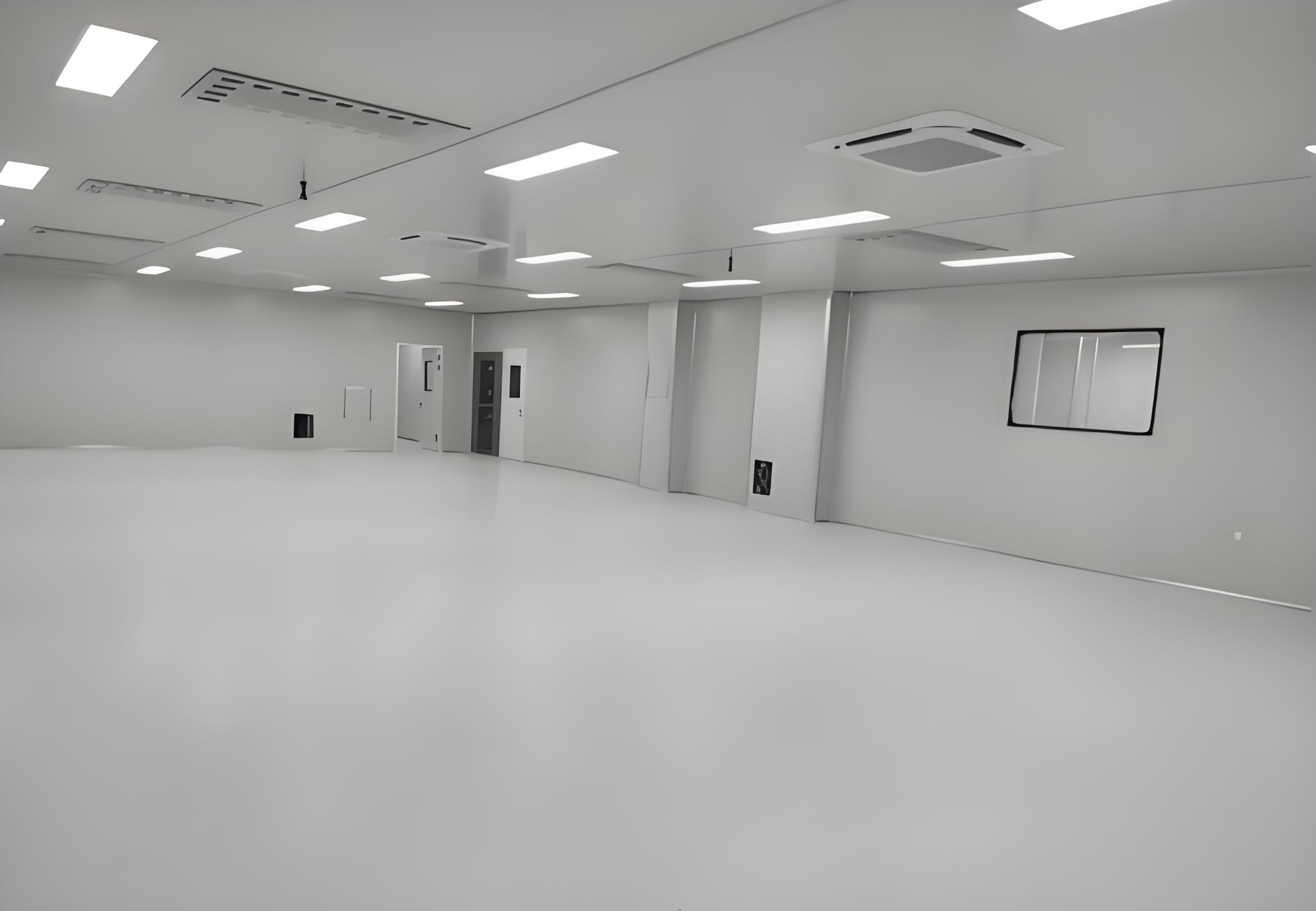
Experience across dozens of projects reveals recurring issues. Below are failures and specific specification clauses to include in procurement documents.
Failure 1: Silicone sealants that exude unreacted
siloxanes
Correction: Specify neutral-cure, low-VOC, cleanroom-grade
silicone (e.g., Momentive RTV 160). Require outgassing test per NASA 1124.
Failure 2: Floors that lose gloss and become porous after six months
of cleaning
Correction: Specify PUR flooring with ≥2 mm thickness
and documented abrasion resistance >4000 cycles (Taber test).
Failure 3: Stainless steel scratches entrapping
residues
Correction: Specify #4 brushed finish (Ra 0.5 μm) with
grain direction consistent, not random orbital finish which creates microscopic
pits.
Failure 4: Light fixture gaskets shrinking after VHP
cycles
Correction: Specify FKM/Viton gaskets (not EPDM or silicone
foam).
Failure 5: Window frames collecting particles
Correction:
Specify flush-mount polycarbonate or tempered glass with thermally fused frame,
no external screw heads.
A professional cleanroom decoration project delivers more than a finished room. It provides a traceable quality package including:
Material certificates (chemical resistance, outgassing, surface roughness).
Sealant lot numbers and application records.
Post-installation particle fallout tests (static and dynamic).
Ultraviolet black light inspection of all joints after cleaning.
Airborne particle counts with final HEPA filters running.
Without this documentation, qualification (IQ/OQ) delays occur. Leading engineering firms integrate these deliverables into their project milestones.
Q1: What is the difference between standard industrial flooring and
cleanroom decoration flooring?
A1: Standard
industrial flooring may have open joints, higher porosity, and lower chemical
resistance. Cleanroom flooring is seamless, coved at walls, tested for particle
shedding, and resistant to disinfectants like peracetic acid. It also meets
conductivity requirements if ESD control is needed.
Q2: Can I use acrylic paint on cleanroom walls for low-grade ISO 8
areas?
A2: Acrylic paint is not recommended — it
microscopically cracks and absorbs moisture, fostering mold. For ISO 8 (Grade
D), use a two-component epoxy coating or at least a high-build epoxy mastic.
Painted surfaces require regular recertification every 12–18 months.
Q3: How do you maintain wall panels if a panel is damaged from
equipment impact?
A3: Modular panels allow
individual replacement: isolate the zone, clean surrounding area, remove damaged
panel, install new pre-finished panel, reseal joints, and requalify air changes.
For bonded systems (e.g., FRP over drywall), a patch repair with epoxy filler
and topcoat is possible but less reliable; panel replacement is safer for Grade
B and above.
Q4: What certification standards govern cleanroom decoration
materials?
A4: Key references: ISO 14644-4 for
design and construction, IEST-RP-CC018.4 for cleanroom finishes, and ASTM E84
for flame spread. For biocontamination, EN 16787 provides guidance on surface
cleanability. Pharmaceutical projects also reference PIC/S PI 032-2 on GMP
finishing.
Q5: How long does a typical cleanroom decoration project take for a
200 m² ISO 7 suite?
A5: For modular systems: 2–3
weeks (panel installation + sealing + final cleaning). For conventional
construction (drywall + epoxy paint): 6–8 weeks including drying/curing cycles.
Modular also offers faster validation because finishes are
factory-certified.
TAI JIE ER provides integrated design, material supply, and installation for ISO 5 to ISO 8 cleanrooms. Our decoration packages include seamless wall panels, ESD flooring, radius coving, and full validation documentation.
Request your project consultation:
Email: 912228126@qq.com
Visit
TAI JIE ER Official
Website to receive a preliminary material recommendation and cost
estimate within 48 hours.
We support GMP, FDA, and EU Annex 1 compliant finishes for pharmaceutical, biotech, and semiconductor industries.