
In regulated manufacturing and research operations, Cleanroom design represents a specialized discipline of environmental engineering that extends far beyond architectural layout. It is the systematic control of airborne particulate concentration, temperature stability, relative humidity tolerance, and pressurization cascade. For stakeholders in biopharmaceutical aseptic processing, microelectronics lithography, or medical device packaging, the integrity of Cleanroom design directly correlates with production yield and regulatory standing. A deviation of 0.1 inches water column in room pressure or an oversight in cleanroom construction material selection can result in batch rejection, costly decontamination downtime, or 483 observations from auditing bodies.
This analysis dissects the engineering principles that differentiate a validated, high-performance clean envelope from a standard ventilated room. We address the interplay between architectural finishes, HVAC psychrometrics, and operational protocol.

1. Foundational Logic: ISO 14644 Classification and Air Change Calculus
The cornerstone of Cleanroom design is adherence to ISO 14644-1 particle count thresholds. However, specifying an ISO Class is merely the starting point; the mechanical response to that specification defines the project's capital and operational expenditure. The relationship between Air Changes per Hour (ACH) and cleanliness class is exponential.
ISO Class 8 (Conventional Clean): Requires approximately 15-25 ACH. Suitable for secondary packaging or less sensitive support zones.
ISO Class 7 (Common Pharma Grade): Demands 60-90 ACH. This is the typical benchmark for HVAC system sizing for sterile compounding and non-hazardous API formulation.
ISO Class 5 (Grade A/B Critical Zone): Requires 240-480 ACH. This is achieved via laminar airflow hoods or localized unidirectional flow zones within a broader ISO 7 background room.
Inadequate Cleanroom design in this phase—specifically underestimating sensible heat load from process equipment—leads to a supply air volume deficit, rendering ISO classification unattainable during dynamic operation.
2. Airflow Architecture: Unidirectional Displacement vs. Turbulent Dilution
The selection between unidirectional flow (laminar) and non-unidirectional flow (turbulent) is a critical decision point in Cleanroom design. The physics of particle transport dictates the ceiling coverage required.
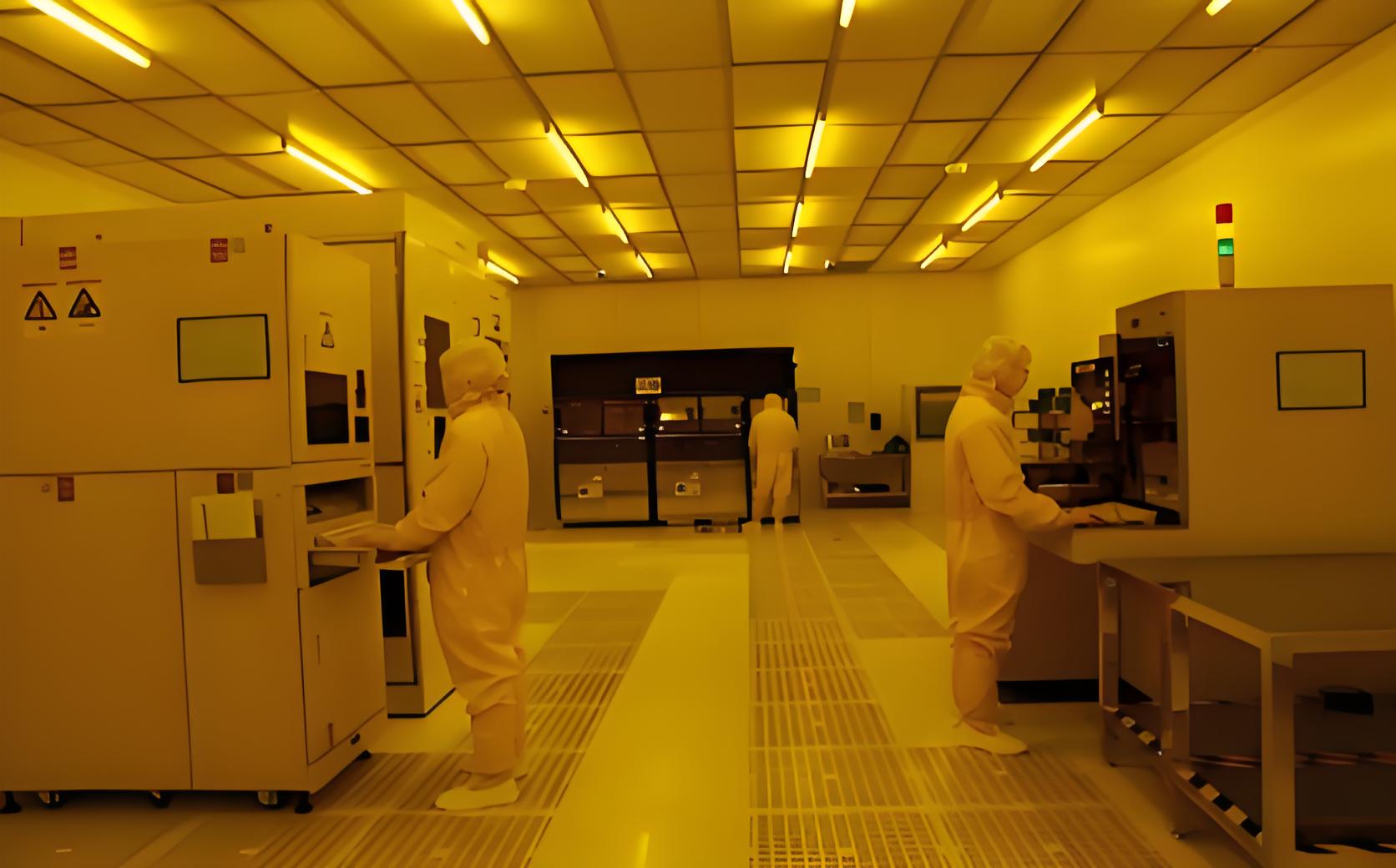
Unidirectional (Laminar) Flow: Air moves in a single pass, uniform velocity column (typically 0.45 m/s ± 20%). This is non-negotiable for wafer fabrication areas where sub-micron defects destroy die yield. The fan filter unit (FFU) coverage in these zones often exceeds 80% of the ceiling plane.
Computational Fluid Dynamics (CFD) Modeling: Prior to installing a single wall panel, sophisticated cleanroom design utilizes CFD to visualize wake effects behind large process tools (e.g., lyophilizers or etchers). Without this simulation, stagnant eddies trap contamination, rendering particle counters ineffective.
3. Envelope Integrity: The Pressure Cascade and Construction Science
A primary failure mode in operational facilities is the inability to maintain the specified pressure differential (ΔP). Cleanroom design must account for the leakage area of the architectural envelope—a factor heavily influenced by the quality of cleanroom construction.
Wall Panel Systems: Gasketed aluminum honeycomb or smooth FRP panels are preferred over traditional drywall. Drywall particulates and taping compounds degrade over time, becoming a source of fibrous contamination.
Door Interlocks and Sweeps: Negative pressure in potent compound containment suites (OEB 4/5) relies on precise offset of supply and exhaust air. A gap of 1/8 inch under a door without an automatic drop seal can negate the containment of a BSC or isolator.
Penetration Management: Every conduit, sprinkler head, and utility drop passing through the clean envelope must be sealed with non-silicone, low-outgassing sealant to prevent particle ingress from the interstitial plenum.
TAI JIE ER engineering assessments frequently identify pressurization instability originating from overlooked architectural details during the fit-out phase.
4. Material Selection: Outgassing and Chemical Adsorption
While particle control is visual, molecular contamination (AMC) is invisible and far more damaging to advanced node semiconductor fabrication. In this context, Cleanroom design extends to specifying materials with quantified outgassing rates per SEMI F21-1102.
Prohibited Substances: Silicone-based caulks are strictly forbidden in photolithography bays; they volatilize and deposit on optics, forming a refractory silicon dioxide film that distorts pattern transfer.
Flooring Selection: High-solids epoxy or polyurethane cementitious urethane systems provide chemical resistance to spillage of photo-resist strippers (e.g., NMP or TMAH) while exhibiting negligible VOC emissions after full cure.
Ceiling Grids: Aluminum grids with a Teflon-like gel seal are standard in ISO 5 applications to prevent the shedding of zinc whiskers commonly found in standard commercial ceiling components.
5. Thermal Mapping and Relative Humidity Stability
Advanced Cleanroom design treats the space as a thermodynamic system. Process tools in microelectronics generate immense heat loads—often exceeding 500 Watts per square foot. Without a coordinated sensible cooling strategy, the cleanroom air temperature can drift beyond the tight tolerance required for stage positioning accuracy (typically 22°C ± 0.5°C for e-beam lithography).
Humidity Control: In pharmaceutical powder processing, Relative Humidity must remain below 45% to prevent powder agglomeration and hygroscopic absorption. Over-drying, however, induces static charge (triboelectrification), leading to powder cling and explosion risk.
Make-up Air Conditioning: The energy required to condition 100% outside air for once-through, non-recirculating systems (common in potent compound labs) is substantial. Heat pipe run-around coils in air handlers are an energy recovery measure mandated by modern HVAC system design to mitigate operational cost.
6. Utility Routing and the "Clean Build" Approach
The visual aesthetic of a cleanroom is secondary to its cleanability. A well-executed Cleanroom design minimizes horizontal ledges where particles settle. This influences every utility chase.
Process Piping: Bulk gas (N2, CDA, Vac) and ultra-pure water (UPW) lines should be routed in accessible service chases behind the clean wall, not on the cleanroom face.
Lighting Integration: Teardrop or recessed cleanroom luminaires with flush, sealed lenses prevent insect ingress and are IP65 rated for washdown compatibility.
7. Containment Strategies: Biosafety and Cross-Contamination Mitigation
In multi-product biopharmaceutical facilities, the separation of cell lines or viral vectors depends on the precision of Cleanroom design. The concept of "Air Locks" is functional, not merely transitional.
Cascade Air Locks: These use a sink or bubble configuration to prevent the migration of potent compounds into general circulation spaces.
Single Pass Air: For BSL-3 and ABSL-3 suites, recirculation is prohibited. The entire exhaust airstream must pass through two stages of HEPA filtration (bag-in/bag-out housings) before atmospheric discharge.
8. Lifecycle Cost Analysis: Beyond the Square Foot Price
Procurement decisions based solely on lowest bid for Cleanroom design often result in a 20-40% penalty in long-term energy and maintenance costs. Fan energy to drive high ACH rates dominates the electric load. A facility designed for 70 ACH but operating at 85 ACH due to undersized HEPA filters or poorly laid out ductwork installation will incur seven-figure excess energy costs over a decade.
Variable Frequency Drives (VFDs): Design must incorporate VFDs on supply fans to allow for "setback" mode during non-production hours (reducing ACH by 30-50% while maintaining positive pressure).
Filter Loading: Accurate static pressure calculations for loaded filters prevent the fan from riding the curve and stalling.
TAI JIE ER emphasizes that a robust technical specification during the design phase mitigates these operational fiscal drains.
9. Certification and Commissioning: The Data-Driven Closeout
No Cleanroom design is complete without a rigorous commissioning plan that moves beyond simple particle counting. The following tests verify the design intent:
Airflow Visualization (Smoke Studies): Verifies unidirectional flow is not disrupted by equipment geometry.
Recovery Rate Testing: Measures the time required for the room to return to its target cleanliness after a simulated contamination event (particle burst).
Room Pressure Decay Testing: Quantifies envelope leakage using a calibrated blower door (similar to ASTM E779).
Viable Monitoring Mapping: Identifies micro-niches of fungal or bacterial growth risk, particularly in water-prone areas (wash bays, steam-in-place skids).
Integrating Process and Environment
Successful Cleanroom design is a predictive engineering discipline. It requires a detailed understanding of the client's process flow, not just the desired ISO class on a drawing legend. From the specification of non-porous, cleanable architectural finishes to the meticulous balance of air distribution ductwork, every component interacts to maintain the state of control demanded by regulators and science. For organizations planning new capacity or retrofitting existing R&D suites, the integration of process utility, facility monitoring systems (FMS), and envelope integrity is the definitive benchmark of project success.
Ensure your next capital project meets ISO 14644 performance criteria from day one. Connect with the engineering team at TAI JIE ER to discuss the technical specifications and validation roadmap for your controlled environment.
Frequently Asked Questions: Cleanroom Design Technical Inquiries
Q1: How do I determine the correct ISO classification for my new medical device assembly suite?
A1: The classification is derived from a risk assessment of the device's exposure to the environment. If the device is terminally sterilized post-assembly, ISO Class 8 (monitored) may suffice. If the device undergoes aseptic processing or has exposed sterile fluid pathways, ISO Class 7 is the typical baseline, with localized ISO Class 5 (laminar flow) over the fill/finish area. The determination should align with FDA 21 CFR Part 820 and ISO 13485 quality system requirements.
Q2: What are the primary differences between a modular cleanroom and traditional stick-built construction?
A2: Modular cleanroom design utilizes prefabricated, free-standing aluminum frame systems with clear PVC or hardwall panels. They offer accelerated depreciation schedules (equipment vs. real property) and greater flexibility for facility expansion. Stick-built (drywall and epoxy) cleanrooms provide better acoustic dampening and are generally preferred for very large, permanent manufacturing bays with heavy process piping support requirements. Both must meet identical ISO cleanliness criteria.
Q3: Can an existing office HVAC system be adapted for cleanroom design use?
A3: Very rarely. Commercial office air handlers are designed for recirculation ratios and filter efficiencies (MERV 8-13) that are insufficient for cleanroom operations. Converting a space typically requires a dedicated make-up air unit (MUA) for pressurization and dehumidification, paired with recirculating air handling units (AHUs) equipped with HEPA or ULPA terminal filtration. The ductwork must also be upgraded to welded stainless or spiral galvanized steel with sealed gaskets to prevent particle ingress and leakage.
Q4: How is electro-static discharge (ESD) managed within cleanroom design?
A4: ESD management is a parallel system integrated into the clean envelope. It involves three tiers: (1) Grounding of all conductive equipment and FFU housings. (2) Specification of static-dissipative flooring (measuring 10^6 to 10^9 ohms resistance to ground). (3) Installation of ionization bars in the airflow stream to neutralize charges on non-conductive items (like wafer cassettes or glassware). Relative humidity control at 45% RH is also a primary ESD mitigation strategy.
Q5: What are the key considerations for cleanroom design in a facility handling potent active pharmaceutical ingredients (HPAPIs)?
A5: The focus shifts from protecting the product to protecting the operator. This requires a "Containment First" strategy. Design elements include: Room negative to adjacent corridors; High-efficiency particulate air (HEPA) filtration on both supply and exhaust (with bag-in/bag-out safe change housings); Air-tight architectural construction verified by pressure decay testing; Integration of isolators or restricted access barrier systems (RABS) rather than open-front clean benches; Single-pass air (no recirculation). The design must adhere to Occupational Exposure Band (OEB) 4 or 5 limits (typically < 1 µg/m³).
Q6: How frequently should airflow visualization (smoke studies) be repeated?
A6: Smoke studies are required during initial commissioning (IQ/OQ) and must be repeated whenever there is a change to the configuration of major equipment within the critical zone (ISO 5 area) or a modification to the HVAC air distribution components. As a best practice for aseptic processing, regulatory agencies expect to see video documentation of smoke studies during routine re-qualification cycles (typically every 2 years) to ensure that equipment like filling needles and stopper bowls do not disrupt the first air sweeping over the sterile surface.
Have a specific pressure cascade or containment challenge? Submit an inquiry to the TAI JIE ER technical department for a detailed engineering consultation.