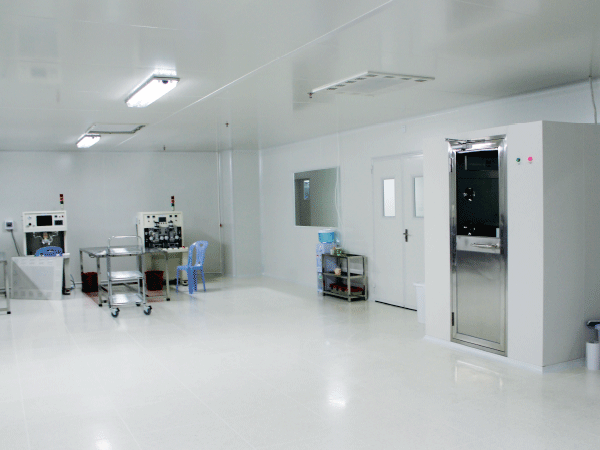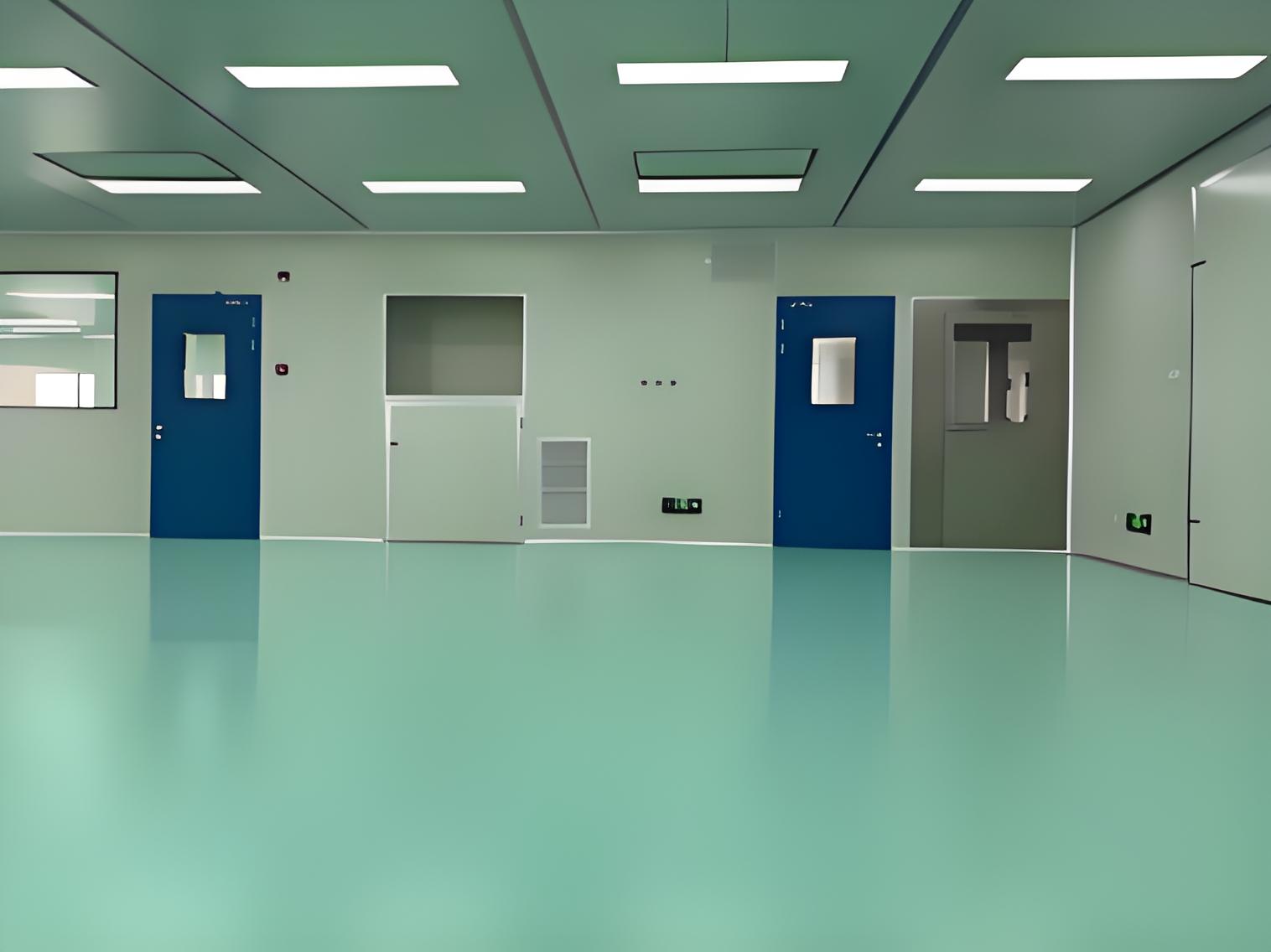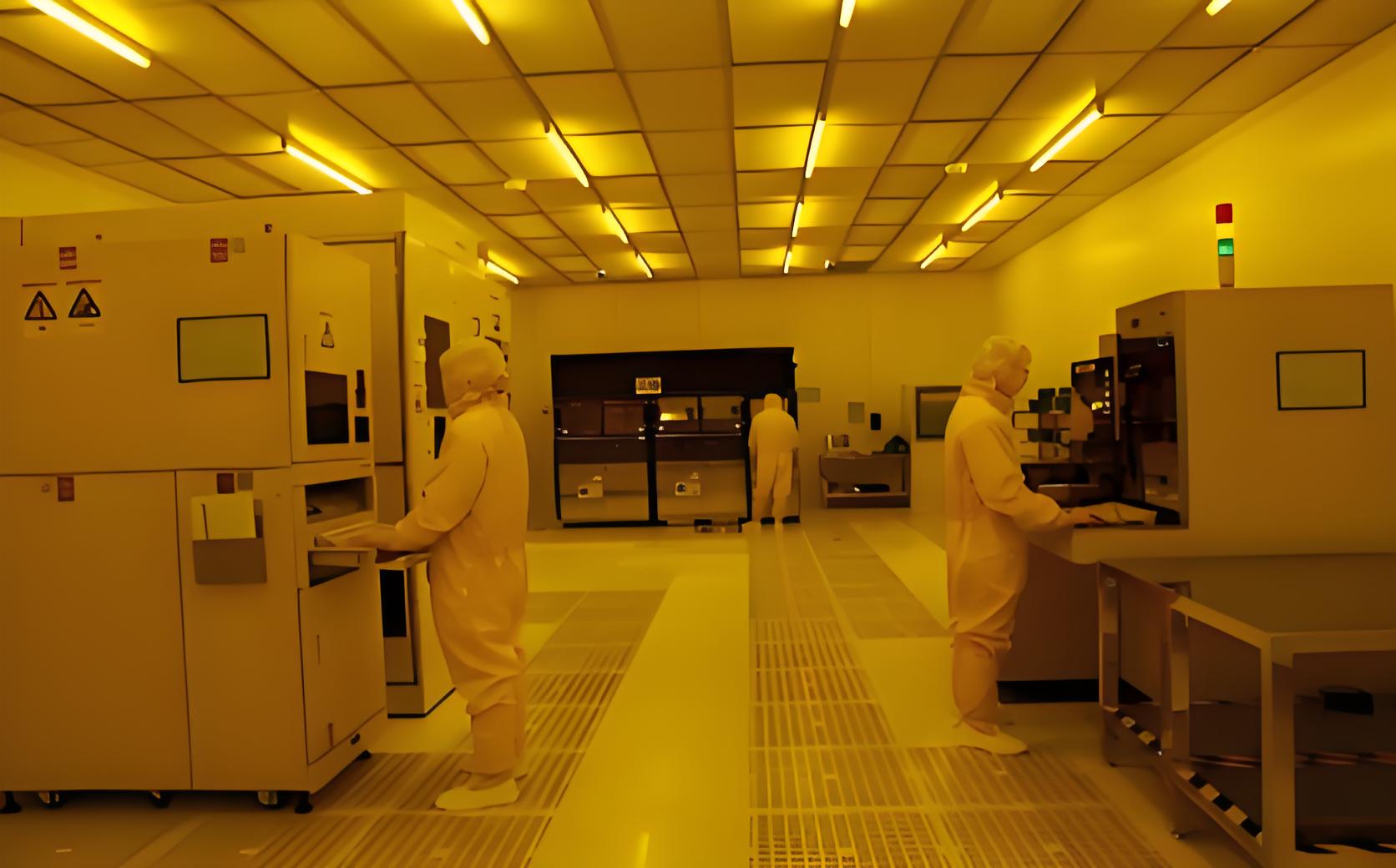

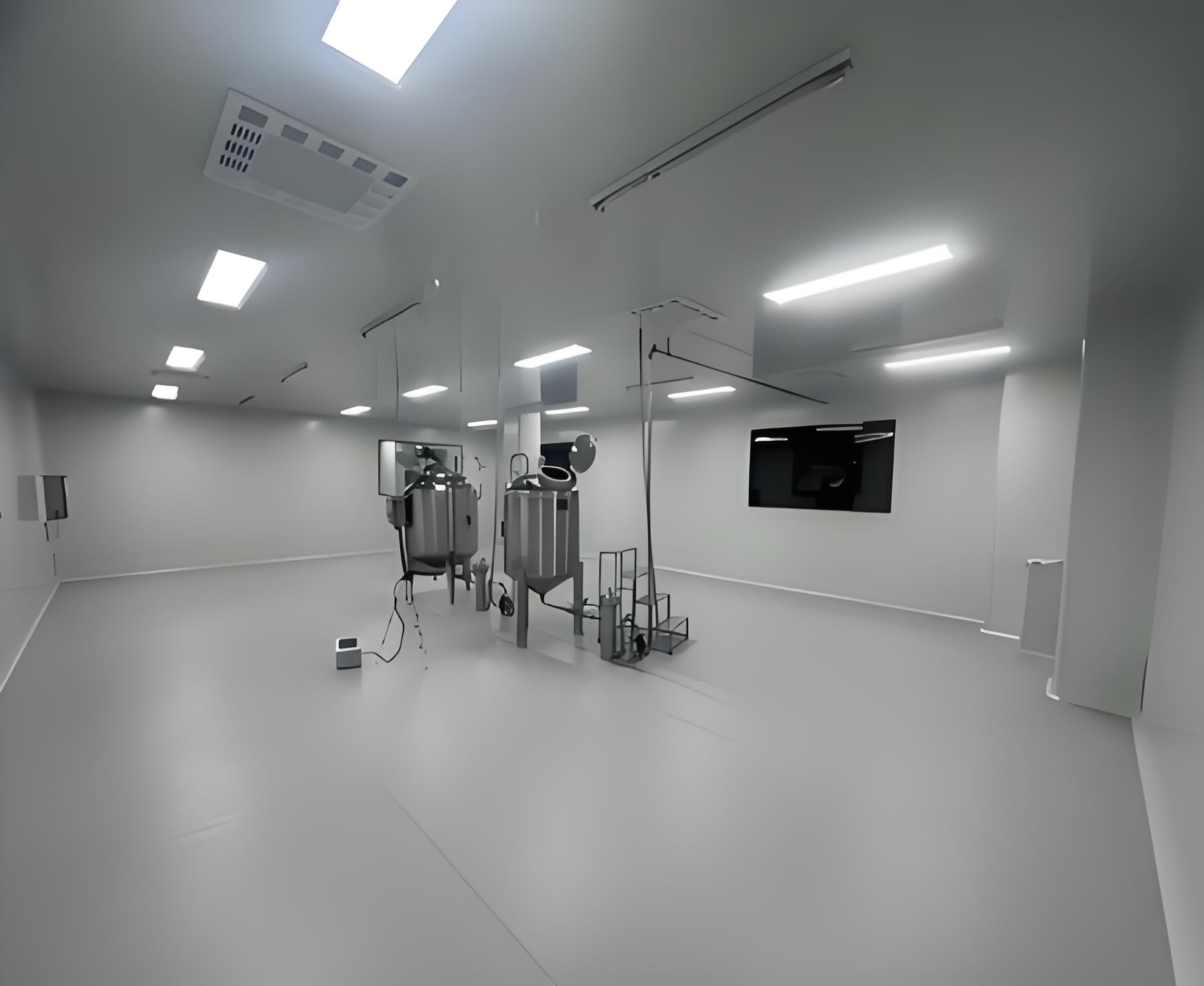
The term sterile room design encompasses a set of architectural, mechanical, and procedural controls aimed at eliminating viable and non-viable particles from critical zones. Unlike standard cleanrooms that focus on particulate control, a sterile room design must also guarantee absence of viable microorganisms (typically ≤1 CFU/m³ for Grade A zones under EU GMP). This requires integrating ISO 5 (Class 100) unidirectional airflow, continuous pressure differential monitoring, and seamless surfaces that resist microbial adhesion. This article provides engineering parameters for sterile room design, covering air change rates, filter placements, material selections, and validation protocols. Drawing on data from 30+ aseptic filling lines, we examine common failure points and corrective actions that reduce contamination risks by 90% during media fill simulations.
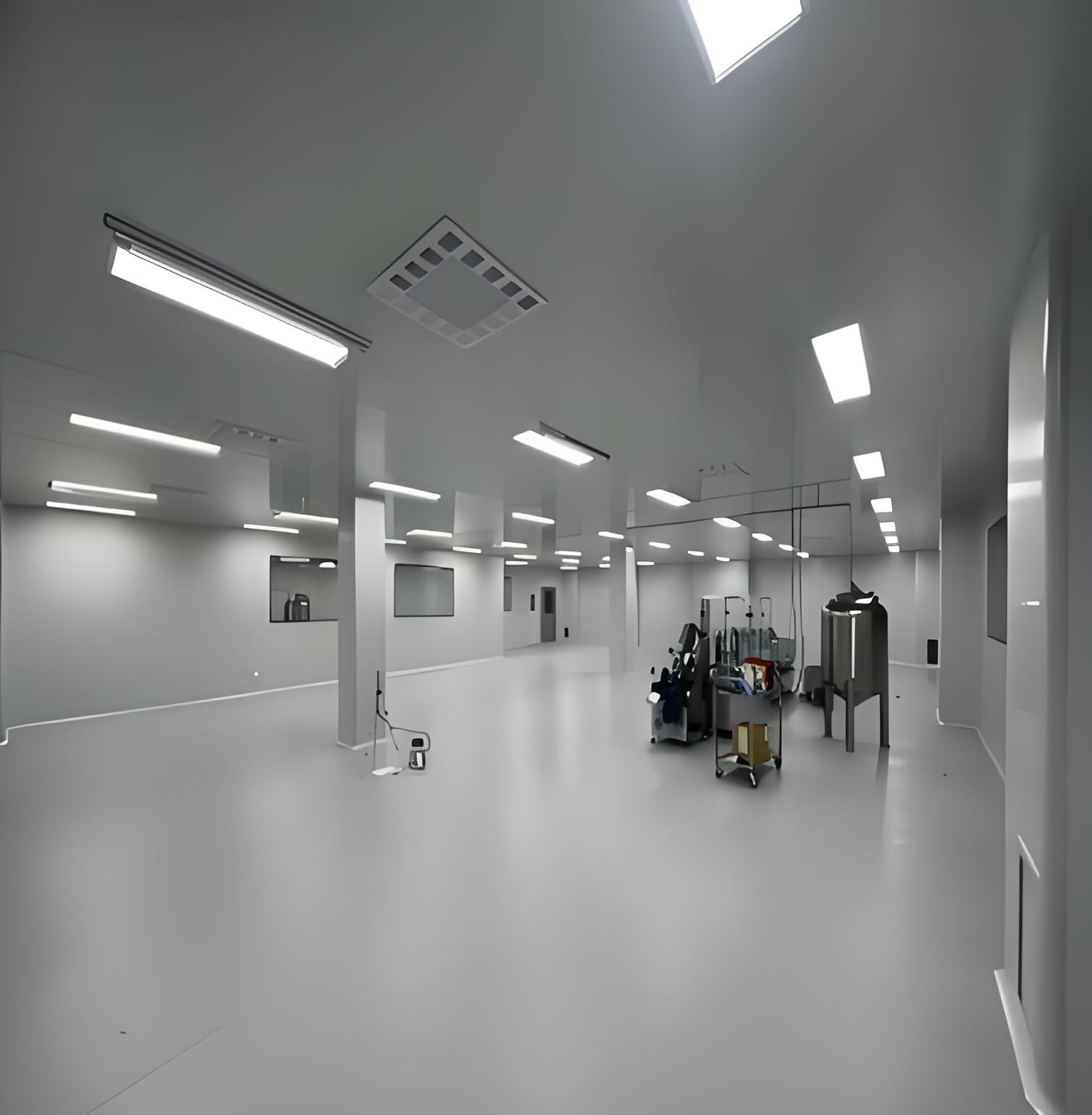
Any sterile room design must align with three main standards: ISO 14644-1 (particle counts), EU GMP Annex 1 (manufacture of sterile medicinal products), and FDA’s Aseptic Processing Guide. These define four grades (A, B, C, D) or ISO classes (5, 6, 7, 8) with specific limits:
Grade A / ISO 5: Critical zone where product and containers are exposed. Maximum 3,520 particles (≥0.5 µm)/m³ and <1 CFU/m³ (viable). Achieved with unidirectional airflow (0.36–0.54 m/s).
Grade B / ISO 6: Background for Grade A. Particle limit: 352,000 (≥0.5 µm)/m³. Viable limit: ≤10 CFU/m³.
Grade C / ISO 7: Less critical steps. Particle limit: 3,520,000 (≥0.5 µm)/m³. Viable: ≤100 CFU/m³.
Grade D / ISO 8: Non-sterile operations. Particle limit: 35,200,000 (≥0.5 µm)/m³. Viable: ≤200 CFU/m³.
Pressure differentials between adjacent rooms must be ≥10 Pa (with alarms). Sterile room design documentation includes a pressure cascade map showing air flows from cleanest to dirtiest zones. A 2022 audit of 12 aseptic facilities found that 40% of initial failures traced to incorrect pressure differentials—remediated by rebalancing HVAC and sealing leaks in architectural joints.
The core mechanical decision in sterile room design is airflow pattern selection:
Used for Grade A zones: HEPA/ULPA filters cover the entire ceiling (or a critical zone enclosure). Air travels vertically downward at 0.36–0.54 m/s, sweeping particles away from product. Key engineering specifications:
Filter coverage: At least 100% of the working zone footprint. For isolators, coverage may be 80% with side returns.
Velocity uniformity: Measured 150–300 mm below filter face, variation ≤±20% of average.
Return air: Low-wall grilles at opposite side or full perforated floors for vertical flow.
Used for Grades B, C, D. Air supply via HEPA diffusers (ceiling mounted), returns near floor. Air change rates (ACR) per hour: Grade B (ISO 6) – 60–90 ACH; Grade C (ISO 7) – 30–60 ACH; Grade D (ISO 8) – 15–30 ACH. Computational fluid dynamics (CFD) modeling is recommended to avoid dead zones, especially near equipment or corners.
During one sterile room design project for a prefilled syringe line, CFD identified a recirculation zone behind a filler turret—corrected by relocating a return grille and adding a deflector, reducing particle counts by 78% at the intervention point. TAI JIE ER integrates CFD analysis as a standard phase in sterile room projects.
Microbial adherence and cleanability are paramount. Sterile room design specifications for walls, floors, and ceilings:
Walls: Smooth, non-porous, and resistant to disinfectants (70% IPA, quaternary ammonium, peracetic acid). Preferred materials: epoxy-coated steel panels (Ra ≤0.4 µm), stainless steel 316L (for wet areas), or modular aluminum-faced panels with polyurethane core. Joints must be welded or filled with epoxy and sanded flush.
Ceilings: Washable, non-shedding, and able to support HEPA filter housings. Use same panel type as walls, with gel-seal or compression-gasket filter frames. Avoid exposed fasteners or unsealed penetrations.
Floors: Seamless epoxy self-leveling (ESL) or polyurethane cement (PUC) with coved base (radius ≥25 mm). ESL thickness 3–5 mm; PUC 4–6 mm. Both must be static-dissipative (resistivity 10^6–10^9 ohms) for electronics but not mandatory for sterile rooms unless explosive solvents exist.
Corners and coving: All wall-wall, wall-floor, and wall-ceiling intersections must be coved (radius 25–50 mm) to eliminate right angles where particles accumulate. Cove base is typically cast as part of the flooring or added as a pre-formed epoxy strip.
A comparative study of 20 sterile rooms found that facilities with seamless epoxy floors and coved corners had 85% lower microbial recovery (RODAC plates) after cleaning cycles compared to those with vinyl tile and square corners. TAI JIE ER offers pre-fabricated cove formers that speed installation by 40%.
Sterile room design must separate clean and dirty flows to prevent cross-contamination. Key architectural features:
Personnel airlocks: Three-stage (outer changing, inner changing, then sterile corridor). Each stage has step-over benches, separate HVAC zones, and pressure differential monitoring. Recommended dimensions: at least 2.5 m² per person per stage.
Material airlocks (pass-through chambers): Interlocked doors with HEPA-filtered air supply. For sterile materials, include a UV-C or VHP decontamination cycle. Chamber dimensions: minimum 600×600×600 mm for small components.
Waste/exit airlocks: One-way flow from sterile to non-sterile, with no backflow. Used for removing filled product or waste.
One-way traffic patterns: Personnel should not backtrack from lower grade to higher grade without re-gowning. Color-coded flooring and signage enforce movement.
Data from a biologics facility showed that implementing a dedicated material airlock with a validated VHP cycle reduced environmental monitoring excursions by 65% over six months. Improper airlock sterile room design (e.g., missing step-over benches or low pressure differentials) was the primary cause of 34% of media fill failures reviewed across 50 batches.
Heating, ventilation, and air conditioning (HVAC) for sterile rooms requires redundancy and monitoring:
Air handling units (AHUs): 100% fresh air or recirculation with HEPA filtration. For Grade A/B, recirculation typically 80–90% with 10–20% fresh. Humidity control: 40–55% RH to inhibit microbial growth while preventing electrostatic discharge.
HEPA/ULPA filter banks: Installed in ceiling plenum or terminal housings. Each filter must be leak-tested (PAO scan) during commissioning, with penetration ≤0.01% for HEPA (99.97% efficient) and ≤0.001% for ULPA (99.999%).
Clean utilities: Purified water (WFI), clean steam, compressed air, and vacuum systems routed through sterile-grade filters (0.22 µm). Piping materials: electropolished stainless steel 316L with sanitary (tri-clamp) fittings. Slope to drain: 1% minimum.
Monitoring systems: Continuous particle counters (≥0.5 µm and ≥5.0 µm) in Grade A zones, pressure sensors for each room, temperature/RH sensors. Alarms triggered when parameters exceed action limits (e.g., pressure drop >5 Pa from setpoint).
An integrated sterile room design by TAI JIE ER includes a building management system (BMS) that logs all parameters every 5 minutes, generating exception reports for audit trails.
After construction, a sterile room must pass three validation phases before production:
Installation Qualification (IQ): Verify materials (epoxy flooring thickness, panel types), HEPA filter certifications, and pressure differentials against design. All deviations recorded and resolved.
Operational Qualification (OQ): Test airflow velocity (at least 10 points per filter), particle counts at rest (ISO 14644-1), and filter leak integrity. Also verify alarm functions (door interlock, pressure drop).
Performance Qualification (PQ): Dynamic particle counts during simulated operations (e.g., media fill runs with growth media). For aseptic rooms, three consecutive successful media fills (no positive units) are required.
Typical sterile room design validation takes 6–8 weeks, generating over 500 pages of documentation. TAI JIE ER provides turnkey validation packages accepted by the FDA, EMA, and NMPA.
Even compliant sterile room design may exhibit recurring problems. Field data from 45 audits reveal top five issues:
Gel seal gaps in HEPA filters: Causes bypass leakage. Remedy: re-torque housing bolts (15–20 N·m) or replace gel channel. Re-test with PAO scan.
Pinholes in epoxy flooring: From outgassing or improper mixing. Remedy: grind, vacuum, apply pinhole filler (epoxy paste), then re-coat full floor.
Insufficient pressure differential across airlocks: Often due to unbalanced HVAC. Remedy: adjust damper positions or increase fan speed; verify with calibrated manometer.
Unsealed cable penetrations: Allow particle ingress. Remedy: apply compression-seal fittings or silicone (low-outgassing grade). Re-validate with smoke test.
Non-coved floor-wall junctions: Accumulate disinfectant residues and microbes. Retrofit: add epoxy cove base (minimum 25 mm radius) using trowel-applied epoxy mortar.
Correcting these during initial construction costs 1/10th of retrofitting. TAI JIE ER includes a pre-commissioning checklist that catches 95% of such issues before validation begins.
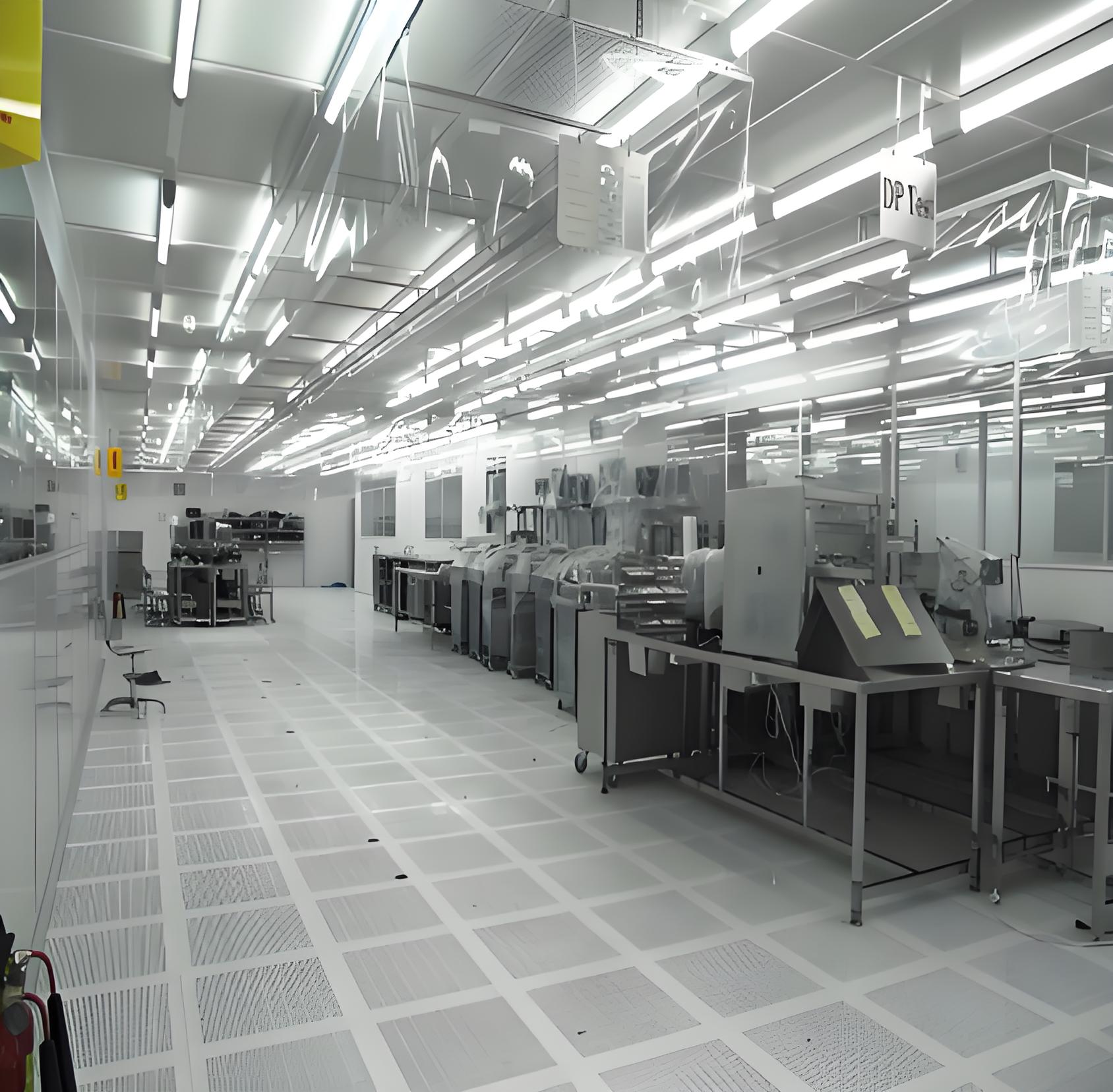
Post-commissioning, a sterile room requires a proactive maintenance schedule:
Daily: Wipe all surfaces with sterile 70% IPA or peracetic acid; record particle counts and pressure differentials; check for any standing water or cracks.
Weekly: Replace pre-filters; inspect HEPA filter gel seals visually; perform surface microbial sampling (RODAC plates) at 10–20 locations.
Monthly: Measure air velocity at each HEPA filter (target 0.36–0.54 m/s); recalibrate particle counters.
Annually: Re-certify HEPA filters (leak test, efficiency test); conduct smoke studies to confirm unidirectional flow; re-validate pressure cascade.
Facilities adhering to this schedule maintain ISO 5/Grade A status for 8–10 years between major refurbishments. TAI JIE ER offers remote monitoring services that alert clients to parameter drifts 72 hours before they exceed action limits.
Q1: What is the minimum air change rate for an ISO 5 (Grade A)
sterile room?
A1: ISO 5 (Grade A) rooms use
unidirectional airflow (0.36–0.54 m/s) rather than air changes per hour.
However, for the surrounding Grade B (ISO 6) background, typical ACH is 60–90. A
sterile room design must specify both: unidirectional
velocity for the critical zone and ACH for supporting areas. Any deviation below
0.36 m/s risks particle ingress; above 0.54 m/s may dry out media or cause
turbulence.
Q2: Can I use painted drywall for an aseptic sterile room (Grade
B)?
A2: No. Painted drywall is porous, develops
pinholes over time, and cannot withstand repeated disinfection with sporicides
(bleach, peracetic acid). For Grade B (ISO 6) or higher, sterile room
design mandates non-porous, seamless panels (epoxy-coated steel or
modular aluminum). A 2021 study showed that painted drywall surfaces in Grade B
rooms had 40–60% higher microbial recovery than epoxy panels after six months of
use.
Q3: How do I verify that a newly constructed sterile room meets EU
GMP Annex 1 requirements?
A3: Follow a three-step
protocol: (1) Perform ISO 14644-1 particle counts at rest and in operation; (2)
Conduct filter integrity testing (PAO scan) for all HEPA/ULPA filters; (3) Run
three consecutive media fill batches (using tryptic soy broth) under full
production conditions, with a minimum fill volume simulating worst-case
interventions. All three media fills must show zero growth (0/5,000–10,000
units). TAI JIE
ER provides pre-validated media fill protocols that reduce false
positives.
Q4: What is the recommended floor-to-ceiling height for a sterile
room with unidirectional flow?
A4: Minimum 2.7 m (9
ft) to accommodate a HEPA filter plenum (0.6–0.8 m depth) plus working height.
For ISO 5 Grade A areas, a height of 3.0–3.5 m allows for proper airflow
development before reaching the critical zone. Lower ceilings (2.4 m) cause
turbulence due to proximity of filter face to equipment. In one sterile room
design retrofit, raising the ceiling from 2.4 m to 3.0 m reduced
0.5 µm particle counts by 62% at the filling needle level.
Q5: How often should the gel seal in HEPA filter housings be
replaced?
A5: Gel seals (non-setting polyurethane
or silicone) have a service life of 5–7 years under normal conditions (20–25°C,
40–60% RH). Signs of degradation: hardening, cracking, or shrinkage visible
during annual leak testing. Replacement requires removing the filter housing,
cleaning the gel channel, and applying fresh gel. Many facilities schedule gel
seal replacement with every second HEPA filter change (every 3–4 years).
TAI JIE
ER uses a proprietary gel with UV tracer, making inspection simple
with a black light.