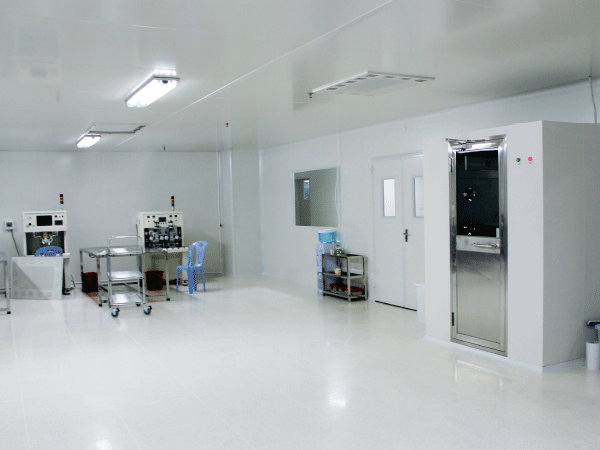

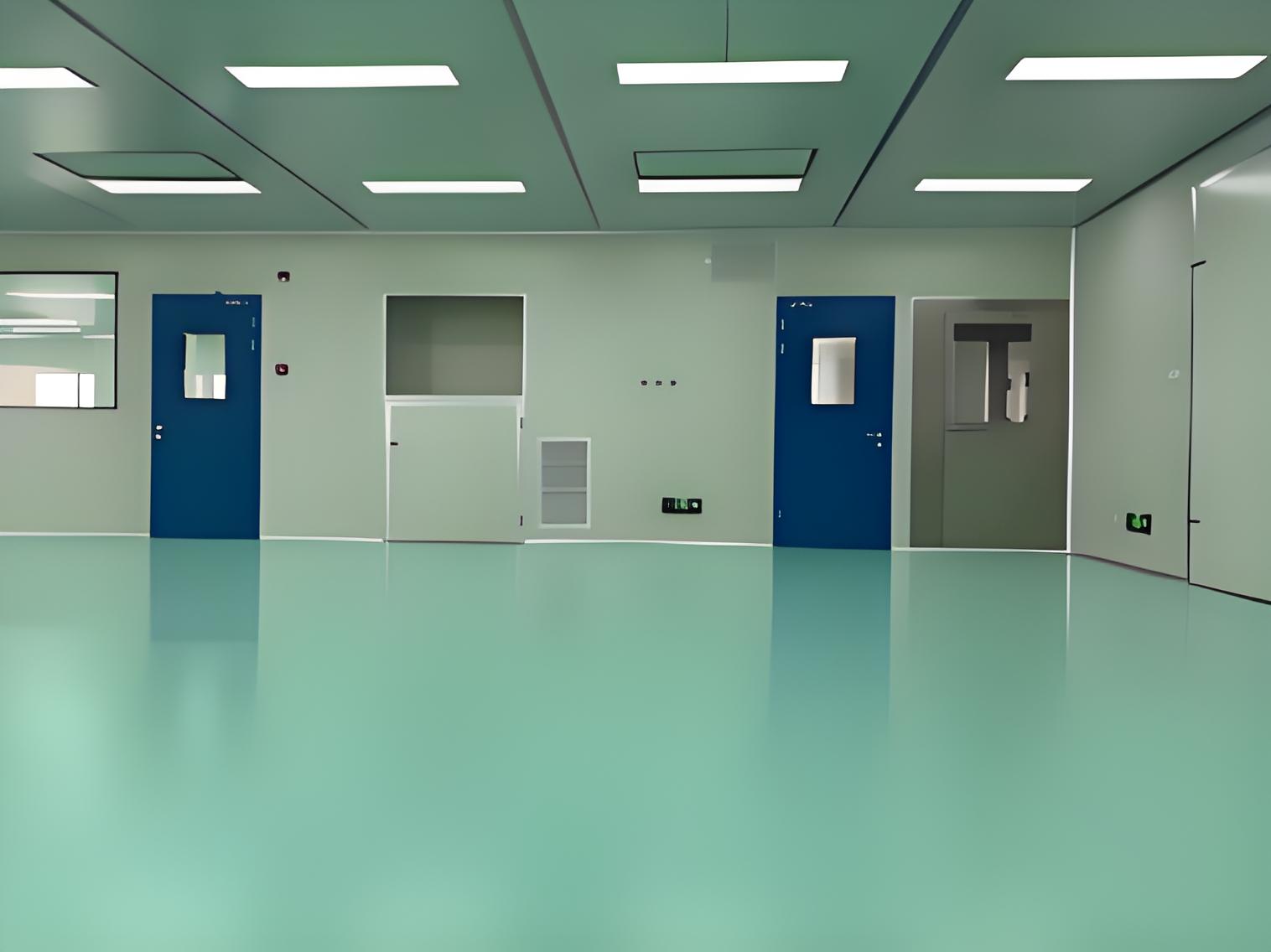
In aseptic processing, biopharmaceutical R&D, and advanced surgical suites, the built environment is not a passive enclosure—it is an active barrier against contamination. The discipline of Sterile room decoration encompasses the selection, installation, and validation of wall, ceiling, floor, and fixture systems that maintain microbial integrity, support rigorous sanitization, and withstand decades of operational stress. Unlike standard cleanroom finishes, sterile-grade decoration demands zero crevices, non-porous substrates, and chemical resistance against sporicidal agents. With more than 20 years of delivering validated controlled environments, TAI JIE ER has refined a methodology where decoration becomes an integral part of the contamination control strategy.
This article dissects the technical layers of sterile room decoration—from monolithic flooring to seamless modular panels—and addresses the challenges of GMP Annex 1 compliance, material outgassing, and long-term maintainability. Facility engineers, quality assurance leads, and project managers will gain actionable insights to avoid costly deviations and ensure that every square meter of the sterile envelope performs to the highest standard.
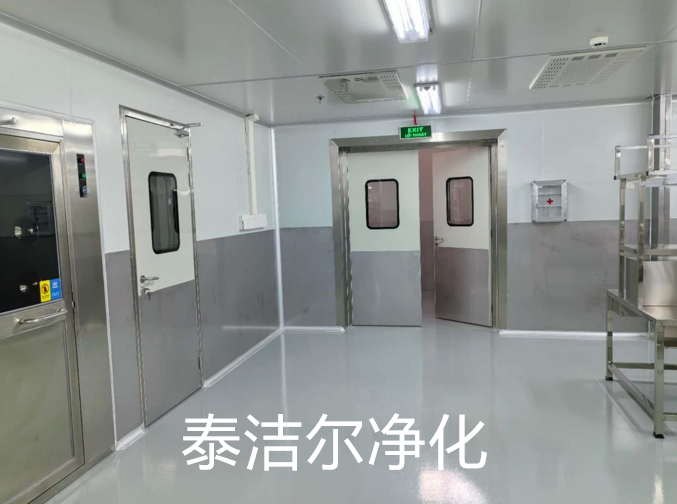
True sterile room decoration begins with the principle that any joint, pore, or irregularity is a potential microbial reservoir. The industry has moved away from field-applied coatings alone toward engineered systems that provide homogeneous, repairable, and validated surfaces. Three material categories dominate modern aseptic facilities:
Seamless Polymer Flooring: Self‑leveling epoxy, polyurethane (PU), and methyl methacrylate (MMA) systems create continuous, monolithic floors with integrated cove bases. Typical thickness ranges from 3 mm to 6 mm, offering impact resistance and thermal shock stability. For sterile zones, static-dissipative versions (10⁶–10⁹ Ω) are specified to prevent electrostatic attraction of particles.
Modular Wall and Ceiling Panels: Pre‑engineered panels with a non‑porous core (mineral wool, polyurethane foam) faced with 0.5–0.7 mm thick painted steel, anodized aluminum, or fiberglass-reinforced plastic (FRP). Panel joints are sealed with structural silicone or pre‑compressed gaskets that withstand repeated cleaning. For aseptic corridors, passivation of stainless steel finishes prevents corrosion from disinfectants containing chlorine or peracetic acid.
Antimicrobial Coatings & Surface Treatments: Silver-ion or quaternary ammonium compounds embedded in clear coats are sometimes applied to high-touch areas, though these must be validated for non‑interference with sterilization cycles. The primary defense remains the absence of joints rather than reliance on active antimicrobial chemistry.
A well-executed Sterile room decoration integrates these materials with a focus on thermal expansion compatibility, because temperature fluctuations during steam sterilization (SIP) or autoclave cycles can cause differential movement that cracks rigid finishes. Therefore, modern designs incorporate flexible transition profiles and engineered expansion joints located outside critical zones.
Beyond floors and walls, sterile room decoration encompasses details that are often overlooked yet critical to contamination control:
Ceilings in aseptic rooms must support terminal HEPA or ULPA filters, lighting, and monitoring sensors. Suspended grid systems with powder-coated aluminum profiles allow filter housings to be flush‑mounted, eliminating horizontal ledges where dust could settle. For Grade A and Grade B areas, flush‑mounted laminar flow modules with gel-seal filters are preferred over pressure‑plenum designs to simplify sanitization of the ceiling plane. The interface between the filter frame and ceiling panel is sealed with validated silicone that remains flexible after repeated chemical exposure.
Standard hinged doors with exposed hardware are unacceptable in sterile environments. Modern decoration incorporates sliding doors with automatic operators, or swing doors with concealed hinges and pneumatic seals. Pass‑through chambers (laminar flow or static) require interior surfaces that match the room finish—typically 316L stainless steel with a No. 4 brushed finish to minimize bacterial adhesion. Door frame installation follows a “first-fix” principle: the rough opening is finished with sealed corners before the door set is installed, ensuring no gaps remain between the wall and the frame.
Utility outlets, data ports, and gas valves represent the weakest points in a sterile envelope. Factory‑prefabricated service panels with seamless gaskets and flush stainless steel cover plates are installed. Electrical conduits are embedded in walls or routed through ceiling voids with double‑sealed compression glands. For process equipment, co‑planar floor penetrations are eliminated by raising equipment on stainless steel stands with radiused bases that allow full access for cleaning underneath.
Despite strict guidelines, many sterile facilities face recurring problems: biofilm formation beneath floor edges, delamination of wall coatings due to moisture ingress, and extended downtime during requalification. A forward-looking Sterile room decoration methodology directly tackles these issues.
Eliminating Hidden Microbial Niches: Traditional “cove stick” or site‑formed coves often develop hairline cracks. Pre‑fabricated cove formers integrated into the base flooring system, combined with monolithic PU topping that extends 150 mm up the wall, create a true seamless junction. This approach eliminates the need for separate wall‑base joints, reducing viable particle counts during active monitoring by up to 80% in comparative case studies.
Chemical Compatibility & Resistance: Frequent disinfection with hydrogen peroxide vapor (HPV), peracetic acid, or sodium hypochlorite degrades inferior finishes. Industry data show that high‑build epoxy floors with quartz filler maintain gloss and integrity after >500 wipe cycles, whereas waterborne acrylics fail within 12 months. Decoration specifications must include compatibility testing certificates from the coating manufacturer.
Accelerated Installation Without Compromising Validation: For facility upgrades, long construction timelines are unacceptable. Using modular cleanroom panels with factory‑cut openings reduces on‑site cutting and dust generation by up to 70%. Panels are installed with a compression‑fit system that requires no wet sealants on the interior face, allowing immediate commencement of cleaning and certification protocols.
Recognizing these operational realities, TAI JIE ER applies a value‑engineering approach that prioritizes materials and joint details proven in GMP environments, ensuring that decoration choices do not become the source of future corrective actions.
While the underlying principles of sterile room decoration remain consistent, the execution varies significantly across industries.
For sterile injectables, cell therapy, and gene therapy manufacturing, the decoration must facilitate frequent decontamination cycles, including hydrogen peroxide vapor. Wall systems are typically composed of smooth, non‑porous panels with sealed, radiused corners at floor and ceiling intersections. All surfaces must be able to withstand 2–3 daily sanitizations. In these environments, sterile room decoration also incorporates visual indicators—such as color‑coded cove strips—to delineate operational zones without introducing physical barriers that could disrupt laminar airflow.
Healthcare sterile zones require decoration that minimizes acoustic reflection while meeting rigorous hygiene standards. Antimicrobial copper alloys are sometimes used for grab bars and door push‑plates, but the primary envelope relies on seamless flooring (homogeneous vinyl or epoxy) with heat‑welded joints and wall cladding that integrates with medical gas services. An emerging standard is the use of demountable wall systems that allow rapid reconfiguration for changing surgical robotics while maintaining the same cleanliness classification.
ATMP facilities often combine open manufacturing steps with strict segregation. Decoration must support compartmentalized pressure cascades. Here, modular pass‑through chambers with interlocked doors and integrated wipe‑down stations are incorporated into the wall decoration, ensuring that material transfer does not compromise the aseptic core. The ability to document every joint and material lot through as‑built drawings becomes a regulatory expectation.
Decoration is not complete until it is validated. Industry best practices (ISO 14644‑4, GMP Annex 1) require that all finishes be verified through a documented installation qualification (IQ) and operational qualification (OQ). This includes:
Surface Integrity Tests: Visual inspection of all joints, absence of bubbles or cracks, and verification of radius curvature (typically 50–100 mm for coving).
Electrical Conductivity Measurements: For static‑dissipative floors, point‑to‑point resistance and point‑to‑ground resistance must fall within specified ranges (10⁶–10⁹ Ω).
Microbiological Sampling: Contact plates and swab tests on representative areas, especially near joints, after final cleaning. Acceptance criteria are based on the classified area grade (e.g., ≤1 CFU per contact plate for Grade A surfaces).
Recovery and Cleanability Testing: Simulated contamination with fluorescent tracer and subsequent cleaning verification to demonstrate that decoration geometry does not impede effective sanitation.
Experienced engineering firms like TAI JIE ER embed these tests into the construction schedule, ensuring that any rework is identified before the facility moves to operational handover.
Even the most robust sterile room decoration will face degradation from mechanical impact, chemical exposure, and routine wear. A lifecycle management plan should include:
Predictive Maintenance Programs: Using non‑destructive thickness gauges to monitor epoxy flooring wear; recoating or re‑polishing before substrate exposure.
Joint Re‑sealing Protocols: Silicone sealants in critical zones are typically inspected biannually and replaced every 3–5 years depending on chemical exposure.
Modular Panel Replaceability: When specifying modular wall systems, ensure that replacement panels can be installed from the clean side without disturbing adjacent zones, preserving the validated state.
Data from facilities with 10‑year decoration lifecycles show that planned refurbishment, rather than reactive repair, reduces total downtime by 40% and prevents cross‑contamination incidents.
Sterile room decoration is no longer a finishing trade—it is a core engineering discipline that directly impacts product safety, regulatory outcomes, and operational uptime. By combining monolithic materials, factory‑prefabricated components, and rigorous validation protocols, facility owners can achieve surfaces that withstand the harshest aseptic conditions while maintaining GMP compliance. Whether designing a new aseptic filling line or upgrading an existing facility, engaging with specialists who understand the intersection of material behavior and contamination control is non‑negotiable. A properly executed Sterile room decoration project pays for itself through reduced deviation investigations, shorter cleaning cycles, and extended requalification intervals.
Q1: What is the main difference between a standard cleanroom finish and sterile room decoration?
A1: Standard cleanroom finishes focus on particle control (non‑viable) and often tolerate small joints or field‑applied coatings. Sterile room decoration goes further to eliminate any site where microorganisms can proliferate—requiring monolithic surfaces, radiused coving, validated chemical resistance, and strict adherence to aseptic design principles outlined in GMP Annex 1. Every penetration and joint must be permanently sealed and cleanable with sporicidal agents.
Q2: How do I select the right flooring system for a Grade B aseptic suite?
A2: For Grade B (ISO Class 7 at rest) areas, high‑build epoxy or polyurethane systems with integral coving are preferred. Key selection criteria include: resistance to hydrogen peroxide vapor and peracetic acid, static‑dissipative properties (if required), slip resistance (coefficient of friction >0.6), and documented installation history in regulated environments. Epoxy terrazzo offers exceptional durability but requires specialized installers.
Q3: Can existing conventional cleanrooms be upgraded to meet sterile decoration standards without a full shutdown?
A3: Yes, through phased modular renovation. Pre‑fabricated wall panels, floating floor overlays, and sealed ceiling grids can be installed in segregated phases with temporary barriers. The key is to conduct a risk assessment for cross‑contamination during installation, use negative‑pressure containment, and requalify each zone before bringing it back into operation. Many retrofits achieve the required standards within 4–6 months without halting overall production.
Q4: What documentation is essential for sterile room decoration to satisfy regulatory inspectors?
A4: Inspectors typically request: material certificates (including chemical resistance, fire rating, and emission data), installation qualification (IQ) reports with as‑built drawings, joint and cove radius verification, surface roughness test results (Ra ≤ 0.8 µm for stainless steel surfaces), microbiological surface monitoring data post‑installation, and the sealant validation report confirming compatibility with disinfectants.
Q5: How often should sterile room surfaces be re‑coated or replaced?
A5: There is no fixed interval; it depends on usage and maintenance quality. High‑quality epoxy flooring in a well‑managed aseptic suite can last 12–15 years. However, an annual audit of surface integrity (checking for cracks, delamination, or loss of gloss) is recommended. If the surface shows signs of porosity or cannot pass contact‑plate testing, recoat or replacement should be scheduled before any regulatory filing or major inspection.
Q6: What role does thermal expansion play in sterile room decoration failures?
A6: Significant—especially in facilities with autoclaves or SIP cycles. Temperature variations cause differential expansion between wall substrates, floor slabs, and ceiling grids. Without properly designed expansion joints (placed in less critical areas) and flexible sealants that maintain adhesion, cracks appear, compromising sterility. Modern decoration uses engineered movement profiles and pre‑compressed foam seals to accommodate expansion while preserving the flush surface.
Q7: Is there a specific standard for sterile room decoration materials regarding outgassing and volatile organic compounds (VOCs)?
A7: Yes. For pharmaceutical and semiconductor applications, low‑VOC and low‑outgassing materials are specified to prevent chemical contamination. Reference standards include ASTM E595 for outgassing in vacuum environments and IEST‑RP‑CC031 for cleanroom materials. Material suppliers should provide test data on total volatile organic compound (TVOC) emissions, especially for epoxy and sealant products.
For comprehensive sterile room decoration engineering, validation, and lifecycle support, explore the technical portfolio at TAI JIE ER. Their integrated project delivery ensures that every surface detail aligns with regulatory expectations and operational excellence.