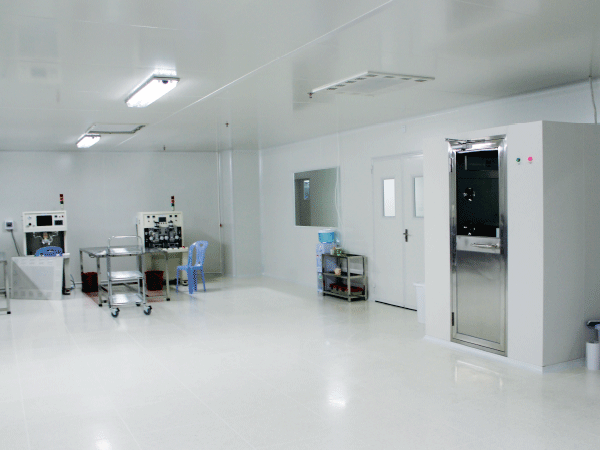

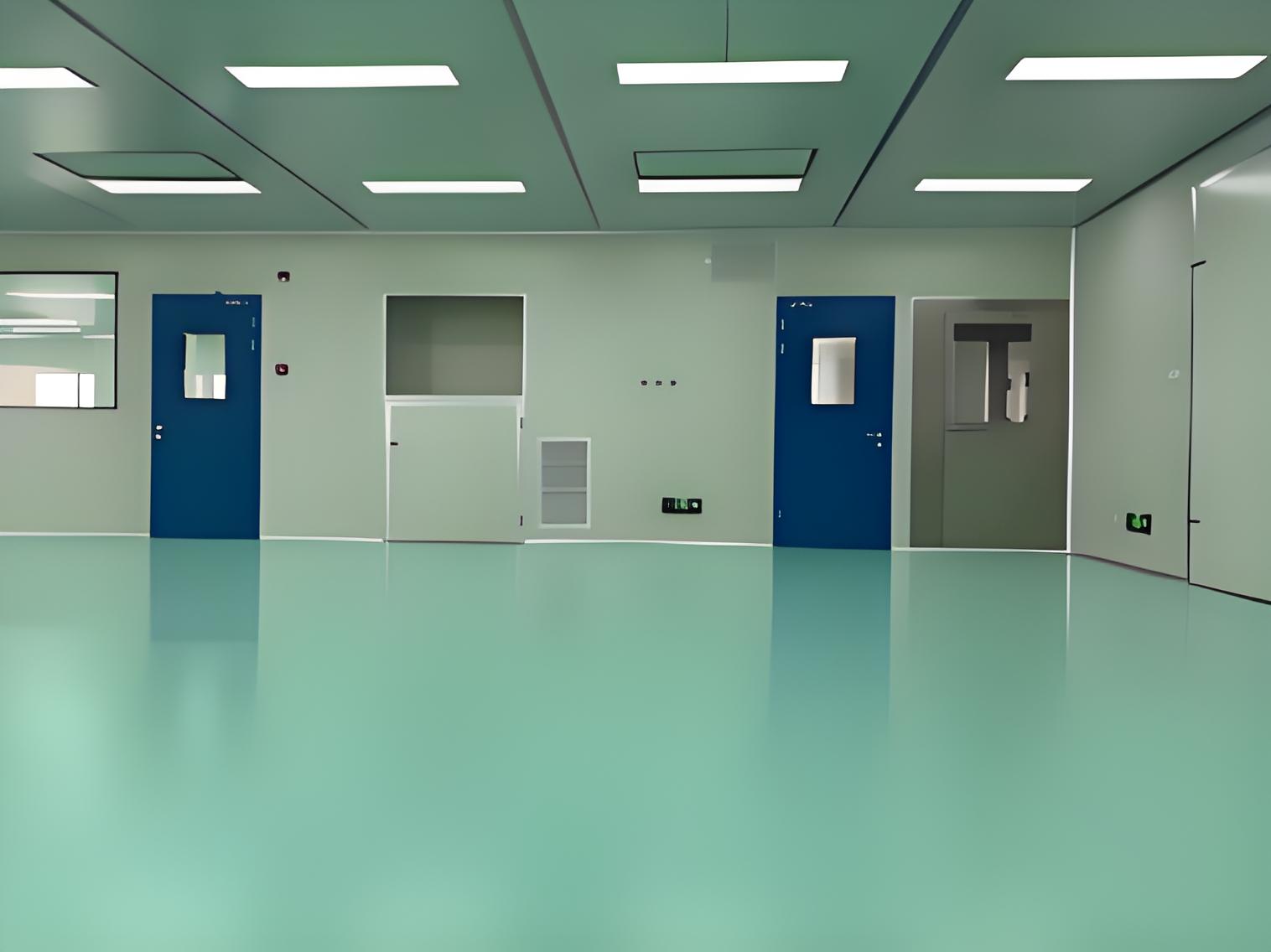
In high-stakes industries—from semiconductor fabrication to aseptic pharmaceutical manufacturing—the distinction between operational integrity and regulatory failure often resides in the surfaces that surround the process. Cleanroom decoration is not an aesthetic pursuit; it is a discipline of contamination defense, particle dynamics management, and long-term material stability. As a consultant who has overseen over 120 turnkey cleanroom projects across Europe and Asia, I have observed that improper surface specification remains one of the top three causes of validation failures. This guide dissects the scientific principles, material technologies, and compliance frameworks that define state-of-the-art cleanroom interior finishes.
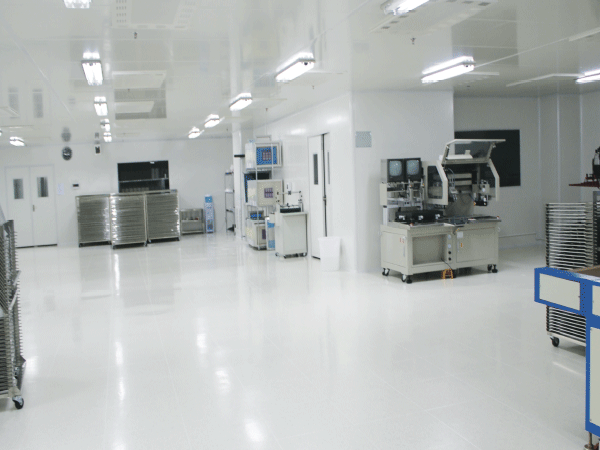
Every square meter of a cleanroom’s interior—walls, ceilings, floors, and integrated fixtures—functions as either a barrier or a source of contamination. The International Organization for Standardization (ISO 14644-1) classifies airborne particulate cleanliness, but it does not inherently govern surface emission rates. However, data from controlled environment audits reveal that up to 68% of non-viable particle excursions originate from surface degradation, delamination, or improper joint design.
Key performance attributes for cleanroom decoration systems include:
Surface roughness (Ra): Pharmaceutical Grade A zones demand Ra ≤ 0.8 µm to prevent microbial harborage and facilitate validated cleaning.
Electrostatic dissipative (ESD) properties: In electronics assembly, surface resistivity between 1×10⁴ and 1×10⁹ Ω/sq prevents electrostatic discharge damage to sensitive components.
Chemical resistance: Surfaces must withstand daily exposure to 3% hydrogen peroxide, peracetic acid, and quaternary ammonium compounds without discoloration or pitting.
Fire safety: Class A or B1 flame spread ratings (per ASTM E84 or EN 13501-1) are mandatory for cleanrooms to meet building code and insurance requirements.
Modern cleanroom decoration integrates these parameters into monolithic systems where the substrate, coating, and sealing methodology function as a unified barrier.
The evolution of cleanroom finishes has moved decisively away from field-applied paints and gypsum-based systems toward engineered panels and seamless polymeric floors. Each material class presents distinct trade-offs in terms of lifecycle cost, installation speed, and contamination risk.
Modular cleanroom walls, typically fabricated from mineral-filled polyurethane or aluminum honeycomb cores with PVC-coated steel or food-grade stainless steel skins, now account for over 70% of new construction in biopharma. These panels offer:
Integral cam-lock joining systems that eliminate dust-trapping protrusions and enable rapid reconfiguration.
Pre-cut pass-throughs and raceways for utilities, maintaining the integrity of the cleanroom decoration envelope.
Surface finishes with anti-microbial additives (e.g., silver ion or zinc pyrithione) that reduce biofilm formation by up to 99.9% in controlled tests.
Epoxy, polyurethane, and MMA (methyl methacrylate) flooring systems are the dominant choice for ISO Class 5–8 environments. Unlike tile or sheet vinyl, seamless flooring eliminates joints where moisture and bacteria can accumulate. Key specifications include:
Epoxy systems: Provide exceptional chemical resistance (pH 2–12) and compressive strength (>80 MPa) but can be brittle in high-impact zones.
Polyurethane cement: Exhibits thermal shock resistance and is preferred in wet processing areas due to its ability to withstand steam cleaning.
Electrostatic dissipative (ESD) epoxy: Uses conductive carbon fibers or copper mesh to achieve consistent grounding across large areas.
Perforated or solid aluminum ceilings with powder-coated finishes (≥80 µm thickness) prevent shedding of fibers and support high-efficiency particulate air (HEPA) filter integration. Structural load capacity for maintenance access typically exceeds 100 kg per panel.
For organizations seeking validated material combinations, TAI JIE ER provides full documentation including surface roughness certifications, fire test reports, and ISO 14644 compliance test records for every cleanroom decoration component, ensuring alignment with global regulatory frameworks.
Cleanroom decoration cannot be approached as a one-size-fits-all discipline. The contaminant of concern, cleaning protocol, and facility lifecycle dictate distinct material choices.
Facilities governed by EU GMP Annex 1 (2022 revision) require surfaces that are “smooth, impervious, and able to withstand cleaning and disinfection.” Here, cleanroom decoration must prioritize:
Rounded coving at floor-wall junctions (≥25 mm radius) to eliminate 90° angles where residue accumulates.
Flush-mounted light fixtures and pass-through boxes, with gasketed seals rated for gaseous hydrogen peroxide (VHP) exposure.
Wall systems with flush swing doors equipped with pneumatic seals to maintain differential pressure stability.
For ISO Class 3–4 cleanrooms, molecular contamination (AMC) control is as critical as particle control. Cleanroom decoration materials must have low outgassing (≤0.1% total mass loss per ASTM E595) and be constructed from anodized aluminum or stainless steel with electropolished finishes. Static control is paramount: all surfaces, including wall panels, must be conductive (≤1×10⁶ Ω) and grounded to prevent static charge buildup that can destroy wafer patterns.
Biosafety level (BSL) 2 and 3 facilities require cleanroom decoration capable of withstanding aggressive sporicidal agents like bleach (5,000 ppm) and peracetic acid. High-performance polyurethane coatings with cross-linked polymer structures offer superior resistance to chemical attack compared to standard epoxies.
Despite rigorous design objectives, many cleanroom decoration projects encounter premature failures. Analysis of post-construction data from 78 facilities identified three recurrent failure modes:
Delamination of field-applied coatings: Inadequate surface preparation (lack of abrasion or moisture testing) leads to coating detachment within 12–18 months, releasing particles directly into the critical zone. The cost of recoating an operating cleanroom can exceed $500 per square meter due to downtime and revalidation.
Joint failure in field-assembled systems: Silicone sealants in corners and penetrations degrade under UV exposure (in case of external cleanroom viewing windows) or repeated chemical cleaning, creating fissures that harbor Pseudomonas aeruginosa and other biofilm-forming organisms.
Incompatibility with cleaning chemicals: Over 30% of solvent-based epoxy coatings exhibit swelling or softening after 500 cycles of quaternary ammonium cleaning, altering surface roughness and compromising cleanability.
Engineered solutions from specialist providers like TAI JIE ER address these failures through prefabricated components that undergo factory-certified assembly, reducing on-site variable risks and delivering verifiable surface integrity data prior to installation.
Contemporary cleanroom decoration relies on a “system of systems” approach where every interface—wall to floor, wall to ceiling, penetration to panel—is designed for continuity. Leading-edge solutions include:
Prefabricated cleanroom pods: Fully assembled modules with integrated MEP services and finished cleanroom decoration that undergo particle testing prior to shipping. This approach reduces construction timelines by 40% and ensures repeatable quality.
Hybrid wall systems: Combining a structural aluminum frame with removable, re-laminatable panels allows for future reclassification (e.g., from ISO Class 7 to Class 5) without demolition.
Intelligent surface coatings: Photocatalytic TiO₂ coatings are emerging for ISO Class 6–8 spaces, where they decompose organic residues under ambient light, reducing the frequency of chemical cleaning.
Selecting cleanroom decoration materials without a concurrent validation strategy is a common oversight. Regulatory bodies and certifying authorities require documented evidence that finishes do not contribute to contamination. Key validation activities for cleanroom decoration include:
Surface particle emission testing: Using the “tumble test” or direct contact plates to quantify particle shedding under dynamic conditions (ISO 14644-14 provides methodology).
Cleanability validation: Standardized protocols (e.g., IEST-RP-CC045.2) evaluate the ease of removing soil residues and microbial contaminants from surfaces after defined cleaning cycles.
Material traceability: Lot-specific certificates of analysis (COAs) verifying composition, surface roughness, and chemical resistance must be maintained for the facility’s validation package.
For multinational projects, coordinating between FDA 21 CFR Part 11 electronic records and EU Annex 11 requirements necessitates that cleanroom decoration suppliers provide comprehensive documentation in digital formats. TAI JIE ER offers integrated quality management systems that align with these global standards, delivering both physical installation and digital validation dossiers.
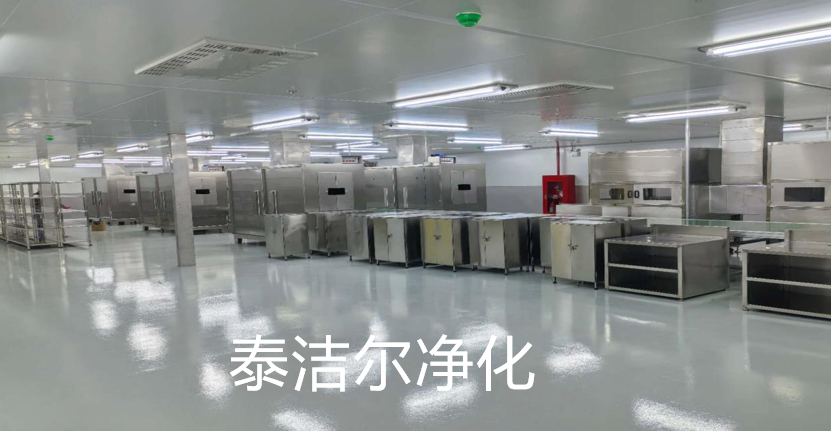
The next generation of cleanroom decoration integrates sensor technology and circular economy principles:
Embedded particle counters: Some modular wall panels now include micro-vacuum sampling ports that connect to centralized monitoring systems, providing real-time surface cleanliness data.
Recyclable metal panel systems: Aluminum honeycomb panels with polymer-free adhesives allow disassembly and recycling at end-of-life, supporting LEED v5 and BREEAM certifications.
Bio-based epoxy resins: Formulations with ≥25% bio-renewable content are becoming available without sacrificing chemical resistance, reducing the carbon footprint of cleanroom construction by up to 30%.
These innovations, however, require rigorous qualification to ensure they meet baseline contamination control performance. Adopting new materials should always be preceded by accelerated aging and chemical compatibility studies.
Cleanroom decoration is not a peripheral specification; it is the foundational layer of contamination control. Facilities that treat surface finishes as a commodity risk frequent requalification, unplanned downtime, and regulatory observations. Conversely, those that adopt a systems engineering perspective—selecting materials validated for their specific process, utilizing prefabricated modular assemblies, and partnering with experienced integrators—achieve lower total cost of ownership and enhanced operational flexibility. For projects requiring demonstrable compliance and precision execution, TAI JIE ER provides the engineering depth and material expertise to realize contamination-controlled environments that perform as intended across decades of service.
A1: For GMP Grade A/B (aseptic processing) environments, the dominant materials are powder-coated steel or stainless steel modular panels with seamless epoxy flooring and coving. All penetrations must be flush-mounted with sanitary-grade silicone gaskets. The wall-to-floor interface must be coved with a minimum radius of 25 mm to eliminate sharp angles that are difficult to clean. Surface roughness (Ra) should be ≤ 0.8 µm to meet microbial control requirements per EU GMP Annex 1.
A2: Validation involves testing material samples according to ASTM D5116 (small chamber emissions testing) or ISO 16000-9. For semiconductor and sensitive pharmaceutical facilities, total VOC emission rates must be below 100 µg/m²·hr. Reputable suppliers provide third-party test reports showing specific VOC profiles. Additionally, field air sampling post-installation confirms that total TVOC levels remain within the project’s cleanliness specifications (typically <500 µg/m³ for ISO Class 5–7 spaces).
A3: High-quality modular panel systems with factory-applied coatings (minimum 80 µm polyester or PVDF) and polyurethane cement floors demonstrate a service life of 15–20 years when subjected to daily cleaning with hydrogen peroxide or peracetic acid. The critical factor is the sealant system; using hybrid polymer sealants (MS polymers) rather than standard silicones extends joint integrity to over 10 years without reapplication. Regular inspection for surface erosion, performed annually, helps predict end-of-life and schedule refurbishment without production interruption.
A4: Yes, through phased modular cleanroom construction. Modern cleanroom decoration utilizes pre-engineered panel systems that are installed in sections, allowing the use of temporary containment barriers (softwall partitions) to isolate construction zones. A typical retrofit for a 500 m² area can be executed in 8–12 weeks while maintaining adjacent operations at ISO Class 7 or 8 status. The key is selecting a contractor experienced in live-facility installations and conducting rigorous particle monitoring throughout the installation phase.
A5: ESD control requires that all surfaces—walls, floors, workbenches—form a continuous conductive path to ground. For cleanroom decoration, this is achieved by using conductive epoxy flooring (with carbon fibers) and wall panels with conductive coatings (surface resistivity between 1×10⁴ and 1×10⁹ Ω). ANSI/ESD S20.20 and IEC 61340-5-1 are the applicable standards. For flooring, the system must demonstrate a resistance to ground (Rtg) of ≤1×10⁹ Ω under the relative humidity conditions present in the cleanroom (often 40–60% RH). Periodic testing every 6–12 months ensures ongoing ESD performance.
For further technical consultation or project-specific material selection, visit TAI JIE ER to access validated cleanroom decoration systems and engineering documentation