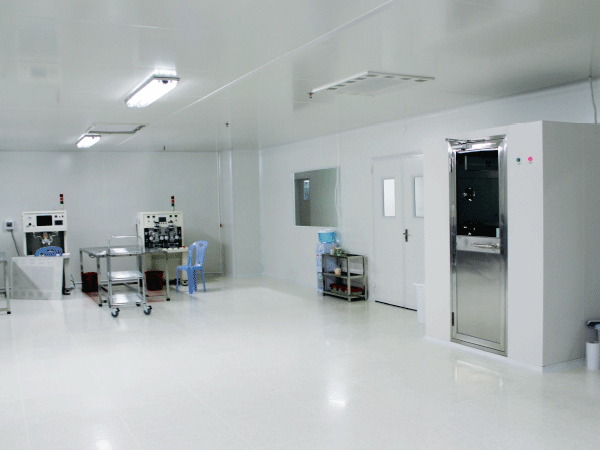

Contamination is the silent enemy of high-tech manufacturing. Whether you are producing microchips, pharmaceuticals, or aerospace components, a single microscopic particle can ruin an entire production batch. This is why facility owners cannot afford to cut corners during the planning phase. Effective Cleanroom Engineering design is not just about installing filters; it is about creating a controlled ecosystem that guarantees product yield and safety.
At TAI JIE ER, we understand that building a controlled environment is a complex investment. It requires a synergy between architecture, mechanical systems, and operational protocols. When the design phase is handled correctly, the facility operates efficiently for years. If it is rushed, operational costs skyrocket and compliance issues arise.
This article breaks down the critical components of designing a modern cleanroom. We will look at the physics of airflow, the materials required for construction, and the energy strategies that keep running costs manageable.
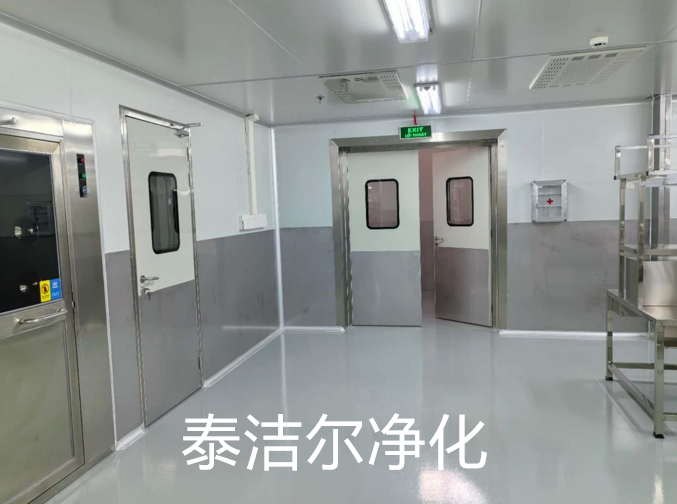
The primary goal of any controlled environment is to manage particle concentration. This is achieved through specific airflow patterns. In Cleanroom Engineering design, we generally look at two types of airflow: unidirectional (laminar) and non-unidirectional (turbulent).
Unidirectional flow is typically used in ISO Class 5 environments or cleaner. The air moves in parallel lines at a uniform velocity. This "piston" effect pushes particles straight down and out of the room. It is highly effective but expensive to build and operate.
Turbulent flow is common in ISO Class 6 through 8 zones. Here, clean air is supplied through ceiling filters and mixes with the room air. The mixed air is then extracted through low-level wall returns. The objective is to dilute the particle concentration continuously.
Engineers must calculate the Air Change Rate (ACH) precisely. A standard office might have 2 to 4 air changes per hour. A stringent cleanroom might require 300 to 600 changes per hour. Calculating this correctly ensures the system is not undersized (risking contamination) or oversized (wasting energy).
You cannot design a facility without a target. The global benchmark for Cleanroom Engineering design is ISO 14644-1. This standard classifies rooms based on the number of particles per cubic meter of air.
For example, an ISO Class 7 room allows a specific number of particles sized 0.5 microns or larger. However, relying solely on ISO standards is often not enough. Pharmaceutical companies must also adhere to GMP (Good Manufacturing Practice) guidelines, such as EU GMP Annex 1.
Electronics manufacturers often have their own internal standards that are stricter than ISO requirements. A design team must integrate these regulatory demands early in the process. Failing to define the classification for each zone leads to costly retrofits later.
The HVAC system is the heart of the cleanroom. It controls temperature, humidity, and pressurization. In many industries, humidity control is just as critical as particle control.
Lithium-ion battery production, for instance, requires extremely low humidity levels to prevent chemical reactions. The HVAC design must include high-capacity dehumidifiers. Conversely, some biological processes require high humidity.
Pressurization is another non-negotiable aspect. The cleanroom must maintain a positive pressure relative to the outside world. This prevents dirty air from infiltrating the clean zone when doors are opened.
In Cleanroom Engineering design, we typically arrange rooms in a cascade. The cleanest room has the highest pressure. The adjacent airlock has slightly less pressure, and the corridor has even less. This pressure hierarchy acts as an invisible barrier against contaminants.
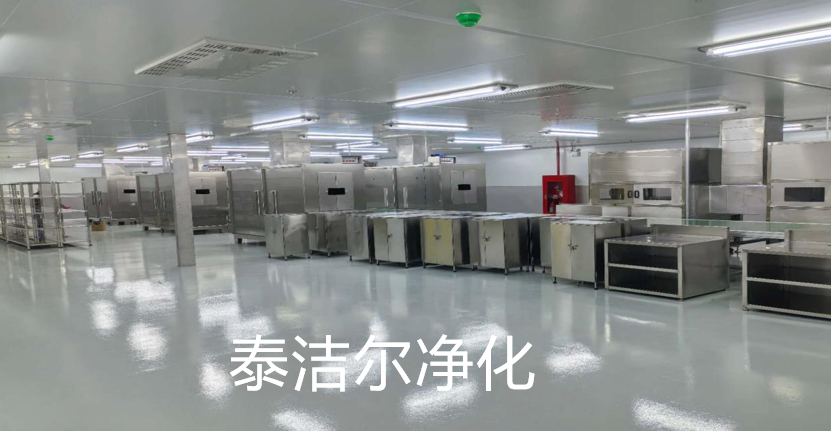
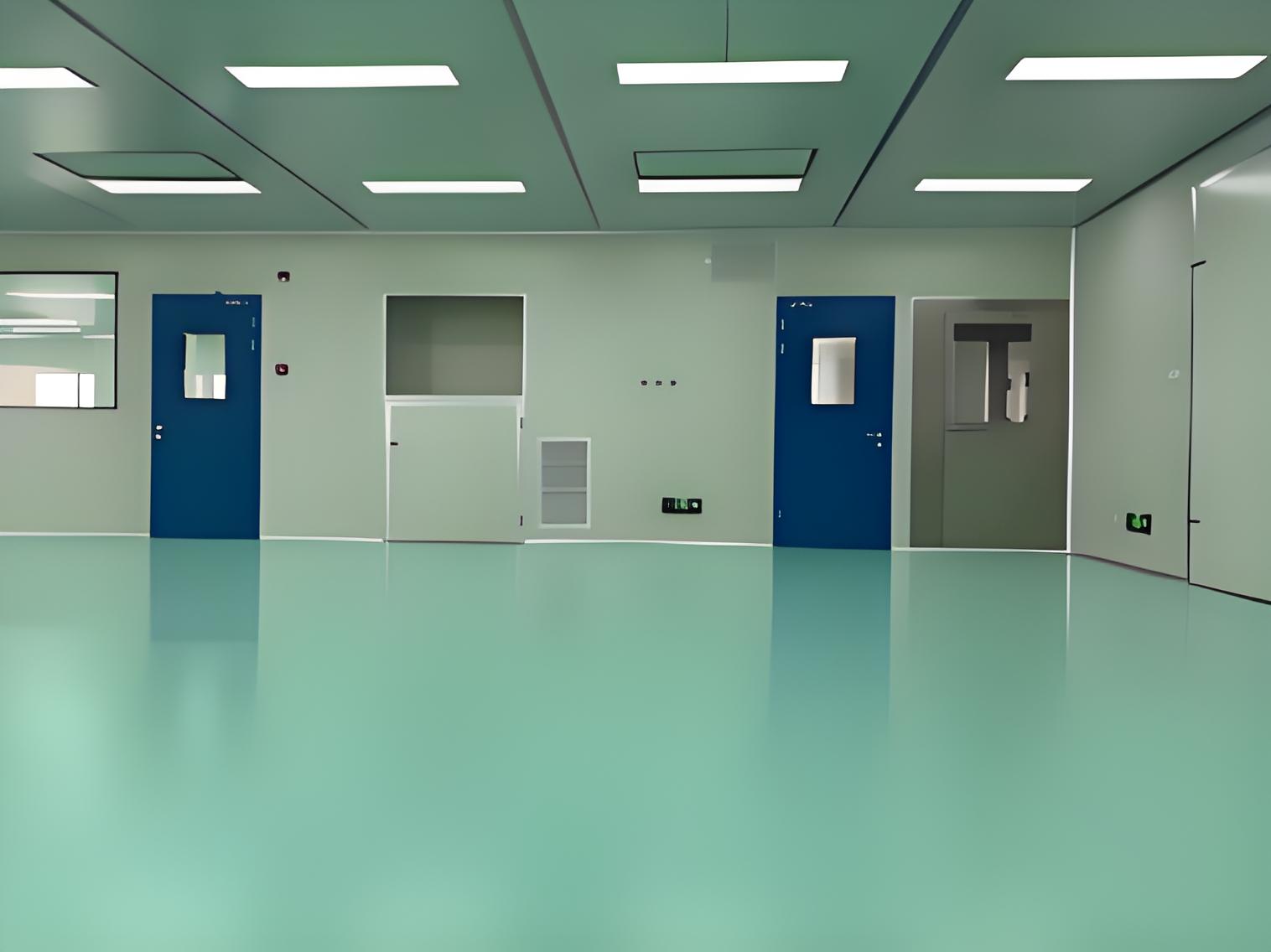
The structure of the room must not generate particles. Standard drywall and drop ceilings are unacceptable. Walls, floors, and ceilings must be non-shedding, easy to clean, and chemically resistant.
Modular wall panels are the industry standard. They provide a flush surface that eliminates crevices where bacteria or dust could hide. At TAI JIE ER, we emphasize the importance of using coved connections between walls and floors. Sharp 90-degree corners are difficult to sanitize.
Flooring selection depends on the application. For electronics, an ESD (Electrostatic Discharge) control floor is vital. Static electricity can destroy sensitive components. For pharmaceuticals, the floor must withstand harsh cleaning agents like phenolic disinfectants.
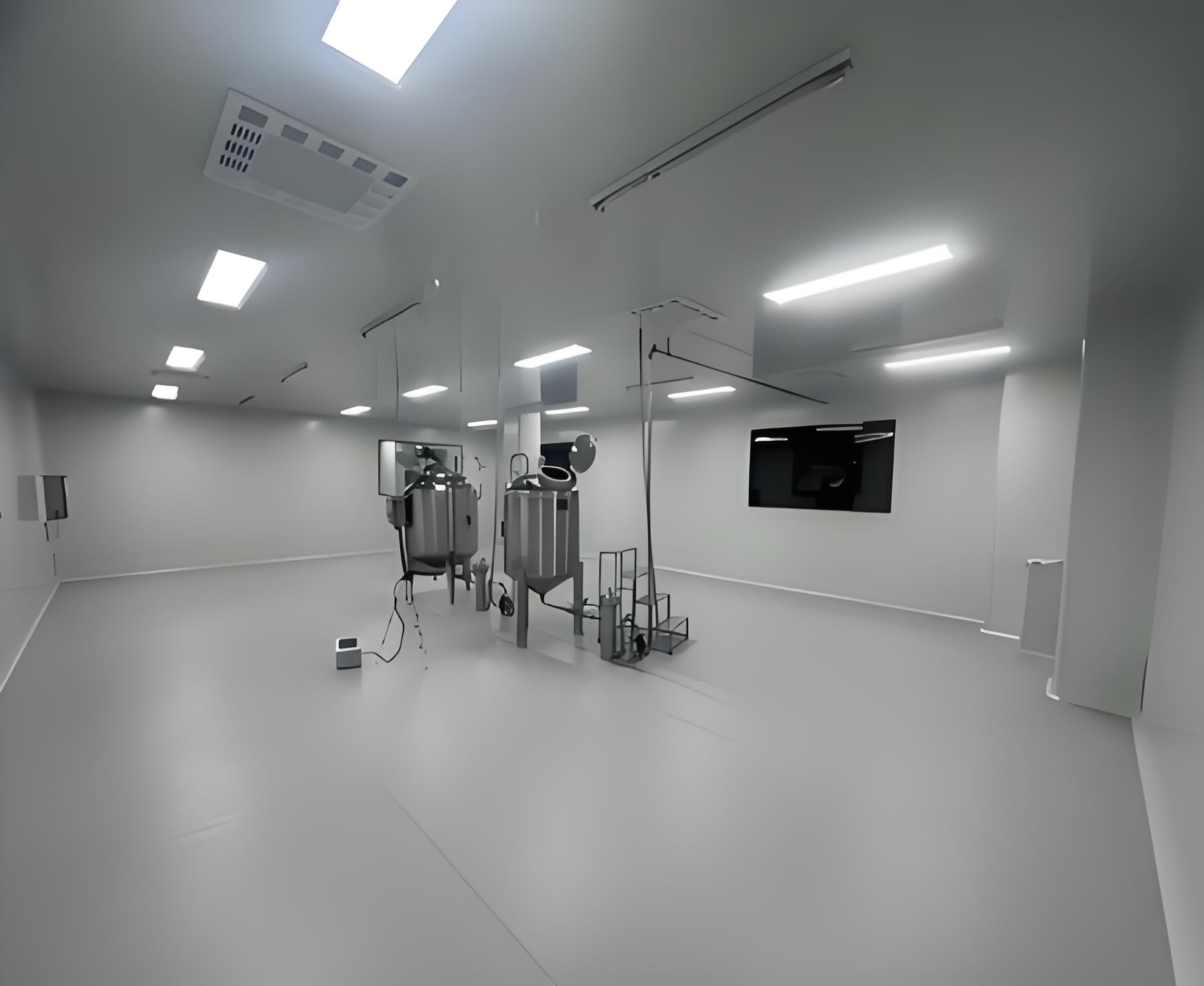
Lighting also plays a role. Flush-mounted LED teardrop lights are preferred because they do not disrupt the airflow pattern. They must be sealed to maintain the integrity of the ceiling grid.
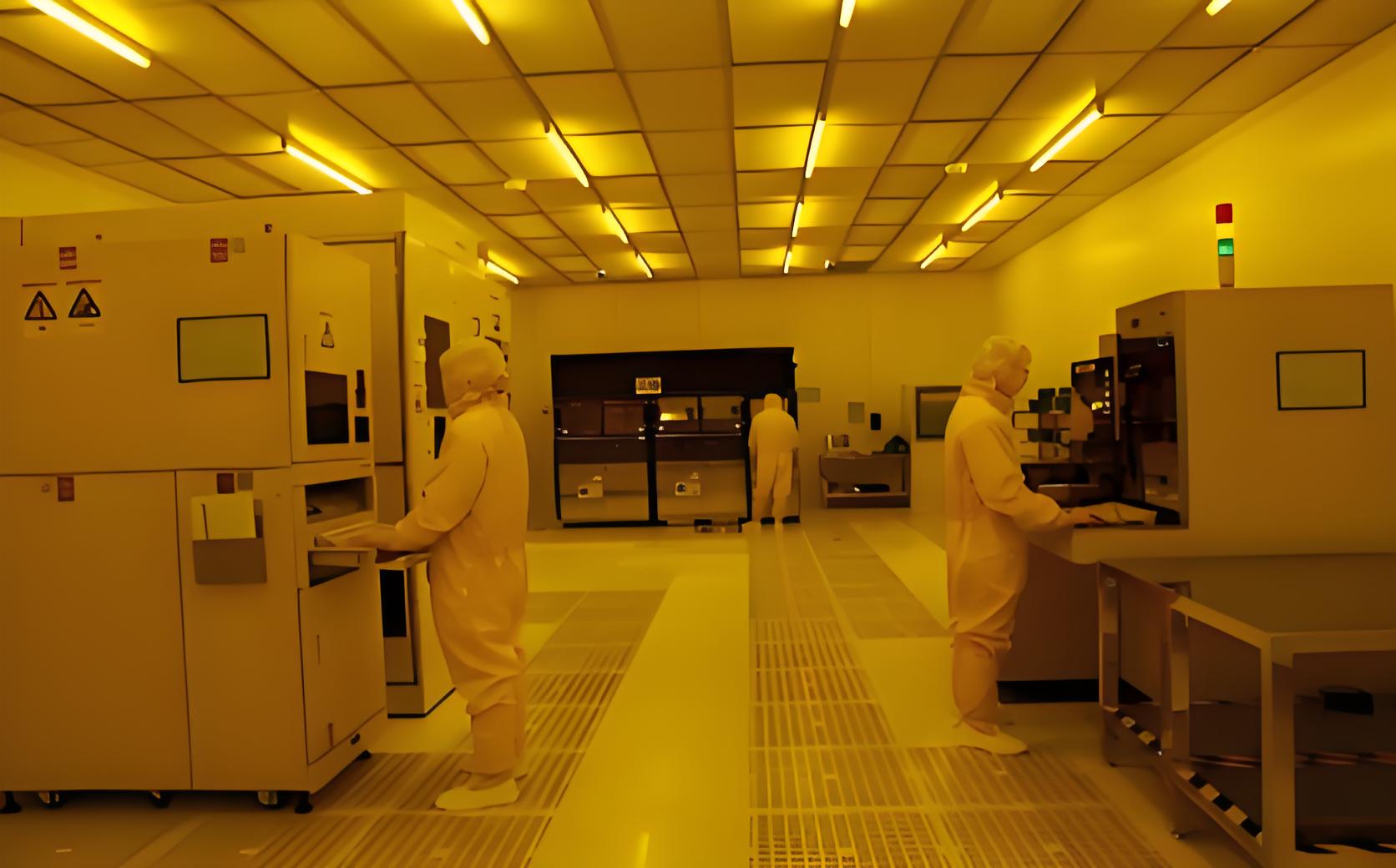
A good layout minimizes the risk of human error. People are the largest source of contamination in any facility. Therefore, the design must control how people enter and exit.
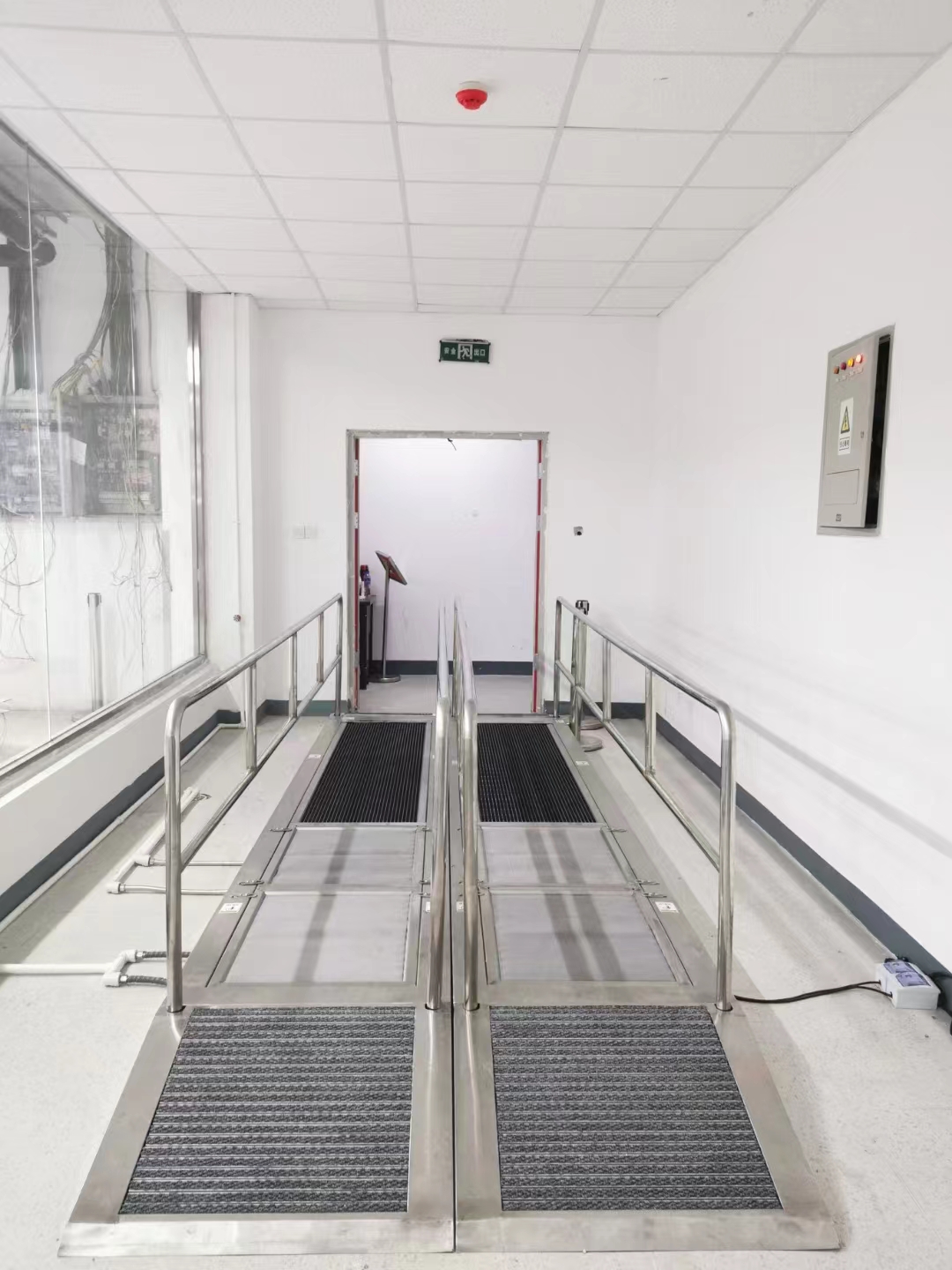
Gowning rooms are the transition zones. A well-planned facility will have separate flows for personnel and materials. Personnel move through cascading change rooms—from "black" (dirty) to "gray" to "white" (clean) zones.
Material transfer requires pass-boxes or airlocks. Active pass-boxes have their own air filtration to "clean" items before they enter the production area. Large equipment might need a dedicated material airlock with rolling shutter doors.
In efficient Cleanroom Engineering design, these traffic patterns are mapped out to prevent cross-contamination. We ensure that raw materials never cross paths with finished products in a way that could compromise quality.
Cleanrooms are energy hogs. They run 24/7 and move massive volumes of air. With rising energy costs, efficiency is no longer optional; it is a design requirement.
Fan Filter Units (FFUs) with high-efficiency DC motors are a standard solution. They consume significantly less power than older AC models. Furthermore, Variable Frequency Drives (VFDs) allow the system to ramp down during non-production hours.
Heat recovery systems are also crucial. The HVAC system expels a lot of conditioned air. Capturing the thermal energy from this exhaust air to pre-treat incoming fresh air can reduce heating and cooling loads by 30%.
Low-pressure drop HEPA filters are another innovation. They allow air to pass through more easily, meaning the fans do not have to work as hard. TAI JIE ER engineers often recommend these sustainable technologies to reduce the total cost of ownership (TCO).
A cleanroom is not just an empty box; it is full of process equipment. The design must account for utility connections without breaking the containment seal.
Process piping, compressed air, nitrogen lines, and vacuum systems often need to penetrate the cleanroom walls. These penetrations must be sealed with specialized escutcheons or gel seals.
Electrical outlets should be flush-mounted. In wet cleaning areas, they must have waterproof covers. The placement of these utilities should be planned based on the equipment layout to avoid trailing cables, which are a trip hazard and a cleaning nightmare.
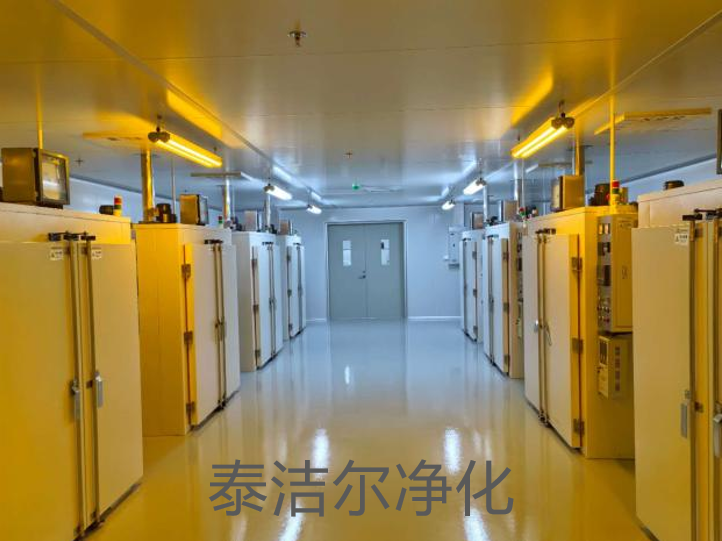
Every industry has unique pain points. A semiconductor fab has different needs than a sterile compounding pharmacy. TAI JIE ER approaches every project with a blank slate but a full toolbox of experience.
We do not believe in cookie-cutter designs. We analyze the client's workflow first. We look at the equipment list, the personnel count, and the expansion plans.
Our team focuses on "buildability." Some designs look great on paper but are impossible to install in an existing warehouse with low ceilings. We ensure that the design works in the real world, not just in CAD software.
From the initial concept to the final selection of wall panels, we guide our clients. We ensure that the Cleanroom Engineering design aligns with their budget while meeting strict international standards.
The design phase ends, but the engineering work continues into validation. A cleanroom is not "clean" until it is proven to be.
Commissioning involves a series of tests:
Airflow Velocity Tests: Ensuring fans are pushing enough air.Filter Integrity Tests: Checking HEPA filters for leaks.Particle Count Tests: Verifying the ISO classification.Recovery Tests: Measuring how fast the room cleans itself after a contamination event.
Documentation is key here. For GMP facilities, the design qualification (DQ), installation qualification (IQ), and operational qualification (OQ) protocols must be rigorous.
If the design was sound, validation is a smooth process. If the engineering calculations were off, this is where problems appear. This is why working with experienced partners like TAI JIE ER is critical for project success.
The industry is moving toward modularity and flexibility. Pod-based cleanrooms are gaining popularity. These are pre-fabricated off-site and assembled quickly on-site.
Smart cleanrooms are also emerging. Sensors continuously monitor particle counts, pressure, and temperature. They feed this data to a central building management system (BMS).
AI is beginning to play a role in predictive maintenance, alerting facility managers before a fan fails or a filter clogs. While technology advances, the fundamentals of physics remain the same.
Building a controlled environment is a high-stakes undertaking. It requires a deep understanding of physics, mechanics, and regulations. A successful project hinges on detailed Cleanroom Engineering design that balances performance with operational costs.
Shortcuts in the design phase lead to expensive headaches down the road. By prioritizing correct airflow, robust materials, and energy efficiency, facility owners ensure their production lines remain safe and profitable.
TAI JIE ER remains committed to delivering high-performance environments. We bridge the gap between technical requirements and practical application, ensuring your facility is ready for the challenges of tomorrow.
Q1: How much does a standard cleanroom cost per square meter?
A1: Costs vary wildly based on the ISO classification and industry requirements. An ISO 8 modular room might cost a few hundred dollars per square meter, while an ISO 5 microelectronics facility can cost thousands. Factors like ceiling height, HVAC complexity, and location also heavily influence the final price.
Q2: What is the difference between HEPA and ULPA filters?
A2: HEPA (High-Efficiency Particulate Air) filters trap 99.97% of particles that are 0.3 microns in diameter. ULPA (Ultra-Low Penetration Air) filters are even more efficient, trapping 99.999% of particles sized 0.12 microns. ULPA filters are typically reserved for the most stringent applications, like semiconductor manufacturing.
Q3: How long does it take to design and build a cleanroom?
A3: A small modular project might take 3 to 4 months from design to commissioning. Large-scale pharmaceutical or semiconductor facilities can take 12 to 24 months. The design phase usually takes several weeks to ensure all engineering calculations and compliance checks are accurate.
Q4: Can an existing office space be converted into a cleanroom?
A4: Yes, but it is challenging. Office HVAC systems are insufficient for cleanroom loads. You usually need to install new air handling units and ductwork. The existing walls and ceilings often need to be covered or replaced with cleanroom-grade materials to ensure they are non-shedding and sealable.
Q5: How often does a cleanroom need to be recertified?
A5: ISO 14644-2 recommends that cleanrooms be tested and certified at least once every 12 months. However, for stricter environments like ISO Class 5 or GMP pharmaceutical facilities, recertification is often required every 6 months to ensure ongoing compliance and safety.