
For industries where airborne particles, electrostatic discharge, or microbial presence directly impact product yield — semiconductor fabrication, sterile filling, precision painting — the workshop itself becomes a process machine. Clean workshop design integrates room geometry, material science, HVAC thermodynamics, and operational workflows into a seamless, certifiable environment. A poorly designed cleanroom leads to recurring particle excursions, high energy costs, and constant revalidation failures. This article, based on over 150 completed projects across Asia and Europe, provides facility planners, project engineers, and quality managers with a systematic framework for clean workshop design — from concept layout to final certification — while avoiding common pitfalls that compromise cleanliness.
Every clean workshop design must begin with a clear target class based on ISO 14644-1 or GMP grade. Over-specifying increases capital cost by 30–50%; under-specifying leads to quality failures.
ISO 5 (Class 100): ≤ 3,520 particles ≥0.5 µm per m³. Applications: aseptic filling, semiconductor lithography, pharmaceutical compounding.
ISO 6 (Class 1,000): ≤ 35,200 particles ≥0.5 µm per m³. Medical device assembly, advanced research labs.
ISO 7 (Class 10,000): ≤ 352,000 particles ≥0.5 µm per m³. Electronics assembly, pharmaceutical packaging, spray painting booths.
ISO 8 (Class 100,000): ≤ 3,520,000 particles ≥0.5 µm per m³. Clean warehouses, food processing, general coating.
Additional parameters: temperature (usually 20–22°C ±1°C), relative humidity (45–55% ±5%), and differential pressure (20–30 Pa between grades). For painting clean workshops, solvent vapor extraction and explosion-proof design become mandatory — specialties of TAI JIE ER.
Contamination enters primarily through people and materials. A rational clean workshop design enforces a unidirectional, progressive clean-to-dirty flow.
Grey zone (non-classified): Street clothing, incoming material receipt.
Gowning area (ISO 8): Changing into cleanroom garments, shoe covers.
Clean corridor (ISO 7): Primary access to classified rooms.
Core processes (ISO 5–6): Highest cleanliness, accessed via airlocks or pass-through boxes.
Personnel airlocks: Interlocked doors with time delay (15–30 seconds). Supply air velocity ≥ 20 m/s at nozzle to strip particles.
Material pass-through boxes: Stainless steel chambers with interlocked doors and HEPA-filtered air purge. For sterile environments, add UV-C lamps.
Layout checklist: No direct openings between different classes; all transfers via airlocks; return air grilles placed low (150–300 mm above floor).
A common error in clean workshop design is placing the gowning room adjacent to a dirty corridor without an air break. Always maintain a pressure cascade: +25 Pa in core, +15 Pa in corridor, +5 Pa in gowning, -5 Pa in grey zone.
Interior surfaces must be smooth, non-porous, and resistant to cleaning agents. Key specifications:
Walls: Modular panels with polyurethane (PUR) or mineral wool core, faced with pre-painted galvanized steel (0.5–0.6 mm). Surface roughness Ra ≤ 0.8 µm. Joints sealed with non-outgassing silicone.
Ceilings: Same panel construction, with HEPA filter housings integrated. For ISO 5, use fan filter unit (FFU) ceilings with gel-seal rails.
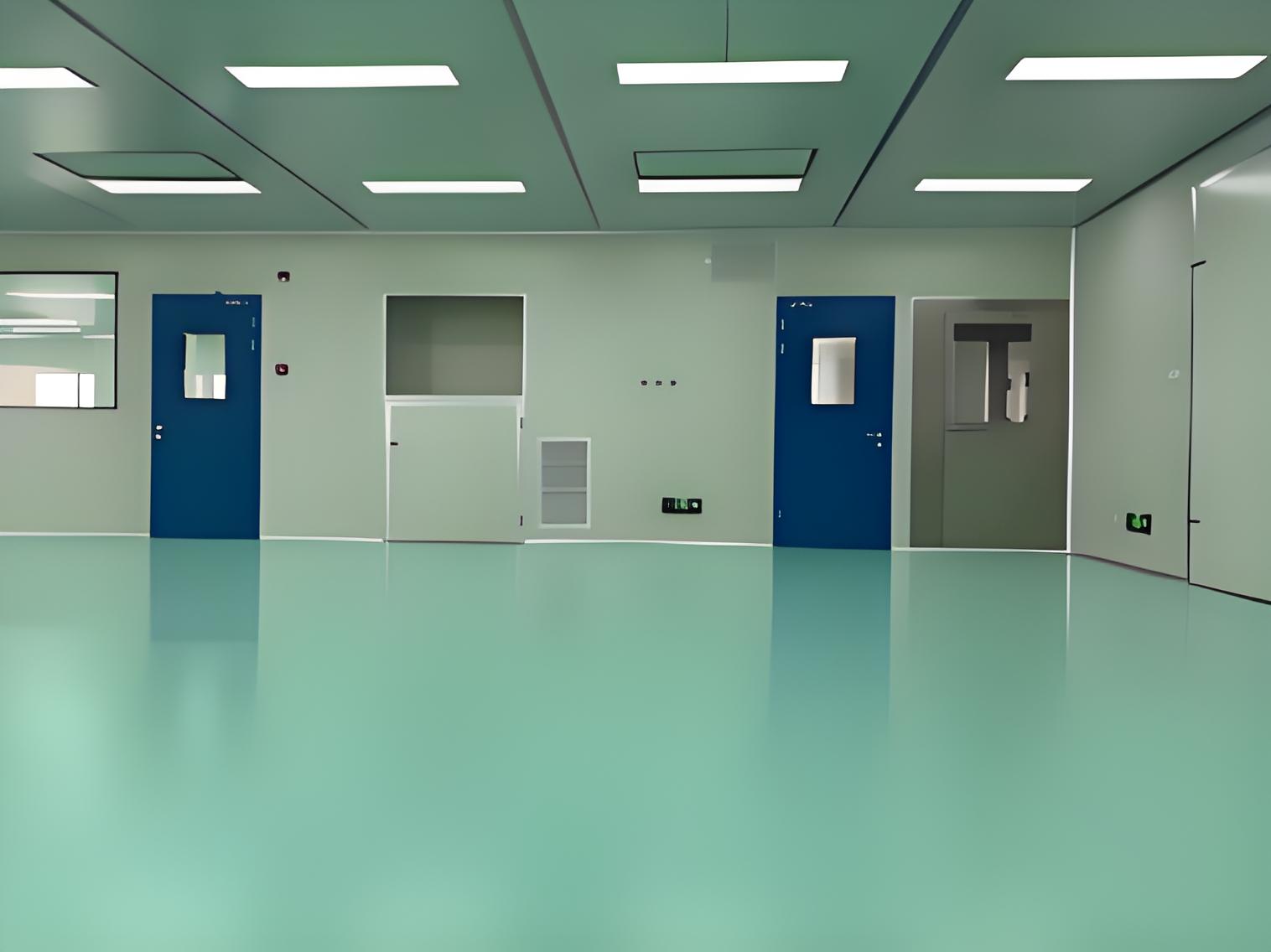
Floors: Seamless epoxy self-leveling (3–4 mm thickness) with cove bases (50 mm radius). Surface resistivity 10⁶ – 10⁹ Ω for ESD protection. For heavy forklift traffic, 6 mm epoxy mortar system.
Windows and doors: Flush-mounted vision panels (double glazed, gas-filled). Sliding doors with brush seals preferred over hinged doors to reduce turbulence.
All penetrations (pipes, conduits, sprinkler heads) must be sealed with compression gaskets or silicone rated for the cleanroom's temperature range. During clean workshop design, specify a "build-clean" protocol: no cardboard, no wood, and HEPA vacuuming after each shift.
The air handling system determines 70% of a cleanroom's energy cost and 90% of its cleanliness performance. Critical design parameters:
Unidirectional (laminar) flow: For ISO 5 and above. Ceiling coverage ≥ 80%, velocity 0.45 m/s ±20%.
Non-unidirectional (turbulent) flow: For ISO 6–8. Air changes per hour: ISO 8: 15–20 ACH; ISO 7: 30–40 ACH; ISO 6: 60–90 ACH.
Return air placement: Low-wall returns (150 mm AFF) for turbulent flow; raised floor plenum for laminar flow.
Pre-filter (G4, F7): Protects HEPA from large particles. Replace quarterly.
HEPA/ULPA filters (H13, H14, U15): Efficiency 99.95% to 99.9995% at MPPS. Gel-seal housings with scan test ports.
Chemical filters (activated carbon): For painting cleanrooms or solvent handling.
Maintain higher pressure in cleaner zones (e.g., +25 Pa for ISO 7, +15 Pa for ISO 8).
Install differential pressure gauges (range 0–125 Pa) with local visual indication and BMS alarm.
Door-mounted pressure switches to alarm if door left open > 30 seconds.
TAI JIE ER uses computational fluid dynamics (CFD) modeling during clean workshop design to visualize air velocity vectors and identify stagnant zones before construction.
In electronics assembly and painting workshops, static charges attract airborne particles and can damage sensitive components. ESD control must be embedded in the clean workshop design:
Flooring: Conductive or static-dissipative (surface resistance 10⁶ – 10⁹ Ω). Grounding grid with 10 m spacing.
Work surfaces: Laminate with same resistivity, connected to common ground point.
Air ionization: Overhead ionizer bars or room ionizers to neutralize charges on non-conductive surfaces (e.g., plastic containers).
Garments and footwear: Conductive soles and wrist straps with continuous monitors.
For spray painting clean workshop design, additional ATEX requirements apply: all electricals must be explosion-proof, floors spark-resistant (copper strips embedded in epoxy), and humidity controlled above 50% to reduce static buildup.
A well-designed clean workshop integrates process utilities without compromising cleanliness.
Lighting: Flush-mounted LED panels, IP65 rated, with smooth polycarbonate diffusers. Illuminance: 300 lux for general areas, 500–750 lux for inspection zones. Color temperature 5000K for accurate color rendering.
Process utilities: Purified water (PW), compressed air, vacuum, and exhaust lines should be routed in interstitial spaces or ceiling plenums. Each penetration sealed with compression fittings.
Building Management System (BMS): Monitors temperature, humidity, differential pressure, particle counts (via remote particle counters), and filter pressure drops. Alarms for excursions.
Cleanliness monitoring: Portable particle counters for routine sampling; fixed particle counters for ISO 5 zones. Viable monitoring (settle plates, active air samplers) for pharmaceutical applications.
Data from monitoring systems must be historian-logged for regulatory audits (FDA, EMA, TGA).
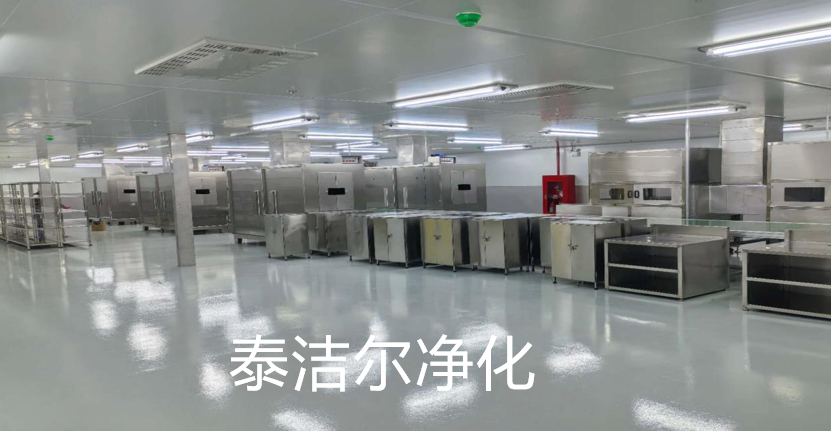
Clean workshop design varies significantly by vertical:
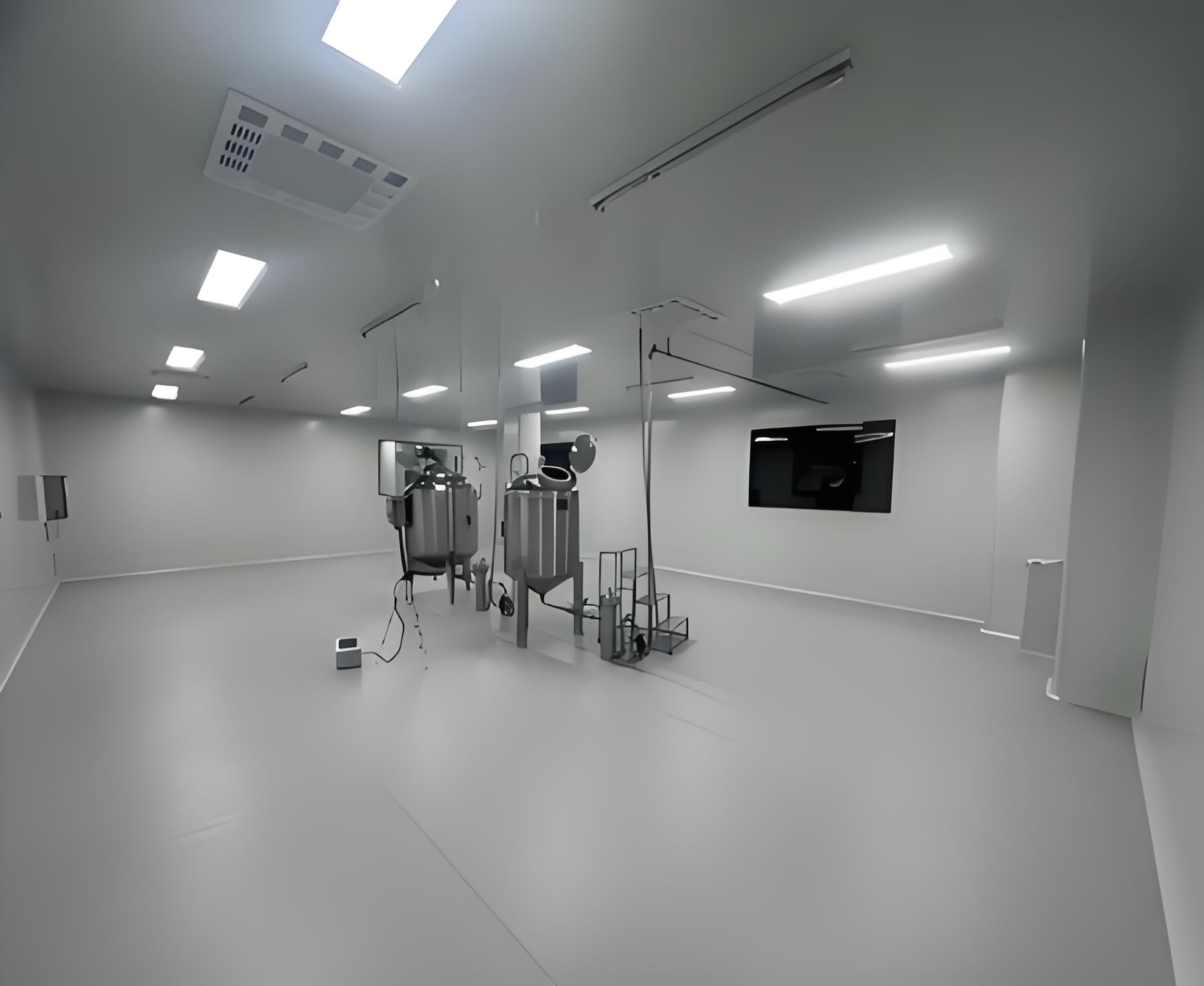
Pharmaceutical (GMP): Coved corners (radius ≥ 40 mm), washable walls (stainless steel or FRP), separate airlocks for waste removal, and pass-through autoclaves.
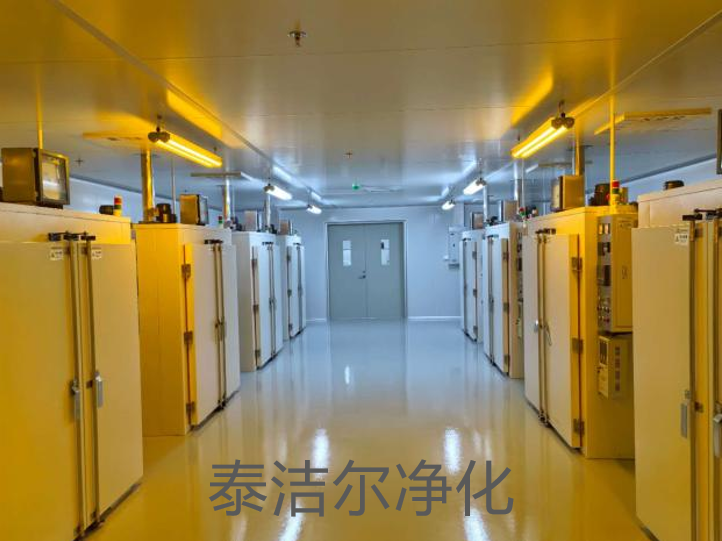
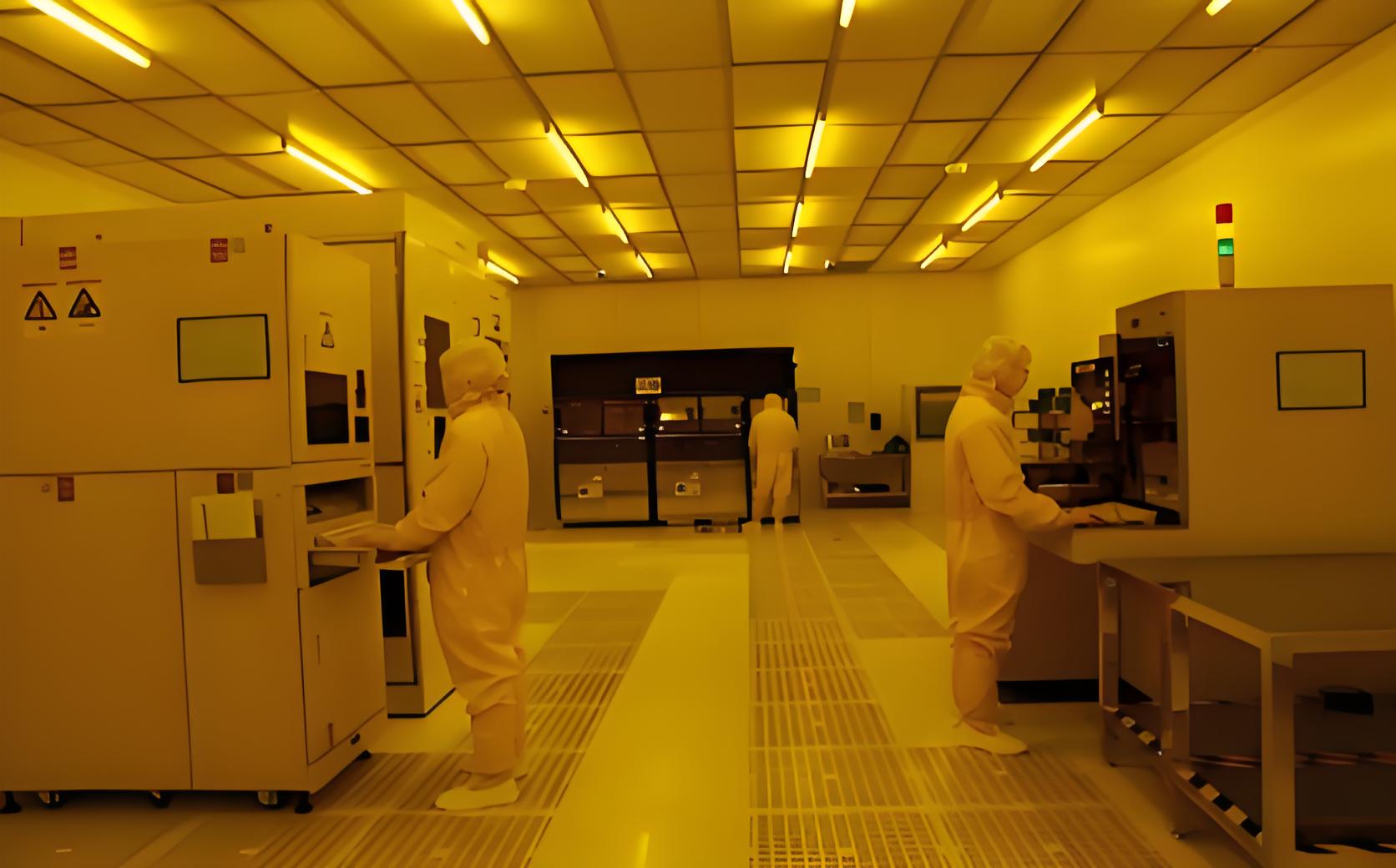
Electronics (semiconductor): Vibration control (VC-C grade or better), raised floors for airflow, ESD everywhere, and chemical exhaust for solvents.
Spray painting (automotive, industrial): Explosion-proof lighting and receptacles, constant temperature (22±1°C) and humidity (55±5% RH), carbon filters for exhaust, and non-slip spark-resistant floors.
Food & beverage: Wash-down capability with floor drains and sloped floors, stainless steel equipment stands, and positive pressure to prevent pests.
TAI JIE ER has delivered turnkey clean workshop design for all four sectors, with each project including full validation documentation (IQ/OQ/PQ).
Q1: What is the typical timeline for a clean workshop design and
construction project?
A1: From concept to certification: 3–5 months
for ISO 8, 5–8 months for ISO 7, and 8–12 months for ISO 5 (including extensive
validation). The clean workshop design phase
(2–4 weeks) includes conceptual layout, CFD modeling, and HVAC load
calculations.
Q2: Can I use standard drywall instead of modular cleanroom
panels?
A2: Not recommended for ISO 7 or higher. Drywall is porous,
sheds gypsum particles, and cannot withstand frequent sanitization. For ISO 8,
you may use gypsum board with three coats of epoxy paint, but it requires
recoating every 2–3 years. Modular panels have higher upfront cost but lower
lifecycle cost.
Q3: How do I determine the number of air changes per hour (ACH) for
my clean workshop?
A3: ACH is not directly prescribed by ISO 14644;
it is derived from the required particle count and time to recover from a
contamination event. For initial design, use industry benchmarks: ISO 8: 15–20
ACH; ISO 7: 30–40 ACH; ISO 6: 60–90 ACH; ISO 5: 240–480 ACH (unidirectional).
Then verify via particle decay testing.
Q4: What is the difference between non-unidirectional and
unidirectional airflow?
A4: Non-unidirectional (turbulent) uses
diffusers and returns to mix air, suitable for ISO 6–8. Unidirectional (laminar)
uses full ceiling HEPA coverage and perforated raised floors to push air in
parallel streams, achieving ISO 5 or better. Unidirectional costs 3–5 times more
in HVAC and filters.
Q5: How often should HEPA filters be tested after the clean workshop
design is implemented?
A5: ISO 14644-3 requires HEPA integrity
testing (PAO or DOP scan) every 12–24 months depending on class. Most
pharmaceutical and electronics companies test annually. Filter replacement
frequency: 3–6 years depending on pre-filter efficiency and environmental
loading.
Q6: What pressure difference should I maintain between clean
zones?
A6: Typically 15–30 Pa between classes (e.g., +25 Pa in ISO 7
relative to ISO 8). Minimum 5 Pa across a door to ensure airflow from clean to
dirty. Pressure differentials above 50 Pa make doors difficult to open and may
cause excessive air leakage.
Q7: Can I incorporate existing equipment into a new clean workshop
design?
A7: Yes, but the equipment must be cleaned, its particle
emission characterized, and its surfaces made cleanable. Often, existing
machinery needs enclosures with local exhaust or positive pressure cabinets.
Clean workshop design for
retrofits and upgrades is a core service of TAI
JIE ER.
A successful Clean workshop design balances contamination control, energy efficiency, workflow ergonomics, and regulatory compliance. TAI JIE ER provides end-to-end services: conceptual design, CFD airflow modeling, material selection, modular panel supply, HVAC installation, validation (IQ/OQ/PQ), and operator training. Our clean workshops are certified to ISO 14644-1:2015 and, for pharmaceutical clients, comply with EU GMP Annex 1.
Do not allow particle contamination or pressure failures to jeopardize your product quality. Contact our cleanroom engineering team for a free initial consultation, budget estimate, or a virtual tour of a reference facility in your industry.
Send your inquiry now: https://www.taijieer.com/ – A TAI JIE ER cleanroom specialist will respond within 6 business hours with a detailed questionnaire and case studies relevant to your application.