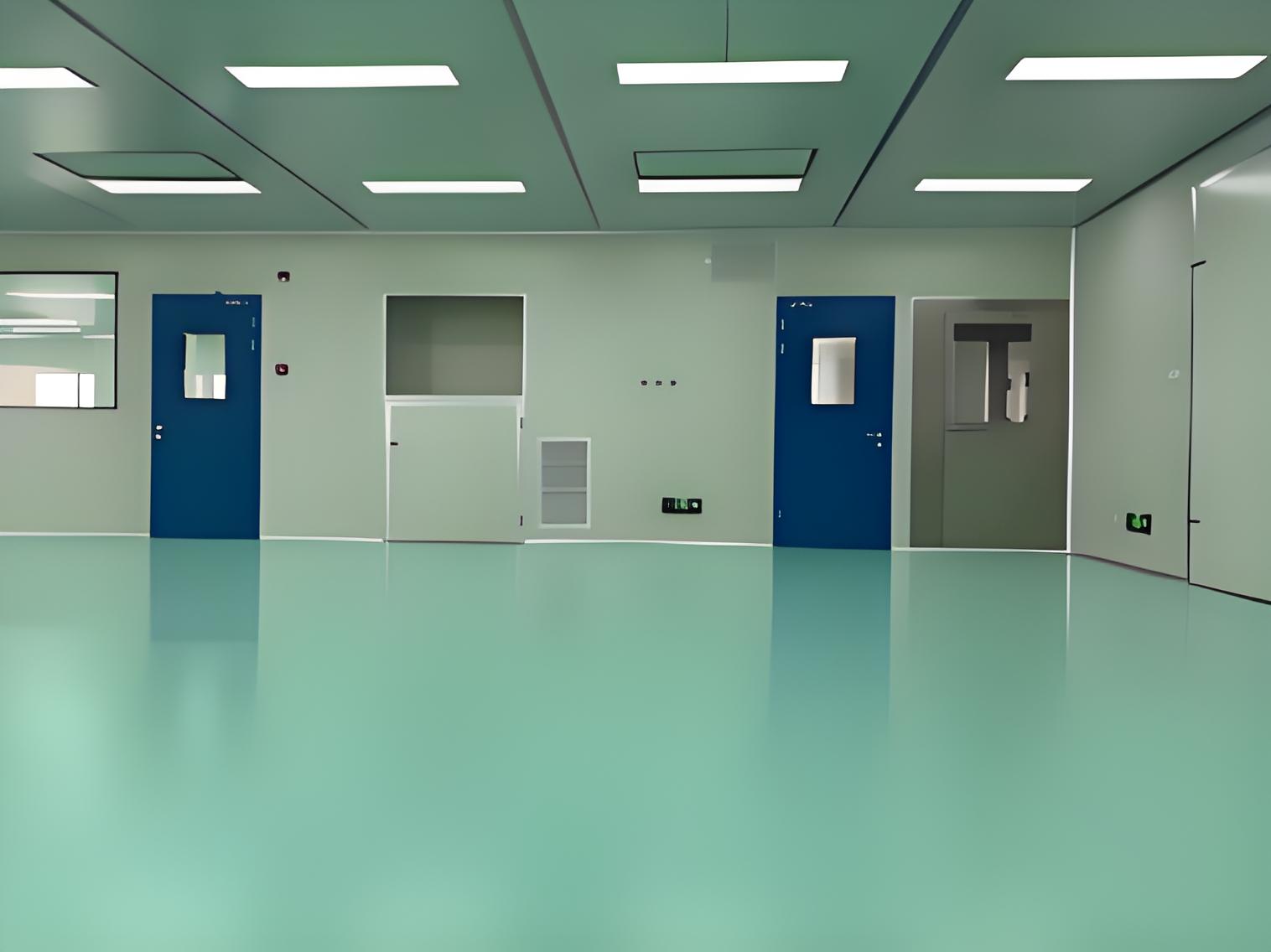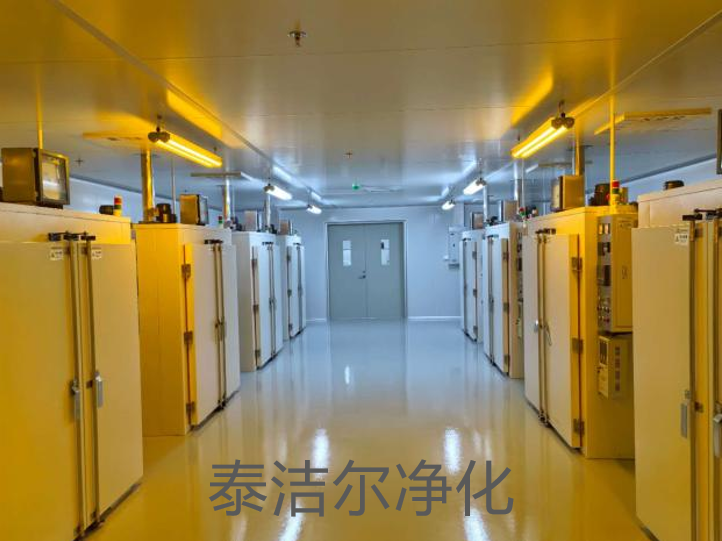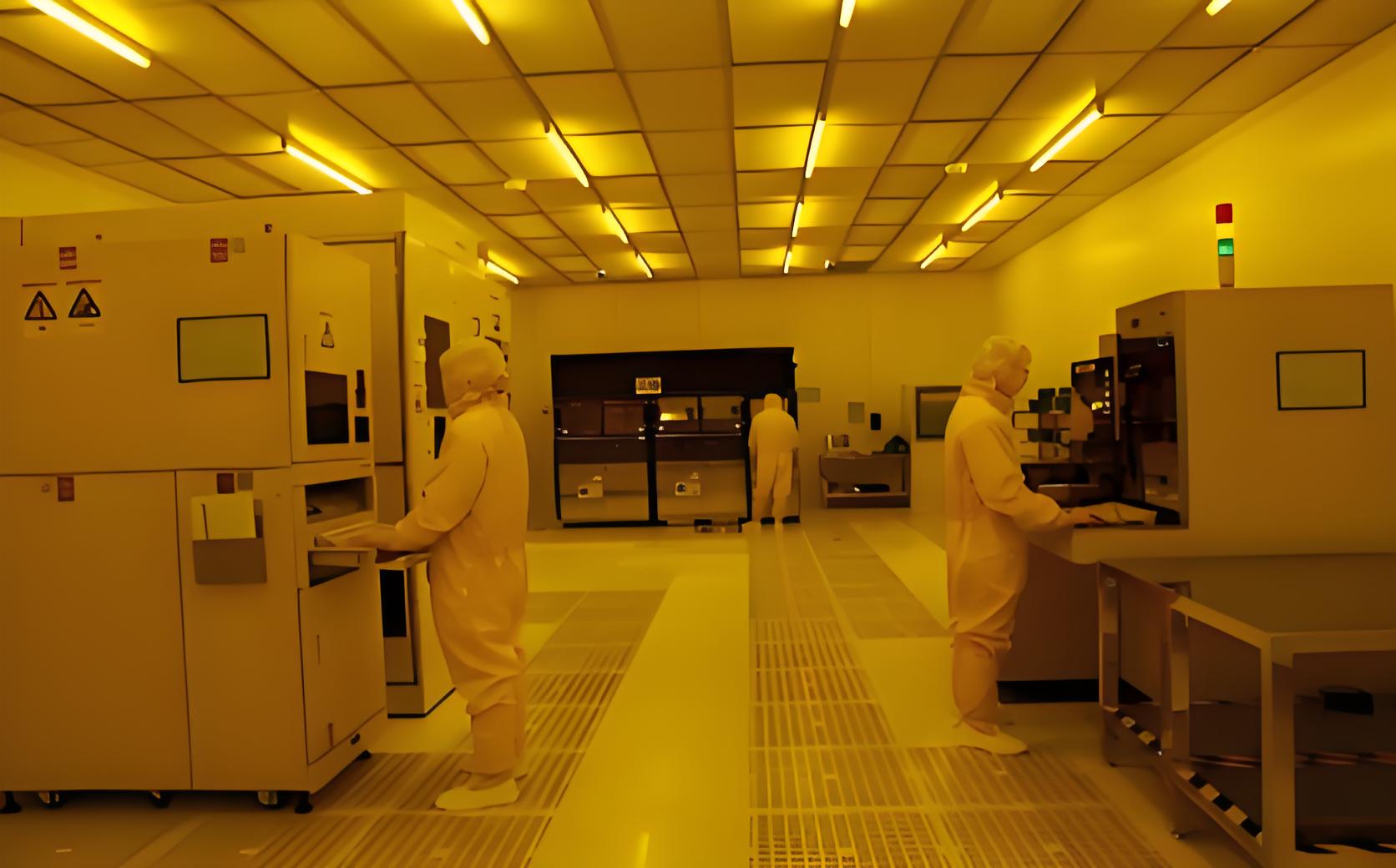

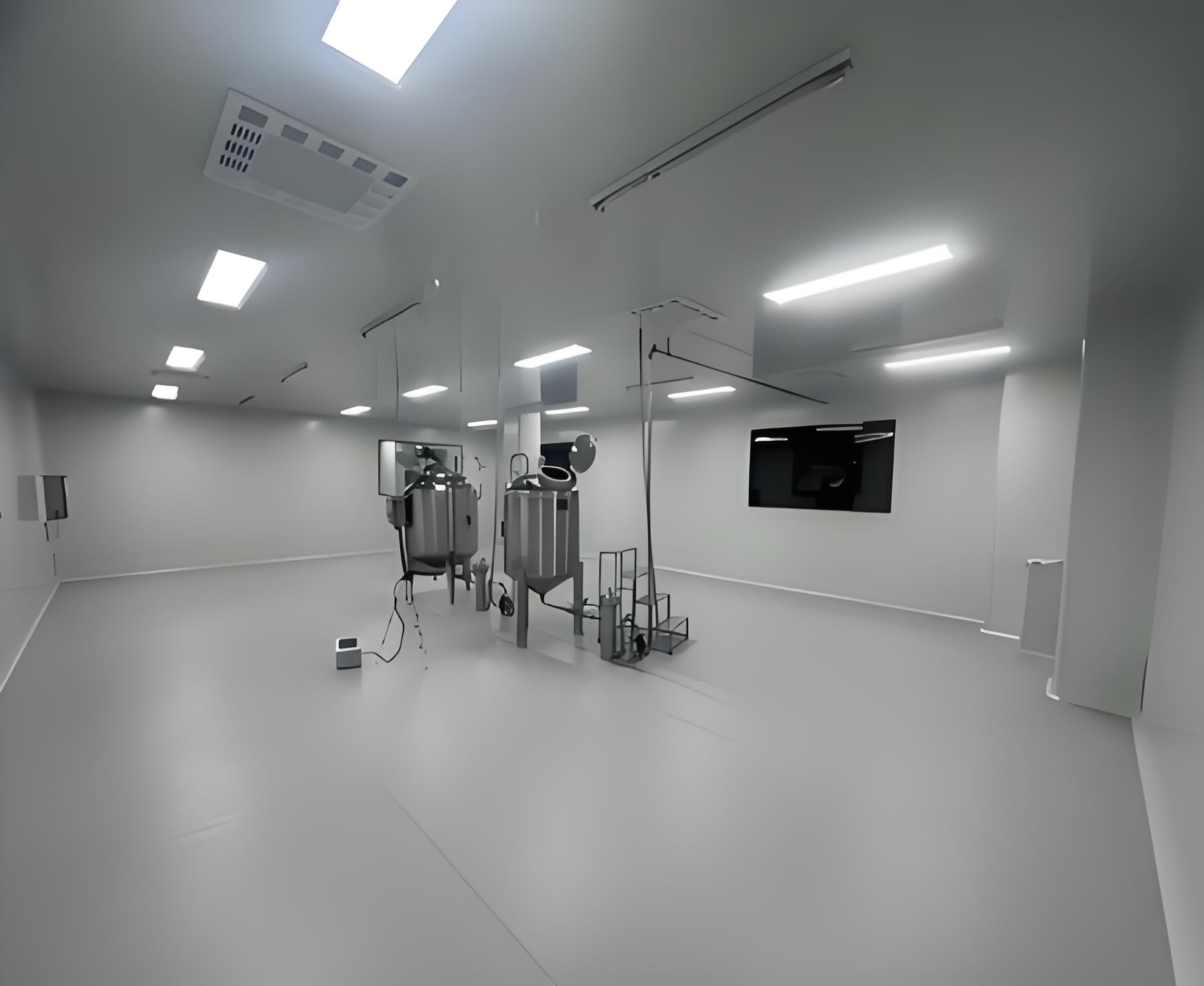
For industries where airborne particles, microbes, or chemical vapors compromise product quality — from semiconductor fabrication and pharmaceutical filling to precision spraying — the physical environment is a process parameter as critical as temperature or pressure. Clean workshop decoration encompasses the systematic design, material selection, and construction of sealed environments that meet ISO 14644 or GMP cleanliness classes. Unlike standard industrial fit-outs, cleanroom decoration demands seamless surfaces, controlled air leakage, static dissipation, and compatibility with aggressive cleaning agents. This guide, based on over 200 executed projects, provides facility managers, project engineers, and procurement specialists with technical specifications and best practices for clean workshop decoration — from ISO 8 (Class 100,000) to ISO 5 (Class 100) environments.
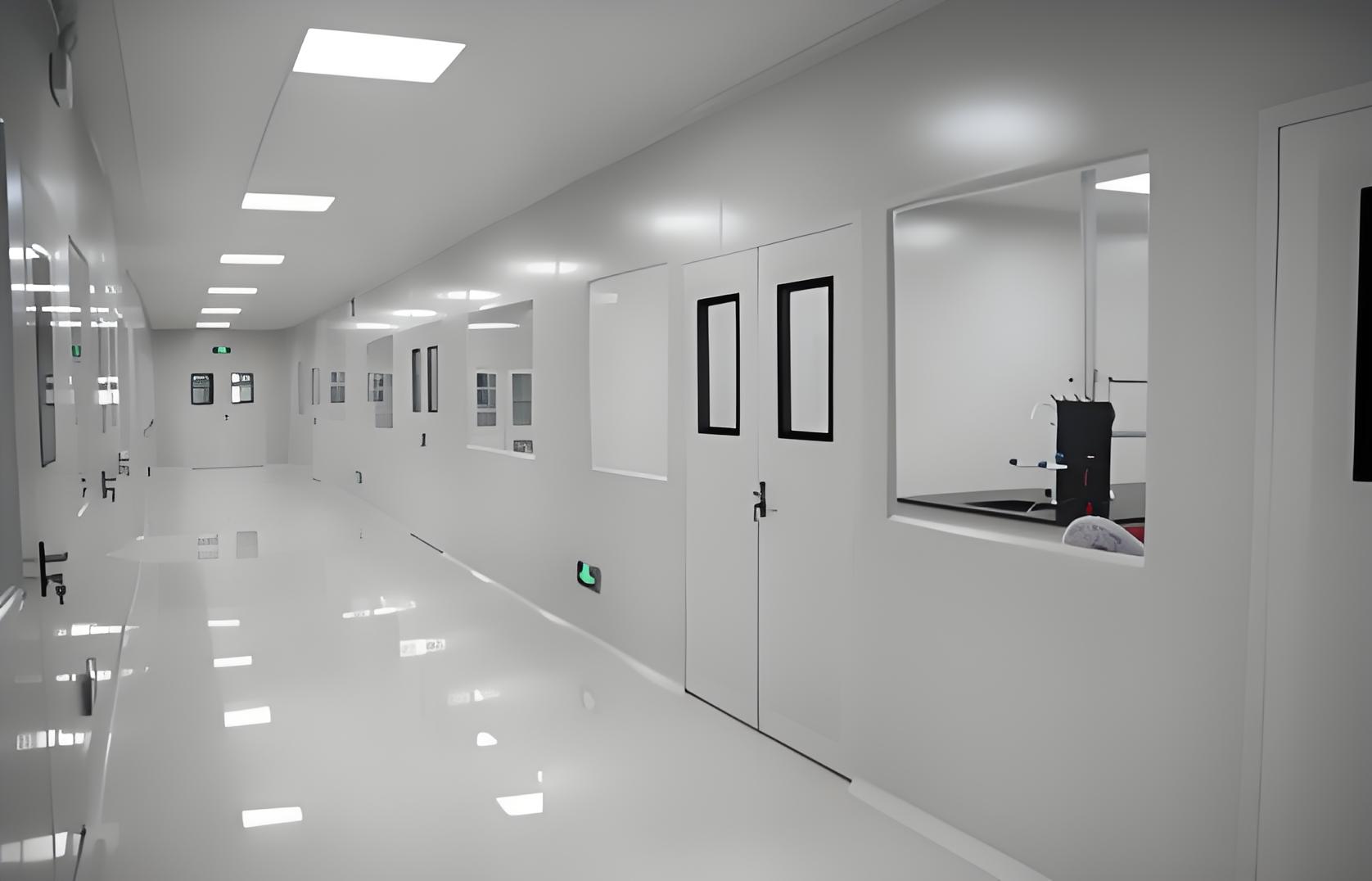
Before specifying any building material or HVAC component, the required cleanliness class must be defined. ISO 14644-1 sets the framework:
ISO 5 (Class 100): ≤ 3,520 particles ≥0.5 µm per m³. Used for semiconductor lithography, aseptic filling.
ISO 6 (Class 1,000): ≤ 35,200 particles ≥0.5 µm per m³. Medical device assembly, advanced research.
ISO 7 (Class 10,000): ≤ 352,000 particles ≥0.5 µm per m³. Pharmaceutical compounding, electronics assembly.
ISO 8 (Class 100,000): ≤ 3,520,000 particles ≥0.5 µm per m³. Spray painting booths, food packaging, clean warehouses.
Each class imposes different requirements on air changes per hour (ACH), filter coverage, and surface finish. For a spray painting clean workshop — a specialty of TAI JIE ER — ISO 7 or ISO 8 is typical, with additional constraints on solvent resistance and static control. The clean workshop decoration must also provide smooth, non-porous surfaces that do not shed fibers or support microbial growth.
The physical enclosure determines air tightness, thermal stability, and cleanability. Common systems include:
Core material: Fire-resistant polyurethane (PIR) or mineral wool core, density 40–120 kg/m³. Thickness 50mm for walls, 75mm for ceilings.
Surface finish: Pre-painted galvanized steel (0.5–0.6mm) or stainless steel for wet processes. Surface roughness Ra ≤ 0.8 µm.
Jointing: Cam-lock or tongue-and-groove with silicone gaskets. Joint sealant must be non-outgassing (low VOC).
Epoxy self-leveling (2–4mm thickness): Provides smooth, monolithic surface with chemical resistance. Surface resistance 10⁶–10⁹ Ω for ESD control.
PVC conductive sheets: 2mm thick, welded seams. Preferred for high-traffic areas requiring electrostatic discharge (ESD) protection.
Coating system: For concrete substrates, use epoxy primer + conductive epoxy topcoat. Cove bases (50mm radius) eliminate right-angle dirt traps.
Plenum or non-plenum: For ISO 5 and above, use fan filter unit (FFU) ceilings with gel-seal housings. For ISO 7/8, standard T-grid with gasketed lay-in panels works.
Cleanroom LED lights: Flush-mounted, IP65 rated, with smooth polycarbonate covers to prevent dust accumulation. Color temperature 5000K for proper color rendering in inspection areas.
All penetrations (pipes, conduits, sprinklers) must be sealed with compression gaskets or silicone caulk. Air leakage through a clean workshop decoration shall be ≤ 0.5% of room volume per hour at 50 Pa pressure difference, verified by door fan test.
The heating, ventilation, and air conditioning (HVAC) system is the heart of any cleanroom. For clean workshop decoration, coordination between architectural finishes and air handling units (AHUs) is mandatory:
Airflow pattern: Unidirectional (laminar) for ISO 5; non-unidirectional (turbulent) for ISO 6–8. Ceiling coverage with HEPA/ULPA filters: 15–25% for ISO 8, 40–60% for ISO 6.
HEPA filter housing: Gel-seal or knife-edge frames with no leakage (<0.01% at MPPS). Filter efficiency H13 (99.95% at 0.3 µm) or H14 (99.995%).
Air changes per hour (ACH): ISO 8: 15–20 ACH; ISO 7: 30–40 ACH; ISO 6: 60–90 ACH; ISO 5: 240–480 ACH (unidirectional).
Pressure differential cascade: Cleanest area at highest pressure (+25 Pa relative to adjacent less clean spaces). Differential pressure gauges with audible alarms required at doors.
Temperature and humidity control: Typical setpoints 20–22°C, RH 45–55% for human comfort and electrostatic management. Use steam humidification (not atomizing) to avoid microbial growth.
A common error in clean workshop decoration is neglecting return air plenums or low-wall returns. For turbulent flow, returns should be placed low on walls (150mm above finished floor) to remove heavier particles. For laminar flow, full perforated raised floor is ideal.
In electronics assembly or painting cleanrooms, static charges attract particles and can damage sensitive components. ESD control must be embedded in clean workshop decoration:
Flooring surface resistance: 10⁶ – 10⁹ Ω (conductive range). Grounding points every 100 m² connected to facility earth.
Wall and ceiling panels: For ESD-sensitive zones, use static-dissipative paint (surface resistivity 10⁶ – 10⁹ Ω) or conductive vinyl wall covering.
Workstation integration: Grounded workbench mats, wrist strap grounding points, and ionizers for air ionization.
Lighting intensity: Minimum 300 lux for general assembly, 500–750 lux for inspection stations. Use anti-static diffusers and non-shedding gaskets.
For spray painting clean workshops, additional requirements include explosion-proof lighting and receptacles, as well as solvent-resistant epoxy floors. TAI JIE ER has delivered dozens of such hybrid clean workshops combining ISO 7 cleanliness with ATEX-compliant electricals.
Even with a well-designed shell, poor detailing can destroy cleanliness. The most frequent issues found during commissioning:
Leaking ceiling grid gaskets: Use closed-cell neoprene gaskets compressed 50%. Perform smoke test to visualize leakage paths.
Unsealed conduit penetrations: All pipes, wires, and sprinkler pipes must pass through compression seals (e.g., Link-Seal) or be embedded in silicone caulk rated for -40°C to 200°C.
Doorway turbulence: Sliding doors or rapid-roll doors with brush seals are preferred over hinged doors. Install air showers for ISO 6 and above.
Personnel and material transfer: Pass-through boxes with interlocking doors (for materials) and airlocks with time-delay for personnel. Gowning rooms should be designed with “black-white” separation.
Outgassing from sealants and paints: Use low-VOC, non-outgassing silicone (e.g., Dow Corning 791) and epoxy coatings with total VOC < 50 g/L.
During clean workshop decoration, a strict construction protocol must be enforced: positive pressure during drywall and sealing, HEPA-filtered vacuuming before panel installation, and no cardboard or paper inside the clean zone.
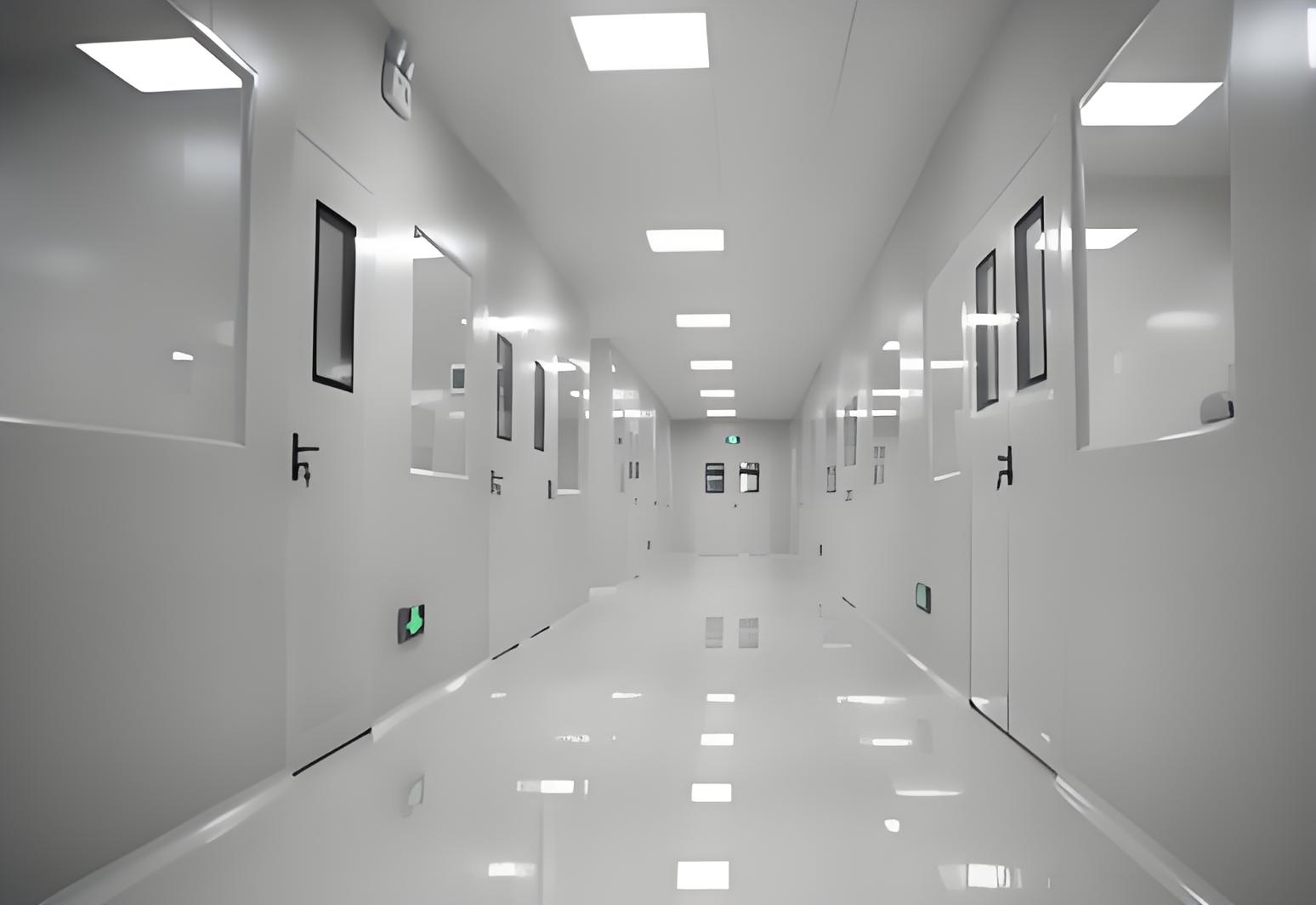
Different production activities impose unique demands on finishes and HVAC:
Pharmaceutical (GMP): Smooth, non-porous surfaces with coved corners (radius ≥ 40mm). Washable walls (stainless steel or fiberglass-reinforced plastic). Air handling units must have HEPA filters on supply and return to prevent cross-contamination.
Electronics (Semiconductor, PCB assembly): Strict ESD control and low-vibration floors (vibration criterion VC-C or better). Raised floor system for airflow and cable management.
Spray painting (automotive, industrial coating): Explosion-proof electricals, spark-resistant flooring, and constant temperature/humidity (22±1°C, 55±5% RH) to ensure consistent paint viscosity. Exhaust air must be filtered through carbon or scrubbers.
Food and beverage: Wash-down capability with slopes to drains. Stainless steel equipment stands. Positive pressure to prevent pest infiltration.
TAI JIE ER provides turnkey clean workshop decoration for all these sectors, including integration with process utilities (compressed air, DI water, exhaust).
Q1: What is the difference between hardwall and softwall cleanroom
decoration?
A1: Hardwall uses rigid modular panels (metal or
composite) and provides higher air tightness, pressure retention, and fire
resistance. Softwall uses vinyl curtains on a frame; it’s lower cost but limited
to ISO 7/8 and smaller pressure differentials. For permanent clean workshop decoration, hardwall is recommended
for class ISO 7 and above.
Q2: How do I validate that a newly decorated clean workshop meets the
specified ISO class?
A2: Follow ISO 14644-3:2019. After HVAC
operation for at least 30 minutes, perform particle counts at specified sampling
locations (number defined by room area) using a portable particle counter. Also
test air pressure differentials, air velocity, HEPA filter integrity (PAO scan
test), and recovery time (from 100x to target class).
Q3: What flooring thickness is required for heavy forklift traffic in
a clean workshop?
A3: For occasional pallet jacks (<500 kg), 3mm
epoxy self-leveling over a 50MPa concrete substrate is sufficient. For daily
forklift traffic (1–3 tons), use 6mm epoxy mortar system or reinforced PVC floor
with compression strength > 60 MPa. Protect with stainless steel corner
guards at column bases.
Q4: Can I use standard drywall (gypsum board) for clean workshop
decoration?
A4: Not recommended for ISO 7 or higher. Gypsum is
porous, sheds particles, and cannot withstand frequent washing. Instead, use
moisture-resistant magnesium oxide board with epoxy paint finish, or metal
panels. For low-grade ISO 8, sealed gypsum with three coats of epoxy paint might
be accepted, but it requires frequent recoating.
Q5: How often should HEPA filters be replaced after clean workshop
decoration is complete?
A5: Replace when pressure drop increases by
100 Pa above initial value, or every 3–6 years depending on pre-filter
effectiveness. Monitor via building management system (BMS). Annual DOP/PAO
integrity testing is mandatory.
Q6: What is the typical cost distribution in a clean workshop
decoration project?
A6: Approximately: HVAC and filters 35–40%,
wall/ceiling panels 25–30%, flooring 10–15%, lighting and electrical 10%, doors
and pass-throughs 8%, project management 5%. For ISO 5, HVAC share can reach 50%
due to higher airflow and FFUs.
Q7: How do I prevent contamination from construction materials during
the decoration phase?
A7: Implement a strict “clean-build” protocol:
pre-clean all panels off-site; stage materials in pre-cleaned area; prohibit
sawing or drilling inside the future clean zone (cut off-site); use HEPA vacuums
for any open joints; run temporary HEPA fans to maintain positive pressure
throughout construction. Final cleaning with isopropyl alcohol and particle
counter clearance before HVAC handover.
Designing and executing a clean workshop decoration that reliably meets ISO/GMP standards requires domain expertise in materials, air dynamics, and industry-specific regulations. TAI JIE ER offers end-to-end cleanroom engineering: from concept design and CFD airflow modeling to modular panel supply, HVAC integration, certification (testing and balancing, filter integrity, particle counting), and operator training. Our projects range from ISO 5 aseptic suites to ISO 8 spray painting booths, with documented performance validation reports.
Do not allow particle contamination or leaks to compromise your production yield or compliance. Contact our cleanroom specialists for a preliminary consultation, budget estimate, or a virtual tour of a reference facility in your industry.
Send your inquiry now: https://www.taijieer.com/ – A TAI JIE ER project engineer will respond within 6 business hours with a tailored questionnaire and relevant case studies.