
Controlled environments are fundamental to modern manufacturing, scientific research, and high-precision assembly. Across industries such as semiconductor fabrication, pharmaceuticals, optics, and biotechnology, the control of airborne particulates, biological contaminants, temperature, and humidity is paramount to ensuring product yield and operational reliability. Achieving this level of environmental stability requires a comprehensive understanding of cleanroom engineering design, a discipline that integrates advanced mechanical systems, material science, and strict operational protocols to isolate sensitive processes from external and internal contamination sources.
A well-conceived facility does not merely filter the air; it establishes a dynamic, self-regulating micro-environment. From the initial spatial layout to the final commissioning phase, every parameter must align with international standards to ensure continuous compliance and operational durability. This analysis explores the core engineering principles, structural configurations, and mechanical systems that form the foundation of successful high-purity facilities.
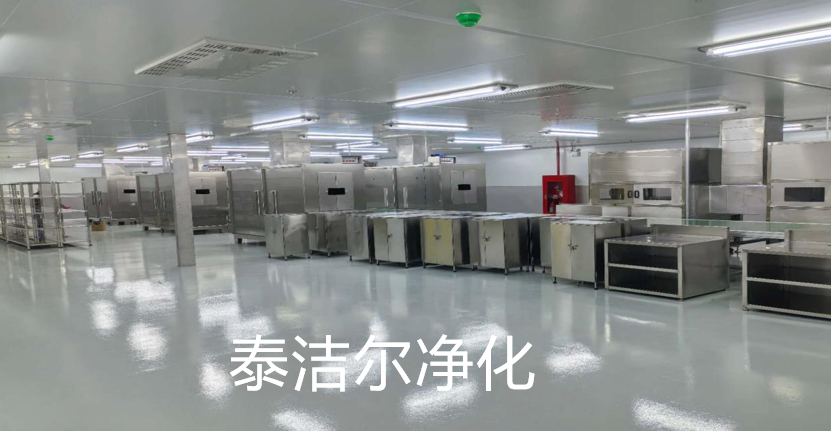
The foundation of any engineering project in this field is the identification of the required cleanliness class. The international benchmark for classifying these environments is ISO 14644-1. This standard categorizes rooms based on the maximum allowable concentration of airborne particulates per cubic meter of air, ranging from ISO Class 1 (the cleanest) to ISO Class 9 (equivalent to ordinary room air).
In practice, the target particle sizes of concern typically range from 0.1 micrometers (µm) to 5.0 µm. For instance, an ISO Class 5 environment allows no more than 3,520 particles of 0.5 µm or larger per cubic meter of air, whereas an ISO Class 7 room allows up to 352,000 particles of the same size. Determining the correct classification is a pivotal first step, as it dictates the required air change rates, filtration efficiency, and architectural choices.
Furthermore, engineering teams must evaluate the operational state of the room during classification verification. These states are defined as:
As-Built: The physical structure is complete, mechanical systems are operational, but no production equipment or personnel are present.
At-Rest: The facility is complete, production machinery is installed and operating, but no operational personnel are in the room.
Operational: The facility is functioning in its normal manner, with specified equipment operating and the designated number of personnel performing their daily tasks.
Because human operators are the primary source of particle generation in a clean space, designing for the "operational" state requires robust ventilation systems capable of rapidly diluting and removing human-derived particulates.
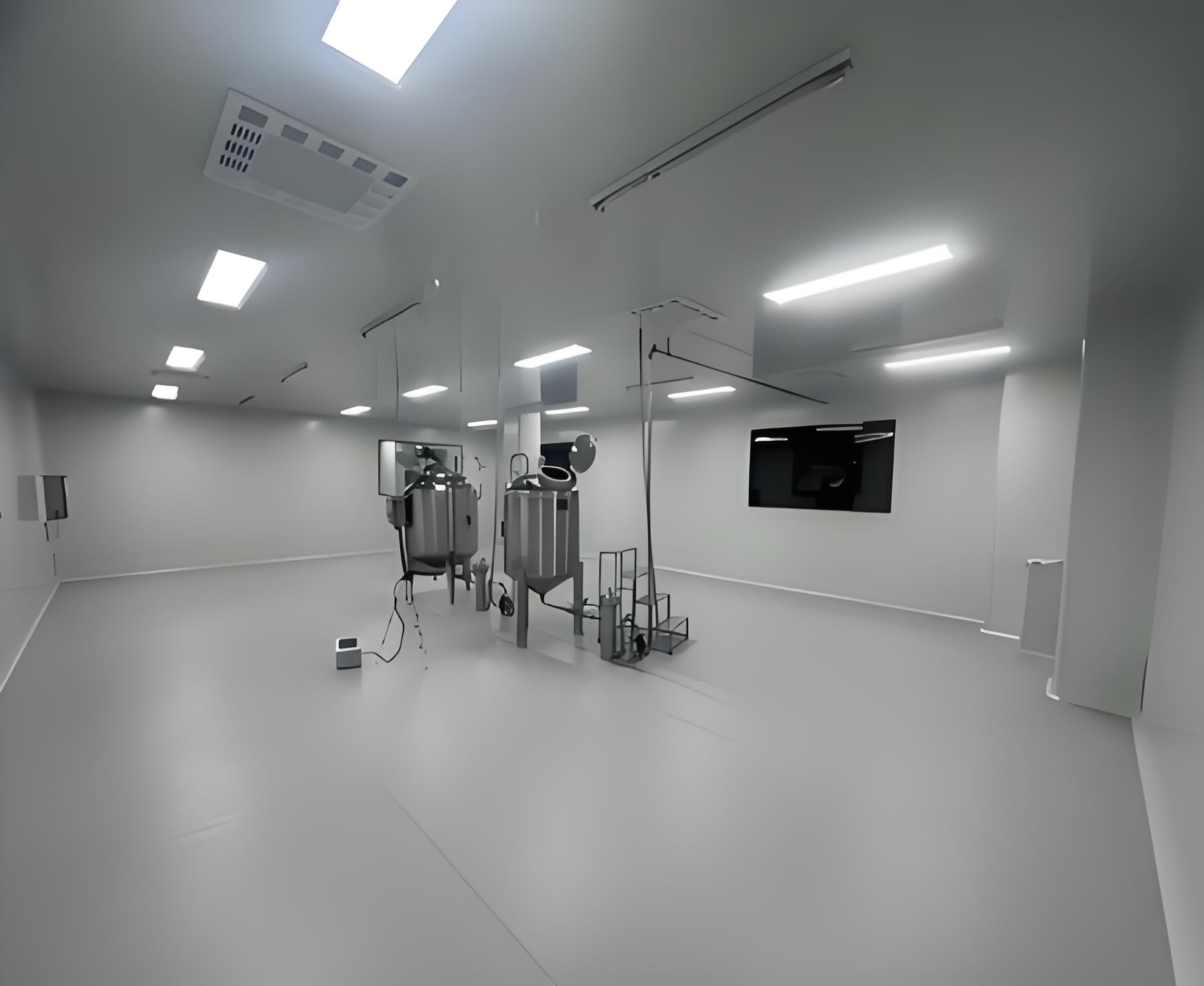
Translating classification requirements into a functional physical space demands a systematic approach to mechanical and structural planning. The execution of cleanroom engineering design must address three main components: mechanical HVAC architecture, airflow dynamics, and pressure differential control.
The Heating, Ventilation, and Air Conditioning (HVAC) system is the primary mechanism for maintaining air cleanliness, temperature, and relative humidity. Unlike standard commercial HVAC configurations, cleanroom systems must handle significantly larger air volumes and operate against much higher static pressures due to the resistance of high-efficiency filters.
Air filtration occurs in stages to protect the terminal filters and prolong their operational lifespan. A typical configuration includes:
Pre-filters: Generally rated G4 to F7, designed to capture coarse dust and large particulates before the air enters the main recirculating system.
Medium-efficiency filters: Rated F8 to H10, positioned further downstream to capture finer particles and protect the cooling/heating coils.
Terminal Filters: High-Efficiency Particulate Air (HEPA) filters (minimum 99.97% efficiency at 0.3 µm) or Ultra-Low Penetration Air (ULPA) filters (minimum 99.999% efficiency at 0.12 µm). These are typically installed in the ceiling grid to deliver clean air directly into the space.
The rate of air exchange is a key variable. While standard commercial spaces require 2 to 4 Air Changes per Hour (ACH), an ISO Class 7 cleanroom may require 30 to 60 ACH, and an ISO Class 5 room often demands 240 to 480 ACH to maintain the required particulate limits.
The direction and velocity of airflow determine how effectively particles are swept away from sensitive working areas. There are two primary airflow methodologies:
Unidirectional (Laminar) Flow: This design utilizes parallel air streams flowing in a single direction, typically from the ceiling to the floor, at a uniform velocity (usually between 0.36 to 0.54 meters per second). Laminar flow is mandatory for ISO Class 5 and cleaner environments, as it prevents the swirling of air and ensures that particulates generated by equipment or operators are immediately pushed downward and out through low-level return grilles.
Non-Unidirectional (Turbulent) Flow: Common in ISO Class 6 to ISO Class 9 environments, this method relies on clean air introduced through ceiling diffusers to mix with and dilute contaminated air. The mixed air is then exhausted through wall-mounted return grilles. While less costly to implement, turbulent flow allows some degree of particulate suspension, requiring higher reliance on overall air dilution rates.
To prevent dirty air from surrounding unclassified areas from infiltrating the clean space, the facility must maintain a positive static pressure relative to adjacent rooms. In general, a differential pressure of 10 to 15 Pascals (Pa) is recommended between areas of different cleanliness classifications.
In applications involving hazardous materials, pathogens, or highly active pharmaceutical ingredients, a negative pressure regime must be designed. In these scenarios, the cleanroom is kept at a lower pressure than the surrounding corridors to contain harmful airborne substances within the room, utilizing specialized exhaust filtration (such as bag-in/bag-out HEPA systems) before releasing the air into the atmosphere.
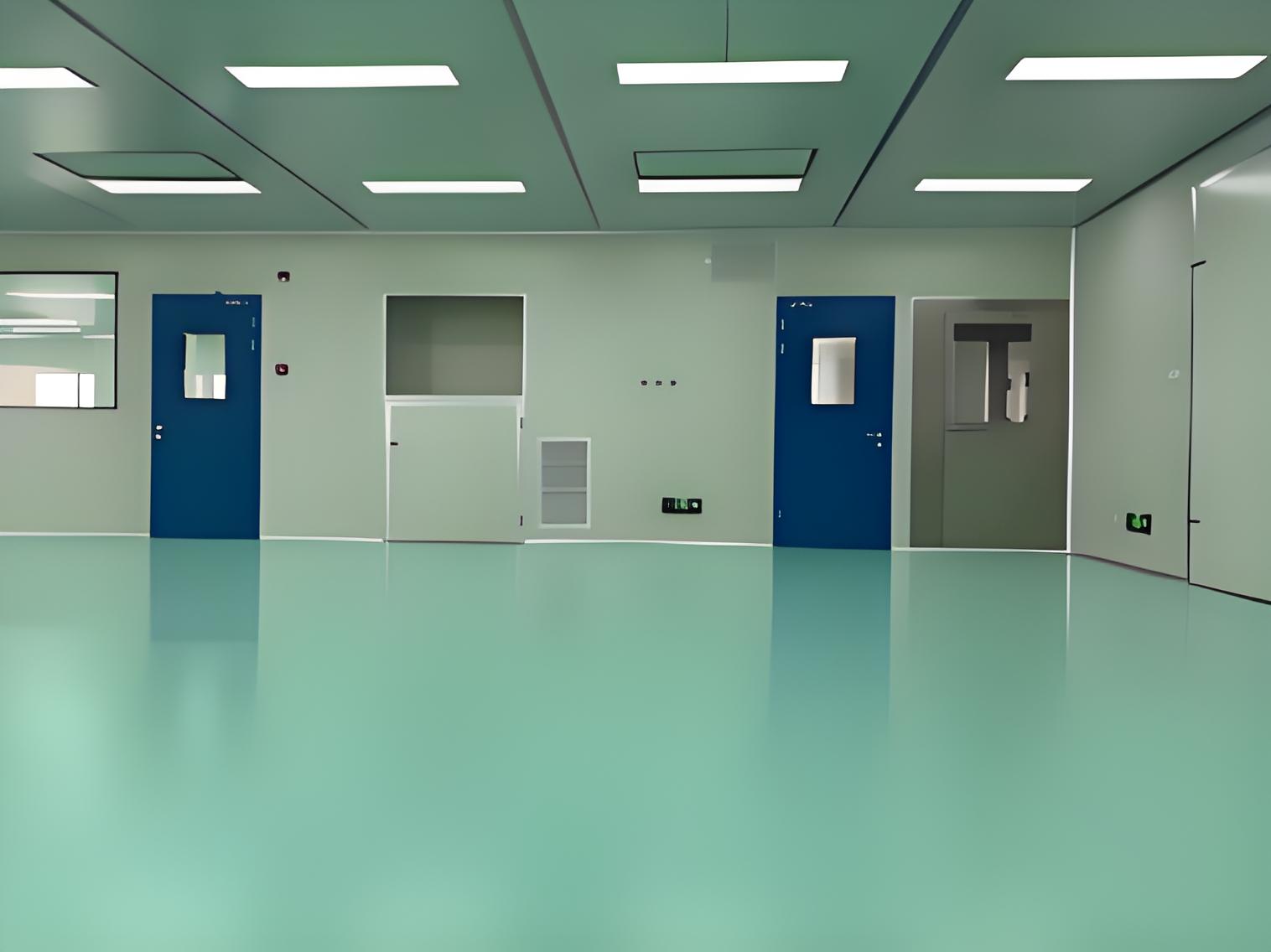
The physical envelope of the room must be constructed from materials that do not shed particles, are easy to clean, resist microbial growth, and can withstand frequent sanitization with aggressive chemical agents.
High-quality wall systems, such as those integrated by experienced specialists like TAI JIE ER, utilize modular sandwich panels with aluminum honeycomb or rockwool cores. These panels offer excellent structural rigidity, thermal insulation, and flat, flush surfaces that eliminate ledges where dust can accumulate. Windows must be double-glazed and integrated flush with the panel faces to maintain a seamless surface.
Flooring selection is equally vital. The most common flooring options include:
Self-leveling Epoxy: Provides a continuous, seamless floor surface that is highly durable and resistant to chemical spills.
Electrostatic Dissipative (ESD) Vinyl: Indispensable in microelectronics and semiconductor packaging, where static electricity can destroy sensitive components or attract airborne dust.
Raised Access Floors: Utilized in high-end semiconductor fabs to facilitate vertical unidirectional airflow, allowing air to pass through perforated floor tiles into the return plenum below.
Airlocks and gowning areas act as physical barriers between different cleanliness zones. These transition spaces must feature electromagnetic interlocking doors to prevent simultaneous opening, ensuring that the pressure cascade is maintained during personnel entry and exit.
The practical execution of cleanroom engineering design must be customized to meet the unique operational challenges of specific industrial sectors.
| Industry Sector | Primary Contaminant Concern | Key Design Parameter |
|---|---|---|
| Semiconductor Fabrication | Sub-micron particles, Airborne Molecular Contamination (AMC), Electrostatic Discharge | ULPA filtration, chemical carbon filters, ESD flooring, vibration isolation foundations |
| Pharmaceutical & Biotech | Viable biological organisms (bacteria, mold, yeast), pyrogens | Aseptic processing zones (Grade A), VHP sanitization compatibility, pressure cascades |
| Medical Device Production | Particulates and microbial bioburden on surfaces | ISO Class 7/8 classifications, continuous environmental monitoring, controlled bioburden levels |
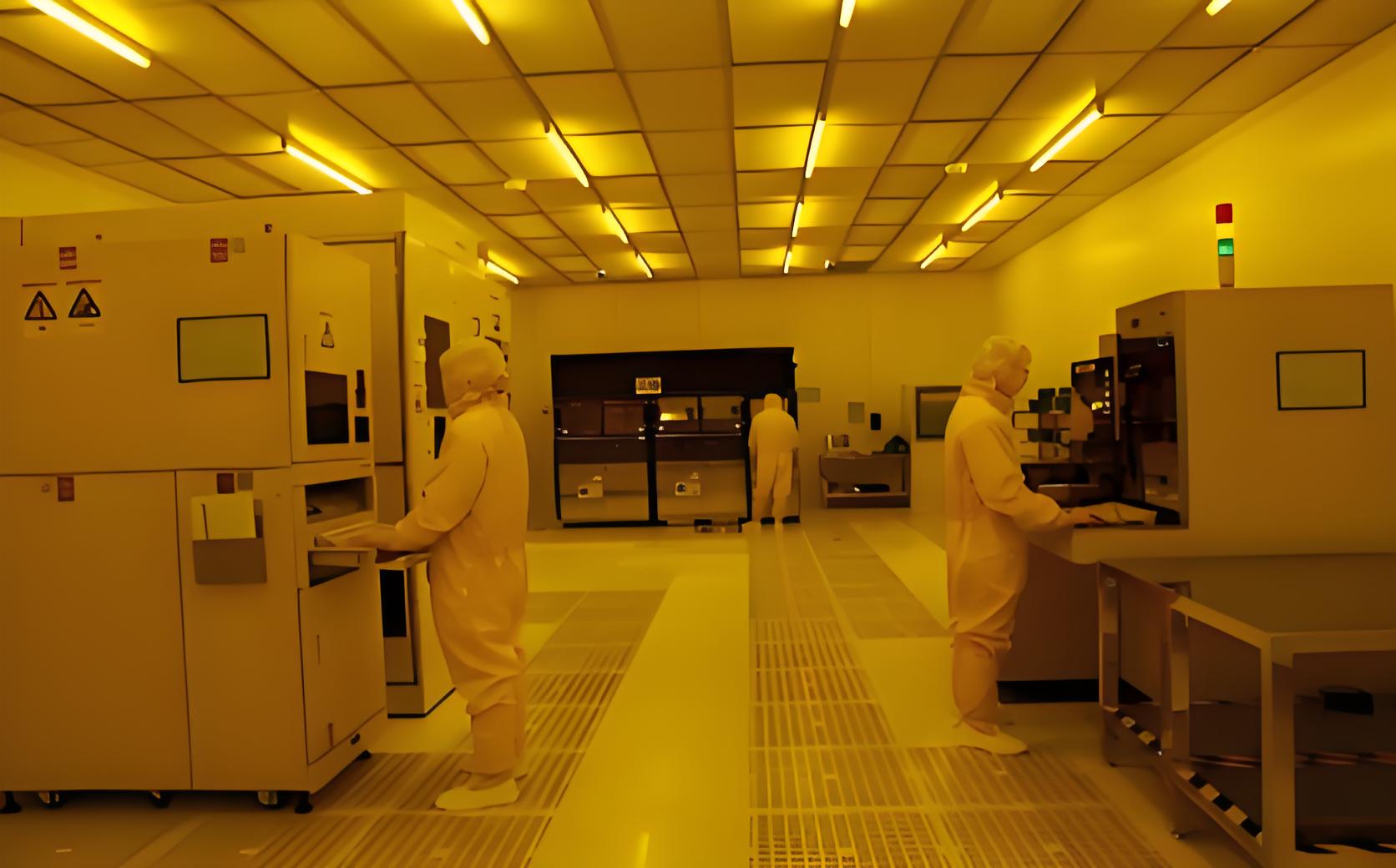
In this sector, even a single sub-micron particle can disrupt lithography processes and ruin integrated circuits. Consequently, these facilities require the highest levels of filtration, often utilizing full-coverage ULPA filter ceilings to achieve ISO Class 1 to ISO Class 3 standards. Furthermore, controlling vibration is crucial; HVAC air handling units must be isolated from the main cleanroom structure, and precision tools are often placed on independent inertia blocks.
Biopharmaceutical facilities must comply with Good Manufacturing Practice (GMP) regulations (such as EU GMP Annex 1 or US FDA guidelines). The focus shifts from purely non-viable particulate control to viable microbial contamination control. Surfaces must be fully radiused (using curved coving profiles at wall-to-floor and wall-to-ceiling joints) to facilitate thorough wipe-downs. The cleanroom design must also accommodate frequent sanitization cycles, including Vaporized Hydrogen Peroxide (VHP) decontamination, which requires materials that resist oxidation and corrosion.
Designing a high-performance cleanroom requires solving complex physical and mechanical challenges. Issues such as unstable relative humidity, pressure migration, and structural thermal bridging can compromise cleanroom integrity and lead to regulatory non-compliance.
For example, in pharmaceutical tableting or semiconductor manufacturing, precise humidity control is necessary to prevent materials from sticking or oxidising. Standard HVAC units often struggle to maintain the required relative humidity (often ±2% to 5% RH tolerances). To address this, specialized desiccant dehumidification systems must be integrated directly into the makeup air handling units.
By partnering with established modular enclosure specialists like TAI JIE ER, operators can ensure that structural connections, door seals, and ceiling grid integrations are designed to prevent air leakage. Minimizing leakage is a vital step in maintaining stable pressure differentials and reducing the energy load of the recirculation fans.
The physical construction of a facility is only part of the process; proving that the space operates within its specified parameters is the final, decisive step. Cleanroom validation is carried out through structured testing phases: Installation Qualification (IQ), Operational Qualification (OQ), and Performance Qualification (PQ).
The commissioning team performs several key tests to confirm the performance of the cleanroom engineering design:
Filter Integrity Testing (Leak Testing): Typically performed using an aerosol photometer and a challenge aerosol (such as PAO) to verify that the HEPA/ULPA filters and their mounting frames are free from bypass leaks.
Airflow Velocity and Volume Measurement: Confirms that unidirectional systems maintain the correct velocity profile and that non-unidirectional systems meet the designed Air Changes per Hour (ACH).
Differential Pressure Testing: Verifies that the pressure cascade is stable and flows in the correct direction when doors are closed and during simulated operational entries.
Particle Count Testing: Uses calibrated discrete particle counters to confirm that airborne particulate concentrations conform to the target ISO 14644-1 classification.
Recovery Time Test: Measures the cleanroom's ability to return to its specified cleanliness class after being subjected to a temporary particulate challenge.
Collaborating with experienced engineering teams like TAI JIE ER ensures that validation documentation is meticulously prepared, allowing for smooth regulatory audits and operational sign-offs.
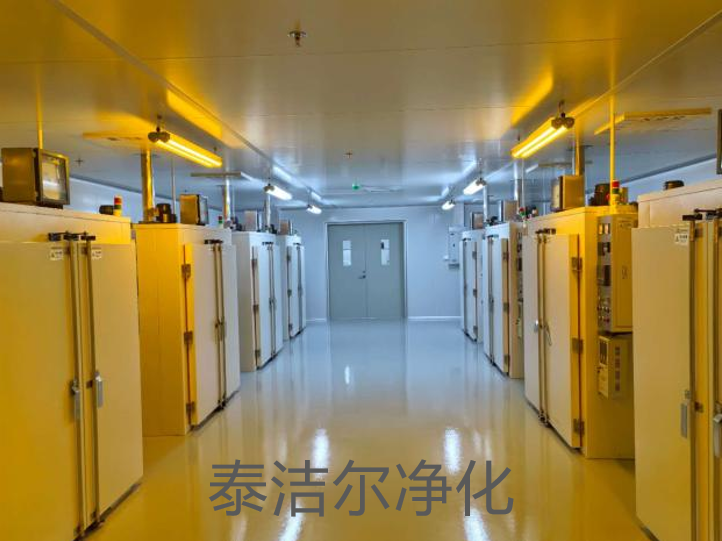
Developing a high-purity facility requires a balanced integration of structural integrity, specialized HVAC performance, and deep regulatory knowledge. Standard architectural solutions are rarely sufficient for the complex contamination challenges faced by modern manufacturers.
For organizations planning to construct or upgrade their facilities, our team offers tailored support from initial conceptual planning to final validation. We provide robust engineering solutions designed to meet the precise requirements of your specific application, ensuring long-term operational reliability and compliance with international standards. To discuss your project parameters and receive a detailed evaluation, please contact our engineering department for an initial inquiry.
Q1: What is the main difference between laminar and turbulent airflow in cleanrooms?
A1: Laminar airflow (unidirectional) moves parallel, uniform streams of air down from the ceiling to the floor, sweeping particles directly out of the room. It is typically used for ISO Class 5 and cleaner environments. Turbulent airflow (non-unidirectional) introduces clean air through ceiling diffusers to mix with and dilute contaminants, making it suitable for lower-grade spaces such as ISO Class 6 through ISO Class 9.
Q2: Why is differential pressure vital in cleanrooms?
A2: Differential pressure prevents clean air zones from being contaminated by adjacent, less clean spaces. By maintaining positive pressure (usually 10 to 15 Pa higher in the cleaner room), air is forced to leak outward through doors and structural gaps rather than allowing dirty air to migrate inward. Conversely, negative pressure is used to contain hazardous materials or pathogens within a specific space.
Q3: How often should HEPA filters undergo integrity testing?
A3: According to regulatory guidelines and standard practices (such as ISO 14644-2 and GMP rules), HEPA/ULPA filters should undergo integrity testing at least once every 12 months. In high-stakes aseptic processing environments, this testing is often required every 6 months to ensure early detection of any media leaks or seal bypasses.
Q4: What materials are recommended for cleanroom wall and ceiling construction?
A4: Surfaces must be smooth, non-porous, and resistant to both biological growth and chemical sanitizers. Double-skin modular panels with cores made of aluminum honeycomb or rockwool are highly recommended. Phenolic resin, powder-coated galvanized steel, or stainless steel are preferred surface finishes because they do not shed particles and can withstand frequent wipe-downs.
Q5: What is the difference between viable and non-viable particulate contamination?
A5: Non-viable contaminants are inanimate particles, such as dust, fibers, and metal flakes, which are the main focus of semiconductor and microelectronics cleanrooms. Viable contaminants are living micro-organisms, such as bacteria, viruses, yeast, and mold spores. Controlling viable contaminants is the primary concern in pharmaceutical, biotechnology, and food processing applications, requiring strict sanitation protocols alongside traditional physical filtration.