
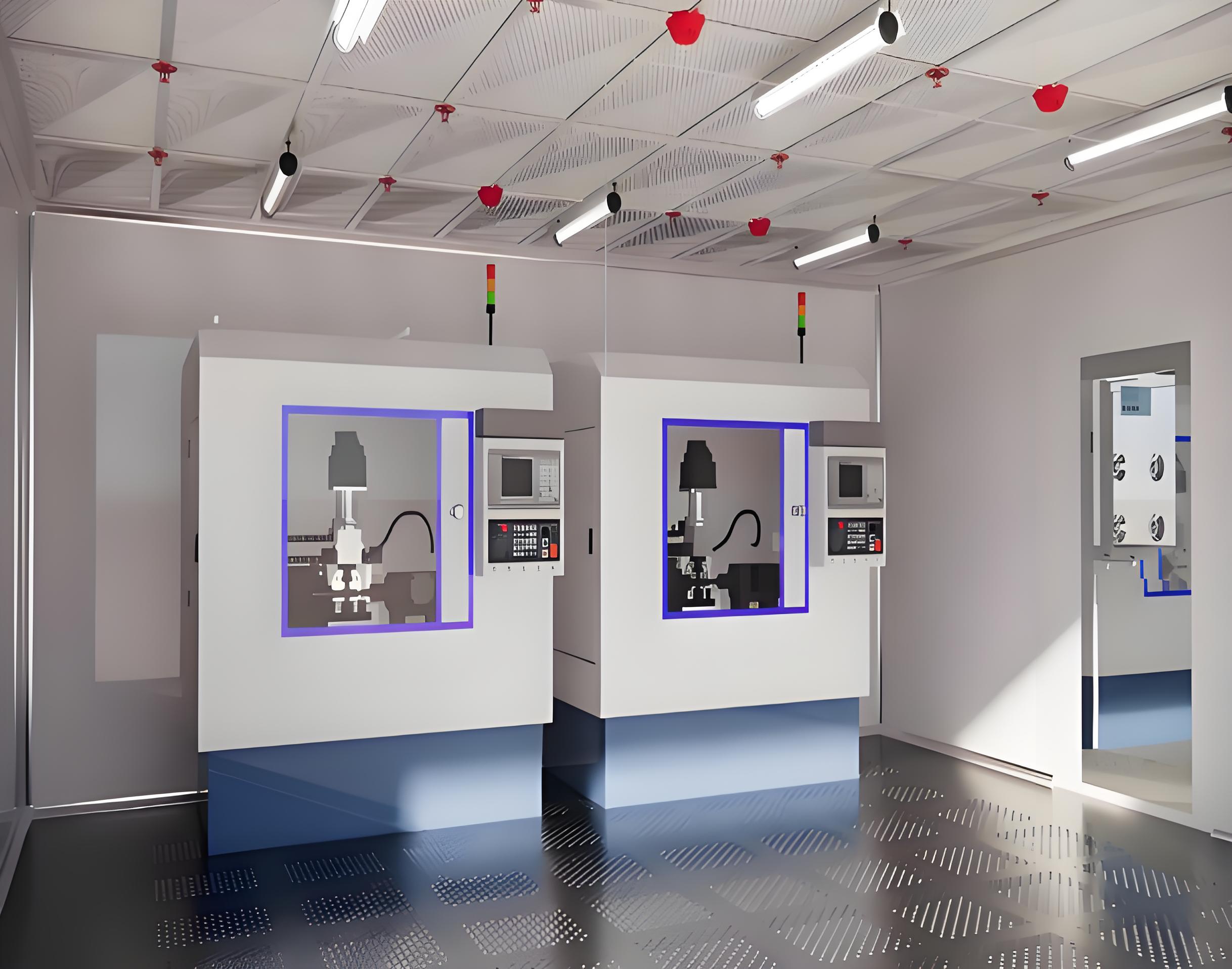
Building a facility that handles sensitive biological agents or pharmaceutical production is a high-stakes engineering challenge. The margin for error is non-existent. A single breach in containment or a spike in particle counts can ruin months of research or halt a production line.
When organizations plan a Sterile laboratory, they are not just building a room; they are creating a controlled ecosystem. This environment must regulate temperature, humidity, pressure, and particulate matter with absolute precision. This article details the technical requirements, cost structures, and construction workflows necessary to deliver a compliant facility.
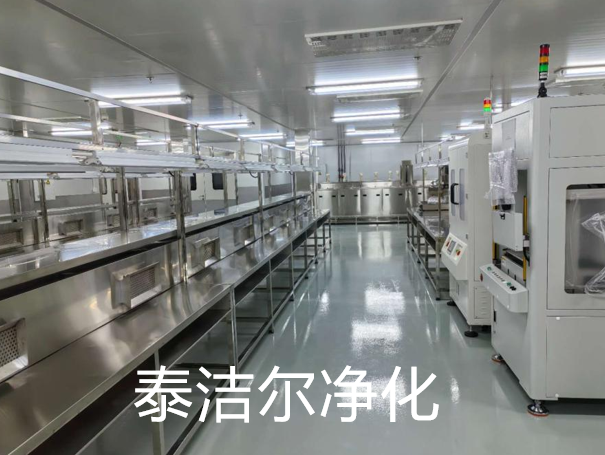
The term "sterile" is often used loosely, but in engineering, it implies a specific set of measurable criteria. Before laying the first brick, you must define the intended use. A sterility testing lab for pharmaceuticals has different requirements than a cell culture suite or a Biosafety Level (BSL) facility.
Your project scope dictates the ISO classification. Most sterile processing areas require an ISO 5 (Class 100) environment for critical zones, surrounded by ISO 7 (Class 10,000) background areas.
Defining these parameters early is crucial. At TAI JIE ER, we often see projects face delays because the initial User Requirement Specifications (URS) were vague. A clear definition of the Sterile laboratory requirements prevents expensive change orders later in the construction phase.
The physical shell of the cleanroom must be impermeable and non-shedding. Traditional construction materials like drywall and standard paint are unacceptable. They generate dust and harbor bacteria.
Wall Systems:The industry standard is modular sandwich panels. These panels typically feature a rock wool or aluminum honeycomb core sandwiched between two metal sheets. They provide excellent thermal insulation and are flush-mounted to prevent dust accumulation.
Flooring Solutions:The floor is the most abused surface in any facility. For a Sterile laboratory, the flooring must be seamless. Epoxy terrazzo or heat-welded PVC are the top choices. We recommend coving the floor up the wall (usually 100mm) to create a radius corner. This eliminates sharp 90-degree angles where dirt and microbes hide, making the cleaning process effective.
Ceilings and Lighting:Walkable ceilings are preferred for maintenance. They allow technicians to service HVAC dampers, lights, and electrical conduits from above the clean space. This ensures that maintenance crews do not violate the sterility of the lab during routine repairs.
The Heating, Ventilation, and Air Conditioning (HVAC) system is the heart of the facility. Unlike commercial AC, which recirculates air for comfort, a cleanroom HVAC system is designed for contamination control.
Air Change Rates:To maintain cleanliness, the air must be replaced frequently. An office might change air 4 times an hour. An ISO 7 lab requires 30 to 60 air changes per hour (ACH). An ISO 5 zone might require over 240 ACH. This high volume of airflow sweeps away particles generated by staff and equipment.
Filtration:All air entering the Sterile laboratory must pass through High Efficiency Particulate Air (HEPA) filters. These filters capture 99.97% of particles sized 0.3 microns. For stricter requirements, ULPA filters are used.
Pressure Cascades:You must control the direction of airflow. In a protective environment (like drug filling), the cleanest room has the highest pressure. Air flows out of the room, preventing contaminants from entering. In a containment environment (like a virus lab), the room is under negative pressure, keeping dangerous agents inside.
Humans are the dirtiest thing in a cleanroom. We shed dead skin cells, hair, and bacteria constantly. Engineering controls must manage this risk.
A well-designed facility uses a series of airlocks to transition people from the "dirty" outside world to the clean core. These are often called PALs (Personnel Airlocks).
The layout usually follows a sequence:
Unclassified Area: Street clothes.Grade D / ISO 8: Changing into facility scrubs.Grade C / ISO 7: Donning sterile gowns, masks, and hoods.Grade B / ISO 5: The critical Sterile laboratory zone.
Interlocks on doors are mandatory. An interlock ensures that door A cannot open if door B is open. This prevents a direct path for air (and contamination) to rush from a dirty area to a clean one.
Beyond air and walls, a lab needs fluids and gases. Piping in a sterile environment presents a unique challenge: bio-film.
If water sits stagnant in a pipe, bacteria will grow. Therefore, Purified Water (PW) and Water for Injection (WFI) systems must be designed as continuous loops. The water is constantly circulating, often at high temperatures (above 80°C) or with ozone treatment to prevent microbial growth.
The piping material is typically 316L stainless steel with an electropolished interior. This smooth surface prevents bacteria from adhering to the pipe walls.
Gas lines (Oxygen, CO2, Nitrogen) also require high-purity stainless steel. All welds must be orbital welds—automated welding that creates a perfectly smooth internal bead. TAI JIE ER ensures all piping undergoes boroscope inspection to verify the quality of these internal welds.
You cannot just build the lab and start working. You must prove it works. This is the validation process, often referred to as the "V-Model."
Design Qualification (DQ): Verification that the design meets the user requirements and GMP standards.
Installation Qualification (IQ): Documented proof that equipment was installed according to the manufacturer's specs and design drawings.
Operational Qualification (OQ): Testing the systems. Does the HVAC maintain the set temperature? Do the interlocks work? Does the pressure cascade hold?
Performance Qualification (PQ): Testing the Sterile laboratory under load. This involves running the facility with personnel inside to ensure it maintains sterility during actual work conditions.
Without this paper trail, your facility cannot be certified by agencies like the FDA or EMA.
Cost estimation for these projects is complex. Prices are not merely determined by square footage but by the technical density of the room.
High Cost Drivers:
HVAC: Often 40-50% of the total mechanical budget.Automation: Building Management Systems (BMS) that monitor pressure and temperature.Materials: Specialized HPL or stainless steel panels are significantly more expensive than standard construction materials.
Operating costs are also a major consideration. Moving that much air uses a lot of electricity. Energy-efficient designs, such as VFD (Variable Frequency Drives) on fans and "night-setback" modes (reducing airflow when the lab is empty), are essential for long-term financial viability.
Selecting a contractor is the most critical decision in the project. General construction companies rarely understand the nuance of cleanroom protocols. They might use the wrong sealant or install ductwork that cannot be cleaned.
TAI JIE ER specializes exclusively in controlled environments. We understand that a Sterile laboratory is a machine, not just a building.
Our team manages the entire lifecycle, from the initial pressure cascade calculations to the final filter integrity testing. We use our own installation teams to ensure that the detailing—where the wall meets the floor, or where the light fixture meets the ceiling—is perfect. These small details are usually where contamination issues arise.
We also assist with the validation documentation, ensuring that your handover package is ready for regulatory inspection.
Once the facility is built, the work is not done. A Sterile laboratory requires rigorous maintenance.
HEPA filters eventually load up with dust and must be changed. This usually happens every 3 to 5 years, depending on the pre-filtration efficiency.
Seals on doors degrade over time and can leak pressure. The Building Management System (BMS) should provide real-time data on these parameters. If a room loses pressure, the system should alarm immediately.
Regular re-certification is required (usually annually or semi-annually) to prove the room still meets its ISO classification. This involves particle counting, airflow velocity testing, and filter leak testing.
Constructing a Sterile laboratory is a balancing act between strict regulatory compliance, complex engineering, and budget constraints. It requires a departure from standard construction practices and a focus on "building clean."
Every joint, every airflow pattern, and every material choice impacts the final sterility assurance level. There is no room for improvisation.
By adhering to international standards and working with experienced specialists like TAI JIE ER, you can ensure your facility performs reliably. A well-built lab protects your product, your personnel, and your company's reputation.
Q1: What is the difference between an aseptic and a sterile laboratory?
A1: While often used interchangeably, "sterile" means the absolute absence of viable living microorganisms. "Aseptic" refers to a process or technique designed to prevent contamination. In construction terms, an aseptic processing facility is designed to maintain a sterile environment during operations, usually requiring ISO 5 airflow in critical zones.
Q2: How much does it cost to build a sterile laboratory per square meter?
A2: Costs vary widely based on the ISO class and location. A standard ISO 7 cleanroom might range from $1,500 to $2,500 per square meter, while a high-end ISO 5 facility or BSL-3 lab can easily exceed $5,000 to $8,000 per square meter. This usually includes the shell, HVAC, and electrical, but excludes specialized lab equipment.
Q3: Can I turn an existing office space into a sterile laboratory?
A3: Yes, but it is challenging. The biggest hurdle is usually ceiling height. You need significant space above the drop ceiling (interstitial space) for large HVAC ducts. If the existing building has low slab-to-slab height, it may be impossible to fit the necessary mechanical systems.
Q4: What is the "recovery time" in a sterile lab?
A4: Recovery time is a standard test defined in ISO 14644-3. It measures how long it takes for the room to return to its target cleanliness level after a contamination event (like a door opening or a spill). A well-designed Sterile laboratory should recover 100:1 (cleaning up 99% of particles) within 15 to 20 minutes.
Q5: Why is humidity control critical in a sterile lab?
A5: High humidity can encourage microbial growth (mold and bacteria) on surfaces. Low humidity can cause static electricity, which attracts particles to surfaces and can damage sensitive electronics. Most sterile labs aim for 45% to 55% Relative Humidity (RH) to balance these risks and ensure personnel comfort.