
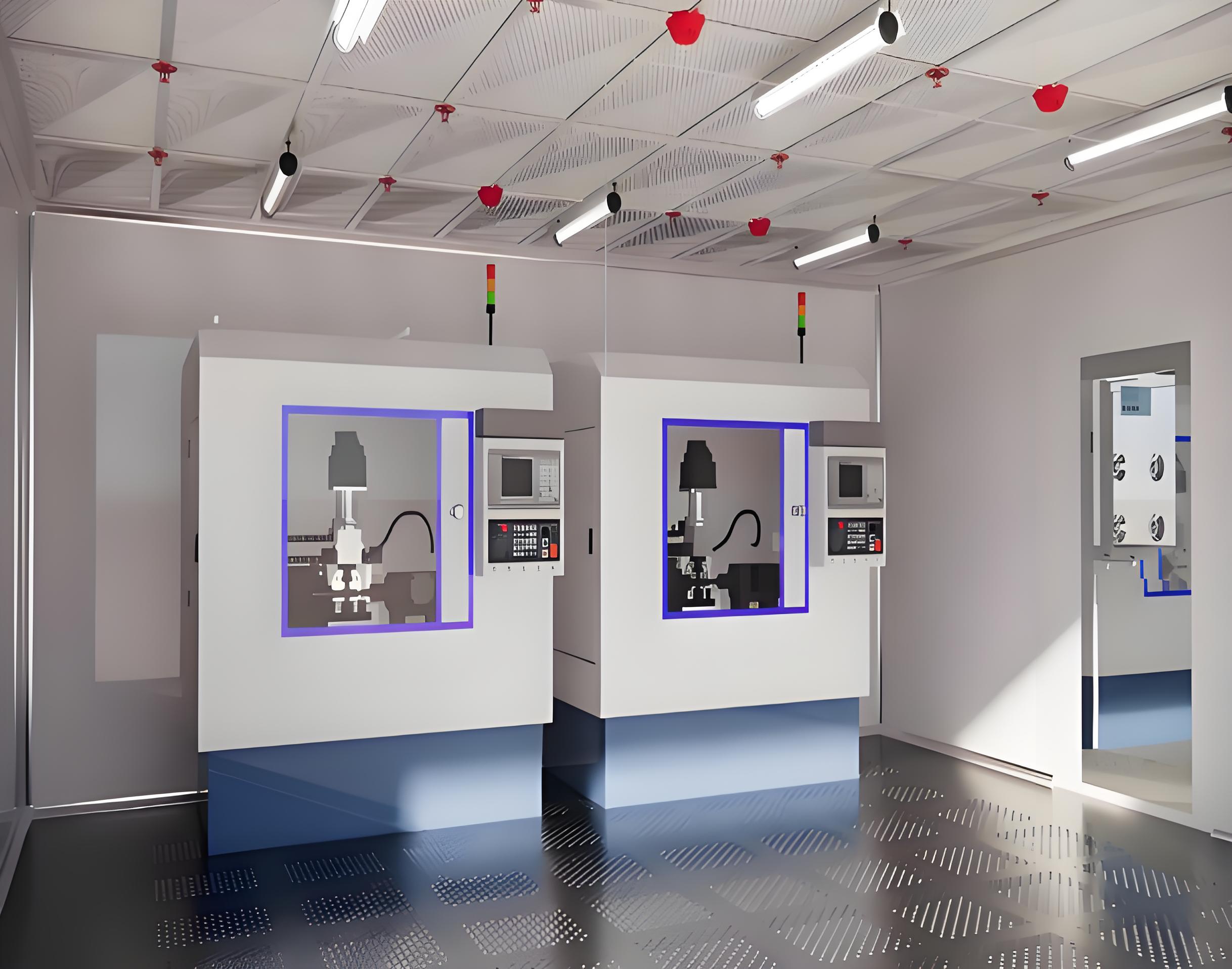
Building or upgrading a clean environment is a massive undertaking. Whether you are in pharmaceuticals, electronics manufacturing, or biological research, the integrity of your workspace dictates the quality of your output. A failed batch due to contamination isn't just a nuisance; it is a significant financial loss.
When you start planning a Laboratory purification project, you are looking at more than just installing filters and white walls. You are engineering an ecosystem that controls particles, temperature, humidity, and pressure with absolute precision. This article looks at the practical steps, technical choices, and financial considerations involved in executing these complex engineering feats.
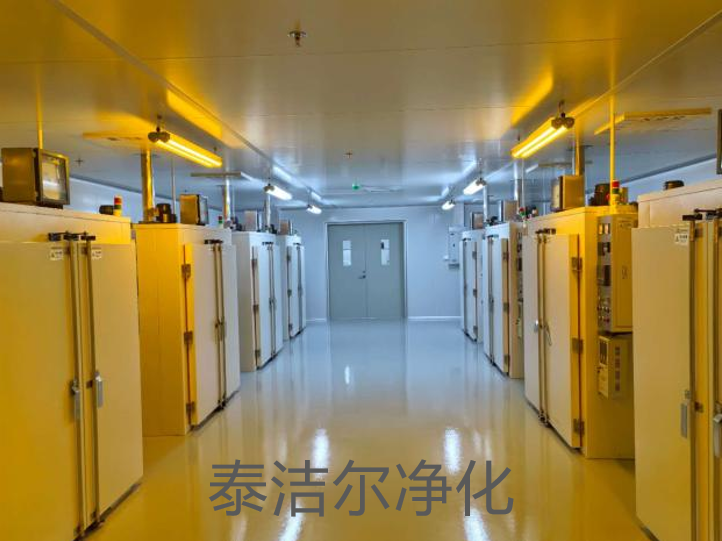
Many facility managers underestimate the complexity involved in purification engineering. It is not merely about buying equipment. It involves a holistic integration of architecture, HVAC systems, and workflow planning.
Your project scope must define the level of cleanliness required right from the start. Are you protecting the product from the people, or the people from the product? This distinction changes your airflow design entirely.
At TAI JIE ER, we often see clients struggle with defining these initial parameters. A clear scope prevents "scope creep," which is the primary killer of budget and timeline in construction.
The backbone of any purification build is the standard you are trying to meet. Most projects align with ISO 14644-1, which classifies air cleanliness by particle concentration.
If you are building for electronics, you might need ISO Class 3 or 4. For pharmaceutical packaging, ISO Class 7 or 8 might suffice.
Understanding these classes is vital because they dictate your air change rates. An ISO 8 room might need 15-25 air changes per hour. An ISO 5 room could require over 240. This difference drastically impacts your HVAC sizing and energy consumption.
Beyond ISO, you must consider industry-specific regulations. GMP (Good Manufacturing Practice) adds layers of requirements regarding surface materials and documentation. Your Laboratory purification project must be designed with the final audit in mind, not just the physical construction.
The Heating, Ventilation, and Air Conditioning (HVAC) system is the most expensive and critical component. In a standard office, HVAC provides comfort. In a cleanroom, it provides control.
You need to maintain a specific pressure cascade. This means your cleanest room usually has the highest pressure, pushing air out into less clean areas to prevent contaminant ingress.
For negative pressure labs (like biosafety labs), the physics reverse. You pull air in to keep pathogens from escaping.
Selecting the right Air Handling Unit (AHU) is a balancing act. You need enough power to push air through dense HEPA filters, but oversizing the unit wastes massive amounts of electricity.
We recommend using variable frequency drives (VFDs) on fans. This allows the system to ramp up or down based on filter loading and actual usage, saving operational costs over the facility's lifespan.
The surfaces in your lab are the second line of defense against contamination. They must be non-shedding, easy to clean, and resistant to the chemicals used in your sanitization protocols.
Flooring Options:Epoxy and PVC are the standard choices. Epoxy is poured and cures into a seamless, hard surface. It is incredibly durable but can crack if the subfloor shifts. PVC sheets are softer and easier to patch but must be welded perfectly at the seams.
Wall Systems:For a modern Laboratory purification project, modular sandwich panels are the industry standard. They consist of two metal faces with a core (rock wool, aluminum honeycomb, or polyurethane).
These panels are superior to drywall because they don't generate dust. They are also faster to install. Drywall requires sanding and painting—two activities you never want near a clean zone.
Ceilings:Walkable ceilings are a game-changer for maintenance. They allow technicians to service lights and filters from above the cleanroom without entering the sterile space. This reduces downtime significantly.
Cost estimation is where many projects hit a wall. There is no single "per square meter" price because the variables are too great. However, understanding where the money goes helps you plan.
HVAC and Filtration: Usually accounts for 40-50% of the total budget. Do not cut corners here. Cheap air handlers fail faster and cost more to run.
Architecture (Walls/Floors): Accounts for roughly 25-30%. Using high-quality modular panels from a reputable brand ensures longevity.
Electrical and Piping: The remaining 20-30%. This includes specialized process piping for gases and purified water.
Don't forget the "soft costs." Validation, design fees, and commissioning often add 15% to the total bill. A realistic budget includes a contingency fund for unforeseen site conditions, especially if you are retrofitting an existing building.
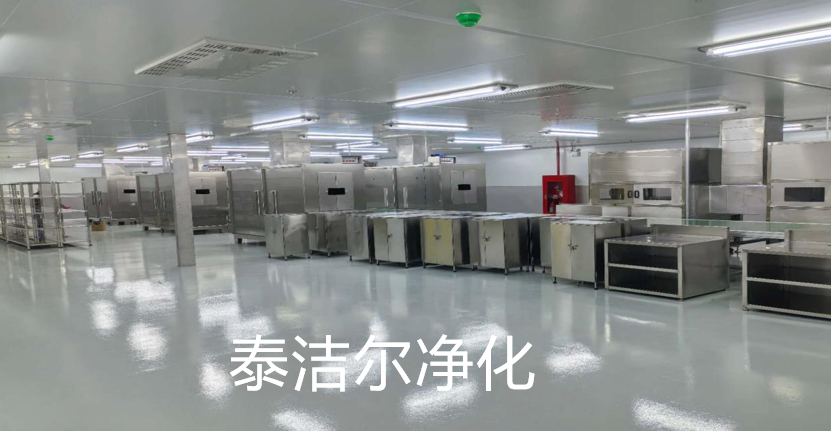
When scoping your project, you will face a choice: Stick-built (traditional) or Modular.
Stick-built involves framing, drywall, and epoxy paint. It is initially cheaper but takes longer. It is also messy.
Modular construction uses pre-fabricated components. It is faster and cleaner. If you lease your facility, modular is interesting because it can be disassembled and moved.
For a high-end Laboratory purification project, modular is almost always the better choice. The precision of factory-made panels ensures better air tightness, which is critical for maintaining pressure differentials.
Finding a contractor who understands both construction and contamination control is difficult. General contractors often lack the nuance required for cleanroom builds.
You need a partner who understands the difference between a "clean room" and a "sanitary room."
TAI JIE ER specializes in this exact niche. We don't just build walls; we design the airflow, select the materials, and manage the validation process.
When vetting suppliers, ask for their project portfolio. Have they built a lab with your specific ISO requirements before? Do they have their own installation teams, or do they subcontract everything?
Subcontracting is common, but it dilutes accountability. We prefer to keep critical control points in-house to ensure the quality matches the design intent.
A typical project follows a strict sequence to minimize dust generation as the build progresses.
Demolition and Prep: The dirty work. Everything is stripped back.Ductwork and Utilities: Large ducts are hung first. This is the bulky phase.Framework: The skeleton of the cleanroom walls is erected.Closing In: Walls and ceilings are installed. The room starts to take shape.Flooring: Installed last to prevent damage from heavy lifts.Finishing: Sealants are applied. HEPA filters are installed.Deep Clean: The "build clean" phase transitions to the "operating clean" phase.
Timeline management is crucial. A delay in ductwork prevents the ceiling from going up. A delay in the ceiling prevents the floor from being laid.
We use critical path scheduling to ensure that one trade doesn't block another. This efficiency is how we meet tight deadlines.
Building the room is only half the battle. Proving it works is the other half. This is the validation phase.
DQ (Design Qualification): Does the design on paper meet the user requirements?IQ (Installation Qualification): Was it built according to the design?OQ (Operational Qualification): Does it run correctly? Do pressures hold? Does temperature remain stable?PQ (Performance Qualification): Does it work under actual load with people inside?
Your Laboratory purification project is not complete until these documents are signed off. Without them, you cannot manufacture regulated products.
TAI JIE ER assists clients through this paperwork maze, ensuring that the physical build matches the regulatory requirements perfectly.
Cleanrooms are energy hogs. They move massive amounts of air and condition it constantly.
Reducing operational costs starts during the design phase.
Heat recovery systems can capture energy from the exhaust air to pre-condition the incoming fresh air. This can lower heating and cooling bills by 30%.
Lowering the air change rate during nights and weekends (setback mode) is another strategy. If the lab is empty, you don't need ISO 7 specifications running at full capacity. Automated controls can dial the system down, saving money without compromising the space recovery time.
Smart monitoring systems can also alert you when filters actually need changing, rather than changing them on a generic calendar schedule.
Executing a successful Laboratory purification project requires a blend of engineering precision, regulatory knowledge, and construction management. It is a high-stakes environment where errors are costly.
By understanding the ISO standards, selecting the right HVAC strategy, and choosing durable materials, you set the foundation for success. However, the most critical decision remains the team you choose to execute the vision.
At TAI JIE ER, we bring years of specialized experience to the table, ensuring your facility is safe, compliant, and efficient. We turn complex requirements into functioning realities.
Invest in the right planning and the right partners today to ensure your laboratory performs flawlessly for years to come.
Q1: How long does a typical laboratory purification project take to complete?
A1: The timeline varies significantly based on size and complexity. A small modular lab (50-100 sqm) might take 4 to 8 weeks for installation. larger, complex facilities with custom HVAC systems often take 3 to 6 months. This does not include the design and permitting phase, which can add another 2 to 3 months upfront.
Q2: What is the biggest cost driver in a cleanroom project?
A2: The HVAC system is almost always the largest single cost, often consuming 40% to 50% of the budget. This is due to the need for high-volume air handling units, precision temperature/humidity controls, and expensive HEPA/ULPA filtration systems required to meet ISO standards.
Q3: Can I upgrade my existing office space into a purified laboratory?
A3: Yes, retrofitting is possible, but it comes with challenges. You need to ensure the building has enough structural height for ductwork (usually an extra meter above the ceiling is needed). You also need adequate space for the mechanical room. Often, building a "box-in-a-box" using modular panels is the most efficient way to convert existing space.
Q4: How often do HEPA filters need to be changed?
A4: This depends on the environment and the pre-filtration used. Generally, HEPA filters last between 3 to 5 years if the pre-filters (G4/F7) are changed regularly (every 3-6 months). Pressure gauges across the filter will tell you exactly when the resistance is too high, indicating a need for replacement.
Q5: What is the difference between turbulent and laminar airflow?
A5: Turbulent airflow (non-unidirectional) is used in ISO 6-8 rooms; it mixes filtered air with room air to dilute contaminants. Laminar airflow (unidirectional) moves air in straight lines (usually top to bottom) to sweep particles away immediately. Laminar flow is required for higher classes like ISO 5 but is much more expensive to design and build.