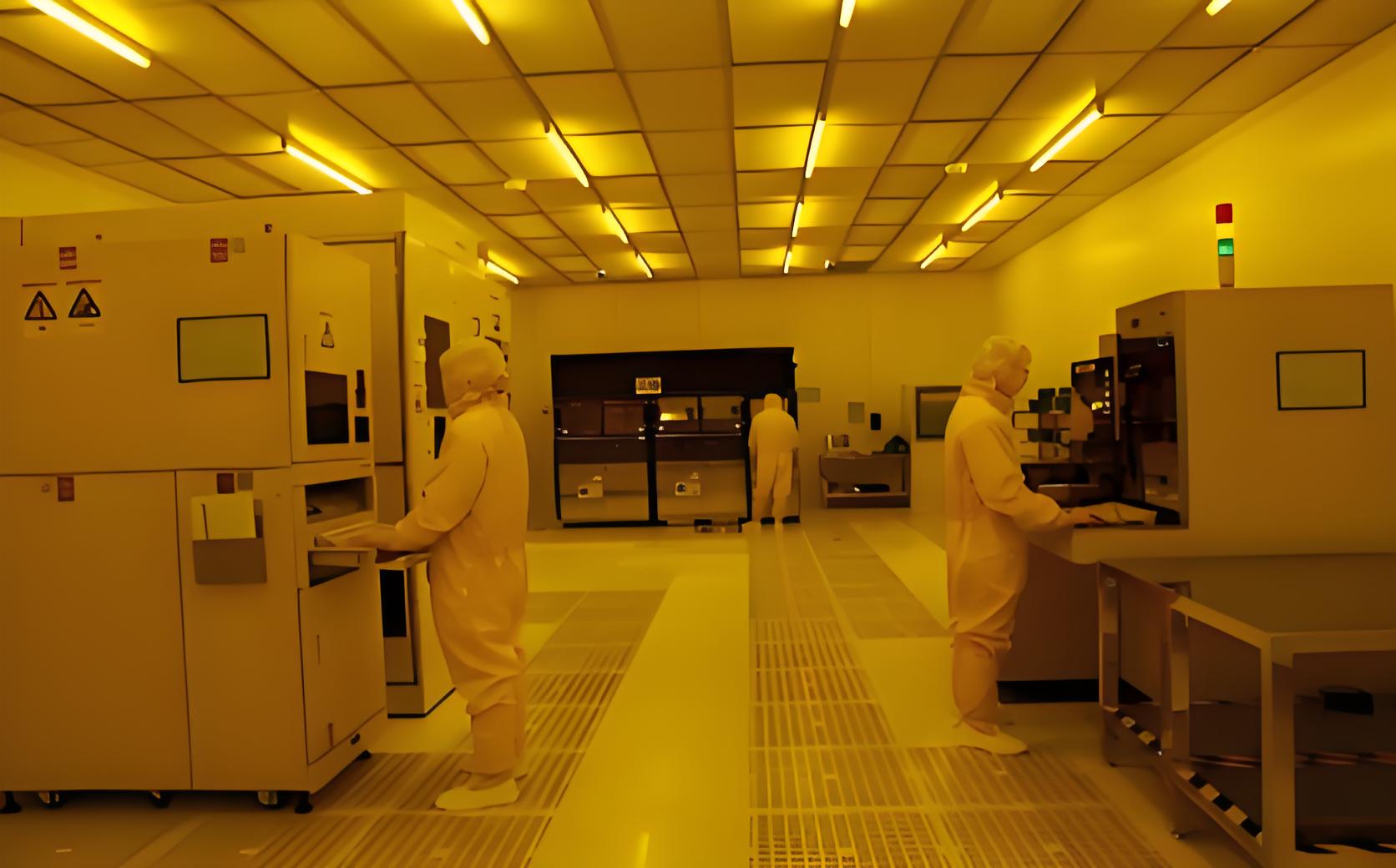

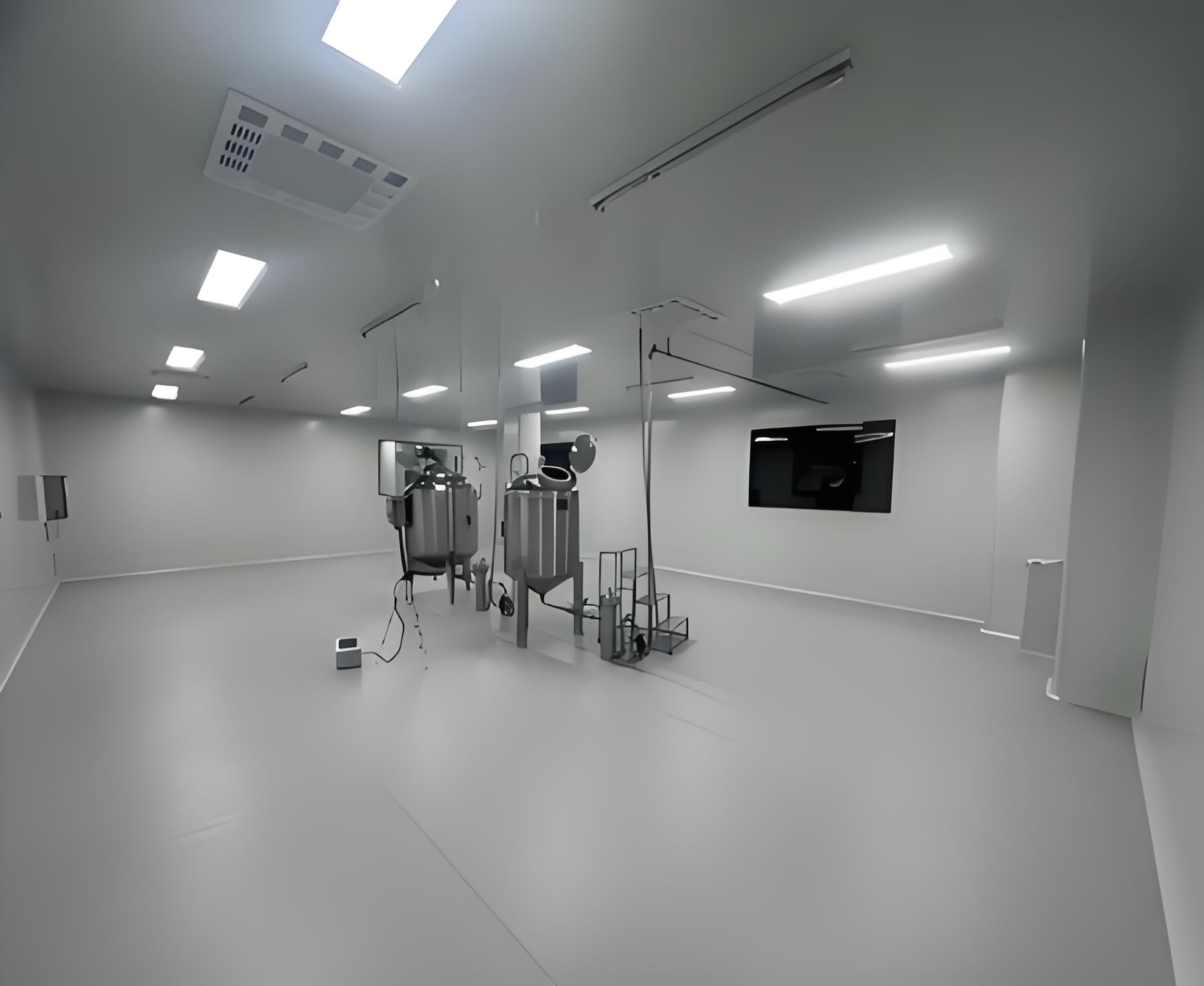
The bridge between a concept and a commercially viable industrial drying process is built on robust Laboratory Engineering. In the realm of industrial dryers for food, pharmaceutical, and chemical sectors, the laboratory phase is where physical constants are verified, process limits are defined, and quality by design is implemented. This article provides a technical deep dive into how modern laboratory engineering mitigates risk and ensures a seamless transition to full-scale production, drawing on the expertise of specialists like TAIJIE ER.
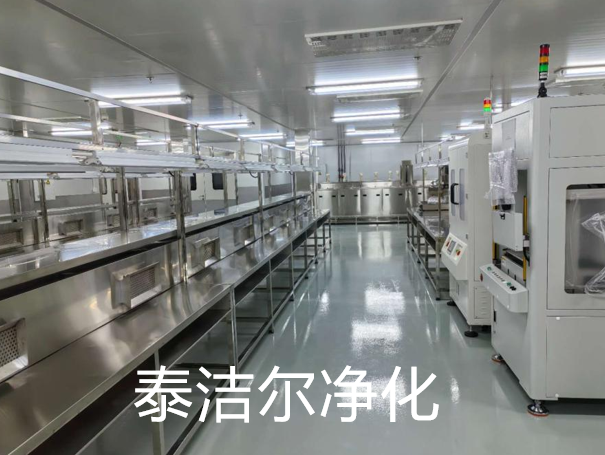
Drying is a complex unit operation involving simultaneous heat and mass transfer. Without meticulous Laboratory Engineering, scaling a drying process from a few grams to metric tons per hour is fraught with uncertainty. The laboratory is not merely a place to test the dryer; it is the environment where the material's behavior under thermal and mechanical stress is first characterized.
Successful industrial drying hinges on data. Laboratory engineering provides the precise measurement of:
Sorption Isotherms: Understanding the equilibrium moisture content at varying water activities (aw) to define target final moisture.
Thermal Degradation Kinetics: Determining the maximum allowable product temperature to preserve active pharmaceutical ingredients (APIs) or nutritional value.
Drying Kinetics (Drying Curves): Establishing the constant rate and falling rate periods to calculate the critical moisture content.
This data, generated through rigorous laboratory engineering protocols, forms the mathematical foundation for dryer sizing and selection.
Contemporary laboratory dryers are sophisticated tools that replicate industrial conditions on a miniaturized scale. When evaluating equipment for laboratory engineering, professionals focus on specific performance parameters that directly impact the validity of scale-up calculations.
Temperature Uniformity: Advanced units offer uniformity of ±0.5°C across the drying chamber, essential for testing heat-sensitive biological materials.
Vacuum Integrity: For freeze-drying or vacuum drying, leak rates below 0.01 mbar·L/s ensure that the process conditions are stable and reproducible, preventing oxidation of sensitive compounds.
Airflow Management: In convective dryers, air velocity and direction are precisely controlled to mimic industrial cross-flow or through-flow conditions.
Modern laboratory engineering is inseparable from data integrity. High-end systems are equipped with:
Integrated mass flow controllers for gas purging (e.g., nitrogen for inertization).
Real-time weighing systems to record mass loss continuously, generating high-resolution drying curves.
Compliance with 21 CFR Part 11 for pharmaceutical applications, ensuring audit trails and electronic signatures.
This level of instrumentation, often integrated into solutions from partners like TAIJIE ER, allows engineers to build predictive models rather than relying on empirical guesswork.
The chasm between a successful laboratory trial and a failed production run is often where Laboratory Engineering is either validated or found lacking. The core challenges revolve around maintaining equivalent process conditions despite vast differences in scale.
Laboratory engineering provides the framework for addressing the "number of variables" problem. Engineers use dimensionless numbers to maintain similarity:
Geometric Similarity: While often impractical, laboratory engineering aims to keep the ratio of critical dimensions (e.g., agitator diameter to vessel diameter) constant.
Dynamic Similarity: Maintaining constant Froude numbers in rotary dryers or tip speeds in agitated vacuum dryers ensures that the mechanical forces on the particles are comparable.
Thermal Similarity: Matching the Biot number ensures that the ratio of internal conduction resistance to external convection resistance is preserved, preventing scale-up errors where the core of a particle dries slower than predicted.
Consider the drying of a hygroscopic polymer gel. In the laboratory, a thin layer might dry in 2 hours. In a production tumble dryer, the same material might take 20 hours and form lumps. Laboratory engineering addresses this through:
Mechanical Design of Experiments (DoE): Testing different agitation speeds and intensities to find the optimum shear rate that enhances drying without destroying particle morphology.
Solvent Recovery Systems: For processes using organic solvents, laboratory setups include condensers and scrubbers to test recovery efficiency and safety interlocks required for explosion-proof industrial environments.
Companies leading the market, such as TAIJIE ER, recognize that laboratory engineering is not a standalone activity but the first phase of a long-term process partnership. Their engineering philosophy integrates client-side R&D with pilot-scale validation. By utilizing the data from meticulously designed laboratory trials, they configure industrial dryers with appropriate features—be it specialized CIP (Clean-in-Place) systems for pharmaceutical use or reinforced construction for abrasive minerals.
The field is evolving rapidly, driven by digitalization and stricter regulatory demands. We are seeing a shift towards "Digital Twins" where the laboratory engineering phase is used to calibrate computational fluid dynamics (CFD) models. These models then simulate the production-scale dryer, predicting particle residence times and temperature distributions with high accuracy. This reduces the number of physical pilot trials, saving material and accelerating time-to-market. Furthermore, the integration of PAT (Process Analytical Technology) tools like NIR (Near-Infrared) probes into laboratory dryers is becoming standard, allowing for real-time monitoring of moisture and chemical composition, which is directly translatable to industrial production lines.
In conclusion, the discipline of Laboratory Engineering is the cornerstone of industrial drying success. It is a data-driven, scientifically rigorous process that de-risks investment and ensures product quality. By focusing on precise measurement, intelligent scale-up methodologies, and leveraging the expertise of established manufacturers, organizations can transform their drying operations from a bottleneck into a competitive advantage.
Q1: How does laboratory engineering improve the energy efficiency of industrial dryers?
A1: It identifies the minimum energy required for drying. Through precise drying kinetics curves, laboratory engineering pinpoints the exact point where the drying rate falls below an economic threshold. This prevents over-drying, which wastes energy, and allows engineers to design multi-stage dryers that use the most efficient technology for each phase of the process (e.g., convective for surface moisture, contact drying for bound moisture).
Q2: What is the most common mistake in scaling up from laboratory data?
A2: Ignoring the mechanical history of the material. In a lab-scale static oven, a material dries gently. In a large-scale fluidized bed or rotary dryer, particles collide and abrade. Laboratory engineering must include mechanical stress tests to ensure that the material's particle size distribution and bulk density remain within specifications under production-scale forces. Failing to do so often results in excessive fines or dust generation.
Q3: Can laboratory engineering help with drying heat-sensitive pharmaceuticals?
A3: Absolutely. It is essential. Techniques like freeze-drying (lyophilization) cycle development rely entirely on laboratory engineering. Using differential scanning calorimetry (DSC) in conjunction with lab-scale freeze dryers, engineers determine the critical formulation temperature (Tg') to avoid collapse or melt-back during primary and secondary drying, ensuring the stability of the final drug product.
Q4: What role does Laboratory Engineering play in regulatory compliance (e.g., FDA, GMP)?
A4: It provides the foundational data for Process Validation. The FDA's guidance on Process Validation emphasizes continuous process verification. Laboratory engineering establishes the "Design Space" (the multidimensional combination of input variables and process parameters). This data, gathered under controlled lab conditions, proves that the process is understood and capable of producing quality product consistently, which is a core requirement of GMP.
Q5: How do you handle solvent-based drying in a laboratory setting safely?
A5: Laboratory engineering for solvent drying requires specialized, explosion-proof equipment. This includes vacuum dryers with inert gas blanketing, closed-circuit solvent recovery systems with condensers, and monitoring for Lower Explosive Limit (LEL). The data from these safe lab trials is used to design the larger-scale solvent recovery and safety systems required for the industrial dryer.
Q6: What is the typical timeline for a full laboratory engineering study for a new drying process?
A6: It varies widely by complexity. A simple moisture removal study for a free-flowing powder might take 2-4 weeks. However, a comprehensive study for a complex biological material or a new pharmaceutical formulation, including stability tests and scale-up modeling, can take 3-6 months. This investment is minor compared to the cost of a failed industrial dryer installation.