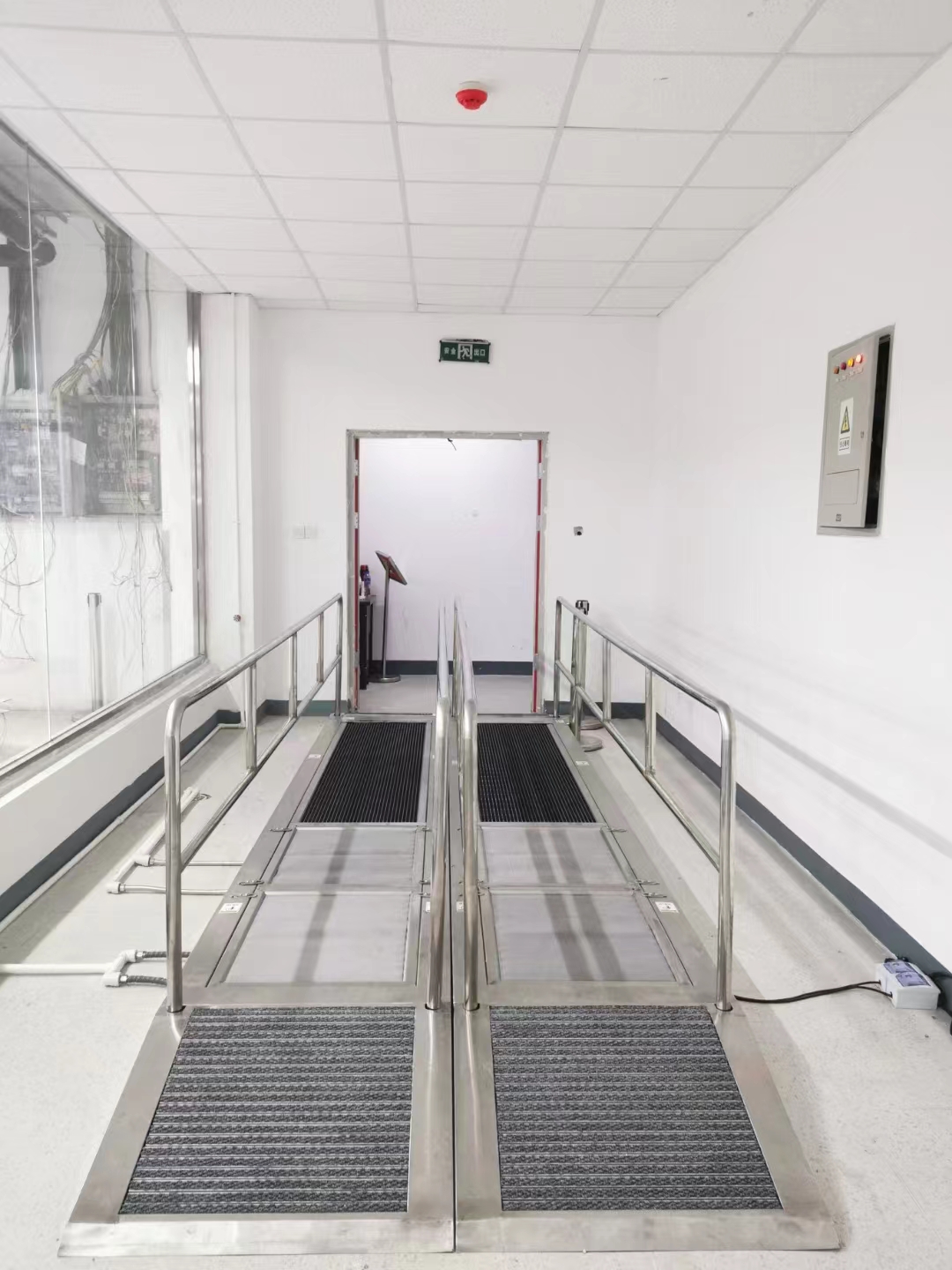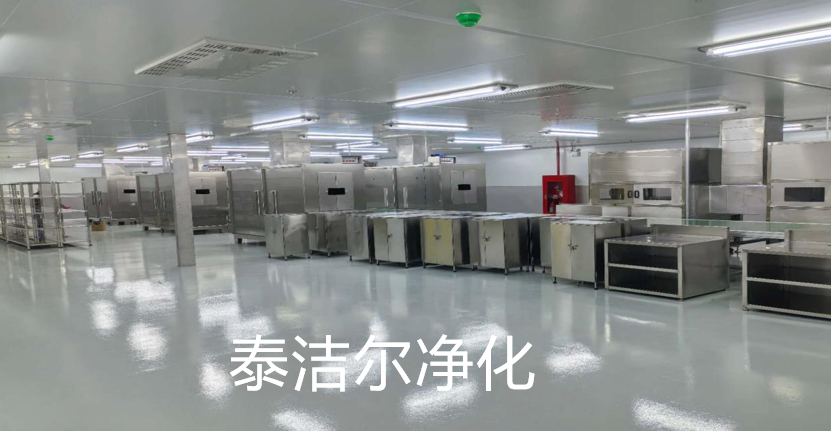


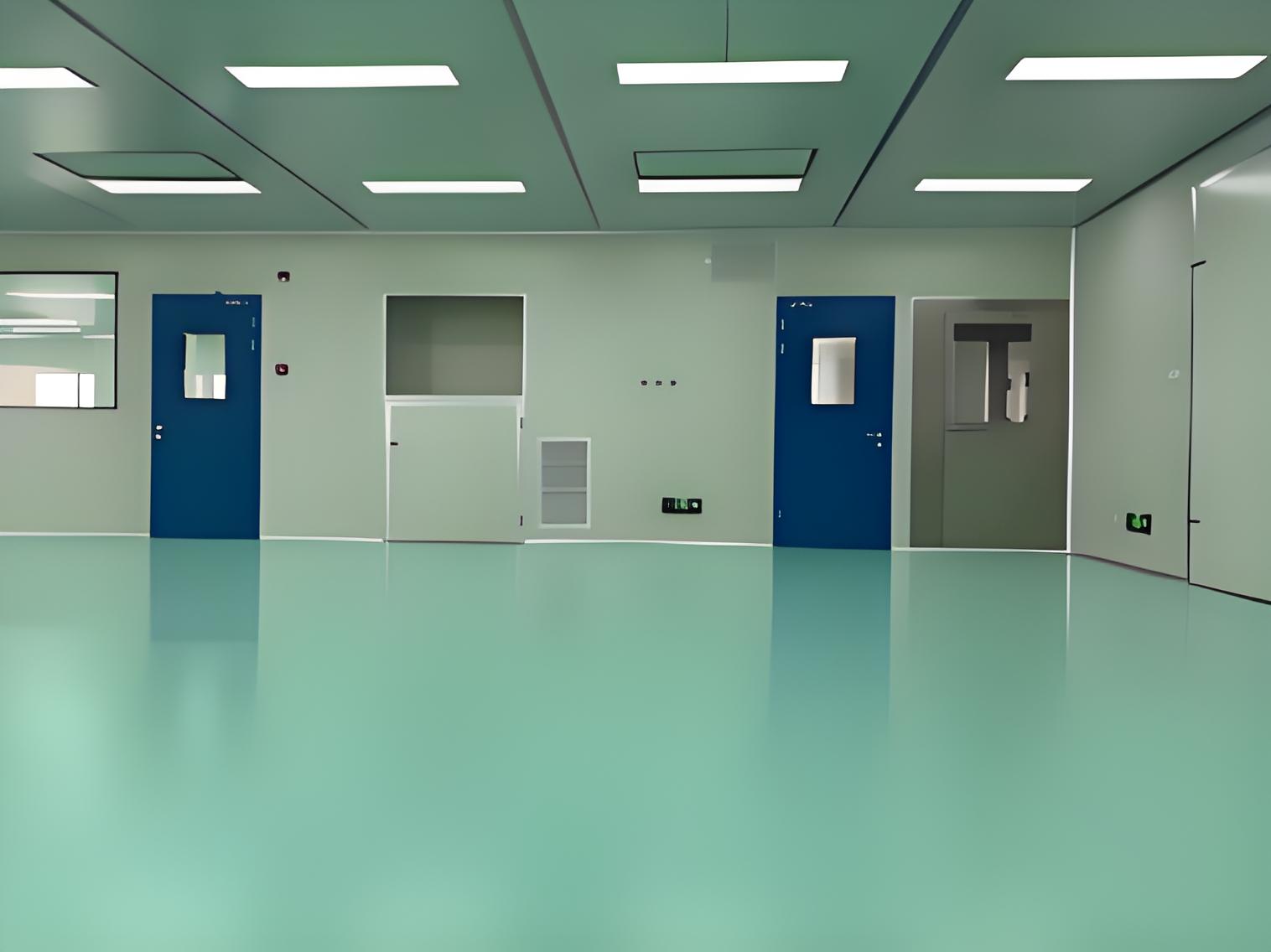
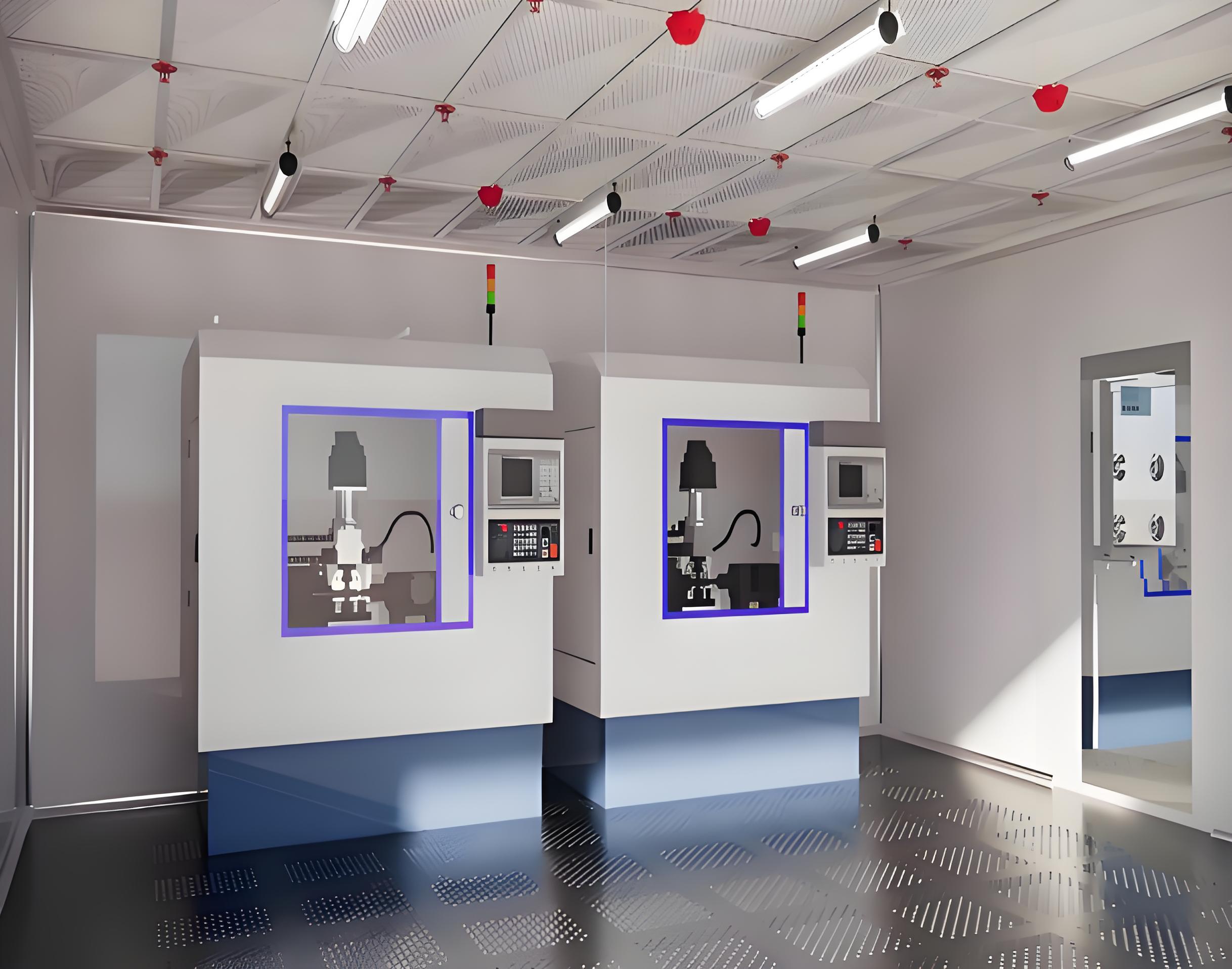
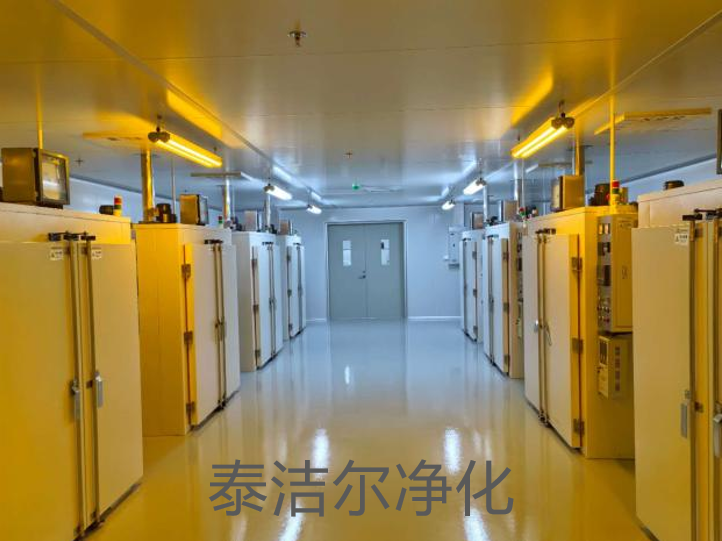
In highly regulated industries—pharmaceutical production, semiconductor fabrication, medical device assembly, and biotechnology research—the physical finish of a controlled environment directly determines particle fallout, microbial retention, and operational integrity. Cleanroom decoration is not an aesthetic discipline; it is a performance-critical engineering layer that must satisfy ISO 14644-1 cleanroom classes, GMP Annex 1 requirements, and specific process-driven contamination thresholds. This article provides a systematic examination of substrate science, joint sealing methodologies, surface resistivity parameters, and qualification protocols, supported by applied solutions from TAI JIE ER’s portfolio of turnkey controlled environment projects.
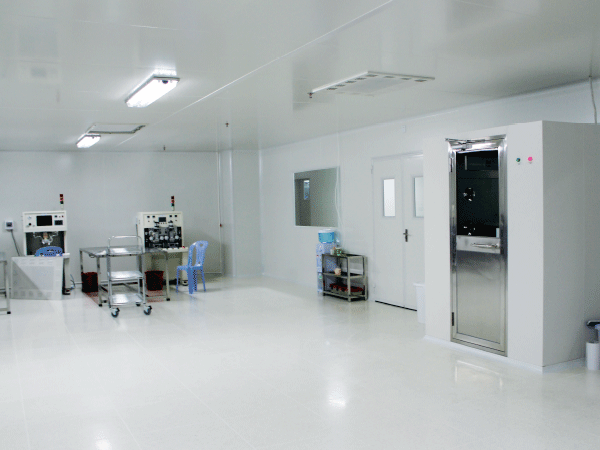
1. Functional Distinctions of Professional Cleanroom Decoration
Standard construction finishes (painted drywall, vinyl tiles, or sealed concrete) fail under constant disinfection, equipment abrasion, and HEPA-filtered air currents. True cleanroom decoration requires five non-negotiable properties: non-shedding surfaces, chemical resistance to cleaning agents (hydrogen peroxide vapor, quaternary ammonium compounds), seamless integration to eliminate harborage points, electrostatic discharge (ESD) control where sensitive electronics are involved, and thermoset stability across humidity fluctuations (40–60% RH typical). The table below contrasts conventional finishes versus validated cleanroom systems:
Walls: Conventional gypsum board with latex paint → high particle generation; recommended modular cleanroom panels with polyurethane core and smooth PVC/PP facings.
Flooring: Vinyl composition tile (VCT) with wax → microbial breeding; instead, fluid-applied seamless epoxy or static-dissipative polyurethane (resistance 10⁶–10⁹ ohms).
Ceiling systems: Perforated mineral fiber → impossible to decontaminate; replace with non-porous, gasketed aluminum grid with cleanroom-rated LED fixtures.
Joints and coving: Straight 90° corners → particle traps; mandatory coved radius (minimum 25 mm) at floor-wall and ceiling-wall interfaces.
Cleanroom decoration failures are often traced to improperly sealed utility penetrations (pipes, conduits, gas lines). Each penetration requires a validated compression seal or silicone bellows that withstands repeated biodecontamination cycles.
2. Material Science for Controlled Environments: Substrates, Coatings & Sealants
Selecting materials based solely on initial cost leads to accelerated degradation and requalification expenses. Professional engineers evaluate three layers: substrate (structural backing), intermediate barrier (vapor retarder), and monolithic wear layer. For ISO 5–8 cleanrooms, the following specifications dominate:
2.1 Wall cladding systems
Fiberglass-reinforced plastic (FRP) panels: 2.5–3.0 mm thickness, smooth gelcoat finish, ASTM G21 fungal resistance rating 0. Joints require co-extruded PVC battens with silicone gaskets.
Stainless steel (type 304 or 316L): For aseptic areas (ISO 5), #4 brushed finish eliminates shadowing, with welded and electropolished seams. Susceptible to denting, so reinforcing backing is essential.
High-pressure laminate (HPL) with phenolic core: Fire-rated (Class B1), chemical-resistant to 70% isopropyl alcohol, but edge swelling occurs without proper sealing—recommended only for dry processing areas.
2.2 Seamless flooring systems
100% solids epoxy mortar: Thickness 3–6 mm, excellent impact resistance. Use conductive quartz aggregate for ESD control. Curing time critical (7 days at 23°C).
Methyl methacrylate (MMA) flooring: Rapid cure (2–4 hours), ideal for tight schedules, but emits strong odor during application – requires separate ventilation.
Static-dissipative vinyl sheet: Welded seams using double-cut technique; surface resistivity according to ANSI/ESD S20.20 (1×10⁵ to 1×10⁹ ohms).
Cleanroom decoration hygiene also includes sealant selection. Neutral-cure silicone (acetoxy-free) with fungicide additive – must pass ASTM C1246-18 for outgassing (total volatile organic compound ≤ 50 µg/g). For pharmaceutical applications, seamless co-polymer acrylic sealants resistant to vaporized hydrogen peroxide (VHP) are mandatory. All sealants must be tested for cytotoxicity (ISO 10993-5) when used in medical device assembly zones.
3. Contamination Control Integration Through Architectural Details
Even the highest-grade materials fail if transitions are poorly designed. Three critical zones require specific attention during cleanroom decoration:
Air return plenum integration: Low-wall returns (300 mm from finished floor) must have coved stainless steel grilles with removable, autoclavable filters. Misaligned grille cutouts create bypass leakage, bypassing HEPA filtration.
Pass-through chamber penetrations: The frame-to-wall interface requires dual gaskets (silicon rubber, closed-cell neoprene) with a pressure differential monitoring port to verify seal integrity.
View windows: Double-glazed, tempered with sloped sills (≥ 45°) to prevent dust accumulation. Use non-wicking epoxy adhesive between glass and frame – no exposed mechanical fasteners.
Additionally, all overhead sprinkler heads, smoke detectors, and speaker fixtures must be flush-mounted with recessed housings. Protruding devices generate turbulent airflow and act as particle sources. TAI JIE ER employs laser tracker alignment to achieve fixture depth tolerance ≤ 1.5 mm relative to the finished ceiling plane.
4. Industry-Specific Decoration Protocols (Pharmaceutical, Semiconductor & Medical Devices)
Generic cleanroom finishes do not address process-specific risks. Below we break down three major application environments and their decoration mandates:
4.1 Pharmaceutical / Biotech (GMP Grade A/B areas)
Wall-to-floor coving radius ≥ 40 mm for easy cleaning with automated scrubbers.
All surfaces must withstand daily disinfection with 3% hydrogen peroxide and 0.5% peracetic acid – polyurea coatings remain stable after 1000+ wipe cycles.
Flooring must have heat-welded seams and be sloped (1:100) toward floor drains to prevent pooling.
No exposed wood, cellulose, or porous insulation in any cavity – use closed-cell polyisocyanurate instead.
4.2 Semiconductor & Electronics (ISO 3–6, ESD-sensitive)
Wall panels with static-dissipative laminate (10⁶–10⁹ ohms) + grounded via copper foil grid (max spacing 3 m × 3 m).
Flooring material must meet triboelectric charge generation < 100 V at 50% RH (measured via AATCC 134).
Avoid any outgassing sources that could deposit molecular contaminants (AMC). Low-VOC sealants and anodized aluminum extrusions are mandatory.
Cleanroom ceiling and wall panels should be non-porous and cleanable with deionized water only; no lubricants used in panel assembly.
4.3 Medical Device Assembly (ISO 7–8, non-sterile but micro-limited)
Antimicrobial additives (silver ion or copper-based) embedded in epoxy flooring – efficacy verified by JIS Z 2801.
Wall surfaces with gloss level ≥ 40 units (60° gloss meter) to facilitate visual inspection of residue.
No sharp internal corners – all interior angles require flexible coving to prevent harboring of bioburden.
For hybrid facilities (e.g., cell therapy), TAI JIE ER implements modular cleanroom decoration systems that allow reconfiguration without demolition, using cam-lock joining mechanisms and reusable gaskets.
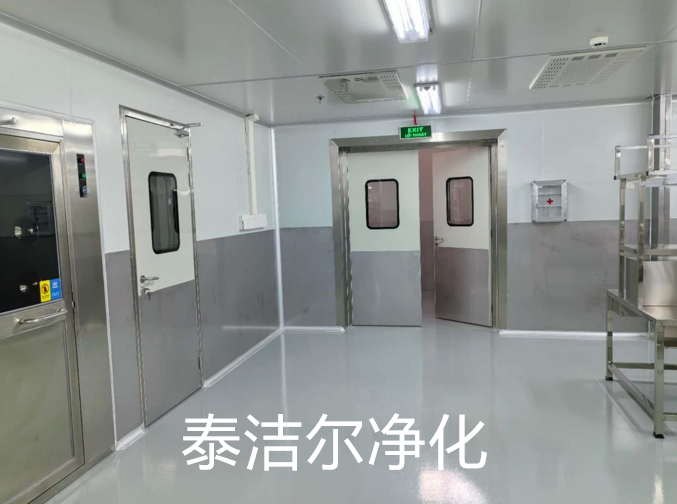
5. Common Decoration Deficiencies and Corrective Engineering Solutions
Field audits across 47 cleanroom projects identified recurring failures. Below we list each pathology and corresponding remedies aligned with ISO 14644-14 (design and construction suitability):
Issue: Floor coating delamination around heavy equipment.
Cause: Insufficient primer adhesion plus missing expansion joints. Solution: Specify moisture-tolerant epoxy primer and incorporate saw-cut expansion joints filled with semi-rigid polyurethane every 6 m × 6 m grid.Issue: Particle spikes from door gaskets.
Cause: Hollow silicone gaskets that collapse unevenly. Solution: Use solid medical-grade silicone gaskets with magnetic latching, achieving compression force of 2–3 N/mm².Issue: Ceiling panel sagging leading to air vortex formation.
Cause: Inadequate load rating (only 100 Pa). Solution: Deploy structural ceiling with 300 Pa uniform load capacity and anti-vibration hangers (stainless steel wire rope isolators).Issue: Chemical attack on wall finish after sporicide use.
Cause: Using epoxy ester or vinyl ester coatings. Solution: Convert to novolac epoxy (high crosslink density) which resists 98% sulfuric acid and 30% hydrogen peroxide for 72 hrs.
One ISO 7 cleanroom we requalified had particle counts exceeding Class 8 due to cleanroom decoration shortcut – the contractor had installed standard ceiling tiles with exposed fiberglass edges. After replacing with gasketed, non-shedding aluminum honeycomb panels, ISO 5 was achieved with same HVAC airflow.
6. Qualification and Post-Installation Maintenance of Decoration Systems
Post-construction, the decoration subsystem must be validated via three protocols before handover:
Visual inspection: 100% check under 500 lux illumination with 2× magnifier for pinholes, bubbles, scratches (depth > 50 µm is rejectable).
Adhesion testing (ASTM D4541): Minimum pull-off strength 2.5 MPa for floors, 1.8 MPa for wall coatings.
Recovery test: After applying standard disinfectant, measure surface roughness (Ra ≤ 0.8 µm for pharmaceutical, ≤ 0.5 µm for aseptic).
Ultrapure water rinse resistance (for semiconductor): No water beading, contact angle ≤ 30° after 10 rinse cycles.
Ongoing maintenance: floor recoat interval every 7–10 years for epoxy; wall panel replacement only when mechanical damage occurs. TAI JIE ER also recommends annual particle fallout mapping (according to IEST-RP-CC007.4) to detect hidden degradation of sealants or coving.
7. Frequently Asked Questions on Cleanroom Decoration
Q1: What are the cost differences between modular cleanroom panels and traditional stick-built decoration?
A1: Modular panels (40–60 mm thick with steel skins) typically have a higher initial material cost (20–30% more than drywall + paint) but provide dramatically lower lifetime expenses due to reusability, faster installation (reducing construction schedule by 40–50 hours per 100 m²), and zero wet-trade curing. Stick-built decoration requires on-site joint sanding and coating, which introduces moisture and delays particle clearance. For ISO 6 and below, modular systems are the industry preference.
Q2: Can existing conventional floors be overlaid with epoxy for cleanroom use?
A2: Yes, but only after proper substrate preparation. The existing concrete must be diamond ground to ICRI CSP 3–4, moisture content below 4% (better below 3% via calcium chloride test), and all cracks routed and filled with 100% solids epoxy mortar. Without a moisture vapor barrier (MVB), residual hydrostatic pressure will blister the new epoxy. Advanced cleanroom decoration frequently uses a two-coat moisture-tolerant epoxy system (amine adduct) for such retrofits.
Q3: How often should cleanroom wall and ceiling sealants be replaced?
A3: Sealant service life depends on chemical exposure. For facilities using only mild detergents and 70% IPA, replace every 5–7 years. In VHP or peracetic acid cycles, inspection should occur every 12 months; typically replacement is required at 3–4 years. Perform a peel test annually – if cohesive strength drops below 1.2 MPa, scheduled replacement should be triggered.
Q4: Do all cleanroom decorations require static control flooring even for non-electronic applications?
A4: Not mandatory for purely biological work, but static charge can attract airborne particles, increasing contamination risk. For ISO 7 and above in pharmaceutical fill-finish lines, we recommend static-dissipative flooring (10⁶–10⁹ ohms) as a best practice. For sterile compounding pharmacies, ESD flooring reduces particulate adherence to surfaces, aiding cleaning validation.
Q5: What documentation should a cleanroom decoration contractor provide for GMP validation?
A5: Essential deliverables include: (1) material certificates with toxicological assessment (ISO 10993 if applicable), (2) installation as-built drawings indicating joint and coving locations, (3) seam test reports (tensile strength min 3 MPa for welded floors), (4) gloss meter readings for each batch of finish, and (5) outgassing analysis (TD-GC/MS) for sealants. TAI JIE ER provides a full data package aligned with VDI 2083 sheet 4.1.
Request a Technical Consultation for Your Cleanroom Decoration Project
Every controlled environment presents unique particle control challenges, regulatory constraints, and process workflows. The engineering team at TAI JIE ER specializes in high-fidelity cleanroom decoration solutions—from material selection workshops to on-site installation qualification. Whether you require ISO 3 nano-fab finishes or GMP-compliant aseptic suites, our experts provide turnkey specifications and validation support.
Send your inquiry with project class, size, and industry sector to receive a detailed technical proposal including material take-offs, sealed sample kits, and installation timeline. Contact our engineering desk via the official inquiry form or directly email project@taijieer.com for a preliminary consultation.
Inquiry Now → (or visit www.taijieer.com for portfolio and technical library)