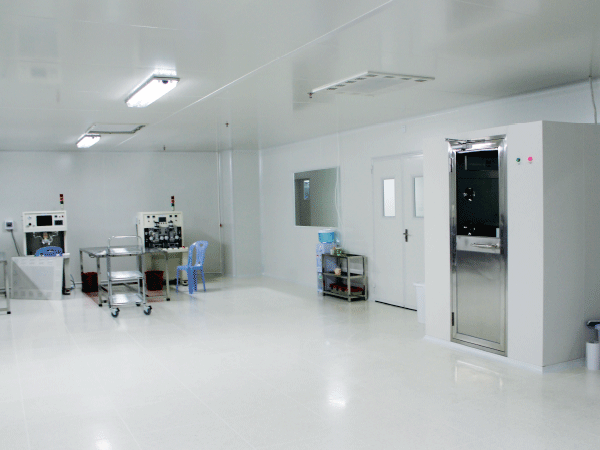

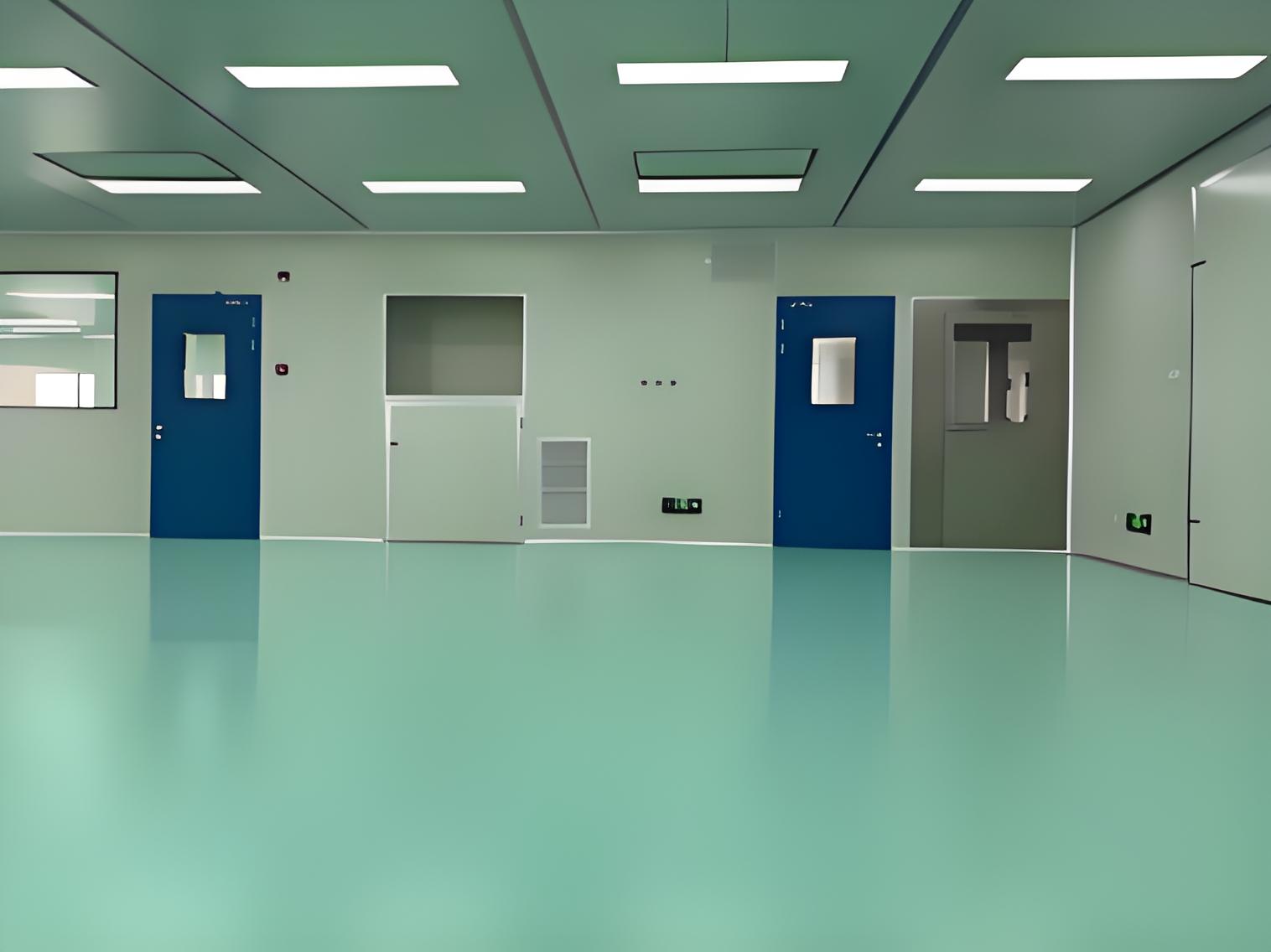
A cleanroom is a controlled environment essential in manufacturing and research where airborne particles, contaminants, and pollutants are kept within strict limits. This specialized room is foundational for industries where even microscopic particles can compromise product quality, safety, and performance. The design, construction, and operation of a cleanroom require meticulous planning and adherence to international standards to ensure it functions as intended. Companies like TAI JIE ER specialize in engineering these sophisticated environments, integrating advanced filtration, precise airflow control, and rigorous protocols to meet the diverse needs of high-tech sectors. Understanding the core principles of cleanroom technology is the first step in appreciating its critical role in modern innovation and production.
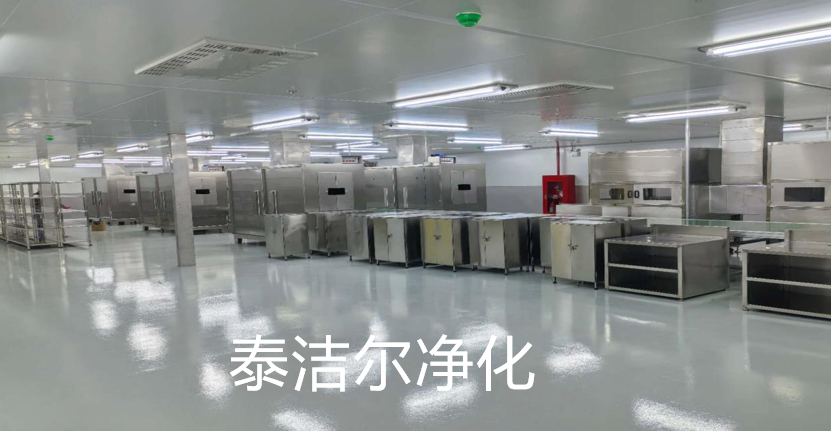
Cleanrooms are primarily defined by their cleanliness level, quantified by the number and size of particles permitted per volume of air. The most widely used standards are ISO 14644-1 and the legacy US Federal Standard 209E.
The ISO classification system ranges from ISO 1 (the cleanest) to ISO 9. An ISO Class 7 cleanroom, for example, allows no more than 352,000 particles 0.5 microns or larger per cubic meter. This objective metric dictates every aspect of design.
There are two main airflow principles governing cleanroom types: turbulent flow and unidirectional (laminar) flow. Turbulent flow rooms use high-efficiency particulate air (HEPA) filters in the ceiling with a lower air change rate, suitable for less critical applications. Unidirectional flow rooms feature HEPA filters covering 80-100% of the ceiling, creating a steady, piston-like downward air sweep for ultra-clean processes.
Modular cleanrooms have become increasingly popular. They offer flexible, faster deployment compared to traditional built-in-place constructions. TAI JIE ER utilizes advanced modular systems that provide scalability and reconfigurability without compromising integrity.
Adherence to recognized standards is non-negotiable. ISO 14644 is the cornerstone series, covering classification, testing procedures, monitoring, and design. It ensures global consistency in cleanroom performance validation.
For life sciences and pharmaceuticals, Good Manufacturing Practice (GMP) guidelines, particularly those from the FDA and EU, are paramount. These regulations often incorporate ISO standards but add stringent requirements for documentation, process control, and aseptic practices.
In microelectronics and semiconductors, standards from bodies like the Institute of Environmental Sciences and Technology (IEST) are critical. They provide detailed recommended practices for testing and component specifications.
Regular testing for certification is mandatory. Key tests include particle count measurement, airflow velocity and volume, air pressure differential, filter integrity, and recovery testing. TAI JIE ER’s project methodology includes comprehensive commissioning and certification support to guarantee every cleanroom meets its specified class before operational handover.
The integrity of a cleanroom hinges on its integrated systems. The air handling unit (AHU) is the heart, constantly conditioning and recirculating air. It controls temperature, humidity, and pressurization while working in tandem with the filtration system.
Filtration typically involves a multi-stage process. Pre-filters capture larger particles, extending the life of the final HEPA or ULPA filters. These ultra-high-efficiency filters are 99.99% to 99.9995% efficient at removing sub-micron particles, forming the primary contamination barrier.
Room pressurization is a key control strategy. Cleanrooms are maintained at a positive pressure relative to less clean adjacent areas, preventing unfiltered air from infiltrating. Cascade pressures are used in multi-room suites.
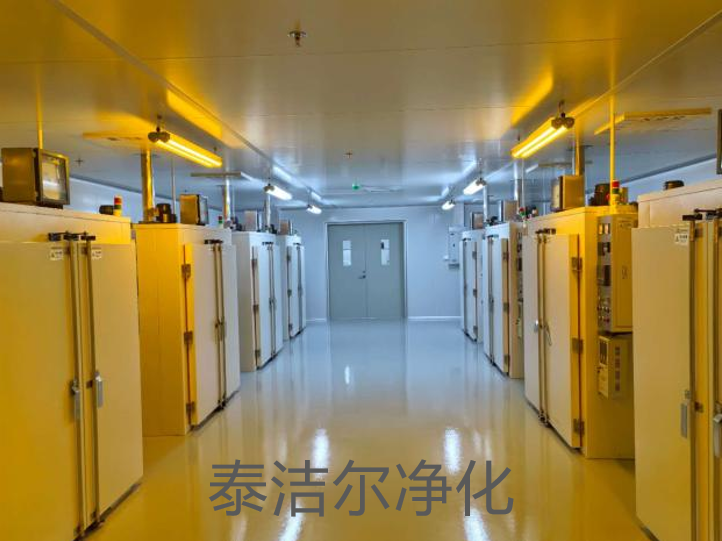
Materials of construction must be non-shedding, smooth, and easy to clean. Common choices include coated steel, fiberglass-reinforced plastic, and vinyl walls with coved corners. Floors are often epoxy or urethane-based seamless coatings.
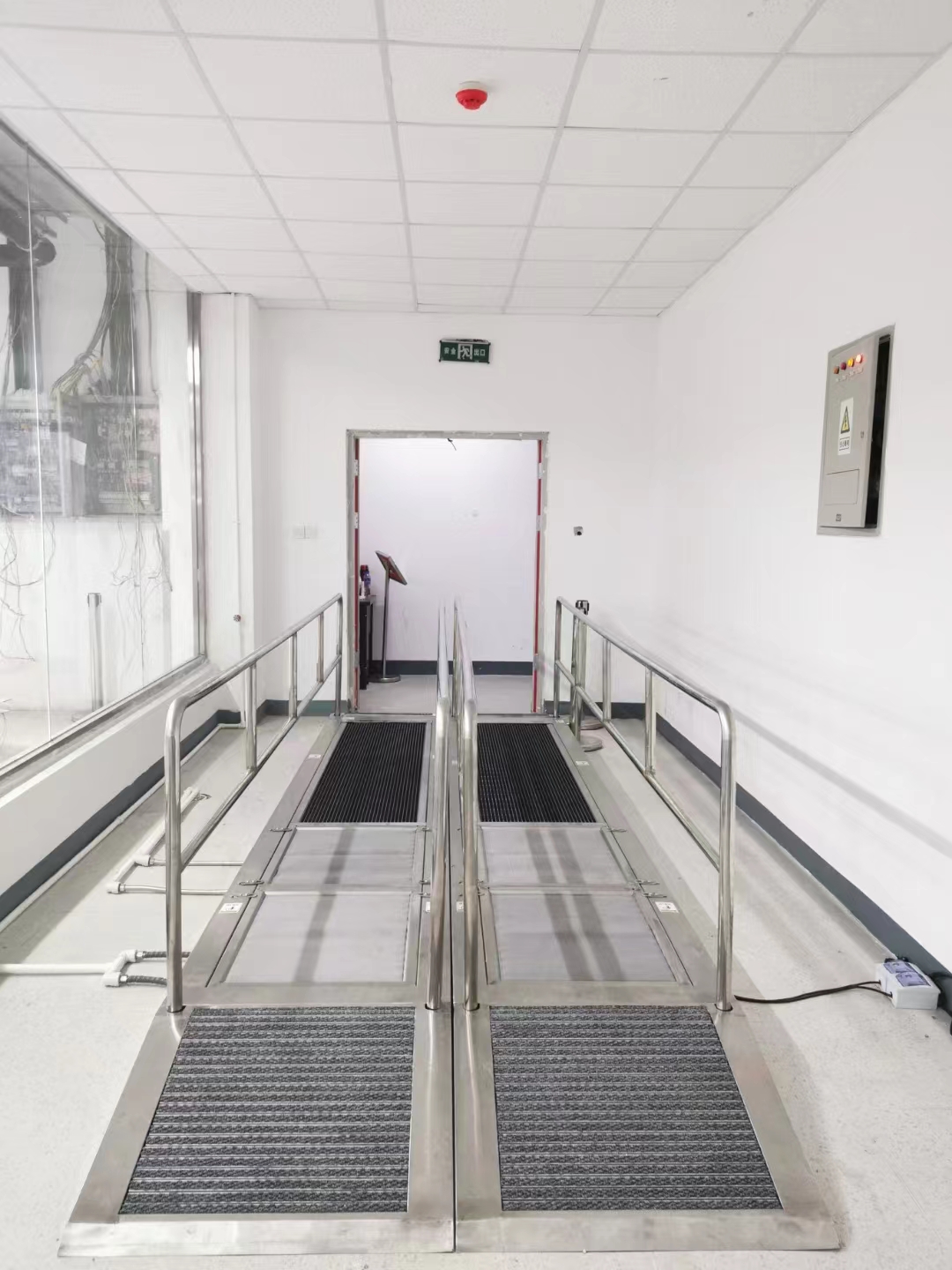
The human operator is the largest contamination source. Therefore, gowning procedures and personnel airlocks are critical design elements. Airlocks serve as transition chambers to maintain pressure differentials and contain contamination.
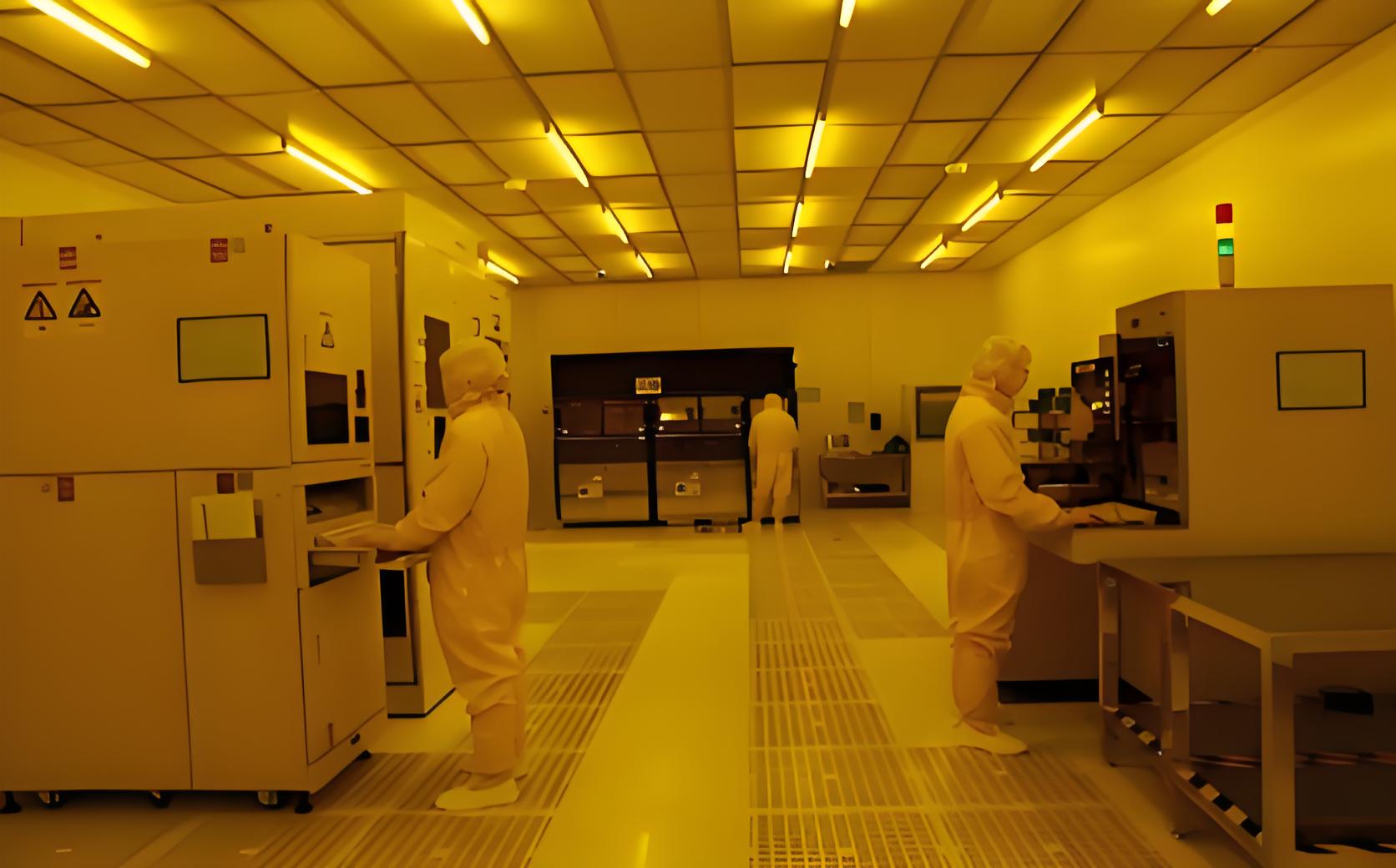
Cleanroom requirements vary dramatically by sector. In semiconductor fabrication, facilities often require ISO Class 1-5 environments. The focus is on eliminating static and microscopic particles that can cause circuit defects. Vibration control and ultra-pure materials are also vital.
Pharmaceutical and biotechnology cleanrooms are governed by GMP for aseptic filling and sterile product handling. These often require ISO Class 5 (Class 100) environments within isolators or fill lines. Environmental monitoring for viable (microbial) particles is as important as non-viable particle counts.
Medical device manufacturing, especially for implants, demands cleanrooms that control both particulate and biological contamination. Stringent documentation for validation and traceability is a core requirement in this sector.
Aerospace and optics industries utilize cleanrooms for assembling satellite components or laser systems. Here, the focus may extend to controlling organic vapors or specific chemical contaminants that could degrade sensitive surfaces.
TAI JIE ER has developed deep expertise across these verticals, tailoring solutions that address not just the generic class standard, but the unique process and regulatory challenges of each industry.
A perfectly built cleanroom will fail without strict operational discipline. Comprehensive Standard Operating Procedures (SOPs) must govern every activity, from entry and exit protocols to cleaning schedules and material transfer.
Cleaning is a systematic, frequent process using approved, non-shedding tools and specific cleaning agents. Techniques like wiping in overlapping strokes from cleanest to dirtiest areas are standard. Disinfectant rotation is often employed in bio-cleanrooms to prevent microbial resistance.
Personnel training is continuous. Employees must understand contamination control theory, proper gowning technique, and the consequences of procedural breaches. Movement within the room should be deliberate and minimal to reduce air turbulence.
Continuous and periodic monitoring is essential. Particle counters, pressure differential sensors, and temperature/humidity monitors provide real-time data. Regular re-certification, typically every 6 to 12 months, validates ongoing compliance.
Preventive maintenance for all mechanical systems is scheduled and documented. This includes filter changes, AHU servicing, and integrity testing. TAI JIE ER offers ongoing service agreements to ensure the long-term performance and compliance of their installed cleanrooms, protecting the client’s critical investment.
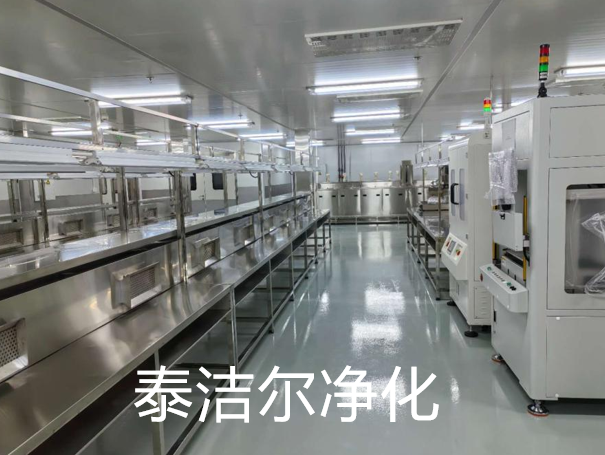
Selecting an engineering partner is a strategic decision. Look for a provider with proven experience in your specific industry and the required cleanliness class. Review their portfolio of completed projects.
Evaluate their design capabilities in-house. A firm that integrates architectural, mechanical, electrical, and controls engineering ensures a cohesive design and avoids costly coordination gaps during construction.
Consider their approach to validation and documentation. A trustworthy partner will have a clear protocol for Factory Acceptance Testing (FAT), Site Acceptance Testing (SAT), and final certification, delivering a complete turnover package.
Assess the quality of core components they specify. The performance of filters, seals, wall systems, and controls directly impacts reliability and lifecycle cost.
Firms like TAI JIE ER distinguish themselves by offering end-to-end service—from initial concept and design through fabrication, installation, validation, and lifetime support. This single-point accountability is invaluable for complex, mission-critical environments.
The cleanroom is a remarkable feat of environmental engineering, enabling advancements in technology and healthcare that define modern life. Its effectiveness relies on a seamless integration of precise engineering, rigorous standards, and uncompromising operational discipline. From microchips to medicines, the products built within these controlled spaces depend on their flawless performance. By partnering with experienced and dedicated firms like TAI JIE ER, organizations can ensure their cleanroom facility is not just a compliant space, but a robust, reliable foundation for innovation, quality, and success in the global marketplace.
Q1: What is the main difference between an ISO Class 5 and an ISO Class 8 cleanroom?
A1: The primary difference is the allowable concentration of airborne particles. An ISO Class 5 cleanroom permits no more than 3,520 particles (0.5 microns or larger) per cubic meter. An ISO Class 8 allows up to 3,520,000 particles of the same size—a thousand times more. This dictates the required air change rates, filtration level, gowning, and protocols.
Q2: How often does a cleanroom need to be re-certified?
A2: Industry best practice and many regulatory guidelines recommend re-certification at least annually. However, critical environments or those under stringent GMP may require semi-annual testing. Continuous monitoring systems can supplement, but not replace, periodic formal re-certification to all relevant ISO 14644 tests.
Q3: Can an existing room be converted into a cleanroom?
A3: Yes, retrofitting is common. The feasibility depends on ceiling height, existing HVAC capacity, and structural layout. A modular cleanroom solution, like those offered by TAI JIE ER, is often ideal for retrofits as it creates a controlled envelope within the existing space, minimizing disruption to building infrastructure.
Q4: What is the single biggest source of contamination in a cleanroom?
A4: People are consistently the largest contamination source. Operators shed skin cells, hair, and microorganisms, and can introduce particles from clothing or movement. This is why rigorous gowning procedures, comprehensive training, and controlled personnel flow are fundamental to cleanroom management.
Q5: What factors most significantly impact the cost of building a cleanroom?
A5: Key cost drivers include the target ISO classification (cleaner is more expensive), the industry-specific regulatory requirements (pharma costs more than industrial), the size of the facility, the sophistication of control systems, and the materials of construction. Operational costs for energy to run high air-change rates are also a major long-term consideration.