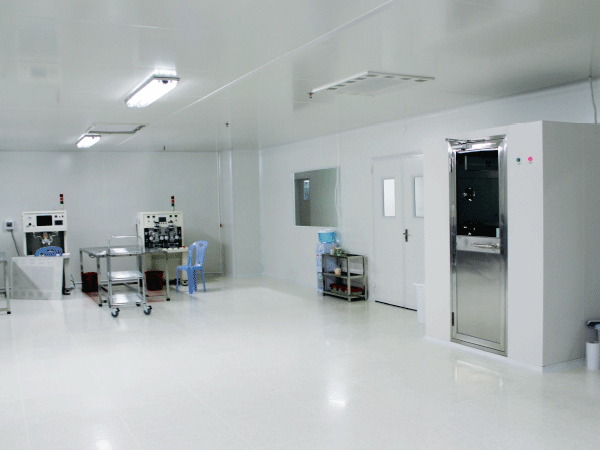
A sterile laboratory is the backbone of aseptic processing, pharmaceutical quality control, and advanced therapeutic manufacturing. Unlike ordinary cleanrooms, a sterile environment demands absolute elimination of viable microorganisms. This requires a holistic engineering approach, rigorous validation, and continuous monitoring. Below, we dissect the technical and operational elements that define a successful sterile laboratory project, incorporating data-driven insights and practical solutions from international standards.
While ISO 14644‑1 defines cleanrooms by airborne particle counts, a sterile laboratory imposes additional microbial limits. For example, a Grade A (ISO 5) zone must demonstrate<1 cfu="">
Cleanrooms control particulates; sterile labs control both particulates and viable organisms. A sterile laboratory must therefore incorporate materials and finishes that resist microbial growth and allow repeated disinfection. Epoxy flooring, coved corners, and electropolished stainless steel are standard.
Four interdependent systems form the foundation of any sterile facility.
Heating, ventilation, and air conditioning (HVAC) in a sterile laboratory must deliver unidirectional airflow (laminar flow) in critical zones to sweep away particles and microorganisms. Air change rates typically exceed 60 ACH for ISO 5 areas, with airflow velocity of 0.36–0.54 m/s. Turbulence can create stagnant zones where contaminants accumulate, so computational fluid dynamics (CFD) modeling is recommended during design.
HEPA filters: H14 grade (≥99.995% efficiency at MPPS) are mandatory for supply air in sterile labs.
ULPA filters: Used when ultrafine particles (nanoparticles) are a concern.
Leak testing: Filters must be scanned annually with a photometer or particle counter to certify integrity.
Positive pressure cascades (12.5–25 Pa) protect sterile zones from adjacent lower‑grade areas. For containment labs (e.g., handling pathogens), negative pressure is applied. Airlocks with interlocking doors and audible alarms ensure pressure stability during material transfer.
All surfaces must be non‑porous, smooth, and resistant to disinfectants like VHP or peracetic acid. Epoxy or polyurethane coatings with antimicrobial additives are common. Seamless welds on stainless steel workstations prevent bioburden accumulation.
Designing a sterile laboratory requires compliance with multiple guidelines. EU GMP Annex 1 (2022 revision) emphasizes contamination control strategy (CCS) and introduces requirements for barrier systems. In the US, USP<797>governs sterile compounding in pharmacies, while USP<1116>addresses microbiological control in cleanrooms. ISO 14644 parts 1–16 provide classification and monitoring methods.
Adherence to these standards is non‑negotiable. TAI JIE ER integrates these requirements into every project phase, from concept to qualification, ensuring that the finished sterile laboratory passes regulatory scrutiny.
The design and operation of a sterile environment vary significantly by application.
In aseptic filling lines, the critical zone (Grade A) is surrounded by Grade B background. Restricted access barrier systems (RABS) or isolators are often employed to minimize human intervention. The sterile laboratory must accommodate rapid transfer ports (RTPs) and integrated decontamination cycles.
USP<797>classifies compounding risk levels (low, medium, high). A sterile laboratory in a hospital pharmacy requires separate ante‑room and buffer room with ISO 7 or ISO 8 background. Laminar airflow workbenches (LAFW) provide ISO 5 conditions at the point of preparation.
Cell and gene therapy products are often open‑manipulated, requiring Grade A conditions with background ISO 7. These labs also need cryogenic storage and strict segregation to prevent cross‑contamination between patient samples. TAI JIE ER has delivered modular sterile suites for CGT facilities that incorporate these complexities.
The 2022 EU GMP Annex 1 mandates a formal CCS for all sterile manufacturing. This document integrates all aspects of contamination control—HVAC, personnel gowning, material flow, disinfection, and monitoring—into a single coherent plan. A well‑designed sterile laboratory project includes a CCS workshop early in the design phase, identifying critical control points and defining acceptance criteria.
Using Failure Mode Effects Analysis (FMEA), the design team evaluates risks such as airlock failures, filter bypass, and human error. Mitigations are then embedded in the architectural and mechanical plans. For example, redundant fans and UPS power ensure pressure stability during utility outages.
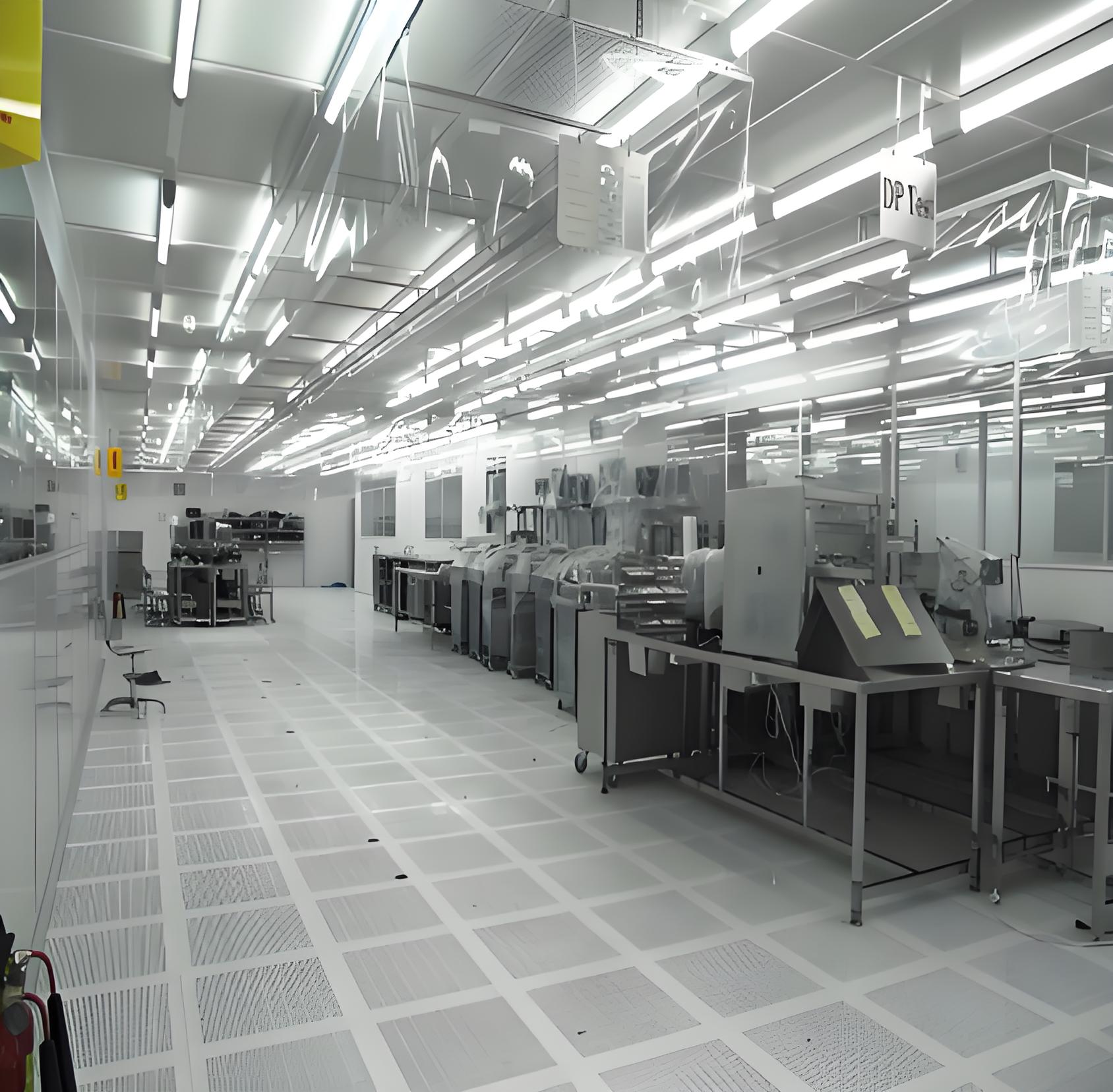
Even experienced teams encounter issues that delay validation and increase costs.
Inadequate airtightness: Leakage through wall penetrations destroys pressure cascades. All joints must be sealed with cleanroom‑rated silicone.
Poorly located diffusers: Supply air diffusers placed directly above critical workstations can cause turbulence and particle dispersion.
Material compatibility: Disinfectants may corrode certain plastics or metals; material selection must be validated with the end‑user’s disinfection protocol.
Incomplete documentation: Regulatory inspectors demand traceability of all design decisions. A turnkey provider like TAI JIE ER maintains a full validation dossier (IQ/OQ/PQ) for every project.
The direction of sterile laboratory engineering is toward minimizing human intervention. Closed isolators with VHP decontamination cycles are replacing open RABS in many aseptic facilities. Automation—robotic filling, automated sampling, and continuous monitoring—reduces the bioburden risk associated with personnel. A modern sterile laboratory must be designed to accommodate these technologies, with adequate space for equipment and utility connections.
A1: There is no single classification; it depends on the activity. Aseptic manipulations (e.g., filling) require ISO 5 (Grade A) at the critical zone, with background of ISO 7 (Grade B) or ISO 8 (Grade C). Support areas like changing rooms are typically ISO 7 or 8. Always consult the relevant pharmacopoeia or GMP guideline for your specific process.
A2: At minimum, annual recertification is required for particle counts, HEPA filter integrity, and airflow velocity. However, microbial monitoring (settle plates, contact plates, active air sampling) should be performed during every operational shift to detect trends. Some guidelines recommend semi‑annual or quarterly re‑certification for critical areas.
A3: All sterile laboratories are cleanrooms, but not all cleanrooms are sterile. A cleanroom controls particulate contamination to a specified level (e.g., ISO 7). A sterile laboratory imposes additional microbial limits and is designed to prevent viable organisms. Sterile labs also require more stringent gowning, disinfection, and monitoring protocols.
A4: Yes, but it requires careful retrofitting. The HVAC system must often be upgraded to achieve higher ACH and proper pressure differentials. Surfaces may need replacement with cleanable, non‑shedding materials. Additionally, the layout must be reviewed to ensure proper material and personnel flow. TAI JIE ER offers feasibility studies and modular upgrades to convert existing spaces into compliant sterile facilities.
A5: Human error is the primary source—improper gowning, poor aseptic technique, or excessive movement. Other causes include inadequate disinfection of surfaces, failure of HEPA filters, and breaches in positive pressure (e.g., opening doors without airlocks). Continuous training and real‑time monitoring systems help mitigate these risks.
A6: A CCS is a documented summary of all measures in place to control contamination in a sterile facility. It covers HVAC, personnel, materials, equipment, cleaning, and monitoring. Required by EU GMP Annex 1, the CCS ensures a holistic, risk‑based approach to maintaining sterility.
A7: The timeline depends on size and complexity. A small modular sterile suite (50–100 m²) can be delivered in 4–6 months, including validation. Large‑scale facilities (e.g., hospital central pharmacy or GMP aseptic suite) may take 12–18 months. Early involvement of a specialist contractor like TAI JIE ER streamlines the process and reduces time to operation.
For expert assistance in planning, designing, and validating your next sterile laboratory, contact TAI JIE ER. Their interdisciplinary team ensures that your facility meets current regulatory standards while remaining operationally efficient.