
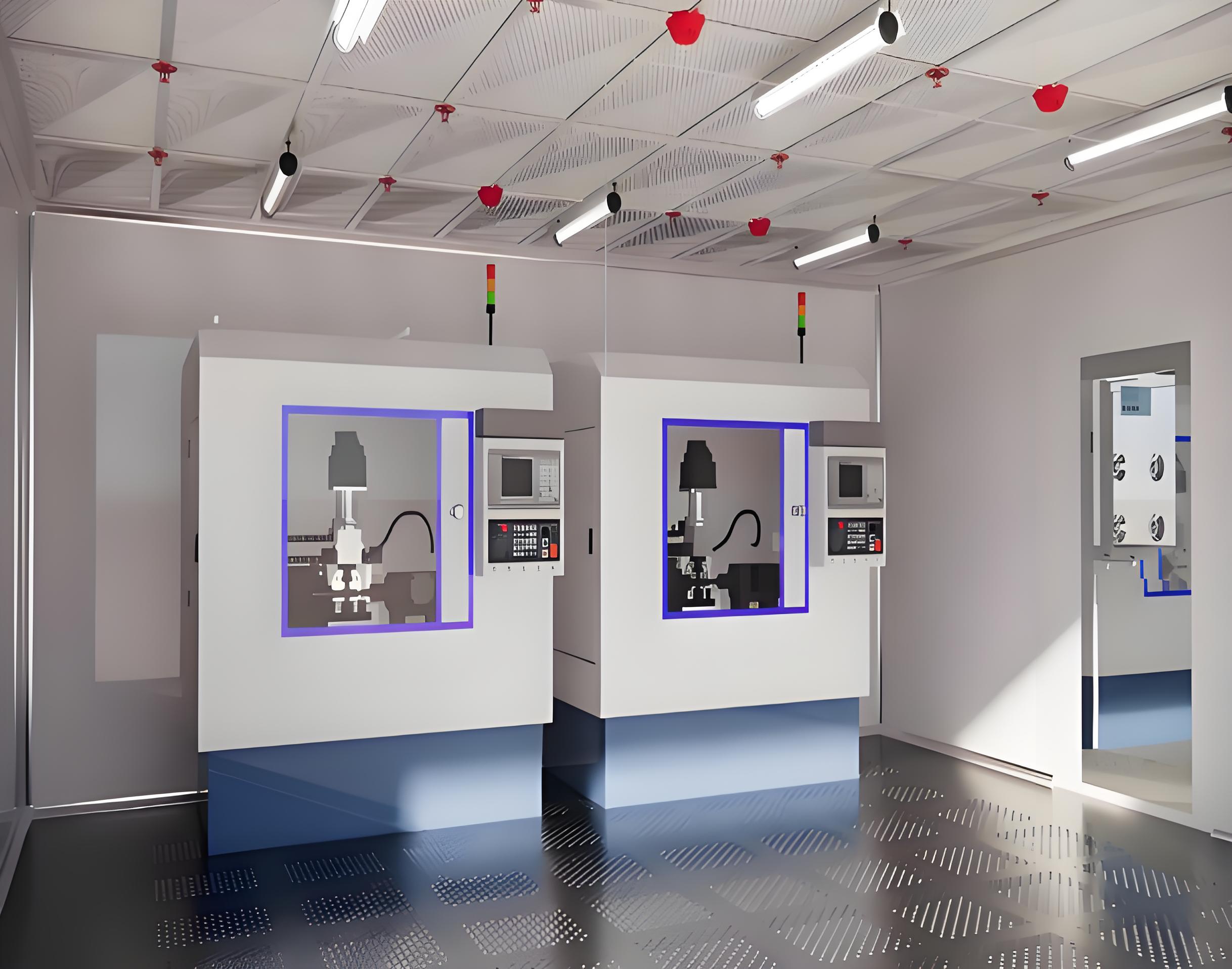
Controlled aseptic environments are the foundation of modern manufacturing sectors where biological and particulate contaminants can compromise product integrity or patient safety. These highly specialized spaces are required in sectors such as pharmaceutical manufacturing, biotechnology, and advanced medical device assembly. Creating a functional, compliant Sterile room involves integrating complex heating, ventilation, and air conditioning (HVAC) systems with custom structural architectural elements to control environmental variables.
For organizations planning to implement or upgrade these sophisticated spaces, collaborating with an experienced engineering, procurement, and construction (EPC) specialist is a logical step. Partners like TAI JIE ER offer custom cleanroom designs and installation solutions designed to satisfy international standards, including ISO 14644 and Good Manufacturing Practice (GMP) protocols. Understanding the complex engineering principles behind contamination control ensures cleanroom projects meet strict compliance parameters while sustaining operational efficiency.
Sustaining an aseptic environment requires limiting the generation, introduction, and retention of viable and non-viable particulates. This objective is met through a combination of physical barriers, active filtration, and managed pressure gradients.
High-Efficiency Particulate Air (HEPA) and Ultra-Low Penetration Air (ULPA) filters are the primary mechanisms used to isolate the room from external contaminants. These filters rely on three main physical principles to trap particles: diffusion, interception, and inertial impaction.
Diffusion: Extremely small particles (less than 0.1 microns) exhibit random Brownian motion, causing them to collide with and adhere to filter fibers.
Interception: Medium-sized particles following the airflow stream pass close enough to a fiber to be captured.
Inertial Impaction: Larger particles, unable to adjust to rapid changes in airflow direction due to their inertia, collide directly with the filter media.
The movement of air within the controlled space determines how effectively particles are swept away from product exposure zones. Cleanroom configurations rely on two primary airflow patterns:
Unidirectional (Laminar) Airflow: Air flows in a single parallel direction, either vertically or horizontally, at a uniform speed (typically 0.45 meters per second). This pattern is utilized in high-grade processing zones, such as ISO 5 areas, to prevent turbulent mixing and ensure particles are rapidly directed out of the room.
Non-Unidirectional (Turbulent) Airflow: Air enters through ceiling diffusers and exits through wall-mounted return registers, creating a mixing effect that dilutes particulate concentrations. This design is suitable for lower-grade cleanrooms where the strict discipline of laminar flow is not mandatory.
Air Change Rates (ACR) must scale with the cleanliness classification. An ISO 8 cleanroom may operate with 20 to 30 air changes per hour, whereas a high-grade Sterile room operating under ISO 5 parameters frequently requires between 240 and 480 air changes per hour to manage microbial loads.
The physical shell of the cleanroom must prevent external air infiltration while resisting the degrading effects of aggressive sanitization agents, such as vaporized hydrogen peroxide (VHP) or phenolic disinfectants.
Standard building materials like drywall are too porous and subject to shedding, making them unsuitable for clean environments. Instead, specialized cleanroom sandwich panels are used to form walls and ceilings. These panels typically consist of two metal skins bonded to a high-density core, such as aluminum honeycomb or rock wool.
The exterior surfaces are finished with chemically resistant coatings, such as Polyvinylidene Fluoride (PVDF) or specialized PVC films, which resist scratching and stand up to daily chemical wipe-downs. All panel-to-panel joints are sealed with high-performance silicone or polyurethane sealants to create a completely smooth, continuous surface. Coved transitions are installed at wall-to-floor and wall-to-ceiling joints to eliminate sharp corners where moisture and microbes could accumulate.
Flooring materials must withstand substantial mechanical loads from personnel and material carts while remaining completely seamless.
Self-Leveling Epoxy: This multi-layer liquid application cures to form a hard, high-gloss surface. It is seamless, non-porous, and offers chemical resistance, though it can crack under severe structural settling or heavy impact.
Homogeneous Vinyl: Heat-welded vinyl sheets provide a slightly flexible, high-impact surface. The seams are fused using vinyl welding rods to establish a continuous barrier that resists bacterial colonization.
When executing these architectural projects, precision installation is vital. Specialized builders like TAI JIE ER manufacture and install these structural systems, ensuring a sealed envelope that minimizes particulate penetration.
Designing a high-quality physical structure is only the first step; maintaining compliance during daily manufacturing requires continuous monitoring and strict control of personnel and material movement.
Human operators represent the most significant source of cleanroom contamination, shedding millions of skin cells and microbes every minute. Managing this contribution requires a structured gowning process separated by physical airlocks.
Personnel Airlocks (PAL) use interlocked doors that prevent both doors from opening simultaneously, maintaining the pressure barrier between dirty and clean areas. Operators progress through distinct zones, shifting from standard factory attire to sterile, lint-free coveralls, hoods, face masks, goggles, and sterile gloves. Material Airlocks (MAL) follow similar protocols, utilizing pass-through chambers equipped with HEPA-purged air showers or UV-C sterilization systems to clean incoming raw materials.
An EMS provides continuous validation of the room's environmental metrics. The system tracks multiple parameters, enabling rapid intervention if values drift from set tolerances:
Differential Pressure: Cleanrooms maintain positive pressure relative to adjacent less-clean spaces, forcing air out when doors are opened. Pressure differences are monitored continuously via differential pressure transmitters.
Temperature and Humidity: Relative humidity is maintained between 30% and 50% to prevent static accumulation on the dry end and mold growth on the wet end, while also ensuring comfortable conditions for operators in heavy protective suits.
Particulate and Microbial Counts: Optical particle counters provide continuous data on airborne non-viable particle levels. Active air samplers and settle plates are positioned at designated locations to capture and measure biological contaminants.
The requirements for controlled environments vary significantly depending on the specific processes being performed within the facility.
Injectable medications and liquid formulations bypass the body's natural defenses, meaning any contamination can have serious consequences. For these processes, a dedicated Sterile room is configured to support aseptic filling equipment. These facilities integrate Restricted Access Barrier Systems (RABS) or isolator technology, which physically separates the filling line from the surrounding room, reducing the direct involvement of human operators during the filling cycle.
The production of advanced therapeutics, such as monoclonal antibodies and cellular therapies, involves working with living organisms. These facilities must maintain highly aseptic conditions to protect the cell lines from cross-contamination, while also ensuring biological containment (BSL-2 or BSL-3 compliance) to prevent the escape of genetically modified agents.
Complex medical implants, including orthopedic joints and cardiac pacemakers, must be assembled under clean conditions. While these devices often undergo terminal sterilization, minimizing the initial bioburden during assembly is necessary. This prevents the formation of pyrogens—bacterial endotoxins that remain on the device even after sterilization and can cause inflammatory responses in patients.
Building a controlled processing environment requires managing complex structural and engineering interactions without introducing operational risks.
Cleanrooms require significant energy to circulate air through dense HEPA filters and maintain high air change rates. Additionally, process equipment, manufacturing vessels, and fan filter units (FFUs) generate substantial heat. Engineering teams must use precise sensible heat ratio calculations to size cooling coils and humidifiers, preventing temperature swings that could affect process consistency or operator comfort.
The heavy-duty blowers and fans needed to sustain cleanroom pressure gradients generate considerable vibration and noise. High-vibration levels can interfere with precision analytical scales, filling line balances, and microscopes. Addressing this requires isolating air handling equipment with specialized spring isolators and installing inline sound attenuators within the ductwork, taking care to use only non-shedding, cleanroom-approved acoustic materials.
By implementing integrated mechanical systems, partners like TAI JIE ER help facility operators balance the demands of high air volume circulation with stable, quiet, and vibration-free operating spaces.
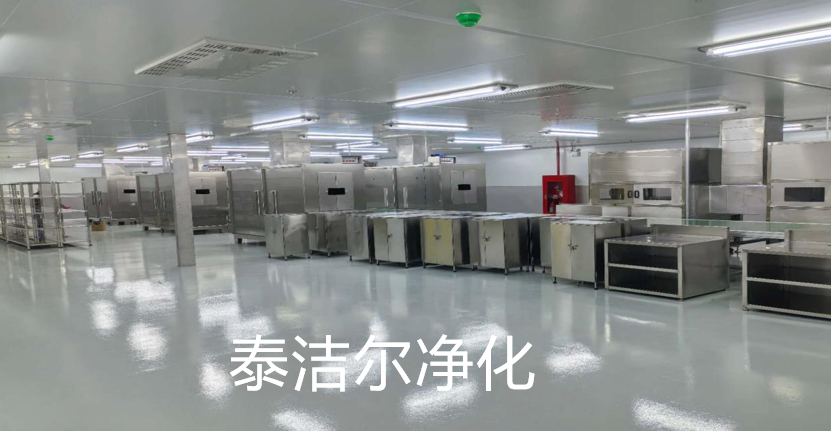
A newly constructed Sterile room cannot begin commercial production until it has been formally validated. This process provides documented evidence that the facility meets all intended specifications and regulatory requirements.
The validation process is divided into three sequential phases:
Design Qualification (DQ): Verification that the proposed facility design meets all user requirement specifications (URS) and regulatory guidelines.
Installation Qualification (IQ): Verification that all HVAC equipment, ductwork, structural panels, and monitoring sensors have been installed in compliance with the approved drawings and manufacturer recommendations.
Operational Qualification (OQ): Testing the facility in an "at-rest" state to confirm that all systems operate as intended under static conditions. This includes performing HEPA filter integrity leak tests, airflow velocity measurements, and pressure differential checks.
Performance Qualification (PQ): Dynamic testing conducted under operational conditions with equipment running and personnel present. This phase demonstrates that the environment consistently maintains required microbial and particulate standards over time.
Sustaining absolute sterility in manufacturing requires precise engineering, robust materials, and a deep understanding of current regulatory expectations. Whether you are building a new aseptic processing line or upgrading an existing facility to comply with current GMP standards, careful planning and professional execution are key to success.
We invite you to consult with our engineering specialists at TAI JIE ER to discuss your upcoming project. Our team is prepared to assist you with conceptual layouts, HVAC system design, architectural material selection, and cleanroom qualification planning. Submit your inquiry today to connect with our cleanroom specialists and receive a comprehensive review tailored to your facility's requirements.
Q1: What is the main difference between a standard cleanroom and a
sterile room?
A1: A standard cleanroom is designed to limit
non-viable particulate matter to meet specific ISO classifications. A sterile
room is focused on preventing biological contamination, requiring active
sterilization protocols, antimicrobial materials, and specialized sanitization
procedures to eliminate all viable micro-organisms, such as bacteria and
viruses.
Q2: How are pressure differentials maintained within these
facilities?
A2: Pressure differentials are maintained by supplying
more clean air into the highly sensitive areas than is returned or exhausted,
creating positive pressure. This ensures that air flows outward when doors or
airlocks are opened, preventing lower-quality external air from entering the
sterile workspace.
Q3: How often do cleanroom HEPA filters need to be tested for
leaks?
A3: To comply with international standards such as ISO
14644-2 and EU GMP Annex 1, HEPA filters in aseptic manufacturing zones must
undergo aerosol leak testing and integrity verification at least once every six
to twelve months, or whenever filter elements are replaced.
Q4: Why is relative humidity control important in these
spaces?
A4: Relative humidity must be kept within a stable range,
typically 30% to 50%. High humidity can promote microbial growth on surfaces,
while low humidity can increase static electricity, which can damage electronic
components and cause powders to cling to cleanroom surfaces.
Q5: What is the role of a pass-through box in a sterile room
configuration?
A5: Pass-through boxes allow materials to be
transferred between areas of different cleanliness classifications without
requiring personnel to walk through. This minimizes traffic into the high-grade
room, protects pressure differentials, and lowers the potential for
contamination.