

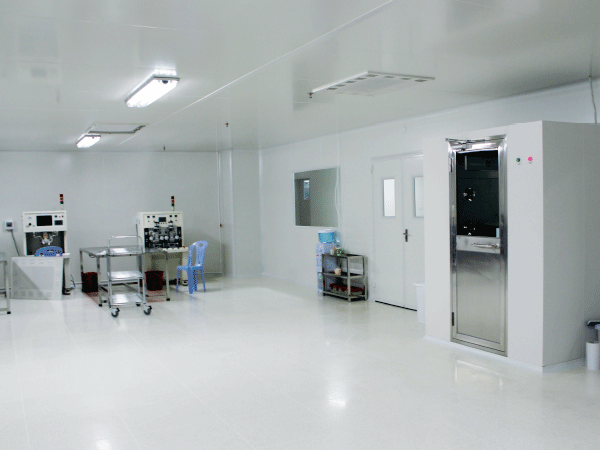
Executing an injection molding purification project requires a systematic approach to particle control, material handling, and environmental monitoring. Medical device, optical lens, and microelectronic component molding demand ISO Class 7 or better cleanrooms. Poor design leads to surface defects, flash contamination, and failed sterility tests. This guide presents nine measurable parameters that project engineers and quality managers must verify before commissioning. Each point is derived from ISO 14644-1, GMP Annex 1, and field audits of operational clean molding lines.
1. Cleanroom Classification and Air Change Rates
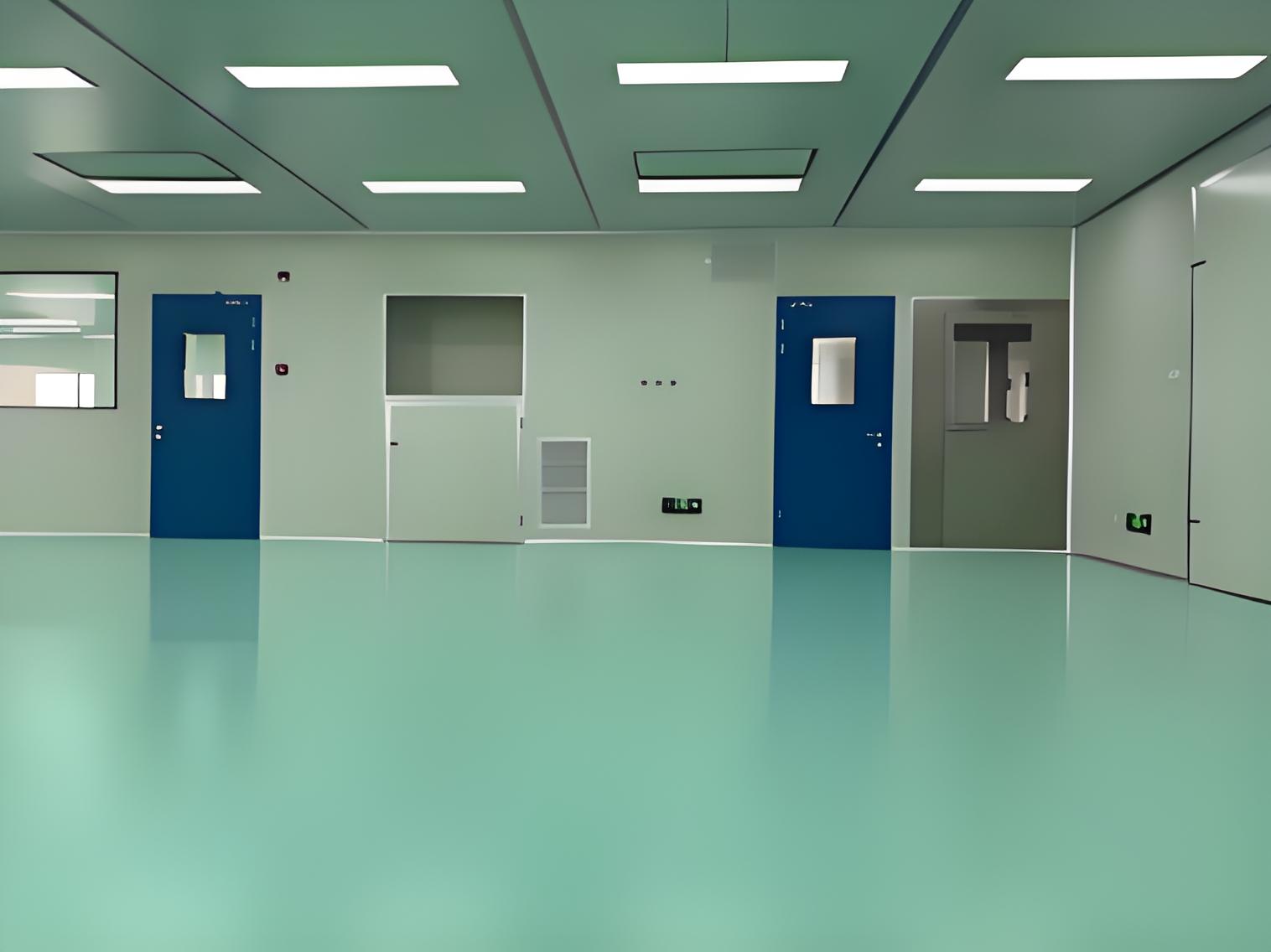
The foundation of any injection molding purification project is the correct cleanroom class. For most medical molding (syringes, IV components), ISO 7 (Class 10,000) with unidirectional flow over critical zones is sufficient. For implantables or ophthalmic parts, ISO 5 or 6 is required.
ISO 7 requires 60–90 air changes per hour (ACH) using HEPA filters (≥99.97% at 0.3 µm).
ISO 5 requires 300–600 ACH with laminar flow velocity 0.3–0.5 m/s.
Return air grilles must be positioned low (near floor) to sweep particles downward.
TAI JIE ER engineers conduct computational fluid dynamics (CFD) simulations to optimize airflow patterns before any construction.
2. Material Handling and Resin Purity Control
Raw resin pellets are a major contamination source. A well-designed purification project includes:
Centralized drying and conveying system with stainless steel piping and particle filters (1 µm absolute).
Vacuum transfer lines that self-clean via reverse pulse air.
Dehumidification dryers that achieve dew point ≤ -40°C to prevent condensation and mold growth.
Resin loading areas must be separated from molding zones by an airlock. TAI JIE ER integrates automatic material purging stations to remove dust before pellets enter the feed throat.
3. Mold and Machine Surface Cleanliness Protocols
Mold surfaces and platens accumulate residues that transfer to parts. Standard cleaning intervals (every 10,000 shots) are insufficient for critical applications. Implement:
In-mold particle detection using high-speed cameras (detects particles > 50 µm).
Dry-ice blasting or ultrasonic mold cleaning without opening the cleanroom.
Non-contact mold release agents (CO₂ or dry lubricant) that leave no residue.
Documented mold wipe tests (adhesive tape on A and B plates) should show < 5 particles per cm² at ISO 7 level.
4. Real-Time Particle Monitoring and Data Integration
Continuous monitoring separates a reactive injection molding purification project from a proactive one. Install:
Remote light-scattering particle counters (0.5 µm and 5.0 µm channels) at return air grilles.
Viable air samplers (impaction or centrifugal) for microbial monitoring per ISO 14698.
Pressure differential sensors between adjacent clean zones (≥10 Pa positive cascade).
All data should feed into a SCADA system with alarm thresholds (e.g., particle excursion above ISO class limit triggers machine hold). TAI JIE ER provides turnkey monitoring systems with 21 CFR Part 11 compliance.
5. Personnel and Garment Protocol Design
Operators contribute 70–80% of particles in a cleanroom. A purification project must include:
Three-stage gowning (street clothes → cleanroom undergarments → coverall with hood, boots, gloves).
Air showers (≥25 m/s air velocity, 15-second cycle) at cleanroom entrance.
Motion restrictions – no paper, cardboard, or exposed skin allowed.
Conduct monthly glove fingerprint testing (agar contact plates) to monitor human shedding. Acceptable limit: < 3 CFU per glove.
6. Validation Protocols: IQ/OQ/PQ for Purification Systems
Every injection molding purification project must follow a structured validation sequence:
Installation Qualification (IQ) – verify HEPA filter certificates, air handler specs, material of construction (304SS or 316L).
Operational Qualification (OQ) – test airflow velocity, particle counts at rest, pressure cascades, temperature/humidity stability (±1°C, ±5% RH).
Performance Qualification (PQ) – three consecutive batches under dynamic conditions (machines running, operators present).
Request a complete validation package from your engineering partner. Without it, regulatory audits will fail.
7. Energy Efficiency and Operational Cost Optimization
Cleanroom HVAC systems consume 5–10 times more energy than standard factories. A cost‑effective purification project uses:
VFD-controlled fans that modulate ACH based on occupancy sensors (saves 30–40%).
Run‑around coils or heat pipe heat exchangers for exhaust air energy recovery.
LED lighting with sealed enclosures (reduces heat load and particle generation).
TAI JIE ER designs low‑energy cleanrooms that meet ISO 7 at 40 ACH instead of 60 by using unidirectional flow only over critical zones, reducing annual energy costs by $25,000–$50,000.
8. Regulatory Compliance: ISO 14644 and GMP Annex 1
Medical injection molding must comply with regional regulations. Key documents for your injection molding purification project:
ISO 14644-1:2015 – cleanroom classification and monitoring.
GMP Annex 1 (2022) – requires continuous particle monitoring for class A and B zones, risk-based validation.
FDA 21 CFR 820 – quality system regulation for medical devices.
Ensure that your cleanroom design includes an environmental monitoring plan (EMP) with alert and action levels for both non-viable and viable particles.
9. Supplier Qualification and Turnkey Execution
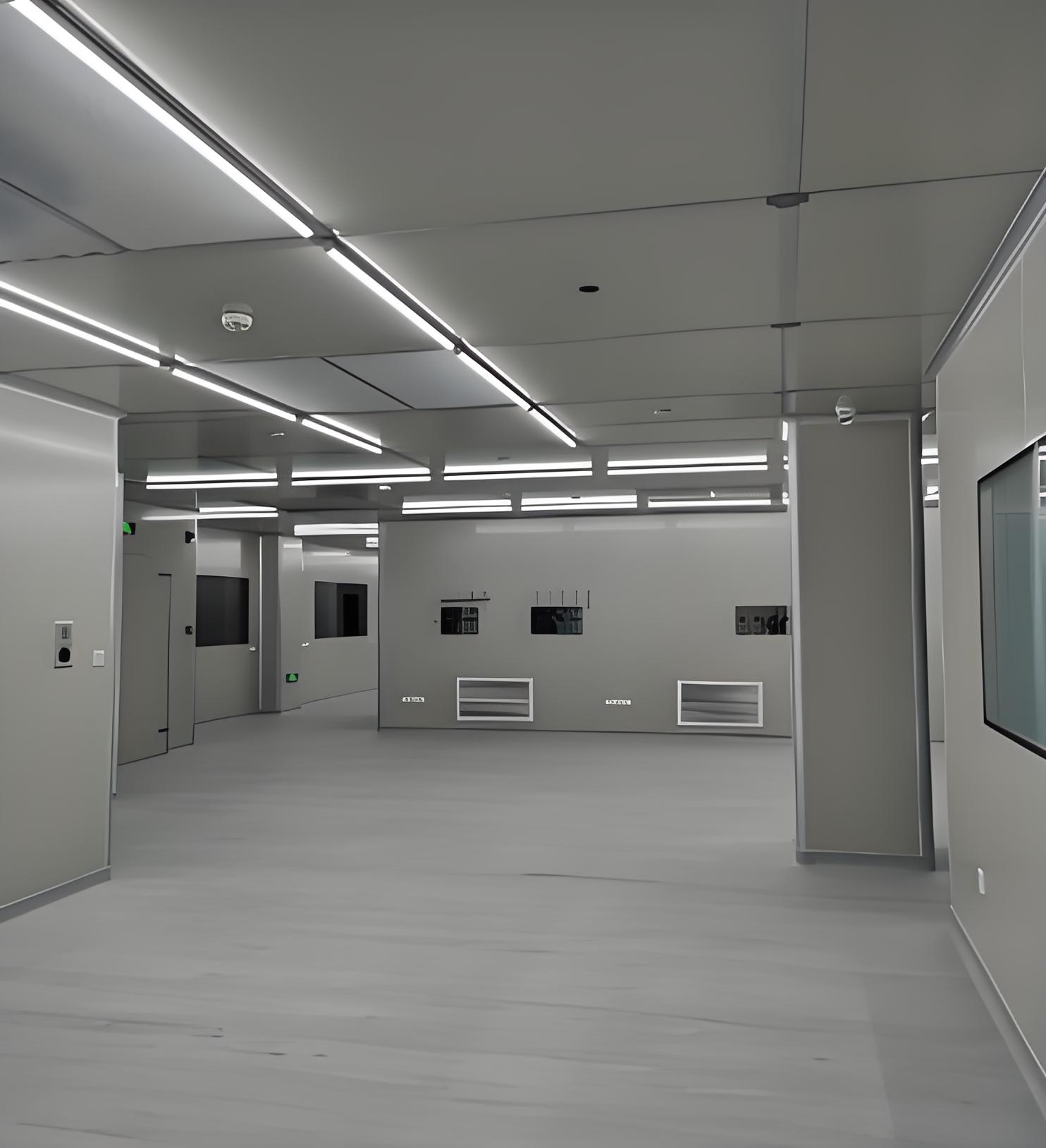
Many cleanroom contractors lack experience with injection molding specific needs (heavy machinery, vibration isolation, sprue removal). A qualified partner should offer:
Previous references from medical injection molding projects (auditable).
In‑house HVAC, electrical, and process piping teams (no subcontractor gaps).
Post‑construction support including annual recertification and particle mapping.
TAI JIE ER has completed over 30 injection molding purification projects for Class I, II, and III medical devices. We provide a single‑source solution from cleanroom architecture to mold purge systems.
Case Example: Reducing Rejection Rate from 8% to 1.2% in Catheter Molding
A catheter manufacturer suffered black specks and surface pits on molded parts. Investigation traced particles to resin conveying lines and mold contamination. TAI JIE ER redesigned the injection molding purification project with stainless steel dust‑free transfer, HEPA‑filtered machine enclosures, and weekly dry‑ice mold cleaning. Reject rate fell from 8% to 1.2%, saving $340,000 annually.
Frequently Asked Questions (FAQ)
Q1: What is the typical cost per square foot for an ISO 7 injection
molding cleanroom?
A1: For a turnkey injection molding purification
project, costs range from $180–$300 per ft² (excluding molding machines).
This includes hardwall panels, HEPA filtration, HVAC, lighting, and electrical.
Modular cleanrooms are 20–30% cheaper but less durable for heavy machine
vibration. TAI JIE ER provides
fixed‑price quotes with detailed breakdowns.
Q2: How do I validate that the cleanroom meets ISO 7 during dynamic
conditions?
A2: Run three production shifts at normal capacity.
Place particle counters at 5 locations (corners and center) at working height.
Count particles ≥0.5 µm and ≥5.0 µm. ISO 7 allows 352,000 particles/m³ of ≥0.5
µm and 2,930 particles/m³ of ≥5.0 µm. Document results with time‑stamped data.
Repeat every 6 months or after any HVAC modification.
Q3: What air pressure differential is required between molding zone
and corridor?
A3: ISO 14644-1 recommends a positive pressure cascade
of at least 10–15 Pa (0.04–0.06 inches water gauge) from cleanest to dirtiest
area. For an ISO 7 molding zone adjacent to a non‑classified corridor, maintain
15–20 Pa. Install pressure gauges with alarms if differential drops below 8 Pa.
This prevents unfiltered air infiltration.
Q4: Can I use an existing injection molding machine inside a new
cleanroom?
A4: Yes, but the machine must be modified. Hydraulic oil
leaks are a major contamination source – convert to electric or seal all
fittings. Replace cooling fans with closed‑loop water cooling to reduce dust.
Enclose the machine with stainless steel panels and connect to central vacuum
for sprue removal. TAI JIE ER offers
retrofitting services for legacy machines.
Q5: What is the recommended frequency for HEPA filter replacement in
a molding cleanroom?
A5: HEPA filters typically last 3–5 years in
clean environments. However, injection molding releases plasticizers and mold
release agents that can clog filters. Test filters annually using a DOP
(di‑octyl phthalate) or PAO (polyalphaolefin) aerosol challenge. Replace when
penetration exceeds 0.03% (for H14 grade) or when pressure drop doubles from
initial value. For high‑volume projects, replace every 2 years to be
safe.
Request a Feasibility Study or Budget Quote
Every injection molding purification project is unique based on part geometry, material, and regulatory target. TAI JIE ER provides a free on‑site or virtual assessment. Send your floor plan, machine list, and required cleanroom class. We will deliver a concept design, validation roadmap, and fixed price within 10 business days.
Submit an inquiry to our cleanroom engineering team → Click here for a response within 24 hours