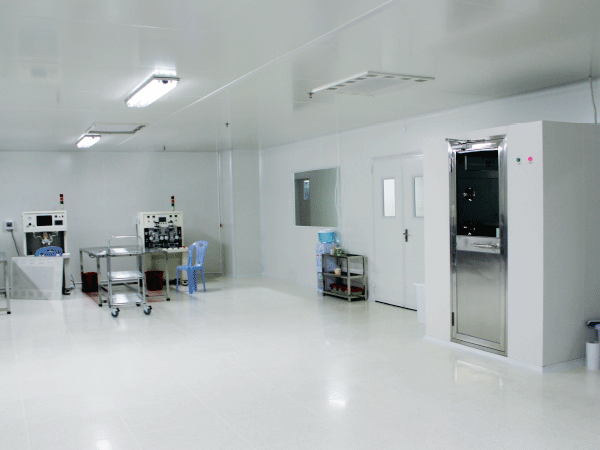

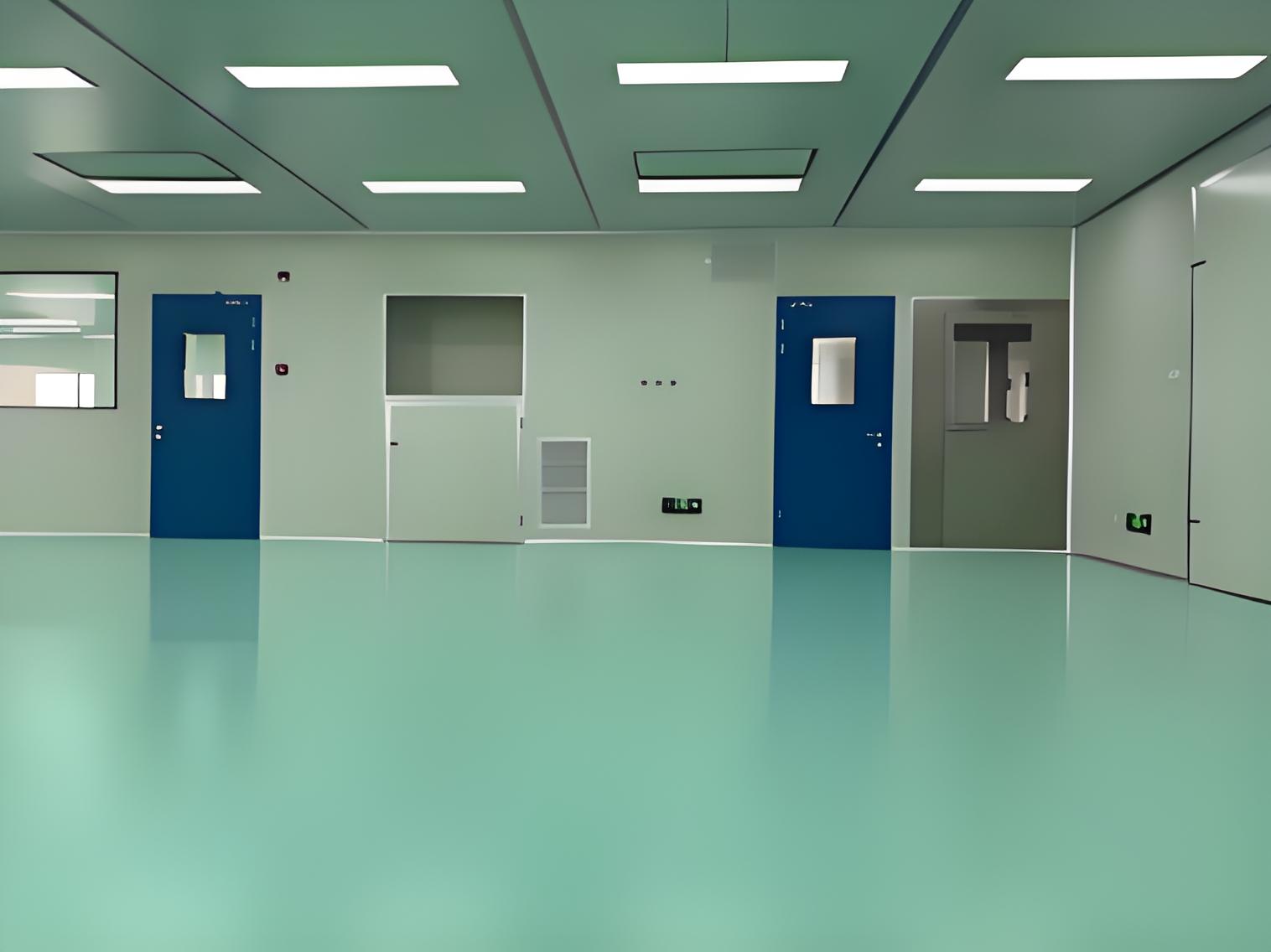
In the fields of pharmaceutical manufacturing, biomedical research, and high-dependency healthcare facilities, the management of viable particulate contamination represents a continuous technical challenge. Biological purification engineering integrates validated air filtration, surface decontamination, and strict hygiene protocols to maintain aseptic conditions. This discipline moves beyond conventional cleanroom operations by focusing on living microorganisms—bacteria, fungi, spores, and viruses—and their elimination or containment. Through systematic design, monitoring, and process controls, facilities achieve reliable sterility assurance levels (SAL) required by global regulators.
Modern production of parenteral drugs, cell therapies, and medical devices demands an environment where microbial excursion risks approach zero. Biological purification engineering provides the framework for achieving this through layered barriers: HEPA/ULPA filtration, unidirectional airflow, validated disinfection cycles, and real-time environmental monitoring. Without such engineered systems, product contamination leads to patient safety hazards, batch rejection, and regulatory actions. This article presents technical foundations, industry-specific applications, root-cause pain points, and precise solutions grounded in engineering practice.
At its heart, this engineering domain relies on three interdependent pillars: source elimination, airflow management, and inactivation technology. Each pillar must be validated individually and as an integrated system. The following breakdown illustrates how these principles apply in aseptic manufacturing environments.
Under EU GMP Annex 1 (2022 revision), facilities must implement a holistic CCS that documents all critical control points. Biological purification engineering contributes through defined zoning (grade A, B, C, D), pressure cascades, and material flow segregation. For example, a Grade A zone (ISO 5) requires unidirectional HEPA-filtered airflow with velocities between 0.36–0.54 m/s, coupled with frequent viable particle sampling using active air samplers or settle plates. The CCS also includes personnel gowning qualification, disinfectant rotation schedules, and rapid transfer ports (RTPs) for sterile material entry.
HEPA filters (H13/H14 according to EN 1822) remove 99.995% to 99.995% of particles ≥0.3 µm, but biological purification engineering also addresses microorganisms attached to larger carrier particles. For high-risk operations (e.g., vial filling, aseptic connection), ULPA filters (U15–U17) provide 99.9995% efficiency at 0.1–0.2 µm. The placement of diffusers, return air grilles, and low-wall returns prevents stagnant zones where microbes could accumulate. Computational fluid dynamics (CFD) modeling helps engineers optimize air change rates—typically >20 ACH for Grade B and >40 ACH for Grade A unidirectional zones.
Beyond physical removal, biological purification relies on validated inactivation steps. Common technologies include:
Vaporized Hydrogen Peroxide (VHP): Dry-cycle VHP (300–800 ppm) achieves 6-log sporicidal reduction on stainless steel and isolator surfaces without corrosive residues.
UV-C irradiation (254 nm): Effective for air handling units (AHUs) and water system loops, though shadowing limits efficacy on complex geometries.
Chlorine dioxide or ozone fumigation: Used for room biocontainment after contamination events, requiring strict aeration protocols.
Non-thermal plasma: Emerging technology for continuous airflow decontamination, reducing microbial loads downstream of cooling coils.
Each technology has specific parameters—contact time, relative humidity, temperature, and material compatibility—that must be qualified during facility startup and periodically revalidated. Biological purification engineering selects and integrates these methods based on risk assessment and production cycles.
While biological purification appears in many sectors, four industries demand the strictest microbial controls. Each application modifies engineering designs to address specific product vulnerabilities.
Sterile Drug Manufacturing (vials, pre-filled syringes, lyophilized products): Requires barrier systems (RABS, isolators) with continuous VHP bio-decontamination cycles between batches. Terminal sterilization is not always possible; thus aseptic processing relies entirely on purification engineering.
Cell and Gene Therapy Production: Open manipulations of living cells demand BSL-2 or BSL-3 containment combined with ISO 7 or ISO 8 background. Biological purification includes redundant HEPA filters and personnel decontamination air showers.
Hospital Isolation Wards (Airborne Infection Isolation Rooms - AIIRs): Negative pressure differential (-2.5 Pa minimum), dedicated exhaust with HEPA filtration, and frequent air exchanges (12 ACH). These measures protect immunocompromised patients from aspergillus spores and other nosocomial pathogens.
Biocontainment Laboratories (BSL-3/BSL-4): Effluent decontamination systems (EDS) for liquid waste, double-door autoclaves, and sealed penetrations. Gaseous decontamination using formaldehyde or VHP is standard before filter changes.
In each case, Biological purification engineering must comply with ISO 14644-1 (cleanroom classification), ISO 14698 (biocontamination control), and local GMP guidelines. Design errors in these applications lead to direct patient infections or invalidated research outcomes.
Engineering professionals require quantitative benchmarks to specify systems. Below are key parameters drawn from industry standards and validated facilities. These are not theoretical ranges but practical design targets used in projects across Europe, North America, and APAC.
Based on EU GMP Annex 1 (2022) and ISO 14698-1:
Grade A (ISO 5, at rest & in operation): <1 CFU/m³ (action limit often 0 CFU). For critical zones, any detection triggers investigation.
Grade B (ISO 7, in operation): ≤10 CFU/m³.
Grade C (ISO 8, in operation): ≤100 CFU/m³.
Grade D (ISO 9, in operation): ≤200 CFU/m³.
Surface limits (contact plates or swabs) vary: Grade A: <1 CFU/plate; Grade B: ≤5 CFU/plate; Grade C: ≤25 CFU/plate. Engineering designs must integrate routine monitoring positions at critical risk points (e.g., filling needle zone, stopper bowl).
A minimum 10–15 Pa pressure cascade (Grade D → C → B → A) prevents reverse airflow. Air change rates (ACR) are typically:
Grade A (unidirectional): 0.45 m/s ±20% velocity, not ACR-based.
Grade B: 40–60 ACH.
Grade C: 20–40 ACH.
Grade D: 15–20 ACH.
Higher ACR improves particulate removal but increases energy consumption. Recirculation with HEPA filtration reduces load, provided fresh air makeup satisfies oxygen and VOC requirements.
To support chemical disinfection and avoid microbial adhesion, surfaces in purified zones must be non-porous, crevice-free, and resistant to repeated wiping with oxidizing agents (bleach, peracetic acid, VHP). Common specifications include:
Stainless steel 316L, electro-polished to Ra ≤0.5 µm.
Coved flooring (PVC or epoxy) with welded seams.
Flush-mounted pass-through chambers with interlocked doors.
Cleanroom-compatible light fixtures with gasketed covers.
Companies like TAI JIE ER specialize in integrating these specifications into turnkey biological purification projects, covering everything from airflow pattern validation to microbial performance qualification.
Despite established guidelines, many facilities struggle with recurrent microbial contamination or costly requalification delays. Below are four persistent challenges and their engineering remedies.
Root cause analysis: Often tied to human intervention (gowning breaches, rapid door openings) or hidden moisture in drain traps, cooling coils, or poorly sloped pipes. Solution: Install particle and microbial monitoring with trend alerts. Use automated clean-in-place (CIP) for drains and slope all utility pipes ≥1% towards low-point drains. Implement a Personnel Contamination Risk Assessment (PCRA) and adopt single-use sterile barrier technologies where possible. Additionally, apply periodic VHP fogging in Grade B corridors during shift breaks.
Root cause: Leakage around compression fittings or diaphragms in valves. Solution: Replace mechanical seals with sterile welded connections (thermoplastic tube fusing) or use pre-sterilized, single-use disposable assemblies that bypass on-site sanitization. Where valves are unavoidable, select weir-type diaphragm valves with zero dead legs and autoclave compatibility. For biological purification engineering of transfer paths, implement leak testing after each aseptic assembly using pressure decay or helium mass spectrometry.
Root cause: Non-optimized VHP cycle parameters (humidity >40% or temperature gradients). Solution: Conduct biological indicator (BI) mapping with Geobacillus stearothermophilus spores (10^6 population) at the hardest-to-reach corners. Redesign air circulation vanes and increase VHP generator dwell time. Apply relative humidity conditioning to 30–35% before injection. Employ wireless sensors for real-time H₂O₂ concentration and temperature mapping. Validate a robust, repeatable cycle that achieves 6-log reduction across all internal surfaces.
Root cause: Inadequate bag-in/bag-out (BIBO) procedures or compromised housing seals. Solution: Specify BIBO housings with passive or active containment. Before any maintenance, perform gaseous decontamination of the filter plenum. For terminal HEPA in Grade A zones, use scan testing with a photometer (upstream challenge of PAO or DEHS) to detect microscopic leaks. Train technicians on aseptic filter change protocols in a simulated environment. TAI JIE ER offers validation-ready engineering packages that include HEPA leak test ports and biosafety-compliant bag-out systems.
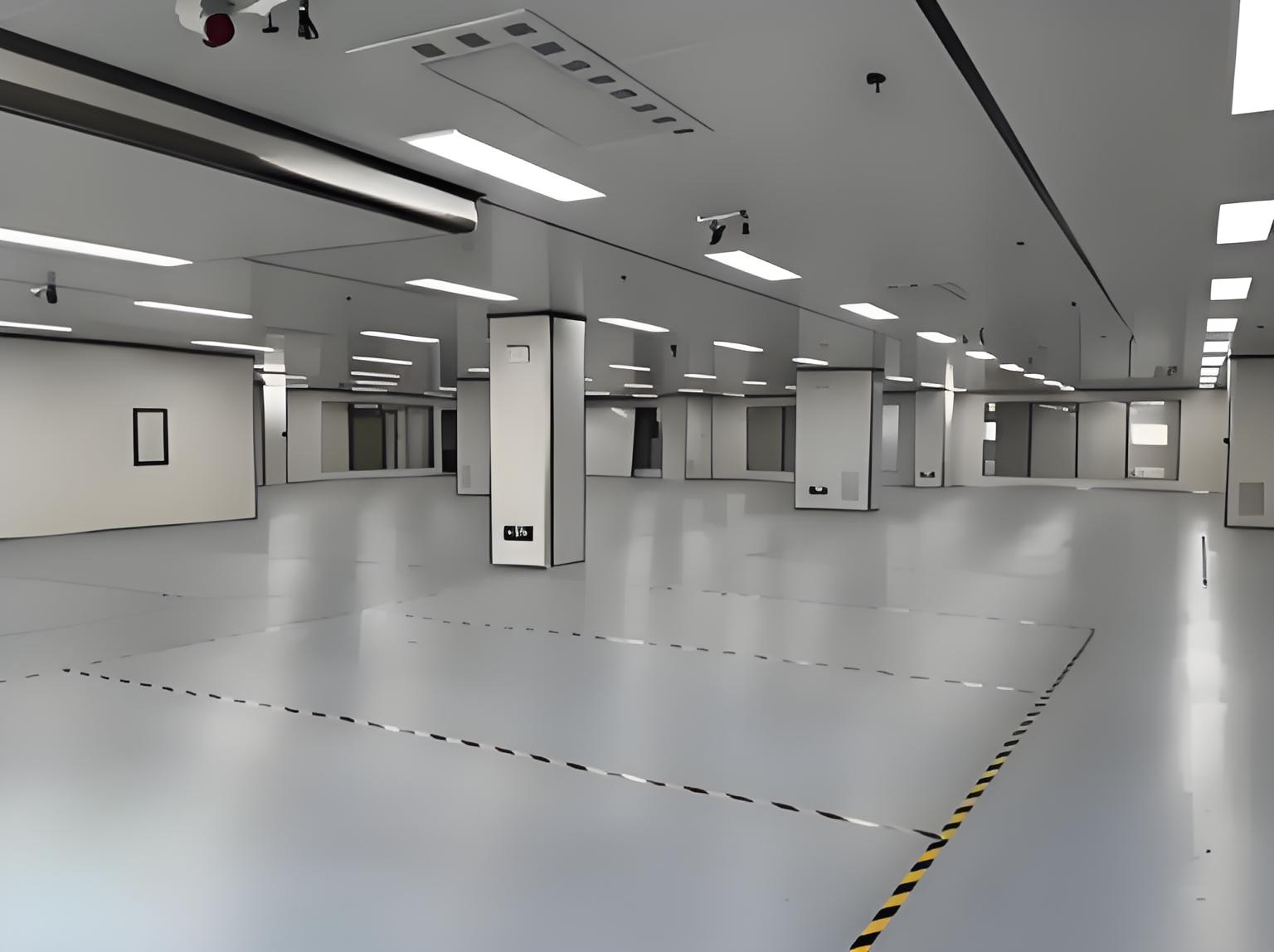
Understanding the compliance landscape is non-negotiable for any biological purification project. Three core frameworks dominate global requirements:
EU GMP Annex 1 (2022 revision): Emphasizes CCS, continuous monitoring, and barrier technology. Demands that purification engineering proves contamination recovery time (≤20 minutes after intervention in Grade A).
US FDA (21 CFR Parts 210/211) & Aseptic Processing Guidance (2004): Focuses on media fills, smoke studies, and environmental monitoring frequency. Requires documented filter integrity testing and microbial data trending.
ISO 14644 series & ISO 14698: Provide classification, testing methods, and biocontamination control metrics. These standards are often referenced by regulators during inspections.
A robust validation package includes design qualification (DQ), installation qualification (IQ), operational qualification (OQ), and performance qualification (PQ). For biological purification systems, the PQ must simulate worst-case production activities (e.g., maximum personnel present, longest run time) while proving that microbial levels remain below limits.
Additionally, global trends push for real-time viable particle monitoring using fluorescence or laser-induced breakdown spectroscopy. These tools, while still emerging, reduce lag time between contamination events and corrective actions. However, most facilities still rely on growth-based methods (TSA or SDA plates) for regulatory compliance.
The next decade will see biological purification engineering adopt Industry 4.0 tools. Predictive models trained on historical environmental monitoring data can forecast contamination risks before they exceed action limits. For instance, neural networks analyzing particle counts, humidity, and operator movement patterns have been shown to predict microbial excursions with 85% accuracy 30 minutes in advance. Such systems could trigger automated UV-C activation or adjust air change rates.
Another trend is single-use technologies (SUT) integrated into flexible purification trains. Pre-sterilized bags, manifolds, and connectors reduce the need for on-site steam-in-place (SIP) loops, lowering both capital cost and contamination vectors. For multi-product facilities, modular cleanroom pods with dedicated VHP recirculation units enable rapid changeover. Facility designers are also exploring closed-vial filling and robotic aseptic processing to eliminate human presence in Grade A zones—the primary source of microbial shedding.
Finally, regulators will demand more data integrity in purification records. Electronic batch records (EBR) with 21 CFR Part 11 compliance ensure that all temperature, pressure, and microbial counts are audit-proof. Purification engineers must therefore select sensors and data loggers that support hash-locked logs and user access controls.
To remain competitive, pharmaceutical and biotech companies should partner with engineering firms that understand both legacy GMP expectations and emerging digital strategies. TAI JIE ER combines deep domain expertise in biological purification engineering with future-ready automation solutions, helping clients bridge the gap between current compliance and next-generation aseptic manufacturing.
A1: Standard cleanroom design focuses primarily on particle counts (non-viable dust) and pressure differentials. Biological purification engineering specifically addresses viable microorganisms—their growth, transmission, and inactivation. It requires validated sporicidal decontamination cycles, continuous microbial monitoring (air, surface, personnel), and stricter material flow segregation to prevent cross-contamination. While a standard cleanroom may meet ISO 7 particle counts, biological purification demands the same zone also achieves ≤10 CFU/m³ microbial limits and includes routine disinfection validation using biological indicators.
A2: According to ISO 14644-2, filter integrity testing (scanning or photometer) for classified rooms should occur at maximum intervals of 24 months. However, for Grade A (ISO 5) zones, most GMP inspectors recommend annual testing or even semi-annual testing for critical processes. Additionally, pressure drop monitoring across filters should be continuous; an increase of 20–30% above initial resistance signals possible clogging or moisture intrusion, requiring immediate inspection. Any filter change in a biological zone must be followed by revalidation of airborne microbial levels.
A3: Yes, through retrofit strategies. For example, installing portable VHP generators for room decontamination, adding HEPA fan-filter units (FFUs) in critical zones, or upgrading door interlock systems to enforce pressure cascades. Another cost-effective solution is to implement enhanced disinfectant rotation and replace conventional diffusers with laminar flow hoods over filling lines. However, major structural issues like improper HVAC duct layout or inaccessible ceiling plenums may require targeted reconstruction. Always conduct a gap analysis to identify the highest contamination risks before retrofitting.
A4: For VHP and dry-heat cycles, Geobacillus stearothermophilus spores (10^6 population) are the gold standard. For ethylene oxide or formaldehyde decontamination, Bacillus atrophaeus is preferred. For liquid disinfectants (bleach, peracetic acid), use Pseudomonas aeruginosa or Staphylococcus aureus on carrier surfaces. BI placement must be mapped to the most challenging locations (e.g., under equipment, inside transfer ports). A passing cycle shows no growth after incubation, confirming a 6-log reduction.
A5: Traditional settle plates (exposed for 4 hours) and active air samplers (1 m³ volume) provide retrospective results after 3–5 days of incubation. Real-time monitors use technologies like laser-induced fluorescence spectroscopy (LIF) or intrinsic fluorescence to detect viable particles instantly (e.g., BioVigilant systems). While real-time sensors cannot identify specific organisms, they provide continuous CFU-equivalent alerts, allowing immediate corrective actions (e.g., pausing fill operations). For regulatory submission, both methods are often combined: real-time for process control and traditional plates for species identification.
For projects requiring certified engineering design, validation support, and lifecycle management of aseptic environments, TAI JIE ER delivers turnkey solutions tailored to pharmaceutical, biotech, and hospital requirements. From initial cleanroom classification to full microbial performance qualification, our experts integrate ISO 14644, GMP, and FDA standards into every build.
Request a technical consultation or quotation today: Please visit our engineering portal or contact our project desk directly. Provide your facility’s target cleanliness grade, application type, and any existing contamination data—we will respond with a gap analysis and proposal within 48 hours.