Particle contamination control in laboratories, pharmaceutical production, and precision manufacturing depends on predictable airflow behavior. A vertical laminar air flow bench delivers filtered air downward in parallel streams across the work zone, protecting samples and processes from airborne particulates. Understanding how these units perform under real operating conditions separates a compliant installation from one that merely meets a purchase specification. This guide examines airflow mechanics, filtration grades, application requirements, selection criteria, and validation procedures for organizations evaluating a vertical laminar air flow bench for their facility.
A vertical laminar air flow bench is a closed or semi-closed workstation in which HEPA-filtered air moves vertically from a ceiling plenum downward to a perforated or grated work surface. The airflow direction mirrors gravitational settling, which reduces the tendency for particles to migrate laterally into the operator's breathing zone and helps maintain unidirectional flow across the critical work area. Clean air enters through the top of the cabinet, passes through a HEPA or ULPA filter, and sweeps the workspace before exiting through a base plenum or front return grille.
Cabinet construction typically employs powder-coated steel or stainless steel (304 or 316L), with coved internal corners to eliminate particle-trapping crevices. The work surface may be perforated stainless steel or a removable tray, depending on cleaning requirements. A transparent front sash provides operator access while maintaining the boundary between clean and ambient air. Units designed for the international clean engineering market often incorporate a pre-filter stage to extend HEPA service life in dusty or high-particulate environments.
The performance envelope of a vertical laminar air flow bench is governed by three interacting variables: filter efficiency, face velocity, and airflow uniformity. Each influences whether the work zone achieves the intended ISO 14644-1 class.
A single pinhole leak in the filter gasket or frame seal can elevate downstream particle counts by orders of magnitude. Field leak scanning, not just factory certification, confirms the installed filtration integrity of any vertical laminar air flow bench.
Standard face velocity for vertical laminar units ranges from 0.30 to 0.50 m/s (60–100 ft/min), measured 150–300 mm above the work surface. Lower velocities conserve energy but risk backflow near the front opening; higher velocities increase turbulence and may disturb sensitive balances or cell cultures. Uniformity across the filter face should remain within ±20% of the mean, verified with a calibrated thermal anemometer on a grid pattern. Fan speed controllers, either solid-state or variable-frequency, allow operators to compensate for filter loading over the service interval. TAI JIE ER designs plenum geometries that maintain laminar flow stability even as filter resistance rises, which extends usable filter life without compromising the clean zone.
The choice between vertical and horizontal airflow configuration depends on process sensitivity to operator-generated particles and equipment placement inside the work zone.
Processes involving hazardous powders, volatile solvents, or biological aerosols require a biosafety cabinet or fume hood rather than a laminar flow bench, because the bench protects the product, not the operator. Confirming the containment category before specifying a vertical laminar air flow bench prevents costly misapplication.
Purchasing decisions should weigh operating cost, serviceability, and regulatory documentation alongside acquisition price. The following factors determine long-term value.
Facilities with variable production schedules benefit from units with programmable fan control and airflow alarms. Integration with building management systems allows centralized monitoring of filter differential pressure and airflow status. TAI JIE ER supplies units with analog or digital controllers matched to the client's monitoring architecture, and provides dimensional drawings in advance so facility engineers can verify clearance, utility routing, and access requirements before delivery.
Performance after installation depends on site conditions as much as on cabinet design. Placement in high-traffic corridors or near doorways introduces turbulence that degrades laminar flow at the front opening. Recommended practice places the unit at least 1 meter from walls, doors, and supply air diffusers, with the operator positioned to minimize body movement across the clean zone.
Commissioning includes airflow velocity mapping, HEPA leak scanning, and particle count verification under static and dynamic conditions. Routine requalification intervals vary by regulatory framework, commonly every six to twelve months for GMP environments and annually for general laboratory use. Filter replacement should be triggered by differential pressure trends and leak test results rather than a fixed calendar interval. Documenting each service event supports audit readiness and demonstrates that the vertical laminar air flow bench continues to operate within its validated parameters.
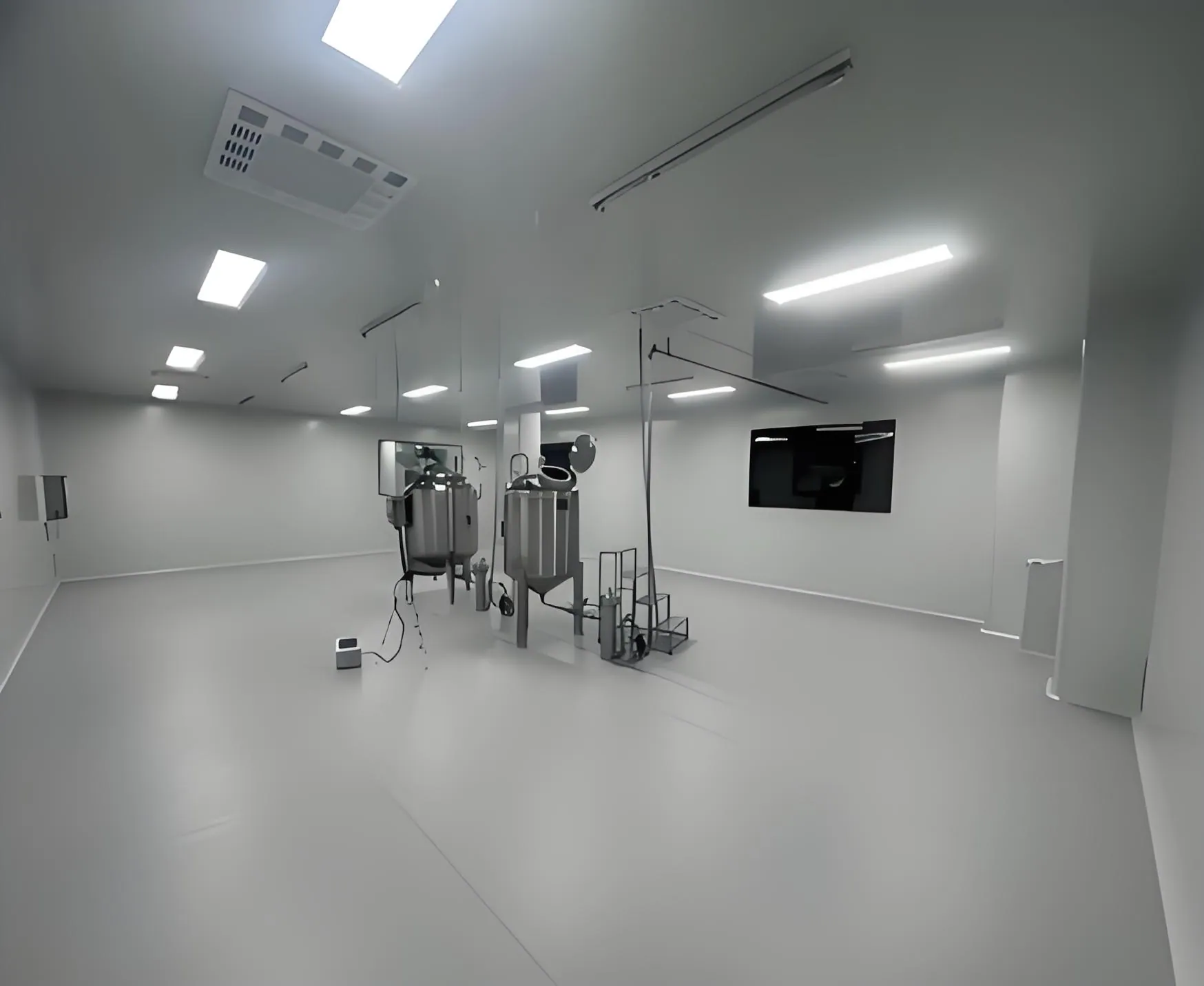
Horizontal benches direct air from the rear plenum toward the operator, which can carry particles shed by the operator across the work surface toward sensitive samples. Vertical units minimize this exposure by sweeping air downward and away from the breathing zone before it exits the base. The vertical configuration also accommodates taller equipment and reduces the footprint required for rear clearance, though it may create slight turbulence around large objects placed near the work surface. Process risk assessment, not preference, should determine which orientation is appropriate for a given application.
A clean bench is a broad category that includes both horizontal and vertical airflow configurations. The term is often used interchangeably, but "vertical laminar air flow bench" specifies the downward airflow direction, which has distinct contamination-control implications for operator proximity and sample protection.
A properly installed unit with H14 HEPA filtration and validated airflow typically achieves ISO Class 5 (Class 100) conditions within the work zone. ULPA-equipped models can reach ISO Class 3 or 4 in localized areas, though the surrounding room class and operator technique strongly influence actual results.
Replacement depends on differential pressure trends, environmental particulate loading, and leak test results. Many facilities plan replacement every two to five years, but pre-filter maintenance and room cleanliness extend service life significantly. Pressure-based replacement decisions are more reliable than calendar schedules.
No. Standard laminar flow benches protect the product, not the operator, and exhaust filtered air into the room. Applications involving infectious agents, toxic powders, or volatile chemicals require a certified biosafety cabinet or chemical fume hood with appropriate containment and exhaust provisions.
Procurement should require a filter test certificate, airflow velocity map, electrical schematics, installation and operation manuals, and material certificates for stainless steel components. For regulated environments, IQ/OQ protocol templates and calibration certificates for installed instruments are essential for audit compliance.
Technicians use a calibrated thermal anemometer or a balometer to measure velocity at multiple points across the filter face or work zone plane. Results are compared against the manufacturer's specification and the applicable standard, typically requiring all readings within ±20% of the average.
Specifying a vertical laminar air flow bench requires balancing filtration performance, workspace geometry, regulatory documentation, and lifecycle cost. Facilities evaluating new installations or upgrading existing workstations can request a technical review covering airflow calculations, dimensional drawings, utility requirements, and validation documentation. TAI JIE ER provides engineering support for clean engineering projects, including configuration recommendations and commissioning guidance tailored to the intended process and applicable cleanroom classification. Submit your project parameters to receive a detailed proposal and specification package for review by your engineering and quality teams.