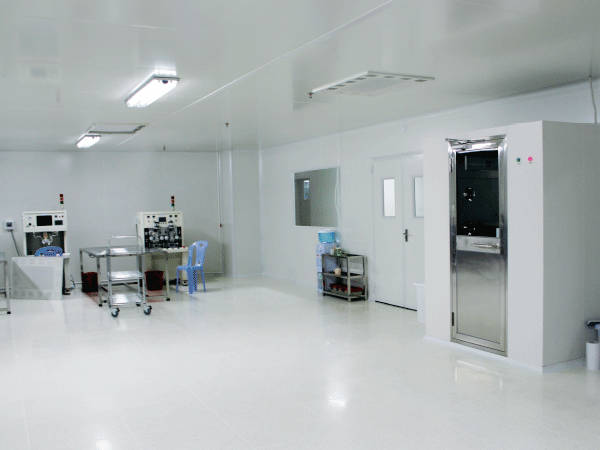
Airflow management is the cornerstone of any controlled environment. The final point of delivery, where filtered air meets the critical space, is often the most overlooked. The design and selection of your high-efficiency air outlet directly impact particle control, temperature uniformity, and operational costs. This isn't just about a diffuser; it's about the final, critical stage of your contamination control strategy.
Getting this component wrong can create dead zones, hotspots, and excessive turbulence. This compromises product integrity and increases filtration load. A properly selected and installed unit, however, ensures laminar or precisely mixed airflow, safeguarding your processes.
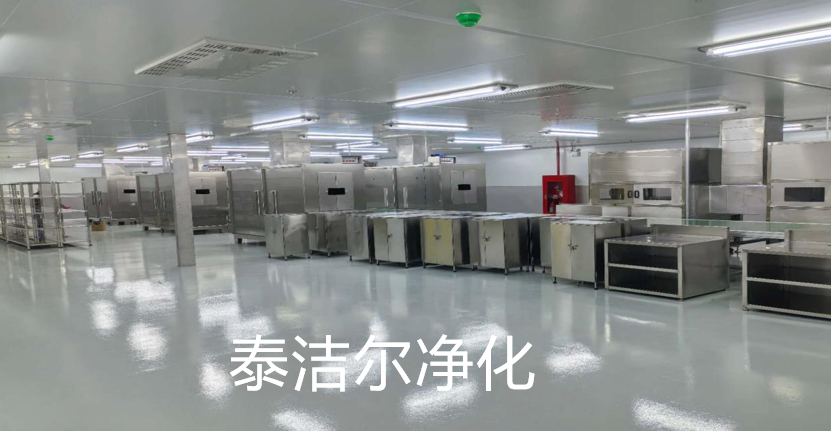
Gone are the days of simple perforated plates. Today's units are precision-engineered devices. Their primary function is to deliver filtered air from the plenum or ductwork into the room with a specific flow pattern.
The core components include a robust housing, a damping mechanism for volume control, and the face assembly. This face is key. It often integrates a static mixing chamber or specially designed blades.
These elements work together to condition the air. They minimize velocity variations and prevent jet streams. The goal is a smooth, predictable, and consistent discharge.
This precise delivery is what defines a true high-efficiency air outlet. It translates filter cleanliness into effective room cleanliness.
In ISO Class 5 (Class 100) and cleaner environments, laminar flow is non-negotiable. Here, the outlet is typically a large, ceiling-mounted HEPA or ULPA filter face. But the supporting grille or diffuser frame plays a vital role.
A well-designed frame minimizes pressure drop and ensures an even velocity profile across the entire filter surface. Any restriction or uneven flow at this point can create turbulence downstream.
For less critical zones, like ISO Class 7 or 8 rooms, mixing types are common. Their design is more complex. A good mixing outlet rapidly dilutes room air with clean supply air.
It does this without creating drafts that could disturb particles on surfaces. TAI JIE ER focuses on designs that achieve rapid mixing with low entrainment velocity, effectively lowering the achievable particle count.
Choosing the right model is not a generic decision. It requires a detailed analysis of your room's requirements.
First, consider the required airflow volume and room pressure. The outlet must handle the CFM while maintaining the necessary pressure differential to adjacent spaces.
Next, evaluate the thermal load. Outlets in rooms with high heat-generating equipment may need enhanced mixing capabilities to prevent stratification.
The physical constraints matter. Ceiling height, plenum depth, and the location of lights or sprinklers all influence the size and style you can install.
Finally, material compatibility is essential. For pharmaceutical or corrosive environments, 304 or 316 stainless steel housings from suppliers like TAI JIE ER are often mandated over standard aluminum.
Modern facilities demand smart control. Advanced outlets are no longer passive components. Many can be integrated with motorized dampers and room sensors.
This allows for dynamic airflow control based on real-time occupancy or particle counts. A room in standby mode can reduce air changes, saving significant energy.
When paired with pressure sensors, they help maintain exact differentials. This automatic adjustment is more reliable than manual balancing.
TAI JIE ER provides outlets compatible with common actuator types. This facilitates seamless integration into your overall BMS for precise environmental governance.
HVAC systems are the largest energy consumers in a cleanroom. The efficiency of your air delivery system has a massive impact on this cost.
A poorly designed outlet with a high-pressure drop forces fans to work harder. This increases horsepower and electrical demand immediately.
Ineffective airflow patterns may also lead to over-compensation. Teams might increase overall air change rates to solve local contamination problems, wasting energy.
An optimized high-efficiency air outlet delivers the required performance with minimal pressure loss. This reduces the static pressure your fans must overcome, leading to direct, ongoing savings on utility bills.
Even the best product fails if installed incorrectly. Proper installation is paramount for performance.
The outlet must be sealed perfectly to the ceiling grid or plenum. Any bypass leakage compromises pressure control and filtration integrity.
After installation, professional air balancing is crucial. Technicians adjust dampers to ensure each outlet delivers its designed airflow. This creates the uniform conditions your process needs.
Maintenance involves regular gasket inspection and surface cleaning. For outlets with integrated dampers, periodic checks for actuator function are advised. TAI JIE ER designs units with serviceability in mind, allowing for easy access without disrupting the sealed environment.
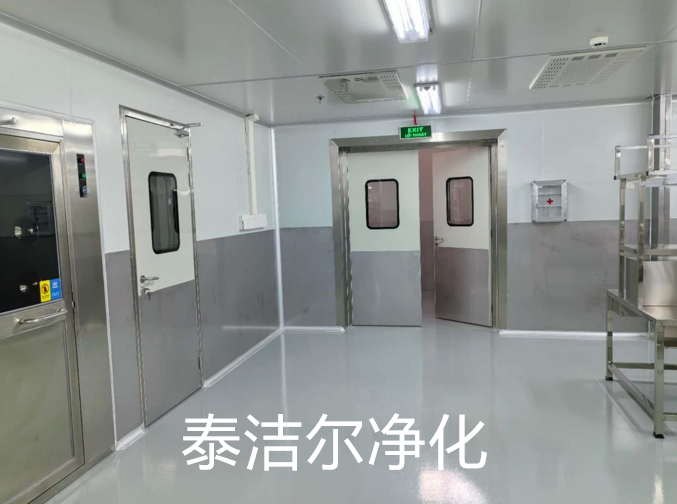
We believe in specification by data, not just appearance. Our development process involves extensive wind-tunnel testing and computational fluid dynamics (CFD) modeling.
We provide certified performance charts for each model. These detail the exact relationship between airflow volume and pressure drop.
We also document thermal mixing efficiency and throw patterns. This allows your engineering team to model room conditions accurately before construction begins.
This data-driven approach ensures that a TAI JIE ER high-efficiency air outlet performs predictably in the field. It removes guesswork and supports validated facility performance.
Selecting the terminal air delivery device is a critical engineering decision. It influences contamination control, operational stability, and energy efficiency. Prioritizing a properly specified high-efficiency air outlet from a technical partner like TAI JIE ER provides a solid foundation for your cleanroom's performance and profitability.
Q1: What is the difference between a laminar flow and a mixing type high-efficiency air outlet?
A1: Laminar flow outlets are designed to deliver air in a straight, unidirectional stream with minimal cross-contamination. They are used in the cleanest zones. Mixing types, often called turbulent flow, deliberately blend supply air with room air rapidly for dilution control in less critical areas.
Q2: How often should the airflow from these outlets be re-balanced?
A2: We recommend initial balancing after installation and then following a scheduled preventive maintenance program. Typically, re-balancing is performed annually, or after any significant changes to the room layout, filtration system, or HVAC equipment.
Q3: Can existing standard diffusers be retrofitted into high-efficiency outlets?
A3: Rarely. True high-performance outlets are part of an integrated system design. Retrofitting usually requires modifying the plenum, updating controls, and ensuring structural support. A full assessment of the existing HVAC system's capacity is needed first.
Q4: Do these outlets help with humidity control in cleanrooms?
A4: Indirectly, yes. By ensuring consistent, well-mixed airflow, they prevent localized condensation or dry spots. However, humidity is primarily controlled at the air handling unit (AHU). The outlet ensures the conditioned air is distributed effectively to maintain uniform room conditions.
Q5: What materials are best for corrosive environments like certain pharmaceutical processes?
A5: For harsh environments involving chemical vapors or frequent washdowns, 316L stainless steel is the standard. TAI JIE ER offers outlets with full SS construction, including housings, dampers, and fasteners, to ensure longevity and prevent corrosion-related contamination.