In the pharmaceutical, biotechnology, and advanced industrial sectors, the quality of products is directly determined by the purity of the utilities used in their manufacture. Water for Injection (WFI), Clean Steam, and Purified Gas are not merely inputs; they are critical raw materials. The discipline that governs the design, installation, and operation of these systems is purification engineering. This field combines mechanical integrity, thermodynamic principles, and stringent regulatory compliance to deliver consistent, contaminant-free outcomes. This article provides a technical examination of the core principles, common failure points, and modern solutions in purification engineering, drawing on the proven methodologies of specialists like TAI JIE ER.
The production of High-Purity Water is the most common and critical application of purification engineering. A typical system is a multi-stage process:
Pretreatment: Multimedia filtration, softening, and dechlorination (via activated carbon or chemical injection) protect downstream equipment from fouling and oxidation.
Primary Purification: Reverse Osmosis (RO) membranes typically reject 95-99% of ions, pyrogens, and organics. Single-pass or double-pass RO configurations are selected based on feed water quality.
Polish Purification: Continuous Electrodeionization (CEDI) or Mixed-Bed Deionization (MBDI) achieves the final resistivity requirement of >18.2 MΩ·cm for WFI.
Generation: For WFI, distillation (vapor compression or multi-effect) remains the gold standard in many regions, though membrane-based (reverse osmosis and electro-deionization) processes are now accepted under EU GMP Annex 1, provided they demonstrate equivalent or reduced microbial risk.
Each stage presents engineering challenges, from membrane scaling to biofilm formation, requiring precise control of flow, pressure, and sanitization cycles.
Beyond liquid water, gaseous utilities demand rigorous purification engineering. Clean steam, used for sterilizing equipment (autoclaves, SIP systems), must be free from boiler additives (amines, hydrazine). This is achieved through specific steam generator designs using polished stainless steel (316L) and demineralized water feed.
Similarly, compressed air and nitrogen used in cleanrooms must be free of oil, particles, and viable organisms. Purification engineering here involves:
Oil-free compressors.
Depth filtration for bulk removal.
Activated carbon adsorption for oil vapor.
Sterile-grade membrane filtration (0.2 µm) at point-of-use.
These systems are often overlooked but are frequent sources of contamination in aseptic processing, underscoring the need for holistic engineering design.
The materials used to transport purified utilities are as important as the purification equipment itself. Incorrect material selection can recontaminating water that has been purified to the highest standard. Core specifications include:
Stainless Steel: 316L with electropolished internal surfaces (Ra < 0.4 µm) to minimize bacterial adhesion and facilitate cleaning.
Orbital Welding: Automated welding in an inert gas atmosphere (back-purged with argon) to create smooth, crevice-free joints.
Slope and Drainability: Piping networks must be designed with a consistent slope (typically 1-2%) to ensure complete drainability, eliminating stagnant pools where biofilms thrive.
These mechanical details are the difference between a system that passes validation and one that suffers from persistent microbial excursions—a reality well understood by TAI JIE ER's engineering teams.
Even the most meticulously designed purification systems face the threat of biofilm—a consortium of microorganisms encased in a protective matrix. Once established, biofilm is extremely difficult to eradicate. Purification engineering addresses this through two primary strategies:
Exposing the system to hot water (80-85°C) or clean steam is the most reliable method for microbial control. Systems must be engineered to withstand thermal expansion and ensure uniform heat distribution.
For ambient temperature systems, ozone (generated and dissolved into the water) provides continuous microbial suppression. Periodic chemical sanitization with peracetic acid or hydrogen peroxide may also be employed. The choice between thermal and chemical methods depends on system materials, energy costs, and validation requirements.
Modern engineering integrates automated sanitization sequences that prevent human error and ensure consistent cycles.
Compliance is not an afterthought; it is embedded in the engineering process. The validation of a purification system follows a structured path:
Design Qualification (DQ): Ensuring the engineered design meets the User Requirement Specification (URS) and regulatory standards (e.g., USP <1231>, Ph. Eur. monograph).
Installation Qualification (IQ): Verifying that materials of construction, welding logs, and component certifications match the design.
Operational Qualification (OQ): Testing alarms, sequences, and performance under normal and challenged conditions (e.g., power failure recovery).
Performance Qualification (PQ): A prolonged period (typically 2-4 weeks) of monitoring chemical and microbiological parameters to prove consistency.
A robust engineering partner provides the documentation and testing protocols to navigate this lifecycle efficiently.
The future of purification engineering lies in digitalization. Continuous monitoring systems now track conductivity, Total Organic Carbon (TOC), and microbial activity in real-time. Data is fed into a centralized historian, enabling:
Predictive Maintenance: Algorithms that detect declining RO membrane performance or heat exchanger fouling before failure occurs.
Electronic Batch Reporting: Automated generation of water release documentation, reducing paperwork and human error.
Remote Monitoring: Secure access to system status, allowing rapid response to alarms.
These technologies transform purification from a reactive maintenance task into a data-driven, predictive operation.
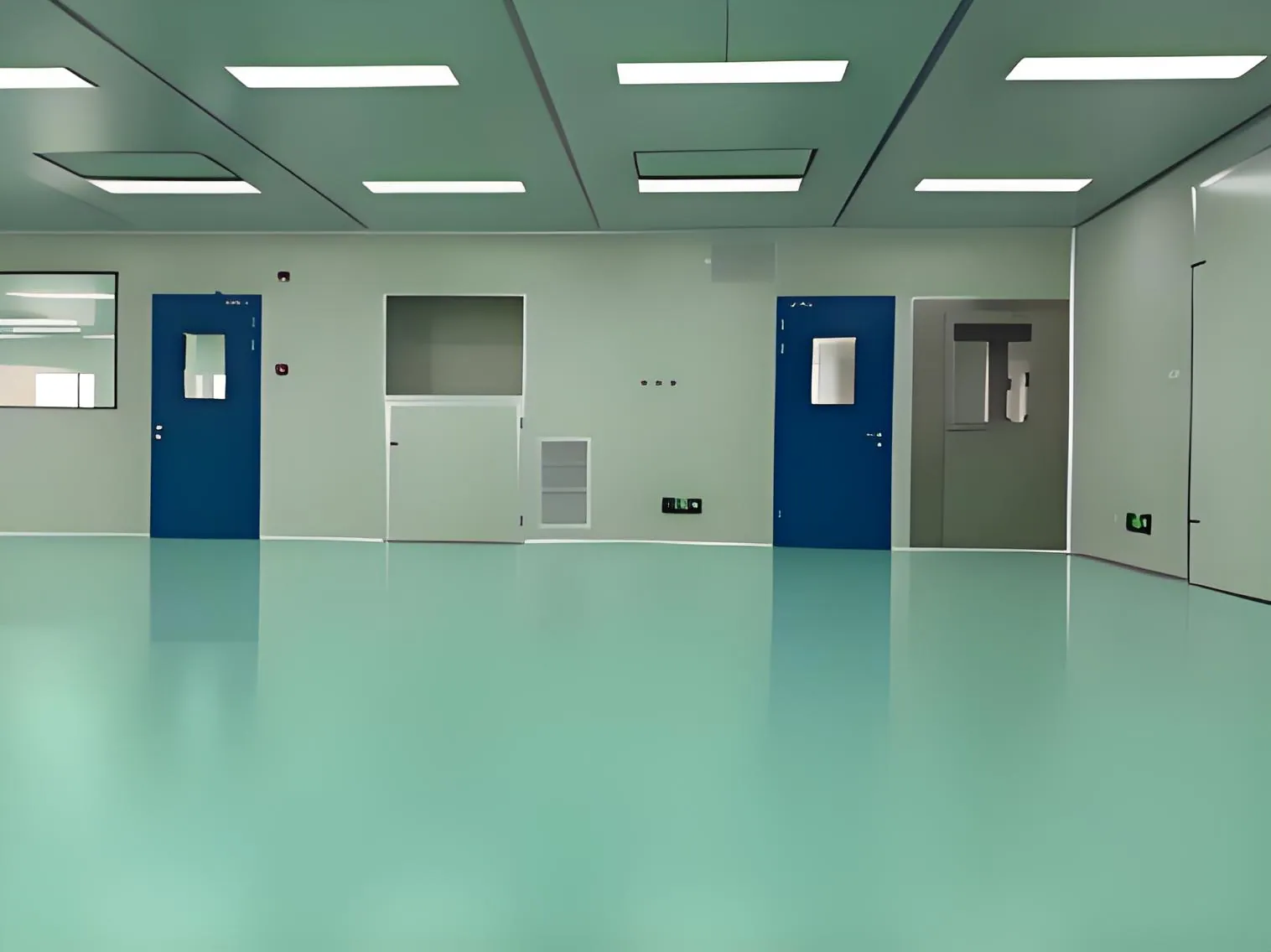
Across multiple projects, TAI JIE ER has demonstrated the value of a systems-thinking approach to purification engineering. In a recent project for a monoclonal antibody facility, the team designed a WFI loop that integrated vapor compression distillation with ambient temperature distribution, reducing energy consumption by 30% compared to traditional 80°C loops. The design incorporated 3D modeling to optimize pipe routing for drainability and utilized advanced orbital welding with real-time data logging. The result was a first-pass validation success and a system that consistently produces water meeting USP and EP specifications with minimal operator intervention.
Q1: What is the difference between Purified Water (PW) and Water for
Injection (WFI) from an engineering perspective?
A1: The primary
difference lies in the allowable endotoxin limit (WFI: <0.25 EU/mL; PW: no
specified limit) and the method of production. WFI systems traditionally
required distillation, but modern purification engineering now permits
equivalent membrane-based processes. Distribution is also more critical for WFI,
often requiring continuous circulation at elevated temperatures (65-80°C) to
prevent microbial growth.
Q2: How often should Reverse Osmosis membranes be
replaced?
A2: Typical lifespan is 3-5 years, depending on feed water
quality and pretreatment efficacy. Indicators for replacement include a 10-15%
increase in normalized pressure drop, a 10-15% decrease in salt rejection, or a
10-15% drop in permeate flow. Regular CIP (Clean-in-Place) can extend membrane
life.
Q3: What are the most common causes of TOC excursions in a WFI
loop?
A3: Excursions often result from biofilm shedding, degradation
of ion exchange resins releasing organic compounds, or ingress of contamination
through vent filters. Purification engineering solutions
include enhanced sanitization frequency, upgrading to higher-grade resins, and
installing hydrophobic vent filters with trace heating.
Q4: Is it better to design a central purified water system or use
point-of-use polishing?
A4: This depends on the facility scale and
usage patterns. A central system with a distribution loop is generally more
economical and easier to validate for large volumes and multiple points-of-use.
Point-of-use polishing (e.g., small RO/CEDI units at each lab sink) may suit
research environments with varied needs but introduces validation complexity and
higher consumable costs per unit of water.
Q5: What is the role of Computational Fluid Dynamics (CFD) in
designing purification piping networks?
A5: CFD simulates velocity,
pressure, and temperature distribution within the piping. It helps engineers
identify dead legs, ensure turbulent flow (Reynolds number > 4000) to prevent
biofilm, and verify uniform heat distribution during thermal sanitization,
ensuring no cold spots exist.
Q6: How does the new EU GMP Annex 1 impact purification engineering
for WFI?
A6: The 2022 revision explicitly accepts non-distillation
methods for WFI production, provided the system is designed to minimize
microbiological proliferation. This has led to increased adoption of RO combined
with electro-deionization and subsequent membrane filtration. It also places
greater emphasis on the quality risk management (QRM) of the entire water
system, including storage and distribution.
Q7: What material is preferred for high-purity distribution
loops—stainless steel or PVDF?
A7: Both are used. Electropolished
316L stainless steel is traditional and robust for hot water and steam
sanitization. PVDF (polyvinylidene fluoride) is chemically inert, non-leaching,
and often preferred for ambient systems or applications requiring extremely low
metal ion content (e.g., microelectronics). The choice depends on sanitization
method and cost analysis.
For engineering assessments, system retrofits, or greenfield designs, the expertise of TAI JIE ER ensures that your purification infrastructure meets both current production needs and future regulatory expectations.