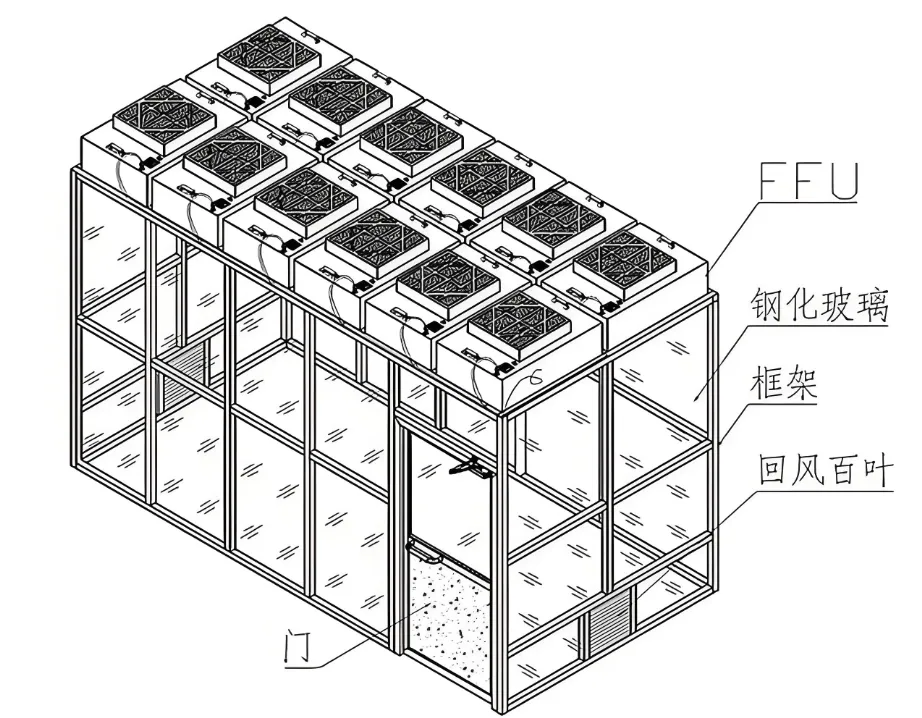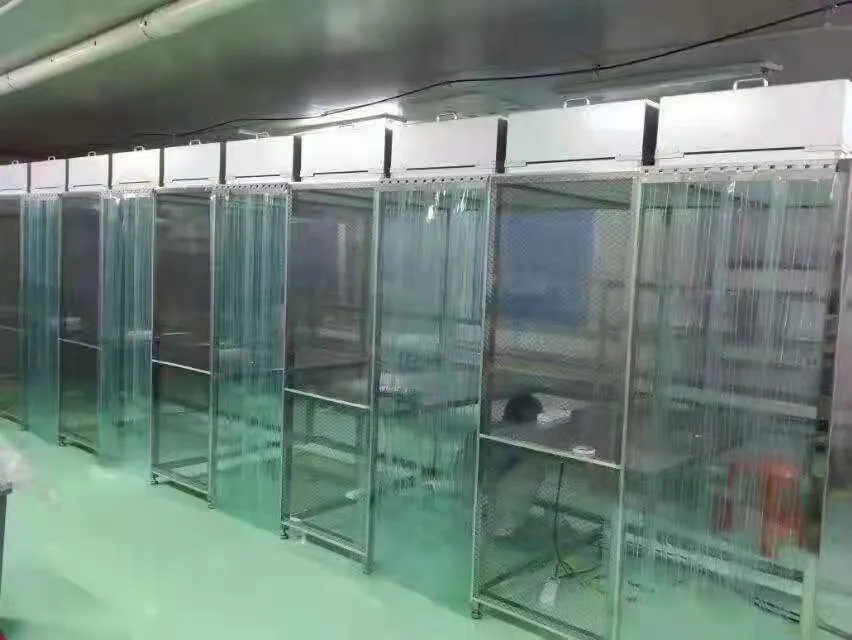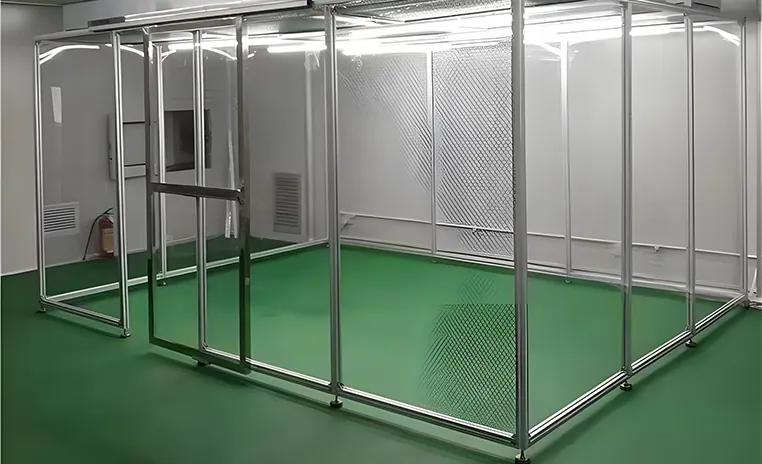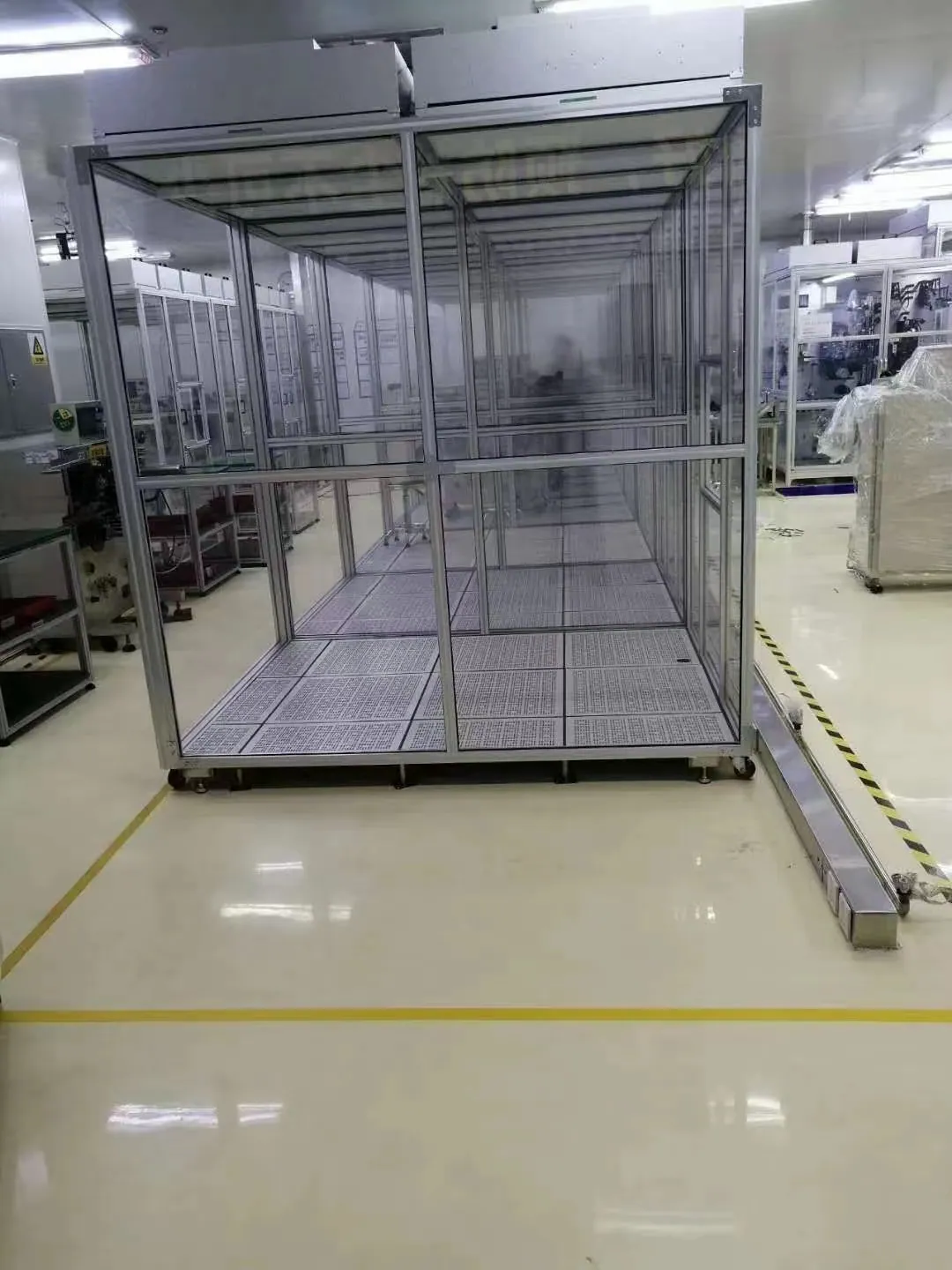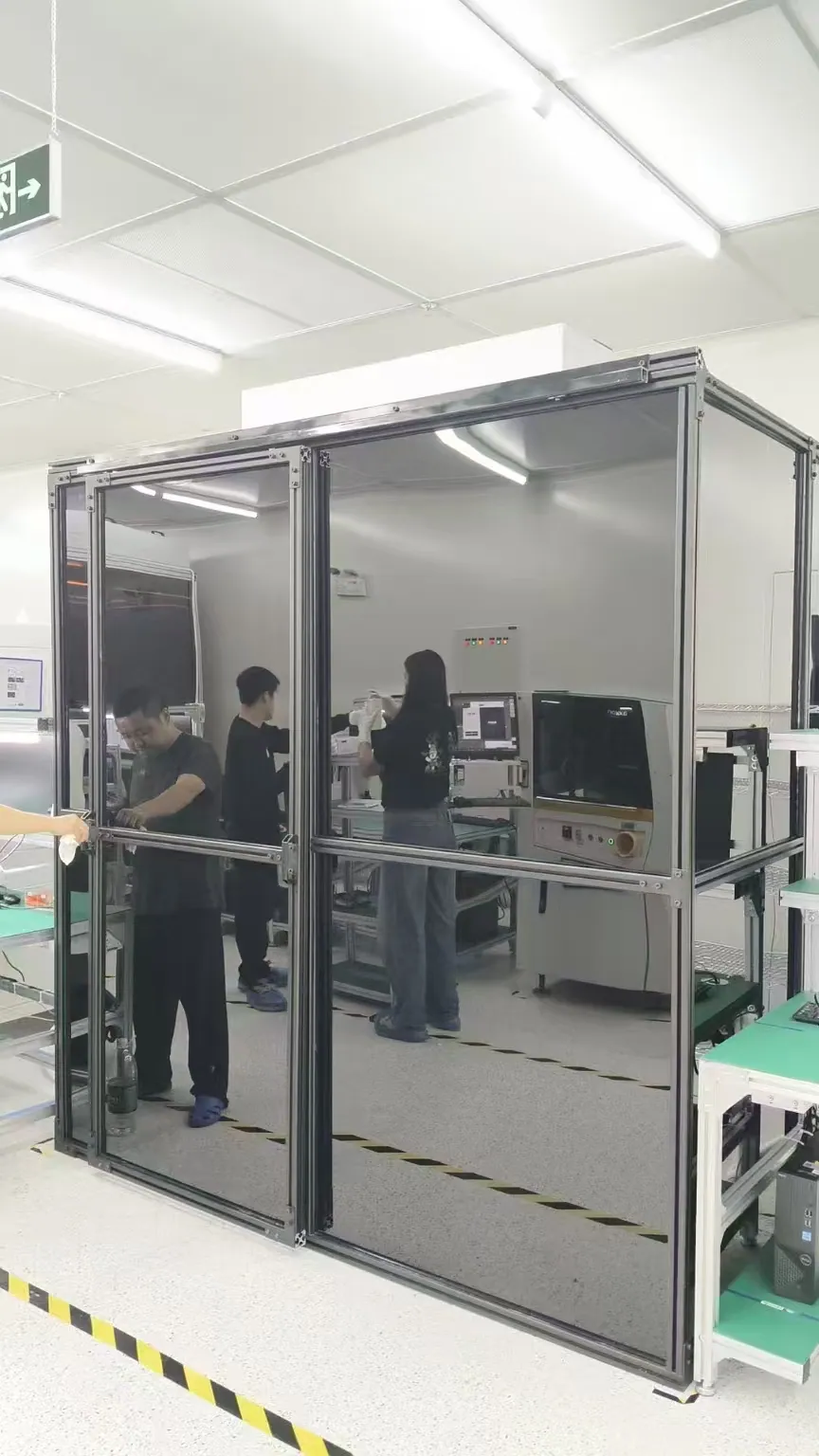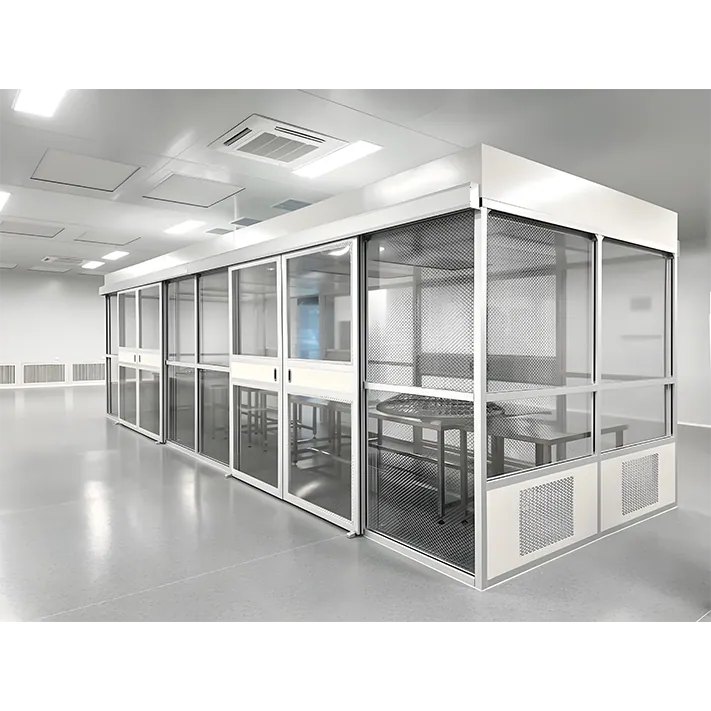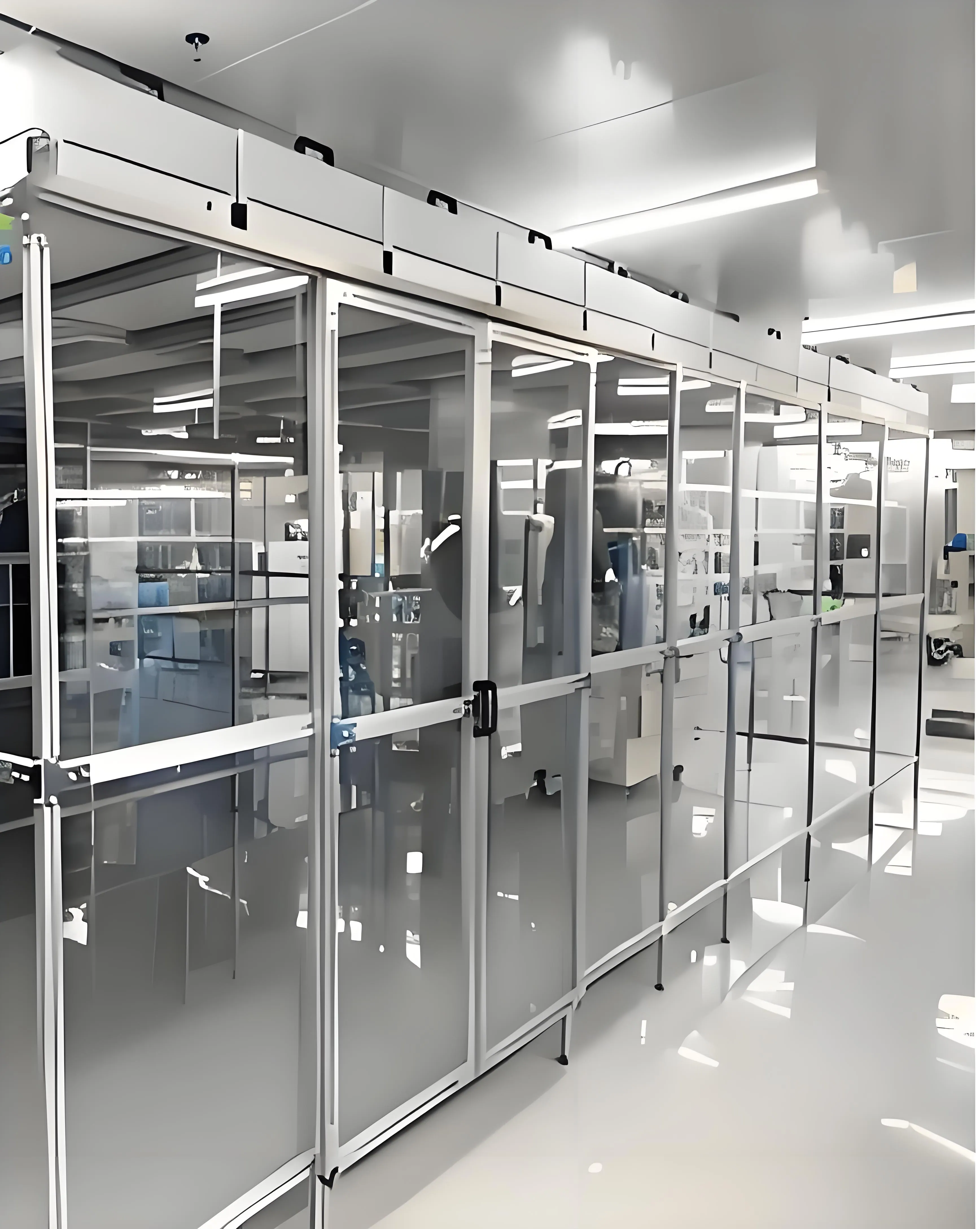
A clean work chamber is one of the most commonly used cleaning devices, typically employed in cleanroom environments with turbulent airflow to enclose a small space using anti-static plastic curtains. It utilizes a standalone high-efficiency particulate air (HEPA) filter or ultra-low penetration air (ULPA) filter along with a fan filter unit (FFU) system to create a higher-grade clean space, usually about 2.0 meters in height. It can also be equipped with wheels for easy mobility. Frame-type clean chambers are favored by small and medium-sized enterprises due to their flexibility, easy installation, low investment cost, portability, and high localized cleanliness.
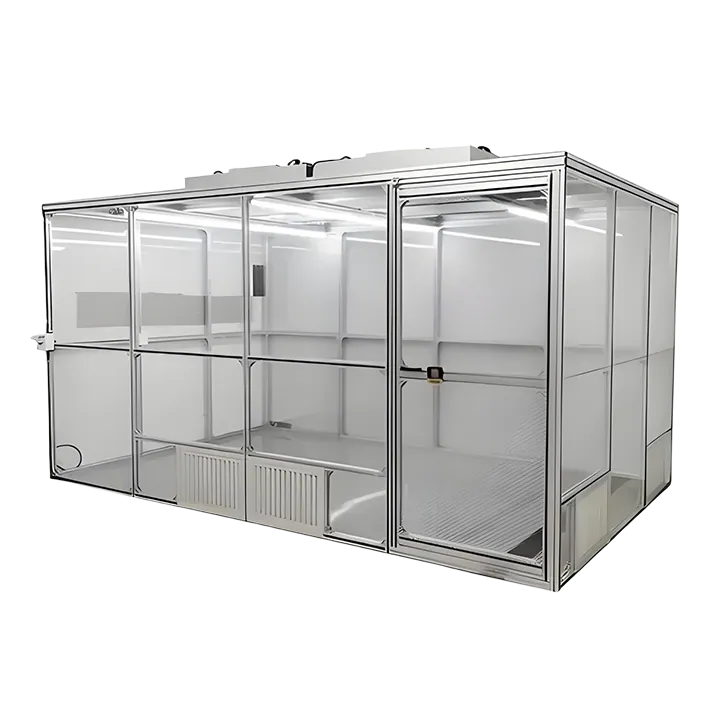
Structure of the clean work chamber: The FFU laminar flow clean layer and high-efficiency filter are mounted on the stainless steel frame of the chamber. The top is covered with a sealed panel, while the sides are enclosed with anti-static curtains. The bottom perimeter uses positive pressure for natural ventilation, achieving a cleanliness level of 100 to 10,000 inside the chamber. The clean chamber features quick installation, short construction time, low cost, convenient mobility, and is suitable for assembly lines or high-precision product assembly.
Materials of the clean work chamber: The frame typically comes in three types: stainless steel, iron, and aluminum.
The top panel materials usually include four options: stainless steel sheet, cold-rolled steel sheet with plastic coating, anti-static mesh, and anti-static acrylic sheet. The clean air supply typically uses an FFU (fan filter unit). The enclosure materials for a Class 100 clean chamber often include: anti-static curtains, anti-static acrylic sheets, and tempered glass.